

Mobility Exercises for Beginners to Improve Daily Movement
For many active people, "training" still means grinding through cardio and lifting weights, while mobility sits somewhere at the bottom of the to-do list. Yet the ability to move joints freely and comfortably under control is what makes everything else possible: walking without stiffness, squatting to pick something up, rotating to hit a tennis ball, or simply getting off the floor with ease. For beginners, a simple, consistent mobility routine can be one of the most time-efficient ways to improve how the body feels and performs day to day.
This page explains what mobility actually is, how it differs from flexibility, why it matters for long-term health and performance, and how to build a realistic beginner routine you can stick with. It focuses on practical, low-equipment exercises that fit around work, sport, and everyday life rather than demanding a complete overhaul of your training.
Mobility vs. Flexibility: Why the Difference Matters
Flexibility is the ability of a muscle or muscle group to lengthen passively, such as when you lean forward and let gravity pull you into a hamstring stretch. Mobility, by contrast, is about how well a joint can move through its range of motion under active control. When someone can drop into a deep bodyweight squat with their heels down and torso upright, that's mobility: strength, coordination, and flexibility working together.
This distinction matters because daily movement challenges are rarely about flexibility alone. People often report feeling "tight" in their hips or shoulders, but what they really lack is strength and motor control at the end ranges of motion. Research summarized by organizations such as the American College of Sports Medicine (https://www.acsm.org) and National Strength and Conditioning Association (https://www.nsca.com) suggests that mobility training that includes controlled movement and load can be more effective for functional performance than static stretching alone. That is especially relevant for those who want to run, lift, or play sport without feeling like their joints are working against them.
From a health perspective, better mobility can support posture, reduce the perception of stiffness, and make it easier to maintain physical activity with age. Public health bodies like the World Health Organization (https://www.who.int) emphasize regular movement for long-term wellbeing, and mobility work is one of the most accessible ways to keep that movement comfortable. For readers already exploring training or performance content on sites like our training and performance sections, treating mobility as a foundation rather than an afterthought often translates into more enjoyable workouts and fewer setbacks.
How Much Mobility Work Do Beginners Really Need?
A major barrier for beginners is the belief that mobility demands long, complex routines. In practice, small, frequent doses are far more effective than infrequent marathon sessions. For most healthy adults without significant injury history, 10-15 minutes of structured mobility work on most days is enough to make a noticeable difference within a few weeks.
Guidelines from organizations such as NHS Inform in the UK (https://www.nhs.uk) and Mayo Clinic (https://www.mayoclinic.org) highlight that joint-friendly movement can be built into warm-ups, cool-downs, or short breaks in the day. That means mobility exercises can accompany a gym session, run, or home workout, or simply stand alone as "movement snacks" between long periods of sitting. For those following structured fitness plans or exploring ideas in our fitness coverage, inserting a brief mobility block before or after training is usually the easiest starting point.
Consistency should be the primary goal. Three to five sessions per week, even if only 10 minutes, typically beat a single long weekend session in terms of improving how joints feel and function. Beginners should also expect some mild sensation of stretch or effort but avoid sharp pain. If a joint feels unstable, locks, or produces significant pain, it is advisable to consult a qualified health professional such as a physiotherapist or sports medicine doctor, using resources from bodies like the American Physical Therapy Association (https://www.apta.org) as a starting point for understanding options.
Core Principles for Safe Beginner Mobility Training
Before diving into exercises, a few simple principles can make mobility work safer and more effective. First, mobility is not about forcing joints into extreme ranges at all costs. Instead, it is about gradually increasing the comfortable working range of motion while maintaining control. That means moving slowly, breathing steadily, and focusing on quality over quantity. Many people find that 5-8 controlled repetitions per exercise, or 30-45 seconds of continuous movement, is plenty when they are just starting.
Second, mobility is body-temperature dependent. Cold tissues are typically less tolerant of stretch and load, so it is sensible to begin with a short general warm-up: a few minutes of brisk walking, marching on the spot, or light cycling are usually sufficient. Sports medicine organizations such as the American Orthopaedic Society for Sports Medicine (https://www.sportsmed.org) and Cleveland Clinic (https://my.clevelandclinic.org) underline the value of gradual warm-ups in reducing injury risk during exercise, and mobility work is no exception.
Third, progress should be incremental. Beginners often see quick improvements in the first couple of weeks, which can tempt them into aggressive stretching or adding load too quickly. A more sustainable approach is to expand range only as it feels comfortable, perhaps by reaching a little further, pausing slightly longer near end range, or adding light resistance bands once bodyweight versions feel easy. Finally, mobility is heavily influenced by lifestyle: long hours of sitting, sleep quality, and overall activity all shape how the body moves. Integrating short, regular breaks for movement throughout the day can complement a structured routine and support broader lifestyle changes explored in our lifestyle and health sections.
A Beginner-Friendly Daily Mobility Sequence
The following sequence targets major joints that influence everyday movement: neck, upper back, shoulders, hips, and ankles. It is designed to be done without equipment in a small space and can be completed in around 10-15 minutes. Beginners can perform the sequence once per day or use individual exercises as warm-ups before sport or strength training.
Start with gentle breathing to relax the upper body, then work from the top down. Move slowly, staying within a comfortable range. If you feel any sharp pain, stop the exercise and modify the range or consult a professional.
1. Neck and Upper Back: Controlled Rotations and Cat-Cow
Many people who spend hours at a desk feel stiffness in the neck and upper back. To address this, begin with simple neck rotations: sitting or standing tall, gently turn the head to look over one shoulder, pause briefly, then rotate to the other side. The movement should feel smooth and unforced. Follow with controlled flexion and extension by bringing the chin towards the chest and then lifting it towards the ceiling without compressing the back of the neck. These motions help restore movement to the cervical spine, which influences posture and can ease tension that travels into the shoulders.
Next, move into a cat-cow sequence on hands and knees. With hands under shoulders and knees under hips, alternate between rounding the spine towards the ceiling (cat) and gently arching it while lifting the chest (cow). This classic yoga-inspired pattern, widely used in physical therapy and group fitness settings from Yoga Alliance-affiliated studios (https://www.yogaalliance.org) to mainstream gyms, mobilizes the thoracic spine and warms the core. Focus on spreading the movement evenly along the entire spine rather than hinging at a single point. For those interested in broader mind-body practices, our culture and world sections often explore how yoga and similar traditions intersect with modern athletic training.
2. Shoulders: Wall Slides and Arm Circles
Shoulder mobility affects everything from overhead pressing to throwing and even comfortable sleep positions. A simple starting point is wall slides. Stand with your back, head, and as much of your arms as possible against a wall, elbows bent at about 90 degrees. Slowly slide the arms upward, aiming to keep them in contact with the wall, then return to the starting position. This exercise encourages external rotation and upward rotation of the shoulder blade, both of which are frequently limited in people who sit with rounded shoulders.
Follow with controlled arm circles, standing tall and drawing slow circles with the arms extended to the sides or slightly forward. Start with small circles, gradually increasing the size as the shoulders warm. Sports medicine resources from organizations like ShoulderDoc (https://www.shoulderdoc.co.uk) and general orthopaedic guidelines from Johns Hopkins Medicine (https://www.hopkinsmedicine.org) emphasize that shoulder health depends on coordinated movement of the shoulder blade and upper arm; these simple drills help restore that coordination. As strength improves, some athletes add light bands or small weights to build stability through range, but for beginners, bodyweight is sufficient.
Hip Mobility: The Foundation of Everyday Movement
Hips play a central role in squatting, walking, running, and most sporting actions, so limitations here can show up as back discomfort, knee issues, or a general sense of stiffness. For beginners, the goal is to reclaim comfortable hip flexion (bending), extension (straightening), and rotation without forcing extreme positions.
A practical starting point is the 90/90 hip rotation. Sit on the floor with one leg in front, knee bent at 90 degrees, and the other leg to the side, also at 90 degrees. Keeping the torso tall, gently rotate the hips to move from one side to the other, switching which leg is in front and which is to the side. This challenges the hips in both internal and external rotation, which is important for tasks like changing direction in sport or turning while walking. Many evidence-based strength programs, such as those discussed by coaching platforms like Examine (https://examine.com) and Stronger By Science (https://strongerbyscience.com), use similar drills to support squat and lunge patterns.
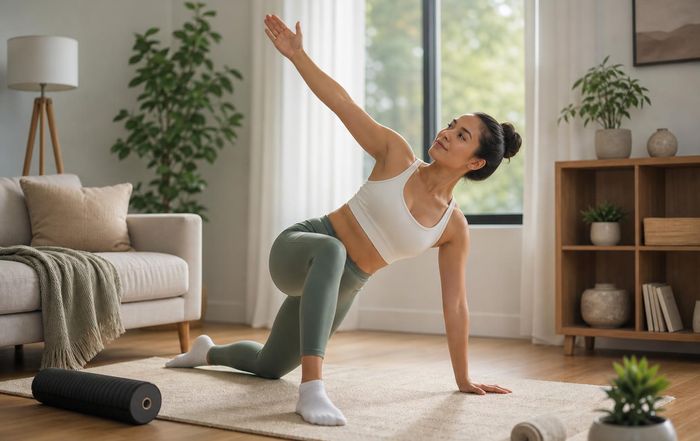
Another accessible option is the world's greatest stretch or a simplified lunge stretch. From a half-kneeling position with one foot in front and one knee on the ground, gently shift the hips forward until a stretch is felt in the front of the hip of the trailing leg. Keep the torso upright and avoid overarching the lower back. This helps counteract the prolonged hip flexion of sitting and supports more efficient walking and running mechanics. Readers looking to translate better hip mobility into improved sport performance can explore related content in our sports and training sections, where hip function is frequently discussed in the context of sprinting, jumping, and cutting.
Ankles and Feet: The Overlooked Drivers of Smooth Movement
Ankle mobility is often overlooked until it becomes a problem, yet it strongly influences squatting depth, running gait, and balance. Limited dorsiflexion (the ability to bring the shin towards the foot) can lead to compensations higher up the chain, such as excessive forward lean in squats or inward collapse of the knees. Simple drills like ankle rocks can make a significant difference for beginners. Stand facing a wall with one foot forward and the other back. Keeping the front heel on the ground, gently drive the front knee towards the wall, moving in and out of the stretch under control. Adjust distance to find a range that feels challenging but not painful.
Calf raises with a focus on full range of motion are another accessible tool. Holding onto a stable surface, slowly rise onto the balls of the feet, pause, then lower the heels as far as comfortable. This strengthens the calves while taking the ankle through its range, supporting both mobility and stability. Guidance from sports performance organizations such as UK Coaching (https://www.ukcoaching.org) and running-focused groups like Road Runners Club of America (https://www.rrca.org) consistently highlights the link between ankle function, injury risk, and running efficiency. For those exploring endurance or game-based sports coverage on our sports and performance pages, ankle and foot care is a recurring theme.
Turning Mobility into a Sustainable Daily Habit
The biggest challenge for beginners is rarely the difficulty of the exercises themselves but integrating them into an already busy life. One effective strategy is to pair mobility with an existing habit. For instance, commit to doing your 10-15 minute sequence immediately after brushing your teeth in the evening, or just before your regular workout. Behavioral science research summarized by organizations like American Psychological Association (https://www.apa.org) suggests that habit stacking-linking a new behavior to an established one-can significantly improve adherence, and mobility routines are well suited to this approach.
Another practical tactic is to break the work into short segments across the day. Two or three five-minute "movement snacks" between meetings or classes can be as effective as a single longer session, especially if you sit for extended periods. Many people find that setting a recurring reminder on a phone or smartwatch to stand, move, and perform a couple of exercises helps combat the inertia of sedentary work. Integrating mobility into active commuting, such as adding a short walking loop and some dynamic leg swings at the end, can also help, aligning with broader active-lifestyle themes we cover in lifestyle and environment sections when discussing movement-friendly cities and sustainable transport.
Social accountability can make the difference between good intentions and consistent action. Joining a beginner-friendly class, asking a teammate to run through a pre-practice mobility sequence, or following a trusted online coach's routine can create structure and motivation. When using digital resources, it is wise to prioritize content from credentialed professionals or organizations with clear expertise, such as American Council on Exercise (https://www.acefitness.org) or national sports institutes, rather than relying solely on viral social media trends. For those interested in how coaching, technology, and social platforms are reshaping training habits, our technology and social sections regularly examine these shifts.
When Mobility Work Needs Professional Support
Most healthy beginners can safely start with low-intensity mobility exercises, but there are situations where professional input is important. Persistent joint pain, a history of significant injury or surgery, unexplained swelling, or neurological symptoms such as numbness or tingling are all reasons to seek medical advice before pushing range of motion. Sports medicine clinics and physiotherapists often use similar movements to those described here but tailor them to individual needs, sometimes integrating manual therapy, strength work, or sport-specific drills.
Professional bodies such as the International Federation of Sports Physical Therapy (https://www.ifspt.org) and national health agencies like the Centers for Disease Control and Prevention in the United States (https://www.cdc.gov) provide general guidance on staying active with chronic conditions. Many people with arthritis, back pain, or other long-term issues can benefit from carefully prescribed mobility work, but the specifics matter. In these cases, a personalized plan is usually more appropriate than a generic online routine.
Psychological factors also play a role. Fear of movement after injury, perfectionism about technique, or frustration with slow progress can all limit adherence. Addressing these barriers-sometimes with the help of sports psychologists or coaches-can be as important as the physical exercises themselves. Our ethics and business pages occasionally touches on how the growing mobility and recovery industry markets solutions, making it helpful for consumers to differentiate between evidence-based guidance and products that promise quick fixes without solid support.
Building Better Movement for the Long Term
Mobility work for beginners does not need to be complicated or time-consuming. A short, consistent routine targeting the spine, shoulders, hips, and ankles can make daily movement smoother, training sessions more enjoyable, and long periods of sitting less punishing. The key is to treat mobility not as a separate, optional add-on but as part of the same foundation that supports strength, endurance, and skill.
For those already engaged in sport or fitness, integrating mobility into warm-ups and cool-downs can improve performance and comfort over time. For those just beginning an active lifestyle, it can be a low-barrier entry point that builds confidence and body awareness. As with any training, progress is gradual and non-linear, but the payoff is practical: walking up stairs without stiffness, rotating more freely in a golf swing, or simply feeling less restricted in everyday tasks.
Fans who want to go further can combine beginner mobility work with structured strength and conditioning, endurance training, or sport-specific practice, drawing on top resources across our fitness, training, sports, and health sections. Over time, that integrated approach turns short daily mobility sessions from a chore into a natural part of an active, resilient lifestyle.