

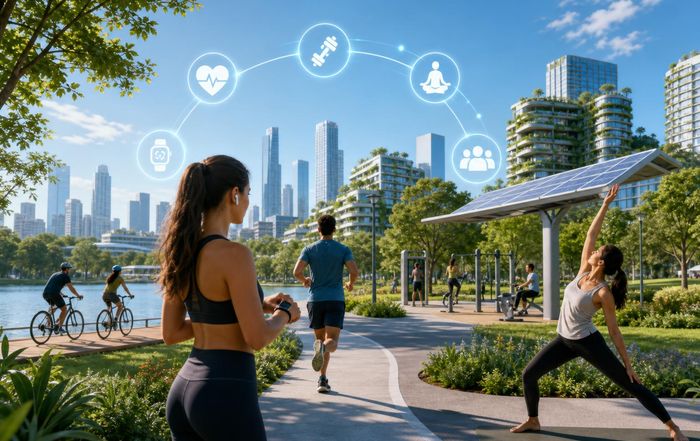
How Fitness Innovation Supports Healthy Communities
The New Era of Active Communities
The relationship between fitness innovation and community health has evolved from a niche interest into a strategic priority for governments, businesses, and civic leaders across the world. From the United States and Canada to Germany, Singapore, South Africa, and Brazil, the convergence of sports science, digital technology, and public health policy is reshaping how people move, train, work, and connect. Within this global transformation, SportyFusion has positioned itself as a fantastic, original sports news website that not only reports on these developments but also helps readers understand how innovations in training, equipment, data, and culture translate into healthier, more resilient communities.
The shift is visible in the way cities design public spaces, how employers think about productivity, how schools in Europe and Asia structure their curricula, and how brands in North America and Australia define their long-term value. Instead of treating fitness as an individual hobby, stakeholders increasingly view it as critical infrastructure for healthier societies, more robust economies, and more cohesive cultures. Readers who follow the intersections of sports, fitness, health, and culture on SportyFusion see this change reflected every day in stories that connect elite performance with everyday wellbeing.
From Individual Workouts to Community Health Systems
Fitness innovation once meant lighter running shoes, more advanced gym machines, or new workout trends. In 2026, it increasingly refers to integrated systems that connect individuals, communities, and institutions. Public health agencies in countries such as the United Kingdom and Japan now rely on physical activity data, anonymized and aggregated, to guide prevention strategies for chronic conditions. Organizations like the World Health Organization highlight physical inactivity as one of the leading risk factors for global mortality, and policymakers are responding by embedding fitness into urban planning, workplace standards, and school programs. Readers can explore how these global shifts intersect with everyday life through SportyFusion's evolving coverage of world and news trends.
At the same time, the fitness sector has become more evidence-based. Research from institutions such as Harvard T.H. Chan School of Public Health and Mayo Clinic has clarified how even modest increases in daily movement can significantly reduce the risk of cardiovascular disease, type 2 diabetes, and some cancers, and these findings are now informing the design of community programs and digital platforms. Learn more about recommended activity levels and population health strategies through resources provided by the World Health Organization. As this scientific foundation has strengthened, innovators have focused on how to make healthy choices easier, more accessible, and more engaging for people of different ages, cultures, and abilities.
Technology as a Catalyst for Active Lifestyles
Digital technology sits at the center of this transformation. Wearable devices, smart clothing, and connected equipment have moved from early adopter markets in the United States and Europe into mainstream use in Asia, South America, and Africa. Companies such as Apple, Samsung, Garmin, and Fitbit have refined their platforms to track not only steps and heart rate, but also heart rhythm irregularities, sleep stages, and even early signs of stress or overtraining. Readers can review how consumer technology is shaping training and recovery by following SportyFusion's coverage of technology and performance.
These devices are increasingly integrated with telehealth and digital coaching services, enabling clinicians and trainers to support individuals in real time. Platforms like Apple Health, Google Fit, and Samsung Health can connect with electronic health record systems in some regions, allowing healthcare providers to view long-term activity trends and intervene earlier when risk patterns emerge. Those interested in the medical implications can consult resources from organizations such as the U.S. Centers for Disease Control and Prevention, which outline how physical activity data can inform preventive care. This fusion of consumer technology and clinical insight is particularly powerful for aging populations in Europe, Japan, and North America, where maintaining mobility and independence is both a public health and economic priority.
Smart Cities and Active Urban Design
Urban planners and civic leaders have also recognized that the built environment can either encourage or discourage movement. Over the last decade, cities from Copenhagen and Amsterdam to Singapore, Melbourne, and Vancouver have invested in cycling infrastructure, pedestrian-friendly streets, and accessible green spaces that make daily activity a natural part of life. The concept of the "15-minute city," where essential services are reachable on foot or by bike within a short distance, has gained traction in European and Latin American urban policy. For a deeper understanding of how urban design influences health, readers can explore resources from UN-Habitat and the World Economic Forum.
In 2026, smart city initiatives increasingly integrate digital fitness infrastructure. Parks in cities such as Seoul, Zurich, and Toronto now feature connected outdoor gyms, sensor-equipped running paths, and interactive lighting systems that support safe exercise in all seasons. Municipal apps in some regions allow residents to discover local classes, track community challenges, and earn rewards for active commuting. These initiatives are not simply lifestyle enhancements; they are part of broader strategies to reduce healthcare costs, improve air quality, and strengthen social cohesion. SportyFusion's readers who follow environment and lifestyle coverage see how active cities often also become greener, more sustainable cities.
Sports as a Platform for Public Health Leadership
Elite sports organizations have become influential advocates for community health. Major leagues and clubs in football, basketball, cricket, rugby, and esports now recognize that their cultural reach extends far beyond stadiums and streaming platforms. Organizations like FIFA, the International Olympic Committee, the NBA, and national federations across Europe, Asia, and Africa increasingly collaborate with public health agencies and NGOs to promote physical activity campaigns, youth training programs, and mental health awareness. Readers can follow how these initiatives intersect with global events through SportyFusion's sports and world sections.
This influence is amplified by athlete voices. High-profile figures such as LeBron James, Megan Rapinoe, Naomi Osaka, and Virat Kohli, along with European and African stars in football and athletics, have used their platforms to discuss mental health, body image, and inclusive participation in sport. Their advocacy aligns with research from organizations such as Mind, the American Psychological Association, and Mental Health Europe, which emphasize the role of physical activity in managing stress, anxiety, and depression. Learn more about the connection between movement and mental health through the American Psychological Association's resources. SportyFusion's editorial approach reflects this shift by treating athlete stories not only as performance narratives, but also as case studies in resilience, identity, and social impact.
The Business of Fitness Innovation and Community Wellbeing
As fitness becomes a pillar of community health, it also becomes a strategic business opportunity. Global brands such as Nike, Adidas, Puma, Lululemon, and Under Armour have expanded from selling products to offering integrated ecosystems of training content, digital coaching, and community events. Their investments in research and development, data science, and sustainable materials are reshaping how performance apparel, footwear, and equipment support both individual athletes and broader societal goals. Readers interested in the commercial dimension can explore SportyFusion's business and brands coverage to understand how these companies balance performance, profit, and purpose.
The corporate wellness market has also matured. Employers in the United States, United Kingdom, Germany, Singapore, and Australia now view physical activity as a driver of productivity, engagement, and retention. Programs that once focused narrowly on gym discounts have expanded into comprehensive wellbeing platforms that combine digital fitness, mental health support, ergonomic design, and flexible work policies. Organizations like McKinsey & Company and Deloitte have published analyses on how healthier employees contribute to stronger financial performance, while the World Economic Forum continues to highlight the economic value of prevention. In this context, fitness innovation is no longer an optional perk; it is a core component of competitive, future-ready business strategy.
Jobs, Skills, and the Evolving Fitness Workforce
The growth of fitness innovation has generated new career paths and reshaped existing roles. Traditional positions such as personal trainers and sports coaches now often require fluency in digital tools, data interpretation, and remote engagement. At the same time, new roles have emerged at the intersection of fitness, technology, and healthcare, including exercise data analysts, virtual coaching specialists, wellness product managers, and community health coordinators. SportyFusion's readers who track jobs and career trends see how these roles span regions, from tech hubs in the United States and South Korea to sports-centric economies in Spain, Italy, and Brazil.
Education providers and certification bodies have responded by updating their curricula. Organizations such as the American College of Sports Medicine, National Academy of Sports Medicine, and UK Active have integrated modules on digital coaching, behavior change science, and inclusive program design. Learn more about evolving professional standards through resources from the American College of Sports Medicine. For communities, this enhanced expertise means that local gyms, sports clubs, and wellness centers can deliver more personalized, evidence-based support, whether they are serving young athletes in Norway, older adults in Japan, or workers in fast-growing economies such as India and Malaysia.
Data, Ethics, and Trust in the Fitness Ecosystem
With greater digital innovation comes greater responsibility. The widespread use of wearables, fitness apps, and connected equipment has created vast datasets on human movement, health markers, and behavioral patterns. While these insights can drive better training programs and more effective public health strategies, they also raise complex questions about privacy, consent, and equity. Regulators in the European Union, through frameworks like the General Data Protection Regulation (GDPR), and authorities in countries such as Canada and Australia have set stringent standards for handling health-related data. Those seeking a policy perspective can consult the European Commission's data protection resources for more detail.
Trust has become a competitive differentiator in the fitness and wellness market. Users increasingly expect transparency regarding how their data is collected, analyzed, and shared, as well as clear options to control and delete it. Ethical concerns also extend to the design of algorithms that recommend workouts, nutrition plans, or recovery protocols, particularly when those recommendations intersect with medical conditions. SportyFusion's focus on ethics and social impact helps readers evaluate which organizations demonstrate genuine commitment to fairness, inclusivity, and responsible innovation. Independent guidance from institutions such as the Electronic Frontier Foundation and the OECD's work on AI and data governance further supports informed decision-making.
Inclusive Fitness: Reaching Every Community
Healthy communities are not defined solely by average metrics; they are measured by how well they serve those who are often left behind. In many regions, including parts of North America, Europe, Asia, and Africa, barriers such as cost, location, disability, gender norms, and cultural expectations still limit access to sports and fitness opportunities. Innovators are increasingly designing solutions that address these gaps, from low-cost community gyms in South Africa and Brazil to inclusive sports programs for people with disabilities in the Netherlands, Sweden, and Japan. Learn more about inclusive sport initiatives through resources from the International Paralympic Committee and the Global Disability Innovation Hub.
Digital platforms have the potential to narrow or widen these inequalities. On one hand, smartphone-based training, streaming classes, and virtual communities can reach remote or underserved areas, as long as connectivity and language needs are addressed. On the other hand, poorly designed systems can exclude those without access to devices, data plans, or digital literacy. SportyFusion's coverage of training and social dynamics emphasizes that inclusive design, multilingual content, and community partnerships are essential for ensuring that fitness innovation supports, rather than fragments, societal wellbeing. Organizations like UNICEF and the World Bank continue to highlight how equitable access to health-promoting infrastructure is a fundamental development priority.
Performance, Recovery, and the Science of Sustainable Training
For athletes at all levels, from youth players in France and Italy to elite competitors in South Korea and New Zealand, performance is no longer defined only by speed, strength, or endurance. In 2026, sustainable performance emphasizes the interplay between training load, recovery, nutrition, sleep, and mental resilience. Sports science research from institutions such as Stanford University, Australian Institute of Sport, and German Sport University Cologne has clarified how overtraining and inadequate recovery can undermine long-term health, even when short-term results appear strong. Readers can explore evidence-based guidance on safe, effective training through resources from the National Institutes of Health.
This knowledge has filtered into mainstream fitness through smarter programming, integrated recovery tools, and more nuanced coaching. Wearables and connected equipment now provide metrics such as heart rate variability, sleep quality scores, and readiness indices, helping users in countries from Finland to Thailand adjust their training intensity. Recovery technologies once reserved for professional teams, including compression systems, cryotherapy, and advanced physiotherapy protocols, are increasingly available in community settings. SportyFusion's performance and health sections highlight how these tools, when used responsibly and guided by evidence, can support both peak performance and long-term wellbeing.
Gaming, Virtual Worlds, and the Future of Active Entertainment
Another frontier in fitness innovation lies at the intersection of gaming, virtual reality, and physical activity. What began as experimental exergaming has, by 2026, matured into a diverse ecosystem of platforms that blend immersive entertainment with structured movement. Virtual reality systems, motion-tracking consoles, and connected home equipment now host competitive leagues, cooperative adventures, and skill-based challenges that engage users who might not be drawn to traditional sports or gyms. Readers can follow these developments through SportyFusion's dedicated gaming coverage.
Organizations such as Meta, Sony Interactive Entertainment, and Valve have invested in hardware and software that support full-body interaction, while fitness-focused platforms integrate coaching, progression tracking, and social features. Research from bodies like UK Active, Active Healthy Kids Global Alliance, and the World Health Organization's guidelines on physical activity for children and adolescents underscores the importance of engaging young people in movement-rich experiences. By transforming screens from passive to active interfaces, these innovations offer a pathway to healthier habits, particularly in urban environments where outdoor space may be limited or safety concerns constrain activity.
Culture, Identity, and the Narrative of Healthy Living
Beyond technology and science, the cultural narratives surrounding fitness have shifted significantly. In many countries, the traditional image of fitness as a narrow pursuit of aesthetics or elite performance is being replaced by a more holistic understanding that includes mental health, social connection, and personal identity. Media platforms, including SportyFusion, play a central role in shaping how people in Europe, Asia, Africa, and the Americas perceive active lifestyles. Through its culture and lifestyle sections, SportyFusion highlights stories that connect movement with creativity, community, and purpose.
This broader narrative is crucial for engaging diverse populations. In some regions, community-based dance, martial arts, or traditional games may resonate more deeply than imported gym cultures. In others, environmental activism and outdoor adventure sports create powerful links between personal health and planetary wellbeing. Organizations like Global Wellness Institute and the UN Department of Economic and Social Affairs emphasize that wellbeing is multidimensional, spanning physical, mental, social, and environmental dimensions. Fitness innovation that respects and reflects local cultures is more likely to foster lasting, community-wide engagement.
How SportyFusion Connects Innovation with Everyday Life
As fitness innovation accelerates, the challenge for individuals, communities, and decision-makers is not a lack of information, but the ability to interpret and apply it. This is where SportyFusion positions itself: as an original sports news resource that connects cutting-edge developments with practical insight for readers across North America, Europe, Asia, Africa, and South America. By integrating coverage of sports, fitness, health, technology, business, and more, the platform reflects the reality that community health is shaped by many interdependent forces.
Through in-depth features, interviews with key innovators, and analysis of global trends, SportyFusion emphasizes Experience, Expertise, Authoritativeness, and Trustworthiness. Its editorial lens recognizes that a new training method in Canada, a workplace wellbeing policy in Germany, a smart city pilot in Singapore, or a grassroots sports program in South Africa are all part of the same global story: how fitness innovation, when guided by ethical principles and inclusive design, can help build healthier, more connected communities. Readers who explore the full ecosystem at SportyFusion.com gain not only awesome information, but also a framework for understanding how their own choices, workplaces, cities, and cultures can evolve toward a more active, resilient future.
In this sense, the most important innovation is not any single device, program, or brand, but the collective realization that movement is a shared responsibility and a shared opportunity. As sports seasons unfolds, the communities that thrive will be those that harness fitness innovation not as a luxury, but as a foundation for human potential, economic vitality, and social cohesion-an understanding that sits at the heart of SportyFusion's mission and its ongoing commitment to covering the world of active living with depth, clarity, and integrity. You’re all caught up for now. Our editorial team publishes fresh, original sport content daily, so there will always be something new waiting when you return.