

Technology Trends Reshaping Recreational Sports
Recreational sports sit at the intersection of technology, culture and global business, and nowhere is this convergence more evident than in the way everyday athletes train, compete and socialize. What was once an informal pastime governed mainly by local clubs and community centers has become a sophisticated ecosystem powered by data, connected devices, immersive media and new business models. For SportyFusion.com, whose readers follow developments in sports, fitness, health, culture and technology from the United States to Europe, Asia, Africa and beyond, understanding these trends is essential to navigating how recreational participation, fan engagement and performance are evolving in real time.
The Datafication of Everyday Athletes
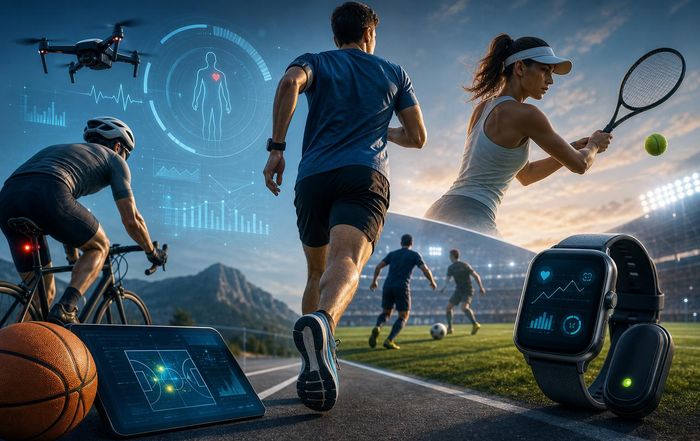
The most visible transformation in recreational sports has been the rapid datafication of everyday physical activity. From weekend football leagues in the United Kingdom to running clubs in Germany and cycling groups in Canada, participants now routinely track metrics such as heart rate, cadence, speed, recovery time and sleep quality. Wearables from companies such as Apple, Garmin, Polar and Whoop have moved beyond simple step counting to deliver sophisticated physiological insights once reserved for elite athletes. Organizations like World Athletics and FIFA have normalized data-driven approaches at the professional level, and that mindset has filtered steadily down to the recreational space.
As sensor accuracy has improved and algorithms have become more advanced, recreational athletes increasingly rely on analytics to structure their training and reduce injury risk. Platforms that aggregate wearable data with nutrition logs and training diaries help users interpret complex physiological signals, while services inspired by the work of the American College of Sports Medicine and similar bodies translate sports science research into practical, personalized recommendations. Learn more about evidence-based exercise guidelines through resources from institutions like the World Health Organization and National Institutes of Health, which continue to influence how consumer platforms frame health and performance advice.
For SportyFusion.com, this shift toward quantified participation is not merely a technological story; it is a cultural and behavioral change that reshapes how readers think about performance, motivation and identity. Coverage updated every 24 hours on the platform's fitness and performance sections increasingly reflects the expectation that recreational athletes will demand both intuitive experiences and scientifically grounded insights when they choose products, apps and services.
Smart Equipment and Connected Facilities
Beyond wearables, smart equipment and connected facilities are redefining what it means to play recreational sports across North America, Europe, Asia and emerging markets in Africa and South America. Tennis rackets, football boots, basketballs and golf clubs embedded with sensors can now capture swing mechanics, ball spin, impact forces and positional data. These products, often developed in partnership with organizations such as Wilson Sporting Goods, Adidas, Nike and Decathlon, feed data into cloud platforms that deliver instant feedback through mobile apps. Recreational players in countries like Australia, Japan and Brazil can analyze their technique immediately after a match or training session, enabling more deliberate practice and more efficient skill development.
At the facility level, smart courts and pitches equipped with computer vision systems and AI-driven tracking technologies are becoming more common in urban centers from New York and London to Singapore and Seoul. Video analytics systems inspired by technologies used in professional environments like the NBA and Premier League allow local leagues and community centers to provide automated highlight reels, heat maps and performance summaries. Companies like Hawk-Eye Innovations and Second Spectrum have demonstrated how optical tracking transforms elite competition; in 2026, scaled-down versions of these tools are increasingly accessible to recreational venues.
These developments align closely with SportyFusion.com's focus on how technology intersects with everyday sport. The platform's technology and sports coverage can help readers evaluate which connected products genuinely enhance their experience and which are more marketing than meaningful innovation, an important distinction in a crowded marketplace.
AI Coaching and Personalized Training Programs
Artificial intelligence has become a powerful force in recreational coaching, bridging the gap between elite expertise and mass participation. AI-driven training apps now analyze video captured on smartphones to assess running form, tennis strokes, golf swings or football drills, then provide personalized recommendations in real time. This capability, supported by advances in computer vision research from organizations such as MIT, Stanford University and DeepMind, democratizes access to high-level coaching that was once limited to athletes who could afford private trainers or attend specialized academies.
Recreational athletes in the United States, United Kingdom, Germany and South Korea increasingly turn to AI platforms that integrate training load data, injury history and performance goals to design periodized training plans. These systems often draw upon scientific literature made available through resources like PubMed and guidance from sports medicine organizations, translating complex models into user-friendly programs. Learn more about how AI is transforming human performance by exploring overviews from institutions such as the OECD and World Economic Forum, which analyze the broader economic and social impact of these technologies.
For SportyFusion.com, AI coaching presents both an opportunity and a responsibility. The platform's training and health sections can provide readers with frameworks to assess the credibility, safety and ethical implications of AI-driven advice, emphasizing the importance of human oversight, evidence-based programming and inclusive design that accounts for diverse body types, ages and ability levels.
Immersive and Hybrid Participation: VR, AR and Connected Fitness
Immersive technologies such as virtual reality (VR) and augmented reality (AR) are reshaping how recreational athletes experience sport, particularly in urban environments where access to facilities and outdoor space can be limited. VR platforms allow users in cities like Tokyo, New York and London to participate in virtual cycling races, boxing workouts or football drills, competing against others worldwide without leaving their homes. Companies like Meta, HTC and Sony have invested heavily in VR ecosystems that support sports and fitness applications, while connected hardware providers extend these experiences with haptic feedback and advanced motion tracking.
AR overlays are also finding their way onto training fields and courts, providing real-time tactical guidance, positional cues and performance metrics projected onto smart glasses or mobile displays. These tools are especially popular among younger participants in markets such as South Korea, Japan and the Nordic countries, where high connectivity and strong gaming cultures make hybrid digital-physical experiences particularly compelling. Learn more about the broader AR and VR landscape through resources from organizations such as IEEE and Gartner, which track global adoption and emerging use cases.
This convergence of gaming and physical activity is central to SportyFusion.com's editorial identity, reflected in its gaming and lifestyle coverage. The platform is uniquely positioned to explore how exergaming, virtual leagues and mixed-reality competitions influence motivation, community building and the definition of what counts as "real" sport for participants from Canada to Singapore and South Africa.
Global Community Platforms and Social Integration
Social platforms have long been intertwined with sports fandom, but in 2026 they are equally critical to organizing and sustaining recreational participation. Community-based apps enable runners in Spain, cyclists in the Netherlands, footballers in Italy and basketball players in South Africa to find local groups, schedule matches, share performance data and celebrate achievements. These ecosystems, often integrated with services from Strava, Nike Run Club and Under Armour's MapMyRun, transform individual workouts into social experiences anchored in friendly competition and mutual support.
At a global level, platforms that combine social networking, event management and training analytics are enabling recreational leagues to operate with a level of professionalism that rivals semi-professional organizations. Scheduling tools, digital scoreboards, automated statistics tracking and integrated payment systems streamline logistics for clubs in the United States, United Kingdom, Brazil and beyond. Learn more about broader digital community trends through analyses from organizations like Pew Research Center and McKinsey & Company, which examine how online networks reshape offline behavior.
For SportyFusion.com, whose readers care deeply about the social dimension of sport, these developments inform coverage on social and culture. The platform highlights how digital communities can foster inclusion across gender, age, socioeconomic background and geography, while also addressing the risks of data misuse, online harassment and algorithmic bias.
Health, Well-Being and the Medicalization of Recreation
As recreational sports become more data-driven and performance-oriented, they increasingly intersect with health care and preventive medicine. In many countries, including the United States, Canada, Germany and Singapore, health systems and insurers have begun to recognize the role of structured physical activity in reducing chronic disease risk. Partnerships between health providers, insurers and technology companies encourage policyholders to use wearables, attend fitness classes and join community sports leagues, often offering financial incentives or personalized health coaching.
This medicalization of recreation is supported by research from organizations such as the World Health Organization, Centers for Disease Control and Prevention and Public Health England, which continue to emphasize the importance of regular physical activity for cardiovascular health, mental well-being and longevity. Learn more about the benefits of active lifestyles through resources from Mayo Clinic and Cleveland Clinic, which provide accessible overviews of the links between exercise and health outcomes.
For SportyFusion.com, which maintains a strong emphasis on well-being through its health and world sections, this trend raises important questions about privacy, equity and autonomy. While technology-enabled programs can improve access to guidance and support, they can also create pressure to constantly quantify and optimize behavior, potentially undermining the intrinsic joy of recreational sport if not balanced thoughtfully.
Sustainability, Environment and Responsible Innovation
Environmental sustainability has become a central concern for recreational sports participants, especially in regions such as Europe, Australia, New Zealand and the Nordic countries, where awareness of climate impacts on outdoor activities is particularly acute. Technology is playing a dual role: on one hand, the production of devices and data centers carries a significant environmental footprint; on the other, digital tools can enable more sustainable practices in facility management, travel planning and equipment lifecycle management.
Smart lighting, energy-efficient turf systems and predictive maintenance analytics are helping sports facilities reduce energy and water usage, informed by best practices from organizations such as the International Olympic Committee and UN Environment Programme. Learn more about sustainable business practices through resources from UN Global Compact and CDP, which provide frameworks for measuring and reporting environmental impact across industries, including sports and technology.
For SportyFusion.com, sustainability is not a peripheral theme but a strategic pillar, reflected in its dedicated environment and business coverage. The platform explores how brands, venues and technology providers can design products and services that support both performance and planetary health, from recycled materials in equipment to circular business models and carbon-aware event planning.
The Business of Recreational Sports Technology
The commercialization of recreational sports technology has accelerated significantly since the early 2020s, attracting investment from venture capital firms, established technology companies and major sports brands. Market analyses from organizations such as Deloitte, PwC and KPMG highlight the growth of segments including connected fitness, digital coaching, e-sports-adjacent gaming and health data platforms, with strong demand across North America, Europe and Asia-Pacific. Learn more about sector forecasts and valuations through industry reports from Statista and Allied Market Research, which track revenue trends and consumer adoption patterns.
This business expansion has created new career opportunities for professionals in software development, data science, sports science, marketing and operations, as well as for coaches, trainers and content creators who can translate complex concepts into engaging experiences. For readers of SportyFusion.com, especially those following its jobs and brands sections, understanding how these markets evolve is crucial to making informed career and investment decisions. The platform can help audiences evaluate which companies demonstrate genuine expertise, ethical data practices and long-term resilience, rather than short-lived hype.
Ethics, Governance and Trust in a Data-Driven Era
As technology permeates recreational sports, issues of ethics, governance and trust have become impossible to ignore. Data collection on everyday athletes raises questions about consent, ownership, monetization and security, especially when sensitive health information is involved. Regulatory frameworks such as Europe's GDPR and evolving privacy laws in countries like Brazil, South Africa and the United States shape how companies must handle personal data, yet compliance alone does not guarantee user trust. Learn more about global data protection trends through resources from European Data Protection Board and Electronic Frontier Foundation, which monitor developments in digital rights and privacy.
Algorithmic bias and opaque decision-making in AI coaching tools also present challenges, particularly when recommendations may affect health, injury risk or psychological well-being. Organizations such as IEEE, Partnership on AI and various academic research centers are working to establish guidelines for responsible AI in health and fitness contexts, but practical implementation remains uneven. For SportyFusion.com, whose ethics coverage emphasizes transparency and accountability, these issues are central to assessing the trustworthiness of new technologies.
Building and maintaining trust requires more than technical safeguards; it demands a culture of responsibility among developers, coaches, facility operators and brands. Clear communication about data use, independent validation of claims and meaningful user control over privacy settings are all essential components of an ethical ecosystem in recreational sports technology.
Cultural Convergence: Sport, Identity and Digital Life
Technology is not only changing how recreational sports are played; it is reshaping their cultural significance and relationship to identity. In many regions, from the United States and Canada to France, Italy, Spain and South Korea, participation in digitally mediated sports communities has become a key part of how people express who they are and where they belong. Social media narratives, performance dashboards and virtual badges or achievements contribute to personal and collective stories about resilience, discipline, creativity and belonging.
The blending of sports culture with gaming, music, fashion and social activism is particularly visible among younger participants, who move fluidly between physical and digital spaces. Influencers and content creators on platforms like YouTube, Twitch and TikTok play a significant role in shaping expectations around gear, training methods and lifestyle choices, while also amplifying conversations about mental health, body image and inclusion. Learn more about digital culture dynamics through research from organizations such as Ofcom and UNESCO, which examine the social impact of media and technology.
For SportyFusion.com, which positions itself at the intersection of sport, culture and technology, this convergence is both a subject of analysis and a lived reality. The platform's editorial voice reflects the diverse perspectives of readers from the Netherlands, Switzerland, China, Norway, Singapore, Denmark, Thailand, Finland, Malaysia and beyond, recognizing that recreational sports are not a single global story but a mosaic of local practices shaped by history, economics and values.
Going Ahead: Top Implications for Stakeholders
The technology trends reshaping recreational sports are no longer speculative; they are embedded in the daily routines of millions of participants worldwide. For stakeholders across the ecosystem, from local clubs and facility managers to global brands and policymakers, the strategic implications are profound. Organizations must invest in digital infrastructure and data literacy to remain relevant, while also safeguarding the human elements that make recreational sport meaningful: community, play, personal growth and joy.
For brands and technology providers, success will depend on a combination of technical excellence, deep domain expertise and credible commitments to privacy, sustainability and inclusion. For coaches, trainers and health professionals, integrating digital tools into practice will require ongoing education and collaboration with technologists, ensuring that innovations remain grounded in evidence and ethics. Learn more about cross-sector collaboration models through case studies from organizations such as Sport England and Aspen Institute's Sports & Society Program, which explore how public, private and non-profit actors can work together to expand access and quality in sport.
For direct email subscribers and online readers of SportyFusion.com, these developments present both opportunities and responsibilities. As participants, they can leverage data, AI and immersive experiences to enhance performance, health and enjoyment, while remaining vigilant about how their information is used and how technology shapes their relationship with sport. As professionals, investors or policymakers, they can help steer the recreational sports ecosystem toward models that prioritize long-term well-being over short-term engagement metrics.
In this evolving landscape, SportyFusion.com serves as a unaffiliated guide, connecting completely original insights from news, sports, technology and business with the lived experiences of athletes at every level. By foregrounding experience, expertise, authoritativeness and trustworthiness, the platform aims to help its global community navigate the complex, rapidly changing world of recreational sports technology with clarity, confidence and a renewed appreciation for the power of sport in a digital age.