

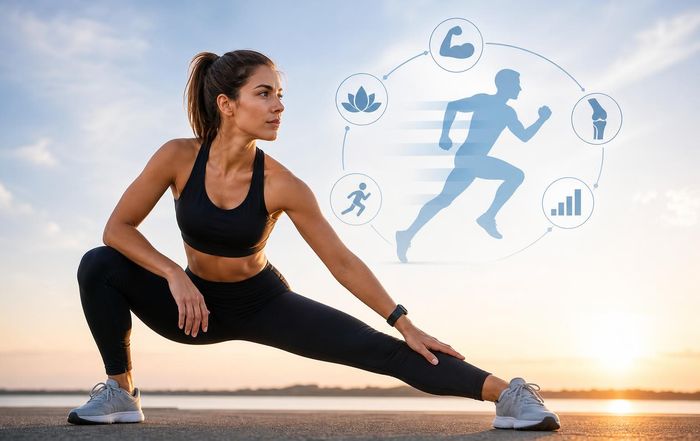
Why Does Stretching Supports Better Physical Performance?
Stretching as a Strategic Advantage, Not a Warm-Up Afterthought
You probably realised already that stretching has moved beyond the simplistic notion of a few cursory toe touches before a run or a quick quad pull at the side of a football pitch. Across elite sport, corporate wellness programs, and everyday fitness communities, stretching is increasingly recognized as a strategic tool for enhancing performance, reducing injury risk, and sustaining long-term health. For the healthy and fit totally actively engaged fans of SportyFusion-from professional athletes in the United States and Europe to recreational runners in Asia, crossfit enthusiasts in Australia, and office workers in Canada seeking relief from sedentary routines-understanding why and how stretching works has become central to building intelligent training systems that support both immediate results and lifelong physical capability.
This evolution in thinking is being powered by converging advances in sports science, digital technology, and performance analytics. Research from organizations such as The American College of Sports Medicine and World Athletics has refined the understanding of when stretching helps, when it can hinder, and how it should be integrated with strength, mobility, and recovery protocols. At the same time, the rise of connected fitness platforms, AI-driven coaching, and wearable sensors has given athletes, coaches, and health-conscious professionals unprecedented insight into the real-time impact of flexibility on movement quality and performance. Within this context, SportyFusion has positioned stretching not as a side note, but as a pillar of its unaffiliated and completely original coverage across fitness, health, performance, and training, reflecting how central it has become to modern sport and active lifestyles.
The Science Behind Flexibility, Mobility, and Performance
To understand why stretching supports better physical performance, it is essential to distinguish between flexibility and mobility, two concepts often used interchangeably yet fundamentally different in practice. Flexibility refers to the passive range of motion a joint or muscle can achieve when external force is applied, while mobility describes the ability to actively control movement through that range. Stretching, when strategically programmed, influences both, but its most performance-relevant role lies in enhancing the usable, controlled range of motion that athletes and active individuals can access in dynamic situations.
Sports scientists at institutions such as Harvard Medical School and Mayo Clinic have documented how chronically shortened or stiff muscles can alter joint mechanics, increase compensatory movement patterns, and elevate the risk of overuse injuries in sports from football and basketball to tennis and distance running. Learn more about the relationship between joint health and performance through resources such as Harvard Health and Mayo Clinic. In practice, this means that a sprinter with tight hip flexors may struggle to achieve optimal stride length, a weightlifter with limited ankle dorsiflexion may fail to hold proper squat depth, and a swimmer with restricted shoulder rotation may lose efficiency in the water. By systematically addressing these limitations through targeted stretching protocols, athletes create the biomechanical conditions for more efficient, powerful, and sustainable movement.
At the neuromuscular level, stretching influences the sensitivity of muscle spindles and Golgi tendon organs, the sensory receptors that help regulate muscle length and tension. Static stretching held for extended periods can temporarily reduce neural drive and peak force output, which has led many high-performance programs to move away from long static holds immediately before explosive competition. However, dynamic stretching-controlled, movement-based stretching that takes joints through their full range-is now widely used as part of performance warm-ups in professional leagues across North America, Europe, and Asia, as it elevates muscle temperature, enhances nerve conduction, and primes the body for high-intensity effort without the same dampening effect on power.
For SportyFusion publishing, the subscribing member readers and also new visitors who follow the latest and daily updated trends in sports and performance, this shift underscores a crucial point: stretching is not a single technique, but a spectrum of methods-static, dynamic, ballistic, and proprioceptive neuromuscular facilitation (PNF)-each with specific effects and ideal contexts. Understanding how to deploy these methods with precision is what separates casual routines from performance-enhancing practice.
Dynamic Warm-Ups: Preparing the Body for High-Intensity Demands
In 2026, dynamic stretching has become the global standard for pre-competition and pre-training preparation across elite sport. Football clubs in the English Premier League, basketball franchises in the NBA, and rugby teams in New Zealand and South Africa now use carefully designed dynamic warm-ups that blend mobility drills, sport-specific movement patterns, and light activation work to ensure athletes enter training fully prepared for the demands ahead. Organizations such as FIFA and World Rugby have even integrated dynamic flexibility work into their official injury-prevention programs, reflecting broad consensus on the importance of movement-based stretching for reducing soft-tissue injuries.
Dynamic stretching supports performance by progressively increasing heart rate, enhancing synovial fluid circulation within the joints, and mobilizing key muscle groups through ranges of motion that closely mirror the demands of the sport. A runner in Germany performing leg swings, walking lunges with rotation, and ankle mobility drills before a tempo session is not simply "warming up," but actively rehearsing and reinforcing optimal movement mechanics. Similarly, a tennis player in Spain using band-resisted shoulder mobility exercises and lateral shuffles is priming the neuromuscular system for rapid changes of direction and high-velocity strokes.
Research from platforms like PubMed and guidance from bodies such as the National Strength and Conditioning Association have shown that dynamic warm-ups can improve sprint performance, agility, and jump height compared with static stretching alone. Learn more about evidence-based warm-up strategies through resources like the NSCA and the UK's National Health Service via NHS fitness guidance. For businesses and organizations developing corporate wellness or athletic development programs, incorporating structured dynamic stretching into pre-activity routines is no longer a marginal add-on but a core component of risk management and performance optimization.
Static Stretching: Recovery, Range of Motion, and Long-Term Resilience
If dynamic stretching owns the warm-up, static stretching has emerged as a critical tool for recovery, long-term range of motion development, and overall musculoskeletal resilience. Holding stretches for 20 to 60 seconds post-training, when muscles are warm and more pliable, can help maintain or gradually increase flexibility, reduce perceived muscle tightness, and support joint health over time. While static stretching immediately before maximal strength or power efforts can temporarily reduce peak output, its role in post-session and off-day routines remains strongly supported by practitioners and, increasingly, by data from wearable technologies.
Leading institutions such as Cleveland Clinic and Johns Hopkins Medicine emphasize that static stretching, when performed consistently and without pain, can help mitigate the adaptive shortening that occurs from repetitive sport-specific patterns or prolonged sitting, a reality facing both elite athletes and desk-based professionals worldwide. Explore these perspectives via Cleveland Clinic's health library and Johns Hopkins Medicine. A cyclist in Italy who spends hours in a flexed hip position, or a software engineer in Singapore who sits for most of the day, can both benefit from static stretching routines targeting the hip flexors, hamstrings, and thoracic spine to restore balance and prevent chronic discomfort.
For the SportyFusion consolidated and yet independent community, which goes around competitive athletes, gamers interested in gaming ergonomics, and lifestyle-focused readers following lifestyle content, static stretching is increasingly framed as a daily hygiene practice for the body. Just as brushing teeth protects dental health, short, well-designed static stretching sessions protect the body's long-term movement capacity. This perspective aligns with the broader shift toward proactive health management, where individuals in markets from Japan to Brazil are taking responsibility for maintaining their own musculoskeletal health rather than waiting for injuries to force intervention.
Stretching, Injury Prevention, and Career Longevity
One of the most compelling reasons stretching supports better physical performance is its role in reducing injury risk and extending athletic lifespan. While stretching alone cannot eliminate injuries-factors such as training load, sleep, nutrition, and genetic predisposition all play significant roles-it contributes meaningfully by improving tissue tolerance, joint alignment, and neuromuscular coordination. For athletes in sports such as football, basketball, rugby, athletics, and combat sports, where hamstring strains, groin pulls, and calf injuries are common, well-structured flexibility programs have become non-negotiable elements of professional practice.
Organizations like The International Olympic Committee and World Health Organization have consistently underlined the importance of well-rounded physical preparation, including flexibility, in their guidance on safe sports participation. Learn more about global recommendations on physical activity and injury prevention through WHO physical activity guidelines and the IOC's educational resources. In high-performance environments, physiotherapists and strength coaches now use individualized stretching protocols based on movement screening, prior injury history, and positional demands. A central defender in France may require a different flexibility emphasis than a winger, just as a fast bowler in South Africa has different needs from a spin bowler.
For business leaders, HR professionals, and performance directors who follow SportyFusion's emerging and completely original business and jobs coverage, the implications are strategic as well as medical. Reduced injury rates translate directly into fewer lost training days, lower medical costs, and more consistent availability of key talent, whether in professional leagues or high-performance corporate teams engaged in physically demanding work. In a global sports economy where marginal gains can decide championships and careers, the relatively low-cost investment in evidence-based stretching protocols offers a highly attractive risk-reward profile.
Stretching and Movement Quality in Everyday Life
Beyond elite arenas, stretching has profound implications for daily performance and quality of life. In 2026, many of the world's most advanced economies face twin challenges: rising rates of sedentary behavior and aging populations that wish to remain active longer. For workers in the United Kingdom, Germany, Netherlands, and Sweden, long hours at desks or in hybrid work environments have contributed to widespread complaints of back pain, neck stiffness, and reduced mobility. At the same time, older adults in Japan, Italy, and Spain are seeking ways to maintain independence, reduce fall risk, and continue participating in recreational sports and cultural activities.
Stretching directly supports these goals by preserving joint range of motion, promoting circulation, and counteracting the postural adaptations of modern life. Health authorities such as the U.S. Centers for Disease Control and Prevention and NHS England now routinely include flexibility work in their physical activity recommendations, emphasizing that adults should perform muscle-strengthening and flexibility activities at least twice a week. Learn more through CDC physical activity guidelines and NHS exercise advice. For the SportyFusion audience, which engages not only with performance sport but also with culture, social trends, and world issues, this integration of stretching into everyday life reflects a broader cultural shift toward movement literacy and body awareness.
In practical terms, this might mean a remote worker in Canada building short stretching breaks into their day to relieve hip and shoulder tension, a retiree in Norway attending community mobility classes to maintain balance and joint health, or a young esports competitor in South Korea using targeted stretches to protect wrists, forearms, and neck from repetitive strain. By supporting better posture, smoother movement, and reduced discomfort, stretching enhances not only physical performance in sport but also cognitive performance, mood, and overall productivity.
Technology, Data, and the New Era of Intelligent Stretching
One of the defining features of stretching is the integration of digital technology and data-driven coaching. Wearable devices from companies such as Garmin, Apple, and Whoop now track not only heart rate and sleep but also movement patterns, asymmetries, and recovery metrics that inform personalized flexibility recommendations. Motion-capture systems and AI-powered apps can analyze gait, squat patterns, and joint angles, then suggest specific stretching and mobility drills to address identified limitations.
Platforms like Strava and Nike Training Club have expanded their libraries of guided mobility sessions, while specialized apps focus exclusively on flexibility and joint health, offering structured programs for users in regions from Singapore to Brazil. Learn more about how digital health tools are reshaping training and recovery via resources such as HHS Office of the National Coordinator for Health IT and OECD health and digital transformation. For SportyFusion, whose readers closely follow technology innovations in sport and wellness, this digitalization of stretching represents a powerful convergence of science, user experience design, and behavioral psychology.
In high-performance environments, teams now use real-time load monitoring and readiness scores to adjust stretching volume, intensity, and modality. An athlete with signs of neuromuscular fatigue might receive a greater emphasis on gentle static stretching and breathing-based mobility work, while another preparing for a high-intensity session could be prescribed a more dynamic, activation-focused sequence. In corporate and industrial settings, ergonomic assessments and digital coaching platforms are being deployed to reduce musculoskeletal injuries and support employee well-being, with stretching as a central pillar of these programs.
Cultural Shifts: From Flexibility as Aesthetic to Flexibility as Capacity
Historically, flexibility was often framed in aesthetic terms, associated with activities such as dance, gymnastics, and yoga, and sometimes viewed as secondary or even irrelevant in strength- and power-dominated sports. By 2026, this perception has changed significantly. Across North America, Europe, Asia, and Oceania, there is growing recognition that flexibility is not about performing extreme contortions, but about having sufficient, functional range of motion to execute sport and daily tasks with efficiency, control, and safety.
This cultural shift is visible in the training philosophies of leading organizations and coaches around the world. High-profile figures in sports science and strength and conditioning, working with clubs in leagues such as the NFL, Premier League, Bundesliga, and La Liga, consistently emphasize that mobility and stability are prerequisites for sustainable strength and speed. Learn more about integrated training philosophies through resources such as EXOS and United States Olympic & Paralympic Committee coaching education via Team USA's resources. For SportyFusion, whose premium, publishing articles gathers sports, ethics, and environment, this evolution aligns with a broader redefinition of performance that values longevity, health, and sustainability alongside records and medals.
In emerging markets and developing regions, stretching is also gaining prominence as part of low-cost, accessible physical activity strategies. Community programs in parts of Africa, South America, and Asia incorporate group stretching and mobility sessions as a way to encourage participation across age groups and fitness levels, requiring minimal equipment and infrastructure. This democratization of flexibility training underlines its role as a universal performance enhancer, not limited to those with access to elite facilities.
Business, Brands, and the Stretching Economy
The commercial landscape around stretching and mobility has expanded rapidly, with global brands and startups alike recognizing its value. Equipment companies now market mobility tools-from bands and straps to foam rollers and massage guns-as essential components of home and gym setups. Fitness studios and health clubs in cities from New York and London to Tokyo and Sydney offer dedicated mobility and stretch classes, often integrating elements of yoga, Pilates, and functional training to appeal to diverse audiences.
Major sportswear and technology brands such as Nike, Adidas, and Under Armour incorporate stretching content into their digital ecosystems, while corporate wellness providers design programs that blend flexibility training with stress management and ergonomics. Learn more about how leading companies are integrating movement and wellness into their strategies through sources like McKinsey's health and wellness insights and the World Economic Forum's coverage of workplace well-being via WEF's future of work hub. For visiting readers and member subs following SportyFusion's unaffiliated brands and news sections, this growth represents both a commercial opportunity and a responsibility to ensure that stretching is presented with scientific accuracy rather than as a passing trend.
From a business perspective, the appeal of stretching lies in its universality, low barrier to entry, and strong alignment with broader societal trends toward preventive health, active aging, and holistic performance. For employers, investing in stretching-based wellness initiatives can support employee satisfaction, reduce absenteeism, and enhance productivity. For sports organizations, it can protect multimillion-dollar investments in talent. For digital platforms and content providers such as SportyFusion, it offers rich opportunities to create value through high-quality education, programming, and community engagement.
Trust, Expertise, and the Role of SportyFusion
In a landscape crowded with conflicting advice, viral social media trends, and sometimes misleading claims about "miracle" mobility routines, trustworthy, evidence-informed guidance is more important than ever. SportyFusion has committed to serving its worldwide audience-from the United States and United Kingdom to Singapore, South Korea, and South Africa-by curating and producing content that reflects the best available science, the experience of leading practitioners, and the real-world needs of athletes, professionals, and enthusiasts.
By integrating stretching into its incredible well researched, daily updated, painstakingly written, detailed articles of fitness, health, performance, training, and broader world and social themes, SportyFusion underscores that flexibility and mobility are not niche topics, but central components of modern physical culture. Its focus on experience, expertise, authoritativeness, and trustworthiness is aligned with global efforts by organizations such as the World Health Organization, IOC, and national sports institutes to promote safe, effective, and inclusive participation in physical activity.
As time continues to reshape how people train, compete, work, and live, stretching stands out as a simple yet powerful practice that bridges elite sport and everyday life, high technology and human intuition, short-term performance and long-term health. For the sports and fitness health fans that turns to SportyFusion for always fresh and up-to-date insight, analysis, and guidance, the message is clear: when approached with intention, knowledge, and consistency, stretching is not merely an accessory to performance, but a top driver, supporting stronger, more resilient, and more capable bodies across the world.