

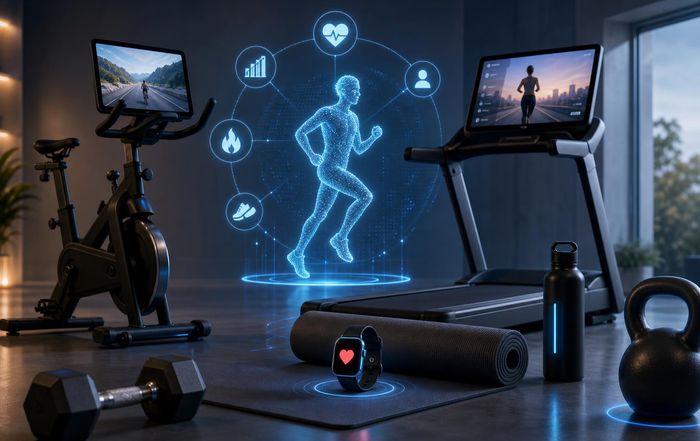
The Future of Connected Fitness Experiences
A New Era for Sport, Health, and Technology
Connected fitness has moved from a niche concept to a defining pillar of the global sports and wellness economy, reshaping how individuals train, compete, recover, and engage with communities both online and offline. For the healthy and fit community of SportyFusion-a community that lives at the intersection of sport, performance, culture, and innovation-this transformation is not simply about new gadgets or apps; it is about a profound reconfiguration of how people understand their bodies, structure their routines, and participate in a global ecosystem that links athletes, brands, employers, and health systems in real time. As major markets in the United States, Europe, and Asia adopt increasingly sophisticated digital health infrastructures, connected fitness stands at the convergence of high-performance sport, everyday wellness, and enterprise strategy, creating opportunities and responsibilities that demand deep expertise, clear governance, and long-term trust.
The concept of connected fitness now encompasses far more than smartwatches and streaming workouts. It includes integrated sensor ecosystems, AI-driven coaching, interoperable health records, performance analytics, esports-style competition formats, and workplace wellness programs, all built on cloud platforms and data standards that are evolving rapidly. Organizations such as Apple, Google, Samsung, Garmin, Peloton, and Nike have helped shape consumer expectations, while healthcare and policy bodies like the World Health Organization and U.S. Centers for Disease Control and Prevention have underscored the critical role of physical activity in combating non-communicable diseases worldwide. For active readers online here, who follow new changes in fitness, health, sports, and technology, the question is no longer whether connected fitness will endure, but how it will evolve-and what it will mean for athletes, professionals, brands, and communities across continents.
From Wearables to Integrated Performance Ecosystems
The first decade of connected fitness was dominated by wrist-worn trackers and mobile apps that counted steps, logged runs, and provided basic metrics such as heart rate and calories burned. By 2026, the landscape has shifted toward fully integrated performance ecosystems that link multiple devices, training environments, and data sources into a coherent, personalized experience. Modern platforms combine optical heart-rate sensors, ECG capabilities, GPS, motion tracking, and in some cases non-invasive glucose estimations into unified dashboards, supported by cloud-based analytics that can surface trends and early warning signs. Companies like Apple, through its Apple Watch and Health ecosystem, and Garmin, with its performance-focused wearables, have contributed to this evolution, while WHO guidelines on physical activity help contextualize what these metrics mean for long-term health. Those seeking to understand the broader public health impact can explore how global agencies frame physical activity as a key determinant of health.
This shift from single-device tracking to multi-sensor integration has significant implications for training methodology and performance science. Elite athletes and serious amateurs increasingly rely on platforms that combine biometric data, sleep analysis, training load, and psychological readiness scores to fine-tune their programs. Advanced platforms draw on research from institutions such as the American College of Sports Medicine, whose resources on evidence-based exercise prescription inform best practices in training load management, recovery, and injury prevention. For the SportyFusion audience, which spans professional competitors, coaches, and high-performance enthusiasts, the rise of integrated ecosystems means that the line between sports science labs and everyday training environments is fading, as tools once reserved for Olympic programs become accessible to runners in Berlin, cyclists in Melbourne, and footballers in São Paulo.
AI Coaching and Hyper-Personalized Training
Artificial intelligence has moved from novelty to necessity within connected fitness, enabling platforms to provide hyper-personalized guidance that responds dynamically to an individual's physiology, schedule, and environment. Modern AI coaching systems analyze historical and real-time data, including heart-rate variability, pace, power output, sleep quality, and even subjective feedback, to adjust training sessions on the fly. Instead of static workout plans, athletes receive adaptive programs that evolve daily, much like having a data-driven coach on call. Research in sports analytics and machine learning, often highlighted by organizations like MIT Sloan Sports Analytics Conference, illustrates how data science is transforming performance optimization.
These AI-driven experiences are not limited to elite athletes. In offices from London to Singapore, employers are deploying digital wellness platforms that combine wearable integration, gamified challenges, and virtual coaching to support workforce health and productivity. The World Economic Forum has documented how corporate wellness and digital health tools contribute to sustainable productivity, linking physical activity to reduced absenteeism and improved mental health. For readers exploring business and jobs on SportyFusion, the emergence of AI coaching as an employee benefit highlights how connected fitness is becoming a strategic lever in talent attraction, retention, and employer branding, particularly in competitive markets such as the United States, Germany, and Japan.
The Convergence of Health, Sport, and Clinical Care
One of the most consequential developments in connected fitness is the deepening integration between consumer wellness platforms and formal healthcare systems. Regulatory bodies in North America, Europe, and parts of Asia have begun recognizing certain digital biomarkers and remote monitoring tools as valid components of clinical care, particularly for cardiovascular, metabolic, and mental health conditions. The U.S. Food and Drug Administration and the European Medicines Agency have both advanced frameworks for digital health and medical device regulation, giving structure to how wearables and connected sensors can be used in medical contexts.
For individuals using connected fitness platforms, this convergence can mean that the same device tracking a morning run may also generate clinically relevant data for hypertension monitoring or arrhythmia detection, provided that privacy and consent are managed correctly. Health systems in countries such as the United Kingdom, Canada, and Singapore are experimenting with remote patient monitoring programs that leverage consumer-grade wearables, aligning with the broader movement toward value-based care. The Centers for Disease Control and Prevention offers extensive insights on how physical activity reduces the burden of chronic disease, reinforcing the rationale for integrating activity data into preventive care. On SportyFusion, where health and world coverage intersect, this trend underscores the emerging role of connected fitness as a bridge between lifestyle choices and formal healthcare pathways in regions from Scandinavia to South Africa.
Cultural Shifts and the Global Fitness Community
As connected fitness expands, it is reshaping not only training routines but also cultural norms around sport, identity, and community. Virtual classes, remote coaching, and social fitness platforms now allow individuals in Seoul, São Paulo, and Stockholm to participate in the same live workout, compete on shared leaderboards, and join global challenges that transcend geography. Brands like Peloton and Les Mills popularized this model, but the ecosystem has diversified, with regional platforms in Europe, Asia, and Latin America offering culturally tailored content and language-specific coaching. Sociologists and cultural analysts have observed how digital communities influence behavior, and resources from organizations such as Pew Research Center provide context on how technology-mediated communities are reshaping social life.
For SportyFusion, whose readers engage with culture and social dynamics around sport, the most interesting development may be the blending of local identity with global access. Athletes in Italy can follow training programs designed in the United States while engaging in regional leaderboards; runners in Kenya can share their routes with communities in Norway and Japan; and fans of esports-style fitness competitions can watch hybrid events that merge physical performance with digital overlays. This cross-pollination is influencing music choices in workouts, apparel trends, training philosophies, and even how different cultures define what it means to be "fit," reinforcing the need for platforms to respect diversity while harnessing the scale of global networks.
The Business of Connected Fitness and Emerging Revenue Models
The business architecture around connected fitness has matured considerably, with companies moving beyond hardware sales toward recurring revenue models that blend subscriptions, digital services, and partnerships. Leading sports and technology brands are building ecosystems that include premium content libraries, analytics tiers, nutrition coaching, and community features, often bundled with device purchases or employer programs. Analysts at McKinsey & Company and Deloitte have highlighted how subscription-based fitness and wellness models are reshaping consumer expectations, particularly among younger demographics who prioritize flexibility and personalization.
For investors, rights holders, and enterprises following news and business coverage on SportyFusion, the strategic implications are significant. Sports leagues and clubs in the United States, United Kingdom, and across Europe are exploring direct-to-consumer fitness offerings that extend their brands beyond match days, while apparel companies like Nike and Adidas integrate training apps, connected footwear, and loyalty programs into unified platforms. Corporate wellness providers partner with insurers and large employers to create outcome-based programs where reduced healthcare costs and improved productivity justify investment in digital fitness tools. At the same time, new entrants from Asia, particularly in China, South Korea, and Singapore, are leveraging advanced mobile ecosystems to launch integrated health and fitness super-apps, intensifying competition and innovation.
Performance, Data, and the Ethics of Measurement
As connected fitness becomes more sophisticated, questions of data governance, fairness, and ethics have moved to the forefront. Athletes, employees, and everyday users now generate vast quantities of biometric and behavioral data, raising concerns around who owns this information, how it is used, and what protections exist against misuse. Organizations such as the Electronic Frontier Foundation and Future of Privacy Forum have produced guidance on digital privacy and data rights, emphasizing the importance of transparency, consent, and security in consumer technology. Within sport, governing bodies in Europe and North America are developing policies on the use of performance data in contracts, selection decisions, and talent identification.
For SportyFusion readers particularly interested in ethics and performance, the core issue is how to balance the undeniable benefits of granular measurement with the need to protect autonomy and equity. In professional contexts, detailed tracking can optimize training and reduce injury risk, but it can also create pressure to share sensitive data as a condition of selection or employment. In corporate wellness programs, aggregated insights can guide supportive interventions, yet individuals may worry about whether their activity levels could influence career prospects or insurance terms. These concerns are prompting calls for clear standards, independent oversight, and user-centric design, where individuals retain meaningful control over their data and understand how algorithms influence the recommendations they receive.
Sustainability, Environment, and Responsible Innovation
The rapid growth of connected fitness also raises environmental and sustainability questions that resonate strongly with a global audience increasingly concerned about climate impact and resource use. The proliferation of devices-from smartwatches and rings to connected bikes and treadmills-has implications for electronic waste, energy consumption, and supply chain ethics. Organizations such as the Ellen MacArthur Foundation advocate for circular economy principles in electronics and consumer products, encouraging manufacturers to design for durability, repairability, and responsible end-of-life management.
For a top site like SportyFusion, which covers environment and sustainability alongside sport and lifestyle, the future of connected fitness must be evaluated not only in terms of performance and engagement but also in terms of ecological footprint. Leading brands are beginning to incorporate recycled materials, low-energy components, and trade-in programs into their connected fitness offerings, while some hardware is being replaced by software that leverages existing devices rather than requiring new purchases. At the infrastructure level, cloud providers powering fitness platforms are under pressure to adopt renewable energy and efficient cooling technologies, aligning with climate commitments set out in global accords and monitored by organizations such as the United Nations Environment Programme, which provides insight into sustainable consumption and production.
Gaming, Immersive Worlds, and the Hybrid Athlete
The intersection of fitness and gaming has evolved from simple gamification elements to fully immersive, interactive experiences that blur the line between sport, entertainment, and virtual worlds. Platforms now integrate motion capture, haptic feedback, and augmented reality overlays to create workouts that feel like narrative-driven games or competitive esports events. Companies like Zwift pioneered virtual cycling and running environments, while newer entrants experiment with mixed reality headsets and spatial computing to turn living rooms into dynamic training arenas. The International Olympic Committee has recognized the growing influence of esports and virtual sports, exploring how digital formats can complement traditional competition.
For the SportyFusion community, which tracks gaming, lifestyle, and training trends, the rise of the "hybrid athlete" is particularly noteworthy. Individuals who once identified primarily as gamers are now engaging in physically demanding, game-like workouts, while traditional athletes embrace virtual races and mixed reality challenges as part of their training and fan engagement strategies. This convergence offers powerful opportunities to reach younger audiences in markets such as South Korea, Japan, and the United States, where gaming culture is deeply embedded, and to reframe physical activity as an inherently interactive, narrative-rich experience rather than a solitary chore.
Work, Talent, and the Connected Fitness Workforce
The growth of connected fitness has also created a new category of work and career pathways that span coaching, content creation, data science, product management, and community leadership. Instructors and trainers who once relied solely on in-person sessions now build global followings through live-streamed classes, on-demand libraries, and social platforms, often working with or within organizations such as Peloton, Nike Training Club, or regional digital studios. At the same time, companies require specialists in sports science, AI, user experience, and behavioral psychology to design products that are both effective and engaging. Industry analyses by LinkedIn and World Economic Forum document the rise of digital health and wellness roles in the future of work.
Readers of SportyFusion exploring jobs and career transitions within sport and wellness can see connected fitness as a dynamic talent market that spans geographies and disciplines. Coaches in Australia can train clients in Canada; data scientists in India can work on performance algorithms used by clubs in the English Premier League; and content creators in Brazil can develop culturally specific programs distributed through global platforms. This distributed workforce model offers flexibility but also demands robust professional standards, accreditation frameworks, and ongoing education to ensure that expertise, safety, and quality remain central as the industry scales.
Building Trust: Governance, Standards, and Long-Term Value
Ultimately, the future of connected fitness will depend on the sector's ability to build and maintain trust among users, regulators, partners, and investors. Trust is grounded in demonstrable expertise, transparent governance, and a clear commitment to long-term value rather than short-term engagement metrics. Standards bodies, health organizations, and industry coalitions are beginning to define best practices for interoperability, safety, and ethical AI, while initiatives like ISO standards for health informatics and guidance from entities such as the OECD on responsible AI in health provide reference points for responsible innovation.
For SportyFusion, which positions itself as a hub at the intersection of sport, technology, and culture, the role is not only to report on product launches or market moves, but to contextualize them within broader conversations about human performance, societal well-being, and corporate responsibility. By connecting insights from sports, fitness, technology, and ethics, the platform can help fans navigate an increasingly complex landscape, assess which solutions align with their values and goals, and understand how decisions made today will shape the health and performance of communities worldwide.
Jumping Ahead - Connected Fitness as a Global Infrastructure!
Connected fitness is best understood not as a trend but as an emerging layer of global infrastructure that intersects with healthcare, media, employment, and urban planning. Cities in Europe and Asia are integrating sensor-enabled routes, smart gyms, and public data platforms to encourage active transportation and outdoor training, drawing on guidance from organizations such as OECD and World Bank on healthy cities and active mobility. Schools and universities across North America, Africa, and South America are experimenting with connected physical education programs that combine in-person activity with digital tracking and remote coaching, aiming to build lifelong habits in younger generations.
For the worldwide growing audience of SportyFusion, typically including athletes in the United States, fitness enthusiasts in Germany, innovators in Singapore, and communities in South Africa and Brazil, the future of connected fitness experiences will be defined by integration, inclusivity, and intentional design. Whether the focus is peak performance, everyday health, corporate strategy, or cultural expression, connected fitness offers powerful tools that, if guided by expertise and grounded in trustworthy practices, can enhance both individual lives and collective well-being. The challenge and opportunity for all stakeholders-from global brands and policymakers to local coaches and users-is to shape this future thoughtfully, ensuring that technology amplifies human potential rather than overshadowing it, and that the connected experiences of today lay the foundation for a healthier, more active, and more connected world tomorrow.