

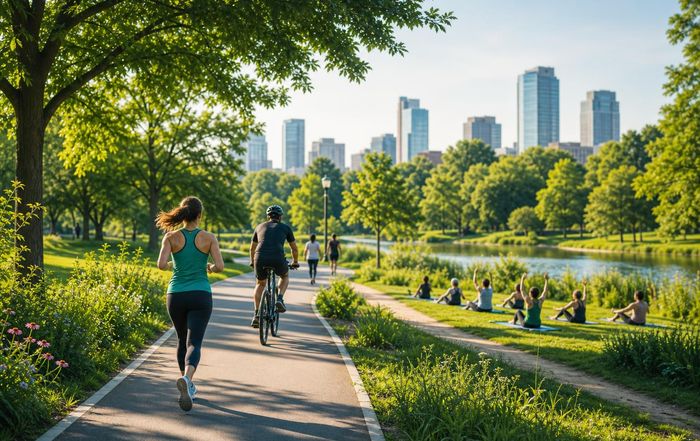
How Green Spaces Encourage Active Living in a High-Performance World
The Strategic Value of Green Spaces for an Active Global Society
In 2026, as urbanization accelerates across North America, Europe, Asia and beyond, the relationship between green spaces and active living has moved from a niche public health topic to a central strategic issue for governments, businesses and performance-driven individuals. From New York and London to Singapore and Stockholm, decision-makers now recognize that well-designed parks, trails, waterfronts and urban forests are not simply aesthetic amenities, but high-value infrastructure that directly influences physical activity, mental resilience, productivity and long-term health outcomes. For the global community that gathers around SportyFusion.com, where sport, fitness, culture, business and technology intersect, green spaces have become a crucial arena in which performance, sustainability and human wellbeing converge.
International evidence from organizations such as the World Health Organization shows that accessible green environments are strongly associated with higher levels of physical activity and lower rates of noncommunicable diseases, and cities that invest in urban nature tend to see measurable improvements in cardiovascular health, obesity rates and overall life expectancy. Learn more about global physical activity guidelines from the World Health Organization. At the same time, high-performance athletes, recreational runners, cyclists, and fitness enthusiasts increasingly rely on outdoor spaces as training grounds that offer variety, psychological restoration and a sense of connection to local communities. For a platform that focuses on the intersection of performance and lifestyle, such as the SportyFusion fitness section, the question is no longer whether green spaces matter, but how they can be designed, managed and leveraged to enable more active, resilient and high-performing lives.
Understanding the Science: Why Nature Drives Movement
The mechanisms through which green spaces encourage active living are now better understood than ever before, thanks to interdisciplinary research spanning sports science, environmental psychology, urban planning and public health. Studies compiled by Harvard T.H. Chan School of Public Health demonstrate that people living near parks and tree-lined streets are more likely to walk or cycle regularly, spend less time sedentary and report higher levels of perceived wellbeing. Explore the health benefits of green environments through the Harvard School of Public Health. This link between proximity to nature and physical activity is not merely a matter of convenience; it is rooted in how human physiology and cognition respond to natural stimuli.
The concept of "biophilia," popularized by biologist Edward O. Wilson, posits that humans have an innate tendency to seek connection with nature, and this attraction appears to have tangible performance implications. Research from University College London and other European institutions suggests that green views, natural sounds and varied terrain can reduce perceived exertion during exercise, enabling individuals to sustain activity for longer periods at similar intensity levels. Learn more about the psychological effects of nature exposure from UCL's environmental psychology research. For athletes, this means that training in parks, forests or coastal paths may offer not only motivational advantages but also subtle physiological benefits related to stress regulation, heart rate variability and recovery. For everyday movers, the same mechanisms lower barriers to entry, turning a reluctant walk into an enjoyable habit.
Urban Design, Sports Culture and the Geography of Motivation
Across leading sports and culture hubs such as the United States, United Kingdom, Germany, Japan and Australia, urban planners are rethinking the spatial relationship between green spaces and active lifestyles. Cities that historically prioritized car-centric infrastructure are now experimenting with green corridors, linear parks and active mobility networks that connect residential areas with workplaces, schools and sports venues. The work of Jan Gehl and similar urban design pioneers, widely documented by institutions like the Danish Architecture Center, underscores how human-scaled, walkable environments can transform daily routines into opportunities for movement. Learn more about people-centered urban design from the Danish Architecture Center.
In performance-driven cultures such as South Korea, Singapore and the Netherlands, green spaces are increasingly integrated into broader sports ecosystems, linking community fields, outdoor gyms and cycling routes with professional training facilities. The Dutch Cycling Embassy has highlighted how green and blue infrastructure, including canals and tree-lined bike paths, has helped make cycling a primary mode of transport and a daily form of exercise for millions. Explore how cycling infrastructure shapes active living through the Dutch Cycling Embassy. For the global audience of SportyFusion interested in how culture and environment shape sport, the emergence of these "active landscapes" illustrates that physical activity is not merely a matter of individual discipline, but of deliberate design choices that either invite or discourage movement. The SportyFusion culture section increasingly reflects these shifts in how cities and communities express their sporting identities through the spaces they build.
Health, Longevity and the Economic Case for Active Green Cities
The health and longevity benefits associated with green, active environments are now central to the policy agendas of governments and corporations alike. Data from the Centers for Disease Control and Prevention in the United States shows that regular physical activity significantly reduces the risk of heart disease, stroke, type 2 diabetes and certain cancers, while also improving mental health and cognitive function. Learn more about the economic and health impacts of physical inactivity from the CDC. When these benefits are aggregated across populations, the economic implications become substantial, affecting healthcare costs, productivity, absenteeism and workforce resilience.
In Europe, the European Environment Agency has documented how urban green spaces can mitigate environmental stressors such as air pollution and heat islands, thereby reducing mortality and morbidity, especially among vulnerable populations. Explore the role of green infrastructure in European cities with the European Environment Agency. For business leaders and policymakers who follow the SportyFusion business coverage, these findings provide a compelling return-on-investment narrative: every dollar or euro invested in accessible, well-maintained green spaces can yield multiple times that value in reduced healthcare expenditure, higher employee engagement and enhanced city competitiveness. In a global talent market where high-performing professionals can increasingly choose where to live and work, cities that offer integrated green-sports ecosystems gain a strategic edge.
Performance, Training and the Outdoor Advantage
For serious athletes and performance-oriented amateurs, green spaces offer a versatile and scientifically grounded complement to indoor facilities and digital training platforms. Sports science research from institutions such as Loughborough University in the United Kingdom indicates that varied outdoor terrain can improve proprioception, lower-limb strength and neuromuscular coordination, while exposure to natural light supports circadian alignment and hormonal regulation that are critical for recovery and performance. Learn more about outdoor training benefits through Loughborough University's sport science insights. As the audience of SportyFusion increasingly seeks advanced training strategies, the role of parks, trails and natural environments in periodized training programs has become a topic of sophisticated experimentation rather than a simple recreational choice.
Elite organizations such as British Cycling, USA Track & Field and Australian Institute of Sport have incorporated altitude trails, forest runs and open-water sessions into their training systems, not only for physiological adaptations but also to break monotony and support mental resilience. For multi-sport athletes, from triathletes in Canada to trail runners in Spain and mountain bikers in South Africa, green spaces serve as dynamic laboratories where equipment, tactics and mental strategies can be tested under variable and often demanding conditions. The SportyFusion performance hub highlights how athletes and coaches now treat natural environments as integral components of a holistic performance ecosystem that spans biomechanics, recovery, nutrition and psychology.
Technology, Data and the Smart Green City
The rise of connected fitness, wearable sensors and location-based platforms has transformed how individuals engage with green spaces, turning parks and trails into data-rich environments that support personalized training, community engagement and urban analytics. Companies such as Garmin, Apple, Polar and Strava have built ecosystems that integrate GPS tracking, heart rate monitoring and environmental data, enabling runners, cyclists and walkers to quantify their outdoor sessions with a level of granularity once reserved for professional laboratories. Explore how connected wearables are shaping active lifestyles with Garmin's training science resources. For a technology-savvy audience following SportyFusion's technology coverage, the convergence of sport tech and green infrastructure is one of the most dynamic frontiers in active living.
Municipalities and urban planners are also leveraging data from digital fitness platforms and mobile networks to understand how residents use green spaces, identify gaps in accessibility and optimize investments. Collaborations between city governments and organizations like MIT Senseable City Lab have shown how anonymized mobility data can reveal patterns of running, cycling and walking that traditional surveys often miss. Learn more about data-driven urban planning from the MIT Senseable City Lab. These insights are increasingly informing decisions about where to build new trails, how to design lighting and safety features, and how to integrate green spaces into public transport and micromobility networks. As smart-city technologies mature, the potential exists for real-time feedback loops where citizen activity, environmental sensors and AI analytics jointly shape more responsive and performance-oriented urban landscapes.
Environment, Climate and the Ethics of Active Green Design
The climate crisis has added a powerful layer of urgency and complexity to the design and management of green spaces for active living. On one hand, urban forests, wetlands and parks play a crucial role in carbon sequestration, flood management and climate adaptation, which directly affects the safety and viability of outdoor exercise in cities exposed to heatwaves, storms and air pollution. On the other hand, the construction and maintenance of sports infrastructure can carry significant environmental footprints if not carefully managed. The Intergovernmental Panel on Climate Change (IPCC) has emphasized the importance of nature-based solutions for urban resilience, which aligns directly with the expansion of multifunctional green spaces that support both biodiversity and human activity. Learn more about nature-based solutions in climate adaptation from the IPCC.
Organizations such as the International Olympic Committee and United Nations Environment Programme are increasingly promoting sustainable sport and recreation strategies, encouraging cities and federations to minimize emissions, protect ecosystems and ensure equitable access to outdoor environments. Explore sustainable sport initiatives through the UN Environment Programme. For the SportyFusion community, which tracks environmental issues in the environment section and debates ethical questions in the ethics hub, the challenge is to reconcile the drive for ever higher performance with a commitment to planetary boundaries and social justice. This implies critical questions about how golf courses manage water in arid regions, how ski resorts adapt to shrinking snow seasons, and how urban sports events manage crowd impacts on fragile green spaces.
Social Equity, Inclusion and the Global Geography of Access
While the benefits of green spaces for active living are well established, access to these environments remains highly uneven within and between countries. Research from The Lancet and other leading journals indicates that low-income neighborhoods, especially in parts of the United States, South Africa, Brazil and rapidly growing Asian megacities, often have fewer parks, lower-quality facilities and higher exposure to environmental hazards. Learn more about environmental justice and health from The Lancet's public health reports. This inequity translates directly into disparities in physical activity levels, health outcomes and opportunities for sport participation, reinforcing broader patterns of social and economic inequality.
International organizations such as UN-Habitat and World Bank are working with cities in Africa, South America and Asia to integrate inclusive green infrastructure into urban development plans, ensuring that parks, community sports fields and safe walking routes are not limited to affluent districts. Explore inclusive urban development strategies via UN-Habitat. For the SportyFusion audience that follows global developments through the world news section and engages with social issues via the social hub, these efforts highlight that active living is not solely a matter of personal motivation or high-end technology; it is also a question of rights, representation and political will. Ensuring that children in informal settlements, migrant communities and under-resourced rural areas have safe, green places to play and train is as critical to the future of sport and fitness as any innovation in equipment or analytics.
Work, Talent and the Business of Active, Green Lifestyles
In a post-pandemic era defined by hybrid work, remote collaboration and intense competition for talent, the quality of local green spaces has become a tangible factor in corporate location decisions, recruitment strategies and employer branding. Reports from McKinsey & Company and Deloitte indicate that younger professionals in the United States, Europe and Asia increasingly prioritize access to outdoor recreation, cycling infrastructure and clean, green neighborhoods when choosing where to live and work. Learn more about how place and wellbeing influence talent strategies from McKinsey's future of work insights. Companies seeking to attract high-performing employees now invest in wellness programs, outdoor team-building and partnerships with local parks or sports organizations, recognizing that active, nature-connected lifestyles can enhance creativity, resilience and leadership capacity.
For brands operating in the sports, fitness and lifestyle sectors, from Nike and Adidas to Lululemon and Decathlon, green spaces represent both a marketing canvas and a testbed for innovation, where new products, community events and digital experiences can be piloted in real-world conditions. The SportyFusion brands section increasingly chronicles collaborations between companies, municipalities and NGOs that create running festivals, outdoor fitness circuits and inclusive youth programs in urban parks. At the same time, the SportyFusion jobs section reflects the emergence of new professional roles at the intersection of sport, sustainability, urban design and technology, as organizations seek experts who can design, manage and monetize active green ecosystems without compromising social or environmental integrity.
The Future of Active Green Living and SportyFusion's Role
Looking ahead to the remainder of this decade, the integration of green spaces into active living strategies is likely to deepen and diversify, shaped by demographic shifts, technological innovation and evolving cultural norms around health and performance. As populations age in Europe, Japan and parts of North America, age-friendly parks with accessible walking loops, outdoor strength stations and social programming will become vital to maintaining mobility and independence. Meanwhile, rapidly urbanizing regions in Asia and Africa will face the dual challenge of preserving existing natural assets while creating new green corridors that support cycling, informal sport and safe routes to schools. Initiatives supported by organizations like the World Resources Institute demonstrate how nature-positive urban development can balance growth with health and climate priorities. Learn more about sustainable urban development from the World Resources Institute.
Digital innovation will continue to blur the boundaries between physical and virtual activity in green spaces, as augmented-reality games, location-based challenges and gamified fitness experiences attract new participants who might not otherwise engage in traditional sport. For a community that also follows gaming and lifestyle trends via the SportyFusion gaming and lifestyle sections, this convergence of play, performance and place presents both opportunities and ethical questions, particularly around data privacy, commercialization of public space and equitable access to technology. The SportyFusion training hub will increasingly serve as a platform where coaches, athletes, technologists and urbanists can share best practices on how to use green environments for structured, science-based training while preserving their openness and spontaneity.
As a global platform dedicated to the fusion of sport, fitness, culture, technology and ethics, SportyFusion is uniquely positioned to document, analyze and influence how green spaces encourage active living across continents and cultures. From in-depth reporting on innovative park projects in Germany, Singapore or Brazil, to expert commentary on performance science and environmental policy, the site can help its worldwide audience understand that every running trail, riverside path or neighborhood park is part of a larger system that shapes not only athletic performance, but also economic competitiveness, social cohesion and planetary health. In an era when high performance and sustainability must align rather than compete, the active, green city is emerging as both a powerful aspiration and a practical blueprint, and SportyFusion.com is committed to exploring that frontier with the depth, authority and global perspective its community expects.