

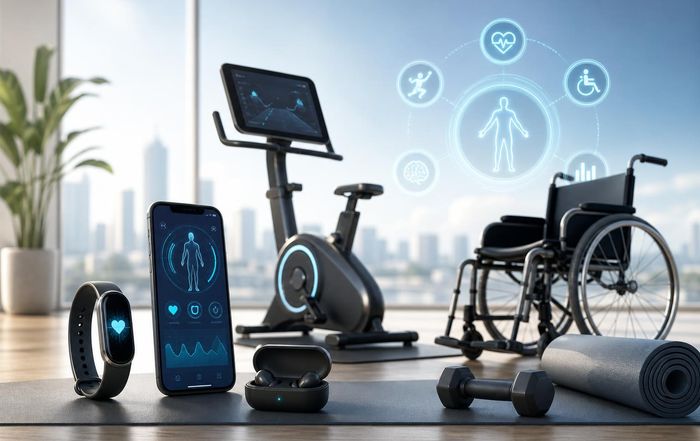
The Future of Accessible Fitness Technology
A New Era for Inclusive Performance
Accessible fitness technology has shifted from a niche concern to a central pillar of the global sports, health and wellness economy, and nowhere is this transformation more visible than in the way SportyFusion curates and interprets innovation for a worldwide, performance-driven, loyal audience. What began as a wave of consumer wearables has matured into a complex ecosystem of connected devices, adaptive software, data platforms and inclusive design standards that together are reshaping how people in the United States, Europe, Asia, Africa and beyond approach movement, recovery and long-term health. As governments, technology giants, sports brands and health systems converge on the shared objective of making physical activity more accessible, the market is being defined not only by who can move fastest, lift heaviest or run farthest, but by who can participate at all.
This evolution is fundamentally about Experience, Expertise, Authoritativeness and Trustworthiness, and the organizations that will lead the next decade of fitness are those capable of combining credible sports science with responsible technology and inclusive culture. For a growing community that turns to SportyFusion for new insight into sports, fitness, health and performance, accessible fitness technology is no longer a peripheral trend; it is the lens through which the future of training, competition and everyday wellbeing is being reframed.
Defining Accessibility in Fitness Technology
Accessibility in fitness technology has expanded far beyond the narrow idea of affordability or basic usability. In 2026, leading organizations such as World Health Organization and Centers for Disease Control and Prevention frame physical activity as a public health imperative, with digital tools playing a decisive role in reducing global inactivity and chronic disease. Accessible fitness technology therefore encompasses financial access, physical and cognitive accessibility, cultural and linguistic inclusivity, geographic reach and the ability to adapt to varying levels of ability, age and health status.
Learn more about global physical activity guidelines through the World Health Organization. In parallel, public health data from the CDC continues to highlight the burden of inactivity in North America and Europe, reinforcing why connected fitness solutions that can reach into homes, workplaces and communities are now considered critical infrastructure rather than lifestyle luxuries.
For SportyFusion, which operates at the intersection of culture, sport and technology, this broader definition of accessibility is central to how products, services and emerging platforms are evaluated. The most influential solutions are no longer those that merely track metrics, but those that reduce friction to participation for people in Berlin, São Paulo, Johannesburg, Singapore or Sydney, regardless of income, disability status, schedule constraints or training background.
Wearables Evolving from Trackers to Intelligent Coaches
The last decade saw fitness wearables move from novelty devices to mainstream companions, but the period from 2023 to 2026 has been defined by a qualitative leap from passive tracking to proactive, adaptive coaching. Major platforms such as Apple, Samsung, Garmin and Fitbit, together with specialized performance brands, now integrate advanced sensors, machine learning and cloud analytics to deliver personalized training guidance that would previously have required a human coach.
The Apple Watch and Samsung Galaxy Watch families, for instance, have expanded accessibility features to include enhanced haptic feedback for visually impaired users, voice-first interfaces, fall detection and cardiac irregularity alerts that connect directly with healthcare providers in many regions. Meanwhile, endurance-focused ecosystems like Garmin's training platform and the subscription-based coaching services of Whoop and Oura emphasize individualized recovery and sleep optimization, making structured training more manageable for working professionals and older adults who must balance performance with long-term health.
For the community that relies on SportyFusion to navigate the latest performance technologies, the key differentiator is no longer the number of metrics a device can collect, but the quality of the insights it delivers and the inclusivity of its design. Adaptive heart-rate zones for beginners, contextual prompts that adjust to the environment, and safety alerts that consider local healthcare infrastructure in regions from the United Kingdom and Germany to South Africa and Thailand, all contribute to a more equitable fitness landscape.
AI-Driven Personalization and the New Coaching Paradigm
Artificial intelligence has become the engine of accessible fitness technology, enabling mass personalization at a scale that human coaches alone could never achieve. Between 2022 and 2026, rapid advances in generative AI and reinforcement learning allowed platforms to analyze billions of workout sessions, biometric signals and behavioral patterns, transforming raw data into practical guidance that adapts in real time to the user's context, goals and constraints.
Research and analysis from organizations such as McKinsey & Company and Deloitte have documented how AI-driven personalization is reshaping consumer health and sports industries, with fitness apps and platforms increasingly functioning as virtual performance labs that learn from every interaction. Readers can explore how AI is transforming consumer health through resources such as McKinsey's perspectives on healthcare AI and Deloitte's insights on digital health.
For users of SportyFusion, this AI-enabled paradigm manifests in training plans that adjust automatically to travel schedules, sleep disruptions, menstrual cycles, altitude changes or heat waves, as well as in contextual coaching for different sports, from running and cycling to esports-adjacent training captured in the site's gaming coverage. AI systems now frequently integrate with national health guidelines, evidence-based protocols from sources like the National Institutes of Health and sport-specific research from organizations such as FIFA or World Athletics, ensuring that recommendations remain grounded in credible science rather than marketing hype.
The result is a democratization of expertise: athletes in Nairobi, Jakarta or rural Canada can access training sophistication once reserved for elite programs in London, New York or Tokyo, provided that connectivity and device access barriers are addressed through thoughtful policy and industry collaboration.
Inclusive Design: From Disability Adaptations to Universal Usability
Accessibility in fitness technology has also been driven by a deeper understanding of inclusive design, moving beyond retrofitting products for users with disabilities toward a universal approach that benefits all participants. Industry leaders increasingly align their design processes with principles articulated by institutions like the World Wide Web Consortium's Web Accessibility Initiative and inclusive design frameworks promoted by universities and research organizations across Europe and North America.
In practice, this shift means that fitness apps and connected equipment now offer high-contrast interfaces, customizable text sizes, multimodal feedback through sound, vibration and visual cues, and voice control that supports multiple languages and dialects. Companies such as Microsoft have set important benchmarks with initiatives like the Xbox Adaptive Controller, demonstrating how hardware can be reimagined for users with limited mobility, and similar philosophies are now being applied to smart bikes, treadmills and resistance equipment.
For SportyFusion, which covers both performance and lifestyle aspects of sport, inclusive design is not just a technical specification but a cultural stance. The most forward-thinking brands in North America, Europe and Asia are those that co-create with athletes who have disabilities, involve older adults and neurodivergent users in testing cycles, and view accessibility features as core value propositions rather than compliance checkboxes. This perspective reinforces trustworthiness, as users increasingly expect transparency about how design decisions are made and whose needs are prioritized.
Connected Ecosystems: From Home Gyms to Hybrid Communities
The pandemic-accelerated boom in connected fitness has matured into a hybrid ecosystem that spans homes, gyms, workplaces, schools and public spaces. Global players such as Peloton, Technogym and Les Mills have reoriented their strategies toward flexible memberships, open standards and integrations with third-party platforms, recognizing that users in cities from Los Angeles and Toronto to Paris, Seoul and Singapore expect their data and content to move seamlessly across devices and environments.
The Peloton platform now emphasizes multi-modality and off-equipment training, while Technogym continues to expand its presence in luxury facilities and corporate wellness programs through its connected wellness ecosystem. At the same time, community-driven platforms such as Strava have evolved from route-sharing tools into social performance networks that host challenges, charity events and local club activities, helping to bridge the gap between digital experiences and real-world participation; more about these community-centric models can be discovered on Strava's official site.
For the editorial team at SportyFusion, which covers world and social dimensions of sport, these developments underscore how accessible fitness technology is as much about community architecture as it is about devices. Hybrid ecosystems lower barriers for individuals who cannot afford traditional gym memberships, live in regions with limited infrastructure, or manage family and work schedules that make fixed training times impractical. When combined with localized content in multiple languages and culturally relevant coaching, connected platforms become powerful tools for inclusion rather than mere extensions of premium fitness clubs.
Health Integration, Medical Oversight and Regulatory Scrutiny
As fitness technology increasingly intersects with clinical health, regulatory scrutiny and medical partnerships have intensified. The distinction between wellness trackers and medical devices has blurred, prompting agencies such as the U.S. Food and Drug Administration and the European Medicines Agency to refine frameworks for digital health, software as a medical device and remote monitoring solutions. Readers can explore evolving regulatory landscapes through resources like the FDA's digital health center and the European Medicines Agency's guidance on medical devices.
In the United States, Canada and Western Europe, partnerships between wearable manufacturers, health systems and insurers have created pathways for subsidized devices and app subscriptions, particularly for managing cardiovascular risk, diabetes and rehabilitation after injury or surgery. Telehealth platforms increasingly integrate exercise prescriptions, with clinicians drawing on data from consumer wearables to personalize recommendations, monitor adherence and intervene early when risk signals appear. Similar patterns are emerging in parts of Asia-Pacific, including Singapore, Japan and Australia, where smart nation initiatives and digital health strategies emphasize preventative care.
For SportyFusion, which maintains a dedicated focus on business and news, these developments highlight both opportunity and responsibility. Accessible fitness technology can reduce healthcare costs and improve quality of life, but only if data is accurate, privacy is protected and users understand the limits of consumer-grade insights. Trustworthiness in this domain depends on transparent evidence standards, clear communication about what devices can and cannot diagnose, and responsible integration with medical professionals who maintain ultimate accountability for patient care.
Global Markets, Local Realities and the Digital Divide
Despite rapid innovation, the promise of accessible fitness technology remains unevenly distributed. High-income countries in North America, Western Europe and parts of East Asia lead adoption, while large segments of populations in Africa, South Asia and Latin America still face barriers related to device cost, connectivity, language support and cultural fit. Organizations such as the World Bank and UNESCO have repeatedly highlighted the broader digital divide affecting education, employment and health, and these structural realities inevitably shape who can benefit from advanced fitness platforms. Learn more about global digital inclusion challenges via the World Bank's digital development resources and UNESCO's work on digital inclusion.
Nevertheless, 2024-2026 has seen promising progress. Smartphone penetration continues to rise in emerging markets, low-cost wearables have improved in quality, and mobile network expansion, including 5G and satellite-based connectivity, is beginning to reach rural and remote regions. Local startups in countries such as India, Brazil, South Africa and Indonesia are building culturally adapted fitness apps that focus on body-weight training, community walking programs and sport forms that resonate locally, from football and cricket to martial arts and dance.
For SportyFusion, whose readership spans continents and is keenly interested in world and environment issues, the central question is how global brands and policymakers will collaborate to close these gaps. Strategies include tiered pricing models, public-private partnerships that integrate fitness technology into city planning and school programs, and open standards that allow low-cost devices to plug into the same ecosystems as premium wearables. The organizations that demonstrate genuine commitment to these efforts, rather than using inclusivity as a marketing slogan, will be those that earn long-term trust and influence.
Sustainability, Ethics and Responsible Innovation
As hardware production and data-intensive services proliferate, the environmental and ethical footprint of fitness technology has become impossible to ignore. Manufacturing of wearables, connected equipment and data center infrastructure contributes to resource consumption and emissions, prompting scrutiny from regulators, investors and consumers who expect alignment with global sustainability goals. Reports from entities such as the Intergovernmental Panel on Climate Change and the International Energy Agency outline the broader climate implications of digital industries and energy use; readers can explore these dynamics via the IPCC's official portal and the IEA's analysis of digitalization and energy.
For the SportyFusion audience that tracks ethics, brands and performance, the sustainability of fitness technology is increasingly a factor in purchasing and partnership decisions. Leading companies are responding with repairable device designs, trade-in and recycling programs, commitments to renewable energy for data centers, and transparent reporting of supply chain practices. Ethical considerations also extend to data governance: consent mechanisms, algorithmic fairness, the prevention of discriminatory insurance or employment practices based on health data, and safeguards against addictive product design.
Industry groups, academic institutions and civil society organizations are collaborating to develop guidelines for responsible AI and digital health in sport, while initiatives like the OECD's AI principles and the EU's AI Act influence how global players structure their research and deployment strategies. As these frameworks evolve, SportyFusion is positioned to provide ongoing analysis that helps athletes, coaches, businesses and policymakers make informed, values-aligned decisions about the technologies they adopt and endorse.
The Workplace, Jobs and the Changing Nature of Fitness Careers
Accessible fitness technology is not only reshaping how individuals train; it is changing how they work. Corporate wellness programs, once limited to gym discounts and occasional workshops, now increasingly integrate wearables, digital coaching and mental health apps into comprehensive employee wellbeing strategies. Companies across sectors in the United States, United Kingdom, Germany, Canada, Australia and Singapore have begun to view movement, recovery and psychological resilience as strategic assets that influence productivity, retention and employer brand.
This shift has generated new job categories and career paths, from digital performance coaches and data-literate physiotherapists to product managers and UX designers specializing in sports and health applications. For readers exploring jobs and career development through SportyFusion, the message is clear: the fitness industry of 2026 is inseparable from technology, and expertise now often requires fluency in both human physiology and digital systems.
At the same time, gig-economy dynamics have penetrated coaching and instruction, with trainers around the world offering remote sessions via platforms that match clients and professionals. While this increases reach and flexibility, it also raises questions about income stability, credential verification and quality assurance. Professional associations and certification bodies are adapting their standards to cover online practice, digital safety and cross-border service delivery, recognizing that a coach in Madrid may now regularly work with clients in New York, Dubai or Tokyo.
Culture, Community and the Human Side of Technology
Beneath the data streams and AI models, the future of accessible fitness technology remains fundamentally human. Cultural attitudes toward body image, competition, aging and disability continue to influence how people engage with movement, and technology can either reinforce harmful norms or help to reshape them. Platforms that foreground diverse role models, highlight adaptive sports, celebrate incremental progress and encourage rest as much as intensity contribute to healthier cultures around performance and wellbeing.
For SportyFusion, which maintains a strong focus on culture and social dynamics, this human dimension is where Experience and Authoritativeness are most visible. The stories of athletes who use accessible technology to return from injury, of older adults who discover strength training through intuitive apps, of gamers who integrate physical conditioning into their routines, and of communities in Johannesburg, Bangkok or São Paulo that leverage low-cost devices for group challenges, all illustrate how innovation becomes meaningful only when it is embedded in real lives.
As global audiences continue to navigate the interplay between high-performance aspirations and everyday health, the platforms they trust will be those that offer nuanced, culturally aware perspectives rather than one-size-fits-all prescriptions. This is the space where SportyFusion operates, connecting the latest breakthroughs in AI, wearables, connected ecosystems and sustainable design with grounded, practical insight for people who care about sport, fitness, health and the broader world.
How to Go From Technology-First to Human-Centric Fitness?
Ok the trajectory of accessible fitness technology points toward a future in which the most successful solutions are not necessarily the most complex, but the most human-centric. In the coming years, several trends are likely to define the landscape: increasingly frictionless interfaces that fade into the background of daily life; deeper integration between fitness data and healthcare ecosystems; more robust frameworks for privacy and algorithmic accountability; and a stronger emphasis on environmental and social responsibility across hardware and software lifecycles.
Equally important will be the expansion of inclusive design principles to encompass not only disability and age, but also socioeconomic realities, cultural diversity and geographic constraints. As hybrid physical-digital communities continue to spread across continents, the ability of technology to foster genuine connection, mutual support and shared purpose will be as critical as its capacity to optimize training plans or predict injury risk.
For the fitness crazy crew that turns to SportyFusion for 100% unique insight into technology, training, performance and the business of sport, the future of accessible fitness technology is both an opportunity and a responsibility. It offers unprecedented tools to empower individuals in New York, London, Berlin, Toronto, Sydney, Tokyo, Nairobi, São Paulo and beyond to move more, recover better and live healthier lives, but it also demands careful stewardship from companies, regulators, professionals and media organizations.
In this evolving landscape, Experience, Expertise, Authoritativeness and Trustworthiness are not abstract concepts; they are the foundations on which enduring relationships between people and technology will be built. As innovation accelerates, the role of sites like SportyFusion will be to continually interpret and contextualize these changes, ensuring that the future of fitness is not only more advanced, but genuinely more accessible for everyone.