

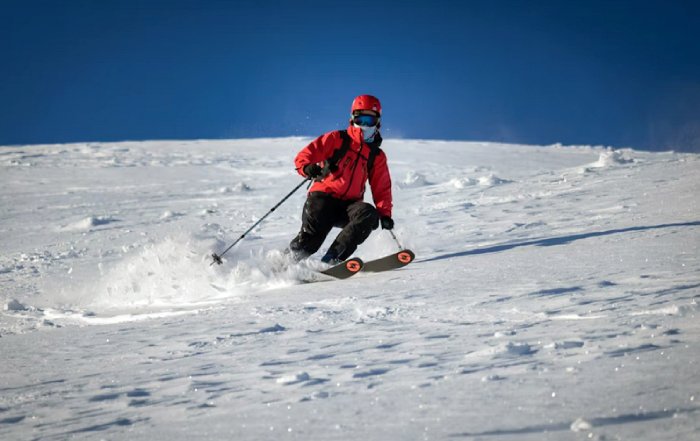
Winter Adventure Sports in 2026: How Cold-Weather Fitness Is Redefining Performance, Lifestyle, and Business
Winter adventure sports in 2026 have evolved from seasonal pastimes into a powerful, year-round fitness paradigm that blends physical performance, mental resilience, technological innovation, and environmental responsibility. What once belonged mainly to alpine communities in the United States, Europe, and Asia is now a global movement that resonates in boardrooms, research labs, urban training studios, and digital platforms. For the audience of SportyFusion.com, this shift represents not just a trend but a strategic rethinking of what it means to be fit, competitive, and future-ready in a world where health, sustainability, and technology are inseparable.
From Seasonal Niche to Global Fitness Platform
By 2026, winter adventure sports such as skiing, snowboarding, ice climbing, ski mountaineering, snowshoeing, and backcountry touring have become integral components of comprehensive training systems used by both elite athletes and dedicated amateurs. Participation data from organizations such as the International Ski and Snowboard Federation (FIS) and national sports bodies in Canada, Japan, and Norway reflect a continued rise in engagement, with growth driven as much by health-conscious professionals and remote workers as by traditional competitive athletes. This expansion is closely linked to the broader "experiential fitness" economy, where travelers and urban residents alike seek immersive, physically demanding experiences that combine adventure, recovery, and cultural discovery.
Destinations from the Swiss Alps to Korea's Gangwon Province and Colorado's Rockies have responded by repositioning themselves as year-round wellness and performance hubs rather than purely winter playgrounds. Resorts and training centers offer integrated programs that pair alpine sports with strength conditioning, yoga, mindfulness, and altitude-specific recovery protocols. In Chamonix, Banff, Niseko, and emerging hubs in Italy, Spain, and New Zealand, hybrid retreats now attract executives, entrepreneurs, and creatives who see winter adventure not only as recreation but as a structured tool for building stamina, focus, and leadership skills. Readers interested in how this shift fits into the broader evolution of training culture can explore additional perspectives at Sporty Fusion Fitness.
Winter Training as a Strategic Performance Advantage
From a performance standpoint, winter sports in 2026 are recognized as potent engines for developing functional strength, neuromuscular coordination, and cardiovascular capacity in ways that traditional gym environments cannot fully replicate. Activities like ski touring, cross-country skiing, and splitboarding demand continuous engagement of stabilizing muscles, proprioception, and balance while operating in cold, variable conditions that challenge thermoregulation and mental focus. Ice climbing and mixed climbing, increasingly popular in Germany, Switzerland, and the United States, require high-level grip strength, core stability, and problem-solving under pressure-attributes that translate directly into improved performance in fields ranging from endurance racing to team sports.
Professional triathletes, cyclists, rugby players, and footballers now incorporate structured winter blocks into their annual periodization plans, guided by data from performance centers and sports science institutes. Research published by organizations such as the American College of Sports Medicine and performance labs at universities in Canada and Scandinavia has reinforced the value of cold-environment training for enhancing oxygen utilization, metabolic flexibility, and recovery efficiency. This scientific grounding has moved winter sports from the periphery of cross-training to a central component of high-performance planning. For readers who follow the latest in performance science and applied training, curated coverage at Sporty Fusion Performance offers further depth.
Technology-Driven Precision in Cold Environments
The technological landscape surrounding winter sports has matured dramatically, turning mountains and ice fields into data-rich environments. Wearables from Garmin, Suunto, Apple, and Polar now integrate GPS, barometric altimeters, temperature sensors, and advanced heart-rate variability analytics to deliver real-time feedback on exertion, altitude adaptation, and fatigue. Platforms linked to Strava and similar ecosystems allow athletes in the United Kingdom, Germany, Australia, and South Korea to benchmark their winter sessions against global peers, fostering both accountability and community.
Virtual and augmented reality technologies have also reached a level of sophistication that allows realistic winter skill acquisition before athletes ever step onto snow. VR ski simulators in cities like London, New York, Singapore, and Tokyo blend motion platforms and haptic feedback with photorealistic slopes modeled on real resorts, enabling technique refinement and tactical rehearsal year-round. Elite teams and national federations increasingly use motion-capture systems and force plates to analyze ski turns, landing mechanics, and pole-plant timing, drawing on research from institutions such as MIT Sports Lab and ETH Zurich to minimize injury risk and optimize efficiency. Readers interested in the intersection of sport and emerging tech can follow related developments at Sporty Fusion Technology.
Sustainability as a Core Performance and Brand Imperative
The expansion of winter adventure sports has coincided with heightened awareness of the fragility of snow-dependent ecosystems. Shorter seasons and unpredictable weather patterns across Europe, North America, and Asia have made climate resilience a central strategic issue for resorts, brands, and governing bodies. Nonprofits such as Protect Our Winters (POW) and advocacy groups aligned with initiatives like the UN Environment Programme have pushed the industry to integrate decarbonization, biodiversity protection, and responsible tourism into long-term planning.
Forward-thinking resorts in Austria, Sweden, France, and New Zealand are now powered increasingly by renewable energy, using smart snowmaking systems that rely on real-time climate data to reduce water and energy consumption. Leading companies including Patagonia, The North Face, Salomon, Burton, and Helly Hansen have expanded their commitments to recycled materials, repair services, and circular design, recognizing that consumers in markets from Canada to Japan now evaluate performance gear through both technical and ethical lenses. This alignment of sustainability with performance and brand equity is a recurring theme in coverage at Sporty Fusion Environment, where environmental stewardship is treated as a core pillar of modern athletic culture.
Mental Resilience, Cognitive Performance, and Winter Environments
The psychological dimension of winter adventure sports has become a focal point for sports psychologists, neuroscientists, and executive coaches. Exposure to cold, altitude, and complex terrain demands sustained concentration, emotional regulation, and risk assessment, making winter environments an ideal natural laboratory for developing resilience and cognitive flexibility. Studies disseminated through organizations such as the American Psychological Association and mental health institutes in Norway, Finland, and the Netherlands highlight how cold exposure and nature immersion can reduce stress markers, enhance mood, and improve sleep quality.
Adventure therapy programs in Canada, the United States, and Scandinavia are integrating snowshoeing, Nordic skiing, and guided backcountry experiences into interventions for burnout, anxiety, and post-traumatic recovery. Corporate leadership programs now leverage structured winter challenges as experiential learning platforms, emphasizing composure under pressure, adaptive decision-making, and team cohesion in unfamiliar conditions. For the Sporty Fusion readership, which spans business leaders, performance professionals, and wellness-focused individuals, these developments reinforce the idea that winter fitness is as much about mental training as physical conditioning; deeper analysis of this mind-body connection is regularly explored at Sporty Fusion Health.
Economic Growth, Jobs, and the Winter Fitness Value Chain
The economic footprint of winter adventure sports has grown into a complex global value chain that encompasses equipment manufacturing, tourism, media, digital platforms, and professional services. Market analyses from firms such as McKinsey & Company, Deloitte, and PwC indicate that the broader winter sports economy is on track to surpass earlier forecasts, with revenues increasingly diversified across hardware, software, and experience-based offerings. Countries like Switzerland, Japan, Italy, Spain, and Chile have identified winter sports as strategic sectors for regional development, investing in infrastructure, transport, and digital connectivity to attract international visitors.
Job creation now extends well beyond traditional roles such as instructors and guides. Data analysts, UX designers, sustainability officers, biomechanists, sports psychologists, and content strategists are all part of the modern winter sports ecosystem. Startups and established players alike are hiring professionals to build booking platforms, performance dashboards, AI coaching tools, and sustainability reporting systems. For those considering career pivots into this dynamic space-from Germany to South Africa and Brazil-resources and insights on emerging roles in sports, wellness, and technology can be explored at Sporty Fusion Jobs.
Global Tourism, Culture, and the "Fitcation" Model
The convergence of winter adventure sports and global tourism has given rise to the "fitcation" model, where travel is explicitly designed around structured training, recovery, and cultural immersion. Destinations in Finland's Lapland, Japan's Hokkaido, France's Savoie, and Canada's British Columbia now package ski touring, cross-country skiing, ice climbing, and snow biking with local culinary experiences, thermal spa rituals, and cultural education. National tourism boards and regional alliances collaborate with wellness hotels, performance centers, and local communities to create itineraries that emphasize authenticity and environmental respect.
International organizations such as the World Tourism Organization (UNWTO) and the World Travel & Tourism Council (WTTC) have highlighted winter wellness tourism as one of the fastest-growing niches in premium travel, particularly among guests from the United States, United Kingdom, China, Singapore, and Australia. This shift has important implications for local economies and for the positioning of winter sports as a lifestyle rather than a single-season pursuit. Sporty Fusion's coverage at Sporty Fusion World frequently examines how these macro trends intersect with culture, policy, and regional development.
Inclusion, Ethics, and Expanding Access
A defining feature of winter sports in 2026 is a much stronger focus on inclusion, ethics, and equitable access. Adaptive sports organizations including Challenged Athletes Foundation, Move United, and national Paralympic committees have transformed the landscape for athletes with disabilities, enabling participation in alpine skiing, snowboarding, Nordic skiing, and ice sports through specialized equipment and coaching. Advances in prosthetics, exoskeletons, and sit-ski technologies-often developed in collaboration with engineering labs and medical research centers-have expanded both recreational and competitive pathways.
At the same time, public agencies and NGOs in Norway, Canada, Japan, France, and South Korea are investing in community programs that lower financial barriers to entry for youth and underrepresented groups, recognizing the broader public health benefits of outdoor winter activity. Ethical considerations now extend to labor standards in supply chains, environmental justice for mountain communities, and cultural respect for Indigenous knowledge related to snow, ice, and survival. These issues are increasingly central to governance frameworks and brand strategies, and they form an important strand of analysis at Sporty Fusion Ethics, where sport is examined through the lens of responsibility and fairness.
Urban and Digital Adaptations of Winter Fitness
For many people in North America, Europe, Asia, and beyond, proximity to mountains is limited, yet the principles of winter fitness are being brought into urban contexts through innovation and design. Indoor ski domes and synthetic slopes in the Netherlands, Germany, China, the United Arab Emirates, and the United Kingdom allow year-round practice of skiing and snowboarding techniques. In dense urban centers like London, New York, Seoul, and Singapore, boutique studios now offer "cold cycle" classes, altitude-simulated treadmills, and controlled-environment ice training that mirror some of the physiological demands of outdoor winter sports.
Virtual platforms have also lowered the geographic barrier. Connected training ecosystems from companies such as Zwift, Peloton, and emerging winter-specific platforms enable users to participate in simulated ski tours, uphill challenges, and strength circuits guided by coaches based in Switzerland, Italy, or Japan, regardless of where participants live. This blending of digital and physical experience aligns closely with the interests of Sporty Fusion's audience in gaming and interactive performance, and related narratives are covered at Sporty Fusion Gaming and Sporty Fusion Lifestyle.
Brands, Media, and the Narrative Power of Winter
From a branding and media standpoint, winter adventure sports have become a compelling canvas for storytelling that emphasizes courage, humility, and environmental awareness. Campaigns from Red Bull, GoPro, Arc'teryx, Moncler, and Canada Goose leverage high-definition cinematography and athlete-generated content to portray winter landscapes as spaces of both challenge and contemplation. Streaming platforms such as Netflix, Amazon Prime Video, and Disney+ have expanded their catalogues of winter sports documentaries and series, highlighting athletes from Sweden, Norway, Italy, South Korea, and the United States who embody a blend of technical mastery and environmental advocacy.
For brands, alignment with winter adventure is no longer just about aspirational imagery; it is about authenticity, transparency, and contribution to community and climate solutions. Partnerships with NGOs, local mountain communities, and research institutions lend credibility to sustainability claims and create long-term value beyond seasonal sales. At Sporty Fusion Brands, these shifts are analyzed not only as marketing strategies but as indicators of how consumer expectations around trust and purpose are reshaping the sports business landscape.
Entrepreneurship, Investment, and the Next Frontier
The entrepreneurial opportunity surrounding winter adventure sports continues to expand as technology, wellness, and environmental innovation intersect. Startups are emerging across Europe, North America, and Asia-Pacific to tackle challenges such as real-time avalanche risk prediction, AI-guided route planning, energy-efficient heating for mountain facilities, and recyclable high-performance materials. Investors are increasingly drawn to ventures that combine commercial potential with measurable impact on health and sustainability, aligning with global frameworks promoted by organizations such as the World Economic Forum and Global Impact Investing Network.
Corporate wellness providers and consulting firms are packaging winter-based leadership and resilience programs for clients in sectors as diverse as finance, technology, and healthcare. These offerings reflect a recognition that the skills developed in winter environments-adaptability, decision-making under uncertainty, and collaborative problem-solving-are directly transferable to volatile markets and complex organizational challenges. Sporty Fusion's business-focused coverage at Sporty Fusion Business follows how these developments are redefining the economics and governance of sport-linked enterprises.
Sporty Fusion's Place in the Winter Fitness Ecosystem
For SportyFusion.com, the ascent of winter adventure sports is not simply a topic of interest; it is a lens through which the platform connects fitness, culture, technology, ethics, and global trends for a diverse, internationally minded readership. From United States and United Kingdom professionals seeking structured winter training to readers in Germany, Canada, Australia, France, Italy, Spain, Netherlands, Switzerland, China, Singapore, Japan, South Korea, Brazil, South Africa, and beyond, the themes emerging from cold-weather performance speak directly to contemporary priorities: sustainable health, data-informed improvement, meaningful travel, and responsible consumption.
Across its sections-whether covering performance insights at Sporty Fusion Training, cultural narratives at Sporty Fusion Culture, or global developments at Sporty Fusion News-Sporty Fusion approaches winter fitness as an integrated system rather than an isolated category. The platform's editorial stance emphasizes Experience, Expertise, Authoritativeness, and Trustworthiness, drawing on the perspectives of coaches, scientists, entrepreneurs, and athletes who operate at the forefront of this evolving space.
In 2026, winter adventure sports stand as a powerful metaphor for the broader transformation of fitness and lifestyle worldwide. They demonstrate that genuine performance is no longer defined solely by speed or strength, but by the capacity to adapt intelligently, act ethically, and thrive in partnership with the environment. As icy slopes, frozen lakes, and snow-covered forests become training grounds for a new generation of athletes, innovators, and leaders, Sporty Fusion continues to chronicle and interpret this movement-linking the cold clarity of winter with the warm, enduring pursuit of human potential.