

Technology Advancing Environmental Monitoring in 2026
A New Era of Environmental Intelligence
By 2026, environmental monitoring has matured from an emerging technology trend into a foundational layer of global decision-making, and its impact is felt acutely across the performance-driven, health-conscious, and innovation-focused community that gathers around SportyFusion.com. What was once the domain of field researchers with analog instruments has become a deeply interconnected digital infrastructure, combining satellite constellations, artificial intelligence, low-cost sensors, edge computing, and advanced analytics to generate near real-time insight into the condition of the planet's air, water, soil, and ecosystems. This transformation is shaping public policy in the United States, United Kingdom, Germany, France, and China, redefining business strategy in Canada, Australia, Japan, and Singapore, and influencing how athletes, brands, and consumers in Europe, Asia, Africa, and the Americas understand the relationship between performance, health, and environmental responsibility.
For the global audience of SportyFusion.com, environmental monitoring is not a distant scientific concern; it is a practical, everyday factor that affects how people train, commute, travel, work, and invest. Urban air quality metrics in London, New York, Berlin, and Seoul now shape decisions about outdoor workouts and event scheduling, while satellite-based assessments of glacier retreat in the Alps and Himalayas, deforestation in the Amazon, and coral bleaching in the Great Barrier Reef inform tourism, sports planning, and long-term infrastructure investments. Environmental data is increasingly treated with the same seriousness as financial metrics or performance analytics, and as expectations rise for real-time, trustworthy, and actionable information, organizations are being compelled to embed environmental intelligence into their core operations. Within this context, the editorial mission of SportyFusion.com-connecting performance, health, technology, and global culture-aligns closely with the evolving demands of a world where climate and ecological realities are inseparable from business strategy and human performance.
Planetary-Scale Sensing: Satellites as the Environmental Backbone
The backbone of modern environmental monitoring in 2026 is a rapidly expanding constellation of Earth-observing satellites that deliver high-resolution, frequently updated views of the planet. Public agencies such as NASA and the European Space Agency (ESA) continue to operate cornerstone missions like Landsat and Sentinel, which provide free, open-access data on land use, ice cover, oceans, and atmospheric composition; those interested in the scientific underpinnings can explore these resources through the NASA Earth Observatory and ESA's Earth Online. At the same time, commercial operators such as Planet Labs, Airbus Defence and Space, and Maxar Technologies have scaled up fleets of small satellites capable of revisiting the same location multiple times per day, offering unprecedented temporal and spatial resolution for monitoring deforestation, crop health, urban expansion, and coastal change from North America to South America, from Europe to Asia-Pacific.
This satellite-driven visibility is reshaping environmental governance and corporate accountability. The European Union's Copernicus Programme, profiled at the Copernicus website, underpins regulatory compliance, climate services, and disaster response, while climate analytics firms combine multi-spectral imagery with meteorological and socioeconomic data to generate risk assessments for wildfire in Australia, flood exposure in Thailand and Bangladesh, drought risk in Brazil and South Africa, and heat stress in dense urban centers like Madrid, Rome, and Tokyo. For sports organizations, outdoor brands, and event operators, integrating satellite-derived climate and land-surface information into planning tools is no longer experimental; it is becoming a baseline requirement for managing risk, protecting participants, and optimizing performance.
From the vantage point of SportyFusion.com, which covers global sports and world developments, satellite-based environmental intelligence is increasingly central to assessing the long-term viability of major sporting venues, training camps, and outdoor recreation hubs. Heat stress mapping informs scheduling for marathons in Chicago, Berlin, and Singapore; snow reliability projections shape the future of winter sports destinations in Switzerland, Austria, and Japan; and coastal vulnerability analyses guide decisions on where to locate or retrofit stadiums in cities such as Miami, Barcelona, and Sydney. As climate volatility intensifies, organizations that can interpret satellite data and translate it into operational decisions will be better positioned to safeguard athletes, spectators, and investments, while also aligning with increasingly stringent environmental expectations from regulators and fans.
Hyperlocal Intelligence: Sensor Networks and Smart Environments
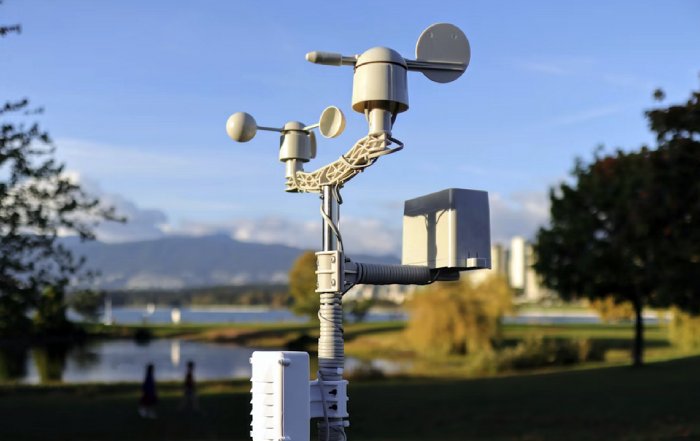
While satellites provide a comprehensive top-down perspective, the most immediate and actionable environmental insights often come from dense networks of ground-based sensors that capture conditions at street level, in facilities, and even within specific training environments. The maturation of the Internet of Things (IoT), low-power wide-area networks, and micro-sensors has enabled cities, enterprises, and communities to deploy thousands of devices that continuously track air pollutants, noise levels, microclimate variations, water quality, and energy consumption across North America, Europe, Asia, and increasingly Africa and South America.
Health authorities and international organizations have underscored the urgency of this monitoring. The World Health Organization (WHO), through its air pollution and health resources, documents the links between particulate matter, nitrogen dioxide, and cardiovascular and respiratory disease, prompting cities in Germany, France, Italy, Spain, United Kingdom, and Netherlands to expand real-time air-quality networks and public dashboards. In parallel, open-data initiatives and citizen science platforms such as OpenAQ, accessible via OpenAQ's global data platform, empower residents in India, Brazil, Malaysia, and South Africa to track local pollution hotspots and advocate for cleaner transport, industry, and energy systems. For runners, cyclists, and team-sport athletes, this hyperlocal information is increasingly integrated into training apps and route planners, making it possible to avoid peak pollution periods or adjust intensity when heat and ozone levels are high.
The audience of SportyFusion.com, which closely follows health, fitness, and performance, is already living in this sensor-rich reality. In cities like Copenhagen, Stockholm, Oslo, Vancouver, Singapore, and Seoul, integrated mobility and environment platforms allow individuals to check bike-lane air quality, UV levels, and heat indices before commuting or training outdoors, while smart buildings and sports complexes use embedded sensors to optimize ventilation, lighting, and indoor climate for both comfort and energy efficiency. For companies operating offices, warehouses, and venues, real-time monitoring of emissions, water use, and energy performance is becoming part of a broader digital sustainability strategy that supports compliance with tightening regulations and demonstrates tangible progress toward climate and health commitments. Within this emerging landscape, SportyFusion.com serves as a bridge between technical innovation and practical application, explaining how these systems work and how they can be used to improve training, workplace wellbeing, and urban quality of life.
AI-Driven Environmental Analytics: From Data Deluge to Decision Intelligence
The proliferation of satellites, sensors, and scientific instruments has created a deluge of environmental data that would be impossible to interpret without advanced analytical tools. In 2026, artificial intelligence and machine learning sit at the heart of the environmental monitoring ecosystem, transforming raw datasets into forecasts, risk scores, and actionable recommendations. AI models are used to detect illegal logging in Indonesia and Congo Basin forests, to predict harmful algal blooms in coastal waters off Australia, New Zealand, and Japan, to forecast extreme rainfall events in South Korea and Thailand, and to anticipate heat waves that threaten public health in cities across North America, Europe, and Asia.
Global institutions such as the Intergovernmental Panel on Climate Change (IPCC), whose assessments can be explored via the IPCC website, rely on increasingly sophisticated climate models that integrate AI-based pattern recognition to refine projections of temperature extremes, precipitation patterns, and sea-level rise. In the private sector, ESG analytics providers and climate-risk platforms ingest satellite imagery, sensor feeds, corporate disclosures, and unstructured data from news and social media to generate composite risk indicators used by asset managers, insurers, and lenders in New York, London, Frankfurt, Zurich, Hong Kong, and Singapore. Frameworks such as the Task Force on Climate-related Financial Disclosures (TCFD), detailed in the TCFD knowledge hub, have accelerated demand for decision-grade environmental data, pushing companies to adopt AI-enabled monitoring systems that can track emissions, water use, biodiversity impacts, and physical climate risks across complex global value chains.
For the business-oriented readers of SportyFusion.com, who follow technology, business, and performance strategy, this convergence has direct implications for skills, governance, and competitive advantage. Organizations now seek professionals who can combine data science fluency with an understanding of climate science, regulatory frameworks, and sector-specific dynamics-from sportswear manufacturing and logistics to media, gaming, and digital platforms. AI-powered environmental analytics are being embedded into product design workflows, training platform algorithms, and venue management systems, enabling brands to optimize for both performance and sustainability. Those who can interpret these models, challenge their assumptions, and translate outputs into credible strategies will be central to the next generation of leadership in sport, technology, and sustainable business.
Human Performance, Wearables, and Environmental Stress
At the individual level, environmental monitoring is increasingly integrated into the tools that athletes and health-conscious consumers use every day. Leading wearable and performance platforms from companies such as Apple, Garmin, Google (through Fitbit), and WHOOP have expanded beyond heart rate, heart-rate variability, and movement patterns to incorporate features that estimate exposure to heat, humidity, UV radiation, and in some cases air quality proxies derived from barometric and optical sensors. While these measurements do not replace professional-grade environmental instruments, they provide a personalized lens on environmental stress, allowing users to align training intensity and recovery strategies with real-time and forecast conditions.
Health agencies have reinforced the importance of this alignment. The U.S. Centers for Disease Control and Prevention (CDC), through its climate and health resources, highlights the growing risks of heat-related illness, wildfire smoke exposure, and ozone spikes, particularly in regions like the American West, Southern Europe, parts of China, and Australia. Sports federations and event organizers now routinely incorporate environmental thresholds into competition protocols: wet-bulb globe temperature indices guide decisions at tennis tournaments in Melbourne and New York; heat and pollution metrics influence start times for marathons and cycling races in Berlin, Chicago, Tokyo, and Bangkok; and air-quality alerts inform training modifications for football, rugby, and cricket teams in United Kingdom, South Africa, India, and Brazil.
For SportyFusion.com, whose core coverage includes training, performance, and fitness innovation, the integration of environmental data into personal performance analytics is a defining storyline of this decade. Readers from Scandinavia, Germany, Canada, Japan, South Korea, and Singapore increasingly expect guidance that goes beyond generic training plans to account for heat acclimatization, altitude adaptation, pollution exposure, and travel-related circadian disruption. As more platforms offer environment-aware training recommendations, there is a growing need for trusted analysis that distinguishes evidence-based practices from marketing claims, and that explains how to use environmental metrics responsibly to enhance performance without compromising long-term health.
Corporate Sustainability, Regulation, and Verified Environmental Data
The technological advances in monitoring have converged with a powerful regulatory and market shift toward mandatory environmental disclosure and verifiable sustainability performance. In the European Union, the Corporate Sustainability Reporting Directive (CSRD) and the EU Taxonomy now require large companies to provide detailed, auditable data on climate risks, emissions, resource use, and biodiversity impacts, while in the United States the Securities and Exchange Commission (SEC) is moving toward more comprehensive climate-related reporting rules. Background on these developments is available through the European Commission's climate action pages and the OECD's environment portal, which outline how policy is tightening across Europe, North America, and beyond.
For global brands in sportswear, outdoor equipment, nutrition, technology, and media, environmental monitoring has become a core compliance and risk-management function rather than a voluntary reputational exercise. Companies are expected to quantify and reduce their greenhouse gas emissions, track water usage in stressed basins, and ensure that raw materials are not linked to deforestation or human rights abuses. Satellite-based deforestation alerts, hydrological models, and supply-chain emissions trackers are increasingly used to validate claims about recycled content, low-carbon manufacturing, or "climate-neutral" events. Civil society organizations and investigative journalists, empowered by open satellite data and public sensor networks, can independently verify corporate statements, raising the stakes for accuracy and transparency.
The readership of SportyFusion.com, which closely follows brands, ethics, and sustainability narratives, is attuned to this new standard of scrutiny. Performance-oriented companies that can demonstrate measurable, third-party-verified improvements in environmental performance are better positioned to win loyalty from athletes and consumers in United States, United Kingdom, Germany, Netherlands, Sweden, Norway, Japan, and Australia, where expectations for corporate responsibility are particularly high. Conversely, organizations that rely on vague or unsubstantiated environmental claims risk backlash, regulatory penalties, and talent attrition. In this context, environmental monitoring data becomes the backbone of credible storytelling about climate action, circular design, and responsible sourcing, and platforms like SportyFusion.com play a crucial role in examining these claims with a critical, informed lens.
Climate-Resilient Cities and Sports Infrastructure
As cities worldwide grapple with rising temperatures, more frequent extreme weather events, and shifting precipitation patterns, environmental monitoring is becoming integral to urban planning and the design of sports and recreational infrastructure. Municipalities in Amsterdam, Rotterdam, Copenhagen, Stockholm, Seoul, Sydney, and Melbourne use high-resolution climate, air quality, and hydrological data to guide investments in green spaces, shade structures, water-sensitive urban design, and resilient transportation networks. Organizations such as UN-Habitat, whose work on climate-resilient cities is profiled at UN-Habitat's urban resilience resources, provide frameworks that cities in Africa, Asia, Latin America, and Eastern Europe adapt to local contexts, using sensor networks and satellite data to monitor the effectiveness of interventions over time.
Sports and recreation infrastructure sits at the intersection of these priorities, as stadiums, arenas, training centers, and community fields are long-lived assets exposed to climate risk. Environmental monitoring informs site selection, orientation, and design choices that influence heat load, ventilation, stormwater management, and accessibility. In coastal regions from Florida and the Caribbean to Bangkok, Jakarta, and Cape Town, sea-level rise projections and flood maps already shape decisions about whether to retrofit existing venues, elevate new structures, or relocate entirely. In hotter inland cities such as Madrid, Athens, Phoenix, and Doha, urban heat island data and microclimate modeling guide the integration of reflective materials, shading, and vegetation into stadium precincts and training hubs.
For SportyFusion.com, where environment, world news, and culture intersect, the evolution of climate-resilient sports infrastructure is a compelling narrative that connects design, technology, and social equity. Examples include multipurpose community pitches in Cape Town and Rio de Janeiro that double as stormwater retention basins, elevated cycling and running routes in Netherlands cities that account for flood risk, and heat-resilient marathon and triathlon courses in Doha, Singapore, and Bangkok that incorporate shaded segments and cooling zones. Environmental monitoring not only helps planners design these systems; it also provides the data needed to evaluate whether they are delivering health, safety, and performance benefits for residents and athletes over time.
The Green Data Economy: Jobs, Skills, and New Career Pathways
The rise of advanced environmental monitoring has catalyzed a new segment of the global economy centered on climate and sustainability data, with profound implications for careers and skills. Across North America, Europe, Asia-Pacific, and increasingly Africa and South America, organizations in finance, manufacturing, sports, technology, and media are hiring climate data analysts, environmental engineers, ESG reporting specialists, sustainability product managers, and environmental risk consultants. The International Labour Organization (ILO), through its green jobs portal, highlights how demand is growing for roles that combine technical literacy with an understanding of environmental policy, social impact, and business strategy.
For the community around SportyFusion.com, which is keenly interested in jobs, technology, and social impact, this emerging green data economy offers both opportunities and challenges. Professionals with backgrounds in sports science, performance analytics, health, or event management are discovering that their skills translate into climate-resilient facility design, environment-aware training platforms, and sustainable event operations. Data scientists and software engineers are pivoting toward climate-tech startups and ESG analytics firms, while journalists, marketers, and brand strategists are specializing in evidence-based sustainability storytelling. In Germany, Canada, Singapore, South Korea, United Kingdom, and France, universities and professional programs are responding by offering interdisciplinary curricula that blend climate science, data analytics, and management.
Organizations that invest in upskilling their workforce on environmental monitoring tools, climate literacy, and sustainability reporting are gaining an advantage in regulatory compliance, innovation, and talent attraction. Within the sports and fitness ecosystem, this may mean developing internal capabilities to interpret heat and air-quality forecasts for event planning, to evaluate suppliers' environmental performance, or to design digital products that help users train more safely in changing conditions. As SportyFusion.com continues to cover these shifts, it provides its readers with insight into the capabilities that will define leadership and employability in a performance-driven, sustainability-conscious global market.
Ethics, Governance, and Trust in a Monitored World
The expansion of environmental monitoring inevitably raises complex questions about ethics, governance, and trust. The same satellite and sensor networks that enable transparency on deforestation, emissions, and pollution can also reveal sensitive information about land use, industrial activity, and mobility patterns, potentially infringing on privacy, sovereignty, or commercial confidentiality if misused. The growing reliance on proprietary algorithms and datasets for high-stakes decisions-such as credit allocation, insurance pricing, or regulatory enforcement-introduces risks of bias, opacity, and unequal access to information. Institutions like the World Resources Institute (WRI), which provides analysis on data and governance through WRI's data and transparency resources, emphasize the need for robust standards, open methodologies, and inclusive governance frameworks to ensure that environmental monitoring serves the public interest.
For SportyFusion.com, which covers ethics, technology, and social dynamics, these issues are central to maintaining credibility and audience trust. Readers in Sweden, Norway, Denmark, Netherlands, United Kingdom, and beyond expect not only accurate environmental data, but also thoughtful scrutiny of how that data is collected, processed, and deployed. They want assurance that environment-aware training platforms, health apps, and smart-city systems respect privacy, avoid discriminatory outcomes, and provide meaningful benefits to the communities they monitor. They also look for critical analysis when environmental metrics are used as tools of greenwashing, surveillance, or exclusion rather than genuine sustainability and resilience.
In response, multi-stakeholder initiatives involving governments, civil society, academia, and the private sector are working to define principles for responsible environmental data use, echoing earlier efforts in digital rights and AI ethics. These frameworks stress transparency about data sources and methodologies, clear accountability for errors and biases, and mechanisms for affected communities to access and benefit from the information collected about their environments. As these norms evolve, platforms like SportyFusion.com play a vital role in explaining complex governance debates in accessible terms, highlighting best practices across regions from Europe and North America to Asia, Africa, and South America, and providing a forum where performance-minded readers can engage with the ethical dimensions of the technologies shaping their lives.
SportyFusion.com's Role in a Data-Rich Environmental Future
By 2026, environmental monitoring has become deeply entwined with the core interests of the SportyFusion.com community: performance, health, technology, culture, and responsible innovation. Air-quality indices influence daily training decisions; climate-risk dashboards shape corporate strategy; satellite imagery informs the future of winter and water sports; and sensor-rich urban environments redefine what it means to live and train in cities from Los Angeles and Toronto to Munich, Paris, Singapore, and Bangkok. In this context, the value of a platform that can interpret complex environmental data through the lens of sport, lifestyle, and business is greater than ever.
Drawing on expert interviews, scientific research, and global case studies, SportyFusion.com is positioned to help its readers understand not only what environmental data reveals, but how it should shape choices about training, travel, investment, product development, and organizational strategy. Features that connect satellite-based snow forecasts to the viability of alpine sports, or that link urban heat mapping to inclusive public play spaces, exemplify the integrated thinking that this era demands. At the same time, the platform's coverage of culture and social trends ensures that technological advances are always contextualized within broader conversations about equity, access, and shared responsibility.
As environmental monitoring technologies continue to improve in resolution, timeliness, and analytical sophistication, expectations for transparency, accountability, and ethical use will rise in parallel. Organizations that embrace this reality and embed environmental intelligence into their core operations will be better equipped to navigate climate risk, respond to evolving regulation, and meet the expectations of a global audience that insists on both high performance and high integrity. For the worldwide readership of SportyFusion.com, spanning United States, United Kingdom, Germany, Canada, Australia, France, Italy, Spain, Netherlands, Switzerland, China, Japan, South Korea, Singapore, Brazil, South Africa, Malaysia, New Zealand, and beyond, understanding this convergence is no longer optional. It has become essential to thriving in a world where environmental conditions are inseparable from the future of health, sport, business, and culture-and where trusted, expert-driven analysis is a critical guide through an increasingly data-rich landscape.