

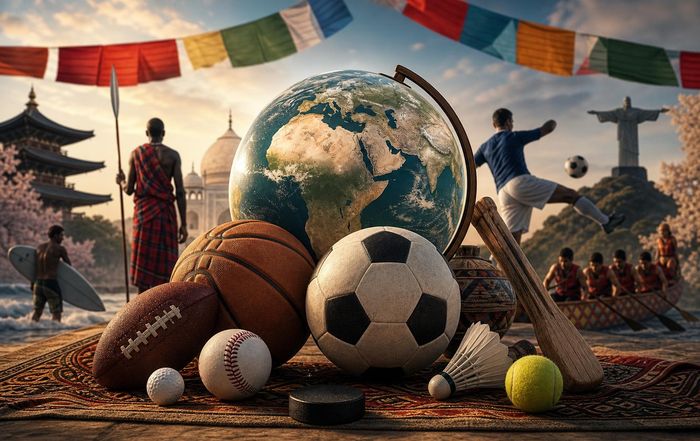
How Sports Traditions Shape Cultural Identity Worldwide
From village fields to global stadiums, sports traditions have become some of the most visible expressions of cultural identity on the planet. They carry stories about who people are, what they value, and how communities see their place in the world. At the same time, modern media, migration, and commercialization are reshaping those traditions, raising questions about what cultural identity in sport will look like in the decades ahead.
This article explores how sports traditions form, how they express and sometimes contest cultural identity, and how global forces-from mega-events to esports-are changing the way nations and communities play, watch, and remember.
Why sport is such a powerful carrier of culture
Sport sits at a rare intersection of body, emotion, and ritual. Anthropologists have long noted that games and contests act as "social dramas," where communities rehearse values like courage, fairness, hierarchy, or resistance in a highly visible way. Unlike many cultural practices, sport is both rule-bound and endlessly repeatable, which makes it a strong vessel for transmitting identity across generations.
International bodies such as UNESCO have argued that traditional sports and games are part of humanity's intangible cultural heritage, much like music or dance, because they encode local histories and worldviews. Organizations such as the International Olympic Committee at https://olympics.com/ and FIFA at https://www.fifa.com/ have, in different ways, amplified this by turning local sporting practices and symbols into global spectacles. National flags, anthems, uniforms, and ceremonies at major events are not add-ons; they are carefully staged performances of identity that millions watch and internalize.
At the everyday level, community clubs, school competitions, and informal games on streets and beaches do similar work on a smaller scale. They help young people learn what it means to be from a particular neighborhood, region, or diaspora. For many readers interested in training or performance, this cultural layer can be easy to overlook, yet it often shapes why athletes choose a sport, how they experience success or failure, and what kinds of role models they look up to. For those exploring broader sports and culture coverage, understanding this context adds depth to every match and medal.
National identity, pride, and the politics of the jersey
Few arenas make national identity feel as tangible as international sport. Sociologists sometimes call sport a "soft" form of nationalism: a way for people to feel part of a nation without engaging in overt politics. When national teams compete at the Olympics, World Cups, or continental championships, they give abstract ideas like "Brazil," "Japan," or "Nigeria" a set of colors, faces, and styles of play.
The FIFA World Cup is one of the clearest examples. For many countries, especially those with histories of colonization or internal division, football became a way to assert independence and unity. When India, Pakistan, and several African nations gained independence in the mid-20th century, participation in events under their own flags was symbolically powerful. The same is true today when smaller nations qualify for major tournaments, briefly commanding global attention and often triggering surges of national pride and public celebration.
Yet sport also exposes tensions within national identity. Debates over who gets to wear a national jersey-especially in multicultural societies in Europe and North America-have revealed deeper questions about citizenship, migration, and belonging. Teams such as France's men's football side or England's national cricket team have been celebrated as symbols of diversity but have also faced racist backlash when results go badly. Researchers at institutions like the London School of Economics and Harvard University at https://www.harvard.edu/ have used these cases to show how sport can both challenge and reinforce exclusionary ideas of who "really" belongs to a nation.
Mega-events like the Olympics add another layer. Host nations often use them to project a carefully curated image of themselves to the world, combining sports performance with opening ceremonies that reference history, art, and technology. The International Olympic Committee promotes this as a form of cultural exchange, but human rights organizations such as Amnesty International at https://www.amnesty.org/ have criticized hosts for using sport to "sportswash" domestic abuses. For readers following world and news coverage, these debates highlight how deeply sport is woven into contemporary geopolitics.
Local games, indigenous sports, and cultural survival
Beyond globally dominant sports like football, basketball, or tennis, many communities maintain indigenous or traditional games that are central to cultural continuity. These can range from wrestling styles in West Africa and Central Asia to stickball among Native American nations, to traditional boat races in Southeast Asia. They often blur the line between sport, ritual, and community gathering.
Organizations such as UNESCO at https://www.unesco.org/ and the United Nations at https://www.un.org/ have emphasized that these practices are at risk from urbanization, commercialization, and the overwhelming media presence of a few global sports. In response, some governments and federations have created festivals and dedicated competitions to keep local games alive. The World Indigenous Games, for example, have aimed to showcase indigenous sports and cultural performances on an international stage, though they receive far less attention than mainstream events.
For indigenous communities in the Americas, Oceania, and parts of Asia, sport can also be a site of cultural reclamation. Reviving traditional games in schools, camps, and community centers helps younger generations connect with languages, stories, and values that may be marginalized in national curricula. This aligns closely with the broader role of physical activity that we explore in our training and lifestyle coverage: movement as a way of learning who you are, not just how fast you can run.
However, preservation efforts face practical challenges. Funding is often limited, facilities are scarce, and there can be tensions between codifying rules for competition and maintaining more fluid, ceremonial forms of play. Some communities worry that turning a ritual game into a standardized sport for tourists or television will strip it of its deeper meaning. Balancing visibility, economic opportunity, and cultural integrity remains a delicate task.
Migration, diaspora communities, and hybrid sporting cultures
As people move across borders for work, study, or refuge, they carry their sports traditions with them. Diaspora communities often use sport to maintain ties to homelands and to negotiate their place in new societies. Cricket leagues in North America, football clubs formed by Turkish communities in Germany, or Gaelic games in the United States are all examples of how migrants recreate familiar sporting worlds abroad.
These spaces are rarely closed. Over time, local residents join, rules adapt to available facilities, and hybrid cultures emerge. In some cities, weekend leagues feature teams named after villages thousands of kilometers away, playing under local regulations on shared pitches. Sociologists at universities such as University of Toronto at https://www.utoronto.ca/ and University of Sydney at https://www.sydney.edu.au/ have documented how these leagues become hubs of social support, business networking, and even informal political organizing.
Diaspora sport can also shape perceptions of entire communities. High-profile athletes with migrant backgrounds-whether in athletics, football, basketball, or combat sports-often become public figures whose stories are read as symbols of integration or marginalization. Media narratives sometimes place heavy expectations on these individuals to "represent" both their ancestral and current homes. When they choose which national team to represent, or how openly to discuss issues like racism, their decisions can ignite intense debate about loyalty and identity.
At the grassroots level, mixed teams and shared facilities can help break down stereotypes, especially among young people. Programs supported by organizations such as Right To Play at https://www.righttoplay.com/ and various national sport-for-development agencies use games to foster dialogue between groups that might not otherwise meet. For readers interested in the intersection of sport and social change, this is one of the most dynamic and hopeful areas of contemporary sports culture.
Gender, representation, and changing traditions
Gender norms are among the most contested aspects of sports traditions worldwide. For much of modern sports history, women and girls were excluded from many disciplines or steered into a narrow range of "acceptable" activities. These exclusions were often justified through cultural or pseudo-scientific arguments about femininity, health, or propriety. Over the past few decades, however, campaigns by athletes, activists, and organizations have reshaped what is possible.
The International Olympic Committee, FIFA, and regional bodies like UEFA at https://www.uefa.com/ now promote gender equality as a core principle, though progress varies widely by sport and region. The growth of women's football in Europe, North America, and parts of Asia, for example, has turned what was once a marginalized activity into a major cultural force, inspiring new role models and shifting community expectations. In some countries, women's national teams have become more successful than men's teams, complicating older narratives about who embodies national sporting prowess.
At the same time, resistance remains strong in some contexts, with arguments framed around tradition, religion, or "protecting" women. The World Health Organization at https://www.who.int/ and other health agencies have pushed back against these restrictions by highlighting the physical and mental health benefits of sport for all genders, reinforcing the idea that access to play is a public health and human rights issue as much as a cultural one.
Debates over attire-such as the right to wear hijab or other religious dress in competition-have become flashpoints where global sporting rules intersect with local cultural and religious identities. Governing bodies have sometimes had to revise regulations after pressure from athletes and advocacy groups, illustrating how sports traditions are not fixed but negotiated. For readers who follow ethics and health topics, these controversies reveal how questions of fairness, safety, and inclusion are increasingly understood through a cultural lens, not just a technical or medical one.
Commercialization, media, and the globalization of sporting culture
Television, digital streaming, and social media have turned certain sports into global entertainment products, spreading specific traditions far beyond their original cultural contexts. The National Basketball Association (NBA) at https://www.nba.com/, English Premier League at https://www.premierleague.com/, and major combat sports promotions have all built worldwide audiences, with fans in Asia, Africa, and the Americas adopting teams and athletes from distant countries as their own.
This globalization has complex effects on cultural identity. On one hand, it can create shared reference points that connect people across borders. A teenager in Lagos, Seoul, and São Paulo might all know the same players, memes, and highlight clips, giving them a common language of sport. On the other hand, it can overshadow local sports traditions that lack similar media exposure or commercial backing. Community clubs may struggle to compete with the allure of global brands, both in attracting young players and in securing sponsorship.
Media narratives also shape how cultures are perceived through sport. Coverage by outlets like the BBC at https://www.bbc.com/ or ESPN at https://www.espn.com/ often highlights certain storylines-underdogs, rivalries, redemption arcs-that resonate with international audiences but may simplify or stereotype local realities. For example, African and Latin American athletes are sometimes framed primarily as products of poverty and struggle, while European or North American athletes receive more individualized backstories focused on personal choice and professionalism.
Commercialization can also influence rituals themselves. Pre-match ceremonies, fan chants, and even traditional foods around stadiums may be repackaged for sponsors or tourists. Some supporters welcome this as a way to sustain clubs financially and share their culture with the world; others see it as a dilution or commodification of something that should remain community-owned. These tensions mirror broader debates about how to balance economic opportunity with cultural authenticity in a globalized economy, a theme that also runs through our business and brands coverage.
Esports, digital fandom, and emerging identities
The rise of esports and digital platforms has introduced new kinds of sports traditions that are less tied to geography and more to online communities. Competitive gaming titles such as League of Legends, Dota 2, and Counter-Strike have built professional leagues, fan rituals, and team rivalries that resemble traditional sports in some ways and diverge in others. While governing structures are different-game publishers hold central power rather than federations-questions of identity still loom large.
Esports fans frequently organize around teams, streamers, or regions, creating chants, memes, and shared histories that function as cultural markers. International tournaments produce national and regional narratives, even when players compete under club brands rather than flags. Organizations like Riot Games at https://www.riotgames.com/ and Valve at https://www.valvesoftware.com/ have had to consider how to manage cross-cultural communication, political statements, and controversies in globally watched events.
Digital platforms also give fans more direct influence over sporting culture. Social media debates can quickly reshape how teams respond to issues like racism, sexism, or homophobia in stadiums and online spaces. Supporter-led campaigns have pressured clubs and leagues to adopt inclusive policies, commemorate marginalized histories, or distance themselves from problematic sponsors. For readers interested in gaming and social dynamics, this convergence of physical and digital arenas shows how cultural identity in sport is increasingly negotiated in real time, across borders.
At the same time, not all communities have equal access to these digital spaces. Broadband infrastructure, language barriers, and platform policies can exclude or marginalize certain groups, reinforcing existing inequalities. As esports and digital fandom become more central to youth culture, questions about whose traditions get visibility-and whose are ignored-will only grow more urgent.
Health, inclusion, and the future of sports traditions
Looking ahead, the way sports traditions shape cultural identity will be influenced by several overlapping trends: public health priorities, environmental concerns, and evolving ideas about inclusion. Health organizations such as the World Health Organization and national agencies increasingly promote sport and physical activity as tools to combat non-communicable diseases, mental health challenges, and social isolation. This has led to new initiatives that blend traditional games with modern fitness approaches, from community walking football for older adults to culturally tailored exercise programs in schools.
Climate change is also forcing a rethink of some sporting traditions, from winter sports facing shorter seasons to mega-events grappling with their environmental footprint. Environmental groups and some athletes argue that the cultural prestige of certain events should not exempt them from scrutiny. Debates over sustainable venues, travel emissions, and resource use are prompting federations to experiment with new formats and technologies. For those following environment and performance issues, this intersection of ecology and identity is likely to become more prominent.
Inclusion will remain a central battleground. Discussions about access for people with disabilities, LGBTQ+ athletes, and marginalized communities continue to challenge long-standing norms. The International Paralympic Committee at https://www.paralympic.org/ has helped shift public perceptions of disability and athleticism, while local adaptive sports programs translate these shifts into everyday opportunities. How societies choose to adapt or defend existing traditions in response to these demands will say a great deal about their evolving values.
Ultimately, sports traditions are not static relics but living practices. They can reinforce divisions or build bridges; they can be used to exclude or to welcome. For athletes, coaches, and fans who care about both performance and the broader meaning of play, paying attention to the cultural stories embedded in sport is not a distraction from the game-it is part of understanding why the game matters at all.