

How Wearable Sensors Are Redefining Training Accuracy in 2026
The New Baseline for Training: Data, Not Guesswork
By 2026, the global sports and fitness landscape has moved decisively from intuition-driven training toward an era in which data, continuous monitoring and algorithmic insights shape almost every serious performance program. From elite athletes in the United States and Europe to recreational runners in Asia-Pacific and weekend cyclists in South America, wearable sensors have become the invisible infrastructure behind more precise, individualized and accountable training. For the audience of SportyFusion-already accustomed to exploring the intersection of sports and performance, fitness and health and technology and business-this shift is not merely a trend; it is a structural change in how training is designed, executed and evaluated.
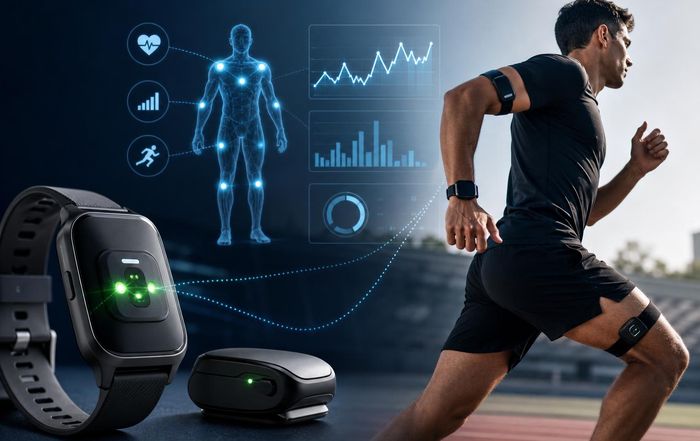
Wearable devices have evolved far beyond simple step counters. In 2026, multi-sensor platforms integrate optical heart-rate monitors, inertial measurement units, GPS, skin temperature sensors, galvanic skin response and even non-invasive glucose estimation in some experimental systems. Organizations such as World Athletics and leading sports science institutes increasingly reference continuous sensor data in their guidelines for training loads and recovery. Learn more about current sports science standards at World Athletics. The result is a training ecosystem in which accuracy is no longer defined solely by stopwatch times or weight-room numbers, but by how precisely training stimuli match an athlete's physiological state and long-term performance objectives.
From Heart Rate to Full-Stack Biometrics
The first generation of wearable sensors focused primarily on heart rate and step counts, providing a useful but partial view of training stress. By 2026, the most advanced platforms used by professional organizations such as Manchester City FC, FC Bayern München and Team INEOS Grenadiers have embraced what many sports scientists call "full-stack biometrics," combining cardiovascular, neuromuscular, mechanical and behavioral data in a single integrated stream. To better understand the foundations of this evolution, readers can explore contemporary sports physiology research at the National Institutes of Health and performance analytics insights from institutions like Aspetar Orthopaedic and Sports Medicine Hospital.
For the typical SportyFusion reader-whether a strength athlete in Germany, a triathlete in Australia or a footballer in Brazil-the same principles apply at a more accessible scale. Modern multisport watches and sensor-enabled apparel now estimate running power, ground contact time, left-right balance, stride length, heart rate variability and even breathing rate, allowing coaches and self-coached athletes to anchor their training zones to individualized physiological thresholds instead of generic formulas. This shift from population averages to personal baselines is at the core of improved training accuracy, because it reduces the risk of both chronic undertraining and the more dangerous pattern of cumulative overtraining.
Precision Training Zones and Load Management
The most immediate way wearable sensors improve training accuracy is by transforming how training zones and workloads are defined. Traditionally, athletes often estimated intensity using rough heart-rate formulas or subjective exertion scales. In 2026, serious programs increasingly rely on individualized thresholds derived from field tests and continuous data, often cross-validated by laboratory assessments when available. Organizations such as Garmin, Polar, Whoop and Apple have invested heavily in algorithms that estimate lactate threshold, functional threshold power and critical speed from everyday training data, and these metrics now guide session design far more precisely than simple heart-rate percentages.
For readers following SportyFusion's ongoing coverage of training methodologies and performance science, the key change is that training load is now quantified across multiple dimensions: internal load (physiological response) and external load (mechanical work). Cyclists and runners, for example, can combine power output with heart-rate response to determine whether a given power level is becoming more or less taxing over time, a powerful indicator of fitness progression or early fatigue. Learn more about contemporary endurance training models at TrainingPeaks, which has become a reference platform for data-driven coaching.
In team sports, GPS and inertial sensors track high-speed running, accelerations, decelerations and impacts, allowing performance staff to calibrate each session to match or slightly exceed match demands without overshooting safe thresholds. This granular understanding of workload has direct business implications for professional clubs and leagues in North America, Europe and Asia, where player availability is a primary driver of competitive success and commercial outcomes. As SportyFusion's business coverage often notes, data-informed load management is now considered a strategic asset, not just a sports science detail.
Reducing Injury Risk through Early Warning Signals
Training accuracy is not only about hitting the right targets; it is equally about avoiding the wrong ones. In 2026, one of the most valuable contributions of wearable sensors is their role in early detection of injury risk. Subtle changes in movement patterns, asymmetries in force production, persistent elevation in resting heart rate, reduced heart rate variability and disrupted sleep patterns can all signal that an athlete is drifting into a zone of heightened vulnerability. Leading sports medicine organizations such as the American College of Sports Medicine (ACSM) and the International Olympic Committee (IOC) now emphasize the importance of continuous monitoring for injury prevention. Readers can review current position stands and consensus statements at ACSM and the IOC.
For semi-professional and recreational athletes-the core of SportyFusion's global community-consumer-grade wearables have begun to approximate some of this functionality. Smart rings and wrist-based trackers can flag abnormal sleep or recovery patterns, while running sensors and smart insoles can highlight changes in impact loading or contact time that may precede overuse injuries. When combined with responsible training design, these early signals allow athletes to adjust volume, intensity or technique before issues become clinically significant, thereby improving the long-term accuracy of their training plans by keeping them aligned with the body's actual capacity.
Personalized Coaching at Global Scale
The rise of wearable sensors has coincided with an explosion in AI-assisted coaching platforms, creating a new model of personalized guidance that operates across borders and time zones. For SportyFusion's worldwide readership-from Singapore and Japan to Canada and South Africa-this democratization of high-level coaching is particularly significant. Athletes can now access adaptive training plans that adjust daily based on their sensor data, rather than relying solely on static programs or infrequent feedback. Digital coaching ecosystems powered by companies such as Strava, Zwift, Nike, Adidas and emerging AI-native startups are integrating wearable streams into intelligent recommendations that respond to real-world conditions.
This model of "coaching by data" does not replace human expertise but rather augments it. Many professional coaches now use dashboards that aggregate sensor metrics, video analysis and subjective feedback into unified athlete profiles, enabling more nuanced decisions about when to push, when to hold steady and when to prioritize recovery. Readers interested in how this trend intersects with digital culture can explore related perspectives in SportyFusion's culture section, where the human side of data-driven training-motivation, identity and community-is a recurring theme. For a broader technology perspective, resources such as the MIT Sloan Management Review analyze how AI and analytics are reshaping performance management across industries, including sport.
Integrating Health, Fitness and Everyday Life
A defining characteristic of the 2026 wearable ecosystem is the blurring of lines between athletic performance and general health. The same sensors that guide interval sessions or strength workouts are increasingly used to monitor cardiovascular health, metabolic status and mental well-being throughout the day. Organizations such as the World Health Organization (WHO) and national public health agencies in the United Kingdom, Germany and Australia have recognized the potential of wearable data to support population-level health initiatives. Readers can explore current physical activity guidelines and digital health initiatives at the WHO.
For SportyFusion's audience, which often navigates demanding professional lives alongside ambitious fitness goals, this integration of training and health data is particularly valuable. Modern platforms correlate exercise metrics with sleep quality, stress markers and even workday activity patterns, helping users understand how lifestyle factors influence both performance and long-term health. Articles in SportyFusion's health section frequently highlight the importance of this holistic perspective, emphasizing that accurate training is not just about the hour in the gym or on the track, but about how that hour fits into a broader 24-hour cycle of work, rest and recovery.
The Business of Wearable Performance
The rapid adoption of wearable sensors has created a robust global industry that touches hardware, software, apparel, sports marketing, insurance and even employment. Market research firms and consultancies such as McKinsey & Company and Deloitte estimate that the broader digital health and performance analytics market continues to grow at double-digit rates, driven by consumer demand, professional sport investment and corporate wellness programs. Business readers can delve into these projections and case studies at McKinsey and Deloitte.
For brands, accurate training data has become a differentiator in product design and marketing. Footwear companies integrate sensor data into shoe development, using real-world running metrics from thousands of users to refine cushioning, stability and energy return. Apparel companies experiment with smart textiles that embed sensors directly into garments, reducing the friction of data collection. SportyFusion's brands coverage tracks how companies position themselves around performance credibility, often highlighting partnerships with elite teams, leagues and research institutions as proof of expertise and trustworthiness.
At the same time, employers in sectors ranging from logistics to corporate services are exploring how voluntary wearable programs can support worker health, reduce absenteeism and enhance safety. SportyFusion's readers who follow jobs and workplace trends will recognize the implications: performance metrics once reserved for athletes are increasingly relevant to knowledge workers, frontline staff and executives navigating high-stress environments. As with any data-driven initiative, however, this expansion raises complex ethical and privacy considerations.
Ethics, Privacy and the Politics of Data
The same capabilities that make wearable sensors powerful tools for training accuracy also make them sensitive instruments of surveillance if misused. Continuous monitoring of heart rate, sleep, movement and stress can reveal intimate details about an individual's health, habits and emotional state. In professional sport, debates have intensified around who owns player data, how it may influence contract negotiations and whether athletes can opt out of certain forms of monitoring without jeopardizing their careers. In corporate settings, regulators and labor organizations in regions such as the European Union and North America have begun to scrutinize wellness programs that rely heavily on wearable data.
For SportyFusion, which maintains a strong editorial focus on ethics and social impact, these issues are central to any discussion of training accuracy. Accurate training should not come at the cost of autonomy or dignity. Leading privacy advocates and legal scholars point to frameworks such as the EU's General Data Protection Regulation (GDPR) and evolving standards from bodies like the Electronic Frontier Foundation (EFF) as reference points for responsible data governance. Readers can explore digital rights perspectives at EFF.
Trustworthiness in the wearable ecosystem depends on transparent data practices, clear consent mechanisms and robust security. Athletes and everyday users alike increasingly demand to know how their data is stored, who can access it and how long it is retained. Organizations that align technical excellence with ethical stewardship will be best positioned to earn long-term loyalty in a marketplace where devices are easy to copy, but trust is not.
Cultural Shifts: From Self-Tracking to Shared Performance
Beyond metrics and business models, wearable sensors are reshaping the culture of sport and fitness. What began as self-tracking has evolved into shared performance, where training data becomes a medium of social connection, competition and identity. Platforms such as Strava and Zwift popularized virtual leaderboards and group workouts, but by 2026, these concepts have expanded into hybrid events that blend in-person races with sensor-verified remote participation, enabling runners in New Zealand, cyclists in Italy and rowers in Norway to compete on level terms despite geographic distance.
SportyFusion's social and lifestyle coverage has chronicled how these developments influence motivation, community formation and even mental health. On one hand, data-rich environments can foster accountability, camaraderie and a sense of shared progress; on the other, they can encourage unhealthy comparison, obsession with numbers and a loss of joy in movement. Cultural institutions, coaches and brands now face the challenge of promoting data literacy and emotional resilience alongside physical training, helping individuals use metrics as tools rather than as measures of self-worth. For broader cultural analysis of digital life, resources such as the Pew Research Center provide valuable longitudinal insights.
Environmental and Sustainability Considerations
As wearable sensors proliferate, questions about environmental impact have become more prominent. Devices require rare earth minerals, complex manufacturing processes and energy-intensive cloud infrastructure to store and analyze data. In regions such as Scandinavia, Germany and Canada, where sustainability is a core societal value, consumers increasingly scrutinize the lifecycle footprint of their devices. SportyFusion's environment section frequently highlights how sports and fitness industries intersect with climate and resource challenges.
Forward-looking companies are responding with modular designs that facilitate repair and recycling, lower-power chips that extend battery life and programs to refurbish or responsibly dispose of outdated devices. Learn more about sustainable electronics and circular economy principles at organizations such as the Ellen MacArthur Foundation. For athletes and fitness enthusiasts, the challenge is to integrate performance ambitions with environmental responsibility, choosing products and platforms that align with both personal and planetary health.
The Next Frontier: Context-Aware and Adaptive Systems
Looking ahead from 2026, the trajectory of wearable sensors points toward even deeper integration, greater contextual awareness and more seamless user experiences. Research groups at leading universities and technology companies are experimenting with sensor fusion that combines wearables, smart clothing, environmental sensors and even computer vision to create a more holistic understanding of the athlete's context. For instance, a future training system might automatically adjust an interval session based on local air quality, temperature, recent sleep debt and upcoming competition schedule, rather than relying on static prescriptions. Readers interested in cutting-edge human performance research can follow developments at institutions such as Stanford University's Human Performance Alliance.
For SportyFusion, this evolution reinforces a central editorial theme: technology is most valuable when it enhances human agency and insight rather than replacing them. Training accuracy in the coming years will depend not only on the precision of sensors or the sophistication of algorithms, but also on the wisdom with which athletes, coaches and organizations interpret and act on the data. Education, critical thinking and a commitment to long-term development will remain irreplaceable, even in a world of real-time analytics and predictive models.
SportyFusion's Role in a Data-Driven Performance Era
As wearable sensors continue to transform training around the world, SportyFusion occupies a distinctive position at the crossroads of sports, fitness, health, technology and business. The platform's mission is not simply to report on new devices or trends, but to provide a trusted, expert lens through which athletes, coaches, executives and enthusiasts can evaluate what truly advances performance and well-being.
In practice, this means interrogating claims with sports science rigor, highlighting both the possibilities and the limitations of sensor-based training, and foregrounding ethical, cultural and environmental considerations that might be overlooked in purely technical discussions. It also means telling the stories of individuals and communities-from youth academies in Africa to masters athletes in North America-who are using data not as an end in itself, but as a means to pursue meaningful goals, build resilient habits and connect across borders.
In 2026, wearable sensors have undeniably improved training accuracy, moving the world of sport and fitness closer to a model in which each session is tailored, responsive and evidence-based. Yet the true measure of this progress lies not only in faster times or higher scores, but in whether the technology supports healthier careers, more inclusive participation and a deeper appreciation of human potential. By continuing to bridge expert knowledge with practical insight, SportyFusion aims to help its global audience navigate this evolving landscape with clarity, confidence and purpose. For readers seeking to stay at the forefront of these developments, the SportyFusion homepage at sportyfusion.com remains a dedicated hub for the latest analysis, news and perspectives on the future of performance.