

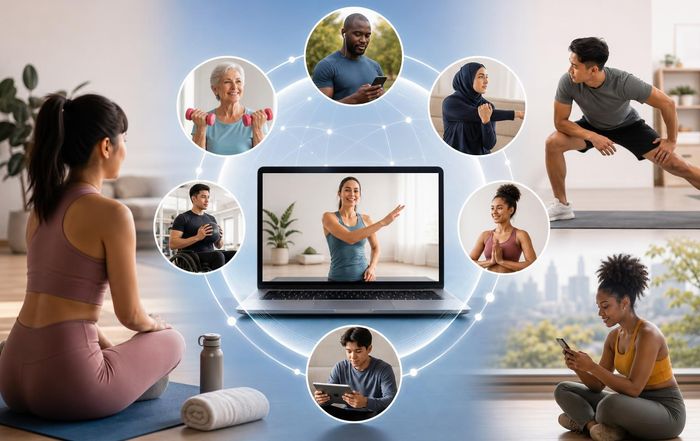
How Fitness Education Is Reaching New Audiences
A New Era for Fitness Education
Fitness education has moved far beyond traditional gyms, print workout plans, and one-size-fits-all advice. It has become a dynamic, data-informed, and culturally aware ecosystem that touches almost every aspect of daily life, from how people in New York or London commute to work, to how communities in Bangkok or São Paulo design public spaces, to how employers in Berlin or Singapore structure workdays around wellbeing. For SportyFusion and its global fitness loving cool audience, this shift is not a distant trend but a lived reality, shaping how readers understand performance, health, identity, and opportunity in an increasingly interconnected world.
This transformation is being driven by the convergence of digital technology, sports science, behavioral psychology, and global culture, as well as by a growing recognition among policymakers, businesses, and educators that physical literacy is as fundamental as traditional literacy and numeracy. Fitness education is no longer confined to athletes or enthusiasts; it is being reframed as a universal competency, essential for navigating a world where sedentary lifestyles, mental health pressures, and chronic disease intersect with rapid technological change. As a result, new audiences are engaging with fitness knowledge through platforms, formats, and narratives that would have been unthinkable a decade ago.
For digital happy readers of SportyFusion's fitness coverage, this evolution raises strategic questions: how can individuals, organizations, and communities harness these developments to improve performance, resilience, and quality of life, and how can they distinguish credible, evidence-based education from the noise of an increasingly crowded marketplace?
From Gyms to Global Platforms
The democratization of fitness education began with online video tutorials and mobile apps, but in 2026 it is shaped by integrated ecosystems that combine streaming, wearables, connected equipment, and community features. Platforms inspired by pioneers such as Peloton and Apple Fitness+ have evolved into multi-layered services that deliver structured programs, real-time performance feedback, and personalized coaching to users in the United States, Europe, Asia, and beyond. These services are increasingly informed by research from institutions such as Harvard T.H. Chan School of Public Health, which has long documented the impact of physical activity on longevity and chronic disease prevention; readers can explore how regular movement reduces risks of cardiovascular disease and diabetes through resources like the Harvard health benefits of exercise overview.
At the same time, the reach of fitness education has expanded through social platforms and creator-driven content, but with a growing emphasis on evidence and transparency. While early "fitfluencer" culture often prioritized aesthetics and virality over substance, a new generation of educators, including certified coaches, sports scientists, and physical therapists, are using long-form video, podcasts, and interactive Q&A formats to explain biomechanics, recovery, and injury prevention in accessible language. Initiatives like the American College of Sports Medicine's guidelines, available through resources such as the ACSM recommendations for physical activity, are being translated into consumer-friendly frameworks by these educators, enabling audiences from Toronto to Tokyo to understand not just what to do, but why it works.
For SportyFusion, which bridges sports, culture, and technology, this global platformization of fitness education underscores the importance of curating and contextualizing knowledge rather than merely aggregating it. Readers increasingly expect not only to discover new workouts or training philosophies, but also to see them analyzed within broader trends in sports performance and innovation.
Personalization Through Data and Sports Science
One of the most profound shifts in fitness education is the move from generic advice to highly personalized guidance, powered by data from wearables, smart equipment, and health platforms. Devices from companies such as Garmin, WHOOP, and Oura now track heart rate variability, sleep stages, and recovery indices, while mainstream smartwatches from Apple and Samsung serve as entry points for millions of users into basic activity tracking and health monitoring. The data generated by these devices is increasingly being translated into educational insights rather than raw metrics, helping users understand, for example, how sleep quality affects training adaptation or why stress management is essential for performance.
This evolution is underpinned by advances in sports science and exercise physiology, much of which is disseminated through organizations like the National Institutes of Health and World Health Organization. Those seeking an overview of how physical activity guidelines are evolving globally can refer to the WHO's recommendations on physical activity and sedentary behavior. In 2026, these guidelines are being integrated into consumer apps and coaching platforms in ways that dynamically adjust recommendations based on age, baseline fitness, and health status, making evidence-based training accessible to a broader demographic, including older adults in Scandinavia, busy professionals in Singapore, and students in South Africa.
Within this context, SportyFusion's readers are not just passive recipients of information; they are active participants in experimentation and feedback loops. Many track their progress, share results, and compare experiences across borders, using key insights from SportyFusion's health coverage to interpret emerging research on topics such as high-intensity interval training, strength training for longevity, or the relationship between VO₂ max and cognitive performance. The challenge is no longer access to information, but the ability to critically evaluate, synthesize, and apply it in a way that respects individual variability and long-term sustainability.
The Cultural Reframing of Fitness
Fitness education is also being reshaped by cultural forces that challenge narrow, appearance-focused narratives and embrace more inclusive, identity-aware perspectives. In the United States, United Kingdom, and Australia, public conversations around body image, gender identity, and social equity have forced brands, educators, and media platforms to reconsider how they present fitness role models and define success. The shift is visible in campaigns by global companies such as Nike and Adidas, which feature athletes and everyday movers across age, size, ethnicity, and ability, as well as in community initiatives that prioritize accessibility and psychological safety over performance metrics.
For readers of SportyFusion's culture section, this reframing is particularly significant, as it highlights how fitness intersects with media representation, social norms, and cross-cultural dialogue. In European cities such as Berlin, Copenhagen, and Amsterdam, urban design that prioritizes cycling and walking has turned active commuting into a cultural norm, supported by policy frameworks and public-health messaging that treat movement as a civic value rather than a private hobby. Interested readers can explore how urban design influences activity levels through resources like the World Economic Forum, which has discussed the role of active cities and can be accessed via articles such as how urban planning can promote healthier lifestyles.
In Asia, from Seoul to Singapore and Bangkok, fitness culture has been influenced by K-pop aesthetics, esports, and a strong emphasis on academic and professional achievement, creating both opportunities and tensions. On one hand, younger audiences are highly engaged with digital platforms and gamified experiences; on the other, they face intense time pressures and social expectations. Fitness education that resonates in these contexts must acknowledge these realities, offering short, efficient routines, stress management techniques, and narratives that frame movement as a tool for cognitive performance and emotional regulation rather than merely for appearance. The OECD has highlighted the economic and social costs of physical inactivity across member states, and readers can learn more about the burden of lifestyle-related diseases to understand why governments are increasingly investing in culturally tailored fitness education campaigns.
The Role of Schools, Universities, and Lifelong Learning
Formal education systems have become critical channels for reaching new audiences with fitness knowledge, particularly children, adolescents, and young adults who are forming lifelong habits. In countries such as Canada, Germany, and the Nordic nations, curriculum reforms have sought to integrate physical literacy with broader health and wellbeing education, emphasizing not only sports skills but also understanding of movement mechanics, nutrition, sleep, and mental health. Organizations such as UNESCO have advocated for comprehensive school-based physical education as a pillar of sustainable development, and their materials on quality physical education have informed policy debates in both developed and emerging economies.
Universities and colleges have also expanded their role beyond varsity sports, offering credit-bearing courses on exercise science, stress management, and digital wellness to students across disciplines. In the United States and United Kingdom, campus recreation centers have become hubs for workshops that teach students how to interpret wearable data, design balanced training weeks, and avoid overtraining or disordered exercise patterns. These initiatives recognize that higher education is not only about intellectual skills but also about equipping graduates with the resilience needed to navigate volatile job markets and high-pressure careers.
For professionals returning to learning later in life, online platforms such as Coursera, edX, and FutureLearn provide access to structured courses on nutrition, exercise science, and health coaching from universities worldwide. Those interested in formalizing their understanding of training principles can explore options such as online courses in exercise and health, which allow learners from Johannesburg to Jakarta to engage with university-level content without geographic constraints. This expansion of lifelong learning aligns with SportyFusion's focus on how education and training intersect with performance and opportunity, and it reinforces the idea that fitness literacy is a continuous journey rather than a one-time acquisition.
Corporate Wellness, Business Strategy, and the Future of Work
The workplace has emerged as a powerful vector for fitness education, particularly as hybrid and remote work models have become entrenched across North America, Europe, and parts of Asia-Pacific. Employers increasingly recognize that musculoskeletal issues, burnout, and chronic disease are not only human challenges but also business risks that affect productivity, innovation, and talent retention. As a result, corporate wellness programs have evolved from simple gym subsidies to integrated wellbeing strategies that include ergonomic assessments, digital coaching, and structured movement breaks.
Leading organizations draw on research from entities such as the World Economic Forum and McKinsey & Company, which have documented the economic returns of investing in health and wellbeing. Readers can learn more about the business case for workplace wellness through global consulting analyses that quantify reduced absenteeism and improved engagement. In 2026, forward-thinking employers in sectors from technology to finance are partnering with fitness educators to deliver tailored workshops on topics such as mobility for desk workers, recovery strategies for shift workers, and resilience training for high-stress roles.
For SportyFusion, which covers the intersection of business and performance, this trend underscores how fitness education is becoming a strategic asset rather than a discretionary perk. Companies in the United States, Germany, and Singapore are integrating fitness metrics into broader wellbeing dashboards, offering employees access to evidence-based content and personalized guidance while navigating complex questions around data privacy and ethical use of health information. The most effective initiatives combine digital tools with human coaching, recognizing that behavior change is driven as much by social support and organizational culture as by individual motivation.
Technology, AI, and the New Frontiers of Coaching
Artificial intelligence and advanced analytics are redefining how fitness education is designed, delivered, and adapted. In 2026, AI-powered coaching systems can analyze training logs, wearable data, and subjective feedback to generate individualized recommendations that adjust in real time to a user's recovery status, schedule constraints, and performance goals. These systems draw on large datasets and models trained on diverse populations, while increasingly integrating clinical guidelines to ensure safety and appropriateness for users with underlying health conditions.
Technology companies collaborate with sports institutes and medical organizations to validate algorithms and minimize bias. For example, research published through platforms such as PubMed and The Lancet Digital Health informs the development of models that predict injury risk or optimize training loads. Those interested in the scientific underpinnings can explore digital health and AI in medicine to understand how similar methodologies are applied in clinical contexts. Fitness platforms then translate these insights into practical, user-friendly experiences, often combining AI-generated plans with human oversight from certified coaches or physiotherapists.
For SportyFusion readers, the rise of AI coaching raises important questions about trust, accountability, and the role of human expertise. While algorithms can process data at scale and identify patterns, human coaches provide contextual understanding, empathy, and the ability to navigate complex psychosocial factors. The most advanced ecosystems, including those covered in SportyFusion's technology section, are not replacing human experts but augmenting them, enabling coaches to focus on higher-order guidance while leveraging AI to handle routine analysis and monitoring. This hybrid model holds particular promise for reaching underserved populations, such as older adults or individuals in rural areas, who may not have access to in-person coaching but can benefit from structured, adaptive guidance delivered via smartphones or smart TVs.
Reaching Underserved and Emerging Audiences
Despite significant progress, global disparities in access to fitness education persist across regions, income levels, and demographic groups. In parts of Africa, South Asia, and Latin America, infrastructure constraints, limited access to safe public spaces, and competing socioeconomic priorities can make traditional fitness offerings inaccessible. However, innovative models are emerging that leverage mobile connectivity, community organizations, and culturally resonant messaging to bridge these gaps.
Non-governmental organizations and public-health agencies are partnering with local leaders to deliver movement education through schools, workplaces, and community centers, often integrating it with broader initiatives around nutrition, maternal health, and disease prevention. The World Bank and UN Development Programme have highlighted the role of community-based health promotion in sustainable development, and readers can learn more about integrated health and development strategies to understand how fitness education fits within these frameworks. In South Africa, Brazil, and Thailand, locally produced content in multiple languages, featuring relatable role models, is helping to normalize movement as an achievable, everyday behavior rather than a luxury pursuit.
Digital platforms are also adapting to low-bandwidth environments, offering audio-based coaching, offline downloads, and SMS-based reminders that do not require constant high-speed connectivity. For SportyFusion, which serves a global readership through its world news coverage, these examples illustrate how innovation is not limited to high-tech wearables or expensive equipment; it also includes frugal, context-aware solutions that meet people where they are. As more brands and organizations recognize the growth potential of emerging markets, there is an opportunity-and responsibility-to design fitness education that is inclusive, affordable, and aligned with local realities.
The Convergence of Sports, Entertainment, and Gaming
Another powerful driver of fitness education's reach is the convergence of sports, entertainment, and gaming, which is particularly relevant to younger audiences in North America, Europe, and Asia. Exergaming platforms and motion-based controllers have matured beyond novelty, offering sophisticated experiences that blend skill development, cardiovascular training, and social interaction. Titles inspired by early successes like Ring Fit Adventure have evolved into ecosystems that track progress, offer structured programs, and integrate with health platforms, making active play a gateway to more formal fitness education.
Esports organizations and professional gamers are also embracing fitness and health as competitive advantages, partnering with sports scientists and nutritionists to design training regimens that enhance reaction time, cognitive endurance, and stress resilience. Coverage from outlets such as ESPN and The Guardian has highlighted the growing emphasis on physical conditioning in esports, and readers can explore how professional gamers train their bodies and minds to understand this shift. As these narratives become more visible, they challenge stereotypes of gamers as sedentary and open new avenues for integrating movement education into gaming communities.
For SportyFusion, which connects sports, gaming, and lifestyle, this convergence offers a compelling lens on how fitness education can be embedded in leisure activities rather than positioned as an obligation. By analyzing how streaming platforms, virtual reality environments, and interactive broadcasts are incorporating movement challenges, wellness segments, and educational commentary, SportyFusion can help readers understand where the next wave of engagement is likely to emerge and how brands can authentically participate without diluting competitive integrity or user enjoyment.
Ethics, Trust, and the Responsibility of Educators
As fitness education reaches broader and more diverse audiences, questions of ethics, trust, and governance become increasingly central. The proliferation of content across social media, apps, and streaming platforms has lowered barriers to entry for aspiring educators, but it has also made it easier for misleading, unsafe, or exploitative advice to spread. In 2026, regulators, professional bodies, and platforms are under pressure to define standards for qualifications, disclosures, and data use, particularly when content is framed as health advice rather than entertainment.
Organizations such as the U.S. Federal Trade Commission and European Commission have issued guidelines on influencer marketing and health claims, and readers can learn more about advertising and health claim regulations to understand how compliance is evolving. Meanwhile, professional associations in sports medicine and physiotherapy continue to emphasize the importance of evidence-based practice, informed consent, and scope-of-practice boundaries. For SportyFusion, which maintains a focus on ethics and responsible reporting, this landscape underscores the importance of vetting sources, highlighting credentialed experts, and clearly distinguishing between opinion, sponsored content, and scientifically grounded guidance.
Trust also hinges on how personal data is collected, stored, and used. As fitness platforms increasingly integrate with electronic health records, insurance products, and workplace systems, users from Zurich to Sydney are rightfully concerned about privacy, discrimination, and algorithmic bias. Ethical fitness education must therefore include not only instruction on movement and recovery but also literacy around digital rights, consent, and data security, enabling individuals to make informed decisions about the platforms and devices they adopt.
Our Small Place in a Connected Fitness Future?
In this rapidly evolving environment, SportyFusion occupies a distinctive position at the intersection of sports, fitness, culture, technology, and business. By curating insights from elite performance and everyday practice, from Silicon Valley startups and European policy labs, from urban training communities and rural grassroots initiatives, the platform can help readers build a holistic understanding of how fitness education is reshaping lives and industries worldwide. Through ever changing 24/7 sections such as sports, lifestyle, and training, SportyFusion is able to connect the dots between high-performance methodologies and accessible, sustainable habits that readers in New York, London, Berlin, Singapore, Johannesburg, and São Paulo can integrate into their own contexts.
As fitness education continues to reach new audiences, the most valuable contributions will come from organizations and individuals who combine experience, expertise, authoritativeness, and trustworthiness with a genuine respect for diversity and individuality. That means foregrounding credible science while acknowledging uncertainty, highlighting inspiring stories without promoting unrealistic ideals, and embracing technology while remaining vigilant about ethics and equity. For readers of SportyFusion, the opportunity in 2026 is not merely to consume more fitness content, but to engage with it critically, apply it thoughtfully, and contribute to a global culture in which movement, health, and performance are accessible and meaningful for all.