

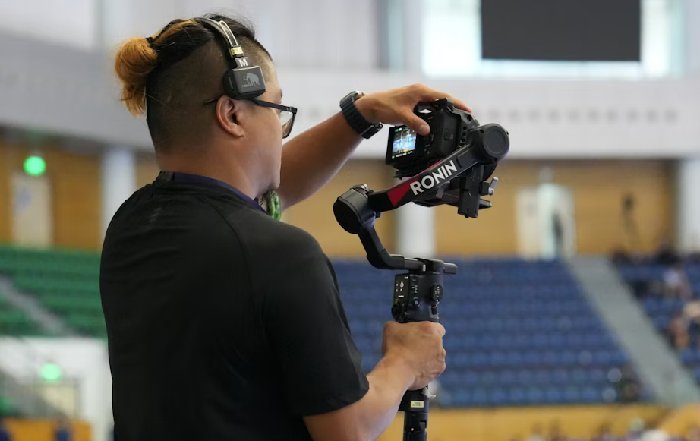
The Evolution of Broadcasting Technology for Remote Audiences
Broadcasting's New Era: From Living Rooms to Always-On, Everywhere
Broadcasting has transformed from a one-way, scheduled experience into a continuous, personalized and interactive layer of daily life, reaching remote audiences across continents, time zones and devices. What began as linear radio and television is now a complex ecosystem of streaming platforms, edge networks, immersive media and data-driven personalization that reshapes how people move, train, work and connect with sports, fitness, culture and global events. For SportyFusion.com, whose community spans athletes, professionals and enthusiasts from the United States, Europe, Asia, Africa and beyond, this evolution is not an abstract technology story but a direct driver of how audiences experience performance, lifestyle and social connection in real time.
The shift is visible in every domain that matters to SportyFusion's readers. Global tournaments are streamed in ultra-high definition to mobile phones in Brazil and South Africa, personalized fitness classes are delivered to living rooms in Germany and Canada, esports tournaments reach fans in South Korea, Japan and Singapore, and breaking news in sport, health and business is consumed on demand in Australia, France and the United Kingdom. As remote audiences have become the default rather than the exception, broadcasting technology has been forced to adapt, prioritizing reliability, low latency, personalization and trustworthiness at planetary scale.
For organizations that operate at the intersection of performance, health and culture, understanding this evolution is now a strategic necessity. It influences everything from media rights and sponsorship to athlete branding, fan engagement and even how training and recovery content is delivered, a trend that is analyzed regularly in the business coverage on SportyFusion's own platform.
From Linear Signals to Global Streams
The origins of broadcasting were defined by scarcity: limited spectrum, few channels, fixed schedules and geographically constrained reach. Radio networks in the early twentieth century and later television broadcasters such as BBC, NBC and ARD built national audiences through linear programming and analog transmission. The experience was shared but inflexible; audiences in Italy, Spain or Netherlands watched what was available, when it was scheduled, on the device in their living room.
The digital transition and the adoption of standards such as DVB in Europe and ATSC in North America laid the groundwork for higher quality and more efficient use of spectrum, but the real disruption came with the internet. As broadband penetration expanded, particularly in markets like Sweden, Norway, Finland and South Korea, streaming became viable for mass audiences, enabling content to be decoupled from fixed schedules and geographic boundaries. Organizations such as Netflix and YouTube demonstrated that on-demand video could scale globally, while sports-focused services like ESPN+ and DAZN applied similar models to live events.
The rise of adaptive bitrate streaming, standardized through protocols such as MPEG-DASH and HLS, allowed broadcasters and platforms to serve high-quality video to heterogeneous networks and devices, from fiber-connected smart TVs in Switzerland to mobile phones on 4G networks in Malaysia or Thailand. This technical capability turned remote audiences into a first-class consideration, allowing global fans to follow events regardless of location. For those tracking performance and training trends on SportyFusion's performance hub, the link between streaming infrastructure and the global visibility of athletes is now unmistakable.
Low Latency and Real-Time Engagement
As streaming matured, expectations changed. Remote audiences no longer accepted delays of 30-60 seconds behind broadcast feeds, particularly for live sports, esports and interactive content. The demand for near real-time experiences drove innovation in low-latency streaming, edge computing and content delivery networks. Companies like Akamai and Cloudflare expanded edge infrastructure, while standards bodies and industry groups refined low-latency extensions to existing protocols, enabling glass-to-glass latencies of only a few seconds.
This shift has been critical for high-stakes live events such as global football tournaments, the Olympic Games and major esports championships. Fans in North America, Asia and Europe expect synchronized experiences, whether they are watching on large screens in public venues or following events from home via mobile devices. Learn more about how real-time internet technologies evolved to enable such experiences through resources from organizations like the Internet Engineering Task Force and the World Wide Web Consortium.
For SportyFusion's community, this low-latency infrastructure underpins new forms of interaction around fitness and training. Live remote coaching sessions, interactive classes and real-time performance analytics depend on the same core capabilities that power large-scale live sports streaming. Readers who explore remote coaching trends in SportyFusion's training section encounter a media environment where the line between broadcast and interactive session is increasingly blurred, and where latency can directly affect the quality of feedback and engagement.
Personalization, Data and the Remote Fan
As broadcasting moved online, it inherited the data-rich environment of the web. Streaming platforms, sports leagues and fitness providers began to collect detailed information about viewing habits, engagement patterns and device usage. This data enabled personalized content recommendations, tailored notifications and customized viewing interfaces, but it also raised important questions about privacy, ethics and governance.
Organizations such as European Data Protection Board and regulatory frameworks like the GDPR in Europe pushed the industry toward more transparent data practices, while privacy advocates and standards bodies urged caution in the use of behavioral data. Those interested in the evolving regulatory landscape can explore guidance from entities like the European Commission's digital policy pages or the UK Information Commissioner's Office, which provide in-depth analysis of data protection principles for digital media.
For remote sports and fitness audiences, personalization has both enhanced and reshaped the viewing experience. Fans in Japan can follow specific athletes across multiple leagues, receive contextual statistics and highlights in their language, and integrate broadcast content with wearable data from devices produced by companies like Garmin, Apple and Polar. Viewers in Canada or New Zealand can construct multi-screen dashboards that combine live video, real-time metrics and social feeds. SportyFusion's readers, who often balance active lifestyles with demanding professional schedules, benefit from tailored content streams that align with their training windows, time zones and interests, with curated coverage across fitness, health and lifestyle topics.
The Convergence of Broadcast and Social Platforms
Another defining trend in the evolution of broadcasting for remote audiences has been the convergence between traditional broadcast models and social media platforms. Live video features on platforms such as YouTube, Twitch, Facebook and X (formerly Twitter) have normalized the idea that any individual or organization can become a broadcaster, reaching global audiences without traditional infrastructure. Esports organizations, independent fitness coaches, niche sports leagues and lifestyle brands have leveraged these tools to build direct relationships with fans in Singapore, Denmark, South Africa and Brazil, often bypassing legacy television entirely.
This convergence has led to hybrid models in which major broadcasters integrate real-time social interaction into their coverage. It is now common for live sports broadcasts to incorporate fan commentary, social polls and user-generated content, creating a more participatory experience for remote audiences. Studies from institutions like the Pew Research Center have documented how social platforms increasingly shape news and entertainment consumption, particularly among younger demographics in United States, United Kingdom and Australia.
From the perspective of SportyFusion's global community, this merging of broadcast and social layers has expanded opportunities for niche sports, emerging fitness trends and grassroots events to gain visibility. Coverage of street sports in France, endurance events in Norway or adaptive sports in South Africa can now reach global audiences through multi-platform strategies, a development that is frequently reflected in the international reporting available in SportyFusion's world section and in its dedicated coverage of evolving sports culture on the sports vertical.
Immersive Technologies: VR, AR and Mixed Reality
While streaming and social integration have redefined the mainstream, immersive technologies are steadily reshaping the frontier of remote audience experiences. Virtual reality (VR), augmented reality (AR) and mixed reality (MR) have moved from experimental showcases to commercially viable formats, particularly for sports, gaming and high-engagement cultural events. Companies such as Meta, Sony, HTC and Apple have invested heavily in headsets and spatial computing platforms, while broadcasters and leagues test formats that place remote audiences virtually at courtside or trackside.
Immersive broadcasting is especially relevant to esports and gaming, where audiences already inhabit digital environments and where latency and interactivity are paramount. Major tournaments in South Korea, China and North America now offer virtual arenas where fans can watch matches from multiple perspectives, access live stats and interact with others. Learn more about the broader evolution of interactive digital media through resources offered by organizations like the Entertainment Software Association and global gaming market analyses provided by Newzoo.
For SportyFusion's readers who follow gaming and performance crossovers, the implications are significant. Immersive broadcasting allows remote audiences to experience the physical intensity and strategic depth of both traditional sports and esports in new ways, supporting a deeper appreciation of training, reaction times and cognitive performance. This convergence is explored in the gaming-oriented coverage on SportyFusion's gaming pages, where the lines between athlete and gamer, arena and virtual environment, are increasingly porous.
Edge Networks, 5G and the Infrastructure Behind the Screen
The visible evolution of broadcasting is only possible because of profound changes in network and compute infrastructure. The deployment of 5G networks across Asia, Europe, North America and parts of Africa and South America has dramatically improved mobile bandwidth and latency, making high-quality live streaming feasible in environments that previously struggled with stability. Telecom operators in Germany, Italy, Spain, Japan and South Korea have partnered with broadcasters and platforms to experiment with mobile-first broadcast formats, multi-angle streams and interactive overlays.
Edge computing has further reduced latency by moving processing closer to the end user. Content delivery networks now host transcoding, caching and analytics functions at the network edge, ensuring that remote audiences in Australia, New Zealand or Malaysia experience responsive, high-quality streams even during peak demand. Those interested in the technical underpinnings can explore resources from organizations like the Linux Foundation's LF Edge initiative or technical reports from the GSMA, which outline best practices for 5G media delivery.
For SportyFusion's audience, these infrastructure advances translate into practical benefits: more reliable live coverage of international competitions, smoother video during mobile workouts, and more consistent access to health and training content on the move. The interplay between connectivity, performance and wellness is a recurring theme in the technology-focused reporting on SportyFusion's technology section, where edge and 5G developments are assessed not just as engineering milestones but as enablers of new lifestyle patterns.
Sustainability, Environment and Responsible Broadcasting
As broadcasting scales to serve billions of remote viewers, the environmental impact of data centers, networks and devices has come under scrutiny. Streaming high-definition and 4K video consumes significant energy, and while efficiencies have improved, the aggregate demand continues to rise. Climate-conscious organizations and regulators in Europe, Canada and Australia have begun to examine the carbon footprint of digital media, encouraging greener data centers, renewable energy sourcing and more efficient codecs.
Standards bodies and industry consortia have responded with initiatives to improve energy efficiency across the media delivery chain. The development of codecs like AV1 and VVC aims to reduce bitrate requirements for high-quality video, while hyperscale cloud providers such as Google Cloud, Microsoft Azure and Amazon Web Services invest in renewable energy to power their infrastructure. Learn more about sustainable technology practices through organizations like the International Energy Agency and the UN Environment Programme, which provide guidance on digital sector emissions.
For SportyFusion, with its dedicated coverage of environmental impact and ethical business in the sports and lifestyle sectors, the sustainability of broadcasting is not a peripheral issue. As remote audiences grow and as more fitness, training and lifestyle content is delivered via streaming, the environmental dimension becomes part of the broader conversation around responsible performance and consumption, a theme that is explored in depth on SportyFusion's environment pages and in its analysis of ethical practices on the ethics hub.
Business Models, Rights and Global Market Dynamics
The evolution of broadcasting technology has fundamentally altered the economics of media rights, sponsorship and fan monetization. Traditional broadcasters once dominated negotiations for national rights packages, but the rise of global streaming platforms, direct-to-consumer (D2C) offerings and regional OTT services has fragmented the landscape. Leagues and organizations in United States, United Kingdom, Germany and France increasingly pursue multi-platform strategies, balancing linear television, subscription streaming, ad-supported tiers and free-to-air digital content.
This fragmentation has created both opportunities and challenges for remote audiences. On one hand, fans in Asia, Africa and South America now have greater access to previously unavailable content; on the other, rights silos and geo-blocking can complicate access and increase costs. Business analysts and policy experts, including those at the OECD and media-focused think tanks, have examined how these shifts affect competition, consumer welfare and cultural diversity.
For professionals and organizations following the business side of sport, fitness and culture through SportyFusion, these developments are central to strategic planning. Sponsorship models now consider global digital reach, data-rich audience segments and cross-platform activations. Athlete brands are built with remote audiences in mind, leveraging streaming, social media and interactive platforms to maintain year-round engagement. The jobs landscape in media, technology and sport has adapted accordingly, with new roles in data analytics, streaming operations and digital fan engagement emerging, a trend that is reflected in the careers-oriented coverage on SportyFusion's jobs section.
Health, Well-Being and the Remote Consumption of Performance
Beyond entertainment and business, the evolution of broadcasting technology has had a profound impact on health and well-being. Remote audiences now access guided workouts, rehabilitation programs, mindfulness sessions and health education through streaming platforms and apps. Health systems in Canada, United Kingdom, Singapore and Denmark have experimented with remote cardiac rehab, physiotherapy and mental health support delivered partly through broadcast-style video content, particularly in the wake of global health crises earlier in the decade.
Leading health organizations such as the World Health Organization and Centers for Disease Control and Prevention have increasingly used video and streaming channels to disseminate guidance, recognizing that remote audiences often turn to digital platforms for timely, trustworthy information. This trend has raised the bar for accuracy, transparency and ethical communication in health-related broadcasting.
For SportyFusion's readers, many of whom integrate training, nutrition and recovery into demanding professional and social lives, remote health and fitness broadcasting has become an indispensable tool. High-quality, evidence-based content allows individuals in Switzerland, Netherlands, South Korea or South Africa to access expertise that might not be locally available, bridging geographic and economic gaps. The intersection of health, performance and media is regularly explored on SportyFusion's health pages, where the emphasis on trustworthiness and expert insight mirrors the broader shift toward responsible, outcomes-oriented broadcasting.
Culture, Community and the Future of Remote Audiences
As broadcasting technology continues to evolve, the cultural and social dimensions of remote audiences are becoming more prominent. Remote does not mean isolated; instead, it often signifies participation in distributed communities that share interests across borders. Fans of a football club in Italy, a basketball team in United States, a cycling tour in France or a street dance movement in South Africa can now interact in real time, co-creating narratives around events and performances.
Cultural institutions and event organizers have embraced hybrid models that combine in-person and remote experiences. Festivals, conferences and exhibitions in Germany, Japan or Brazil often integrate live streams, virtual stages and interactive sessions to reach broader audiences. Organizations like UNESCO and the Council of Europe have examined how digital broadcasting can support cultural diversity and inclusion, ensuring that global platforms do not flatten local identities but instead amplify them.
For SportyFusion, which positions itself at the intersection of sport, culture and social connection, these developments underscore the importance of editorial approaches that recognize remote audiences as active participants rather than passive viewers. The platform's coverage of cultural trends, social movements and lifestyle shifts in its culture section and social pages reflects a world where broadcasting is one of the primary mechanisms through which communities form, values are negotiated and performance is celebrated.
Conclusion: Trust, Quality and Human-Centered Innovation
The evolution of broadcasting technology for remote audiences has reached a level of maturity that demands more than technical excellence; it requires a deliberate focus on trust, quality and human-centered design. Ultra-low-latency streams, immersive experiences and personalized feeds are meaningful only if they are anchored in accurate information, ethical data practices, sustainable infrastructure and respect for audience well-being.
For a global, performance-oriented community such as that of SportyFusion, the future of broadcasting will be measured not just in resolution, frame rate or interactivity, but in how effectively it supports healthier lifestyles, more inclusive cultural participation, fairer business models and more resilient communities worldwide. As coverage across SportyFusion's homepage continues to track innovations in sports, technology, business, ethics and environment, one theme is clear: broadcasting has become a central nervous system for a connected planet, and its evolution will shape how people train, compete, work and live in every region from North America and Europe to Asia, Africa and South America.
In this landscape, organizations, leagues, brands and platforms that combine technical expertise with genuine authoritativeness and responsibility will define the next chapter. Remote audiences, empowered by choice and informed by experience, will reward those who deliver not only cutting-edge broadcasts, but also trustworthy, meaningful and sustainable connections.