

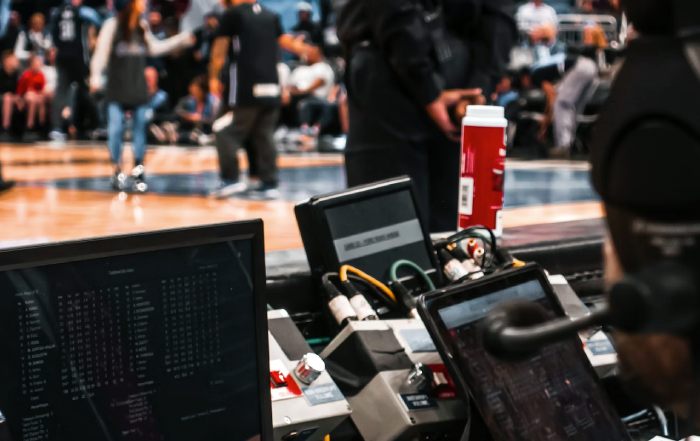
Intelligent Sports in 2026: How Data, AI, and Human Insight Are Redefining Performance
In 2026, professional sport stands at a decisive inflection point where data, artificial intelligence, and human expertise intersect to create a new paradigm of performance. What began with Major League Baseball's sabermetrics revolution, the telemetry-led transformation of Formula 1, and the predictive modeling embraced by Premier League clubs has matured into a global, technology-intensive ecosystem that touches every aspect of athletic life. For the audience of SportyFusion.com, this evolution is not an abstract trend; it shapes how fitness is pursued, how health is protected, how careers are built, and how sport is experienced across continents from the United States and United Kingdom to Germany, Brazil, South Africa, and Singapore. The global sports analytics market, already surpassing USD 4.5 billion in the mid-2020s, continues to expand rapidly, reflecting a shared conviction from leagues, brands, and federations that competitive advantage now resides in the intelligent use of information as much as in raw physical talent.
At the core of this shift lies the capacity to convert massive volumes of structured and unstructured data into actionable insight, combining sensor readings, video streams, biometric signals, and contextual information into cohesive narratives that coaches, athletes, and executives can trust. From elite clubs in Europe and North America to emerging academies in Asia, Africa, and South America, the integration of analytics has become a strategic imperative rather than a discretionary experiment. On SportyFusion's performance hub, this transformation is examined through the lens of real-world practice, connecting global trends to the daily realities of training, competition, and recovery.
From Basic Stats to Integrated Intelligence
Two decades ago, sports analytics largely meant box scores, historical averages, and isolated spreadsheets. By 2026, it has evolved into an integrated intelligence layer that spans machine learning, computer vision, cloud computing, and bioinformatics. Leading organizations such as Manchester City, Golden State Warriors, and Mercedes-AMG Petronas Formula One Team now operate internal analytics departments that resemble advanced research labs, where data engineers, sports scientists, and performance coaches collaborate to interpret millions of data points generated in every training session and match. Platforms like Tableau and Microsoft Power BI provide visualization environments for these organizations, while specialist tools from Catapult and STATS Perform translate complex datasets into tactical and physiological insights.
The proliferation of GPS trackers, inertial sensors, and high-speed camera systems has made it possible to monitor acceleration, deceleration, joint angles, and heart rate variability in real time, enabling coaching staff to adjust workloads before fatigue translates into injury. This multi-layered approach extends beyond elite teams; universities, national institutes, and private academies in countries such as Canada, Australia, and the Netherlands increasingly rely on similar frameworks. Readers interested in how these principles filter down into everyday training and gym environments can explore the connected coverage on SportyFusion Training, where performance science is translated into practical routines for athletes at all levels.
Wearables, Edge Computing, and Real-Time Decisions
Wearable technology has matured from consumer fitness accessories into clinical-grade performance instruments. Devices from Oura, Whoop, Garmin, and other innovators now track sleep architecture, heart rate variability, skin temperature, micro-movements, and recovery scores with remarkable precision, giving athletes in the United States, Germany, Japan, and Brazil continuous feedback on how their bodies respond to stress. These wearables no longer operate in isolation; they are embedded in Internet of Things ecosystems where data is streamed to cloud platforms such as Amazon Web Services and Microsoft Azure and processed at the edge to support in-the-moment decision-making.
In professional rugby or football, for example, real-time dashboards can alert staff when a player's mechanical load or heart rate profile suggests elevated injury risk, prompting substitutions or tactical adjustments. In endurance sports, cyclists and marathoners use live power and lactate-threshold estimates to pace themselves with surgical precision. The trajectory of innovation points toward nearly invisible biosensors woven into fabrics or applied as skin patches, enabling continuous monitoring without adding weight or discomfort. On SportyFusion Technology, readers can learn more about how these systems are converging with broader digital trends such as 5G connectivity and edge AI to redefine what "in-game intelligence" truly means.
Predictive Modeling as a Strategic Weapon
Predictive analytics has emerged as one of the most consequential developments in the sports data landscape. Rather than merely describing what has happened, advanced models now forecast what is likely to happen next, providing probabilities for match outcomes, injury events, tactical scenarios, and even contract value trajectories. Solutions powered by IBM Watson, SAP Sports One, and bespoke in-house algorithms ingest years of historical data and real-time context-weather conditions, opponent tendencies, travel schedules-to simulate thousands of scenarios before a game even begins.
In football, expected goals (xG) and expected threat (xT) metrics have become standard tools for evaluating decision quality rather than just final outcomes, allowing clubs in the Premier League, Bundesliga, La Liga, and Serie A to design attacking patterns that statistically maximize scoring opportunities. In baseball, pitch sequencing models guide catchers and pitchers in exploiting hitters' weaknesses, while in basketball, spatial analytics derived from player tracking systems like those used by Hawk-Eye Innovations and Second Spectrum reveal optimal shot locations and defensive rotations. Even esports organizations leverage similar methodologies, using telemetry from titles such as League of Legends and Counter-Strike to refine strategies at a granular level. The economic and strategic implications of this predictive turn-especially around player recruitment, salary negotiations, and sponsorship valuation-are explored in depth on SportyFusion Business, where data-driven decision-making is treated as a core pillar of modern sports management.
Data-Enhanced Medicine, Injury Prevention, and Recovery
Injury prevention and recovery optimization may be where analytics delivers the clearest financial and human impact. A single long-term injury to a star player in the NFL, NBA, or Champions League can alter the trajectory of a season and reshape the balance sheets of clubs and sponsors alike. To mitigate this risk, leagues and teams partner with technology providers such as Zebra Technologies, Kinexon, and Catapult to collect granular workload data, collision forces, and positional information during every session. These metrics are integrated with medical records, sleep data, hormonal markers, and nutrition logs to feed machine learning models that flag early signs of overuse or imbalance.
Rehabilitation has likewise become more objective. Platforms such as PhysiMax and Fusionetics use computer vision to analyze movement quality during return-to-play protocols, quantifying asymmetries and compensatory patterns that may not be visible to the naked eye. National federations in Germany, South Korea, and Norway increasingly embed these tools into centralized high-performance centers, combining them with research from institutions like Aspetar Sports Medicine Hospital and Cleveland Clinic Sports Health to create evidence-based guidelines. On SportyFusion Health, these developments are connected to broader wellness trends, emphasizing how recovery science is influencing not only professionals but also recreational athletes who seek to train smarter rather than simply harder.
Coaching Intelligence: Where Human Judgment Meets Machine Insight
Coaching in 2026 is no longer limited to what can be observed from the touchline or bench. Video analytics platforms from Hudl, Sportscode, and Wyscout allow staff to dissect every phase of play in multiple dimensions, overlaying heat maps, passing networks, and biomechanical markers on top of traditional video footage. In basketball, NBA teams rely on Second Spectrum data to evaluate off-ball movement, screen effectiveness, and shot contest quality, while cricket teams in India, England, and Australia use ball-tracking and pitch-mapping technologies such as Hawk-Eye to refine bowling plans and field placements.
Yet the most successful programs recognize that data is an instrument, not an oracle. Coaches in top organizations across the United States, United Kingdom, and Europe blend algorithmic recommendations with their understanding of locker-room dynamics, player psychology, and situational nuance. When a model suggests resting a key player for load-management reasons, it is the coach who must weigh those probabilities against intangible factors such as leadership, momentum, and tactical familiarity. SportyFusion Sports explores numerous examples of this hybrid approach, where human leadership and analytical rigor coexist rather than compete.
Fan Experience, Media, and the Data-Rich Narrative
The influence of analytics extends far beyond the training ground and into the living rooms and mobile screens of fans worldwide. Broadcasters such as ESPN, Sky Sports, and DAZN now integrate real-time data overlays into live coverage, using AI to surface contextually relevant statistics, predict likely outcomes of plays, and visualize tactical shapes. Technologies like Intel True View offer volumetric, 360-degree replays that allow audiences to experience key moments from any angle, while platforms such as Opta and Stats Perform power interactive match centers for websites and apps.
Streaming services including Netflix and Amazon Prime Video have popularized behind-the-scenes documentaries that showcase how clubs and athletes use analytics in daily operations, turning data into a storytelling device that deepens emotional engagement. Meanwhile, clubs like Real Madrid and Manchester United use customer-data platforms from Salesforce and Adobe Experience Cloud to personalize digital experiences, tailoring content, offers, and in-stadium activations to individual behavior patterns. This convergence of content, commerce, and analytics is a recurring theme on SportyFusion News, where the media dimensions of intelligent sport are analyzed for a global audience.
Sustainability, Ethics, and Responsible Intelligence
As the sports industry's environmental and social footprint comes under increasing scrutiny, analytics is being deployed to align performance with responsibility. Major governing bodies such as FIFA, the International Olympic Committee (IOC), and World Athletics now use carbon-accounting tools and environmental data models to measure and reduce emissions associated with travel, stadium operations, and mega-events. Initiatives like the UN Sports for Climate Action Framework encourage organizations to adopt science-based targets, while venues such as Tottenham Hotspur Stadium and SoFi Stadium employ AI-driven building management systems to optimize energy use and waste management.
Ethical analytics, however, extends beyond sustainability into the protection of athlete data and identity. Frameworks such as the General Data Protection Regulation (GDPR) in Europe and the California Privacy Rights Act (CPRA) in the United States have forced clubs, leagues, and vendors to reconsider how biometric and psychological information is collected, processed, and monetized. Associations like The World Players Association and EU Athletes advocate for data ownership rights and transparent consent models, while emerging blockchain solutions from companies such as Chiliz and Civic Technologies hint at decentralized approaches to identity and data control. SportyFusion Ethics explores these issues in detail, recognizing that long-term trust in analytics depends on clear governance and respect for individual autonomy.
Globalization, Education, and the New Data Workforce
The globalization of sports analytics has dismantled many traditional barriers between regions and levels of competition. Cloud-based platforms and open APIs enable clubs in South Africa, Thailand, Brazil, and Malaysia to access similar tools to those used by giants in the United States or Europe, while knowledge-sharing initiatives and conferences foster cross-pollination of ideas. Universities such as Loughborough University, Stanford University, and University of Toronto now offer dedicated programs in sports analytics and performance science, while research groups like MIT Sports Lab and National University of Singapore's sports innovation initiatives collaborate with professional teams and technology companies to translate academic findings into applied solutions.
This educational shift has created a new class of professionals-performance data scientists, applied AI engineers, cognitive performance analysts, and sports data product managers-whose careers sit at the intersection of sport, technology, and business. Federations in Singapore, Japan, and New Zealand embed data literacy into coaching badges, while grassroots clubs in Africa and South America leverage partnerships with NGOs and tech startups to introduce analytics tools at youth level. The talent market surrounding this ecosystem, and the emerging career paths it offers, is a recurring focus for SportyFusion Jobs, where readers can track how data competency is becoming a prerequisite for leadership roles across the industry.
Athlete Empowerment and the Personal Data Revolution
Perhaps the most profound cultural change brought by analytics is the shift in how athletes relate to their own data. Instead of relying solely on staff-provided summaries, professionals and serious amateurs alike increasingly access personalized dashboards through platforms such as Strava, Fitbod, and HumanEdge AI, comparing training cycles, sleep patterns, and performance trends over months or years. Cognitive and mental-performance tools like NeuroTrainer and emerging neurofeedback systems allow athletes to monitor focus, stress, and emotional regulation, integrating psychological metrics into the same analytical frameworks that track speed and strength.
This empowerment has contractual and commercial implications: players represented by sophisticated agencies can bring objective evidence of their contribution-pressing intensity, off-ball runs, defensive actions per 90 minutes-to negotiations, while individual sponsorship and content strategies are tailored around verifiable performance narratives. For SportyFusion's global audience, these developments resonate with broader lifestyle trends in quantified self, wellness, and personal branding. On SportyFusion Lifestyle, the editorial lens examines how everyday athletes can responsibly adopt similar practices to improve health, resilience, and longevity in sport without succumbing to data overload.
Cross-Industry Innovation and the Future of Intelligent Sport
The sports analytics revolution does not exist in isolation; it both influences and is influenced by adjacent industries. Motion-capture and biomechanical analysis techniques first refined in elite performance environments now support orthopedic surgery planning and rehabilitation protocols in hospitals. Predictive fatigue models used by Formula 1 teams and airlines share conceptual roots, as do risk-assessment algorithms in finance and tactical decision engines in team sports. Conversely, advances in cloud computing, edge AI, and cybersecurity pioneered in sectors like e-commerce and banking underpin the reliability and scalability of sports data systems.
Looking ahead, emerging technologies promise to deepen this interdependence. Quantum computing research by IBM Quantum and Google DeepMind could dramatically accelerate complex simulation tasks, allowing teams to explore billions of tactical scenarios or equipment configurations in near real time. Brain-computer interface research, still in early stages, hints at the possibility of training environments where cognitive states and motor outputs are optimized simultaneously. At the same time, organizations must navigate the ethical boundaries of augmentation-ensuring that enhancements remain within the spirit of fair play and do not exacerbate inequalities between resource-rich and resource-poor systems. For readers tracking these frontiers, SportyFusion World and SportyFusion Technology offer a global perspective on how innovation is unfolding across continents and cultures.
Balancing Precision with Humanity
Despite the sophistication of modern analytics, the essence of sport remains rooted in human experience-emotion, resilience, creativity, and community. Legends such as Serena Williams, Cristiano Ronaldo, and LeBron James have repeatedly emphasized that while data can refine preparation and strategy, it cannot fully capture leadership, courage, or the capacity to perform under existential pressure. The most advanced organizations in 2026 therefore treat analytics as a powerful ally rather than an unquestionable authority, integrating it into holistic models of performance that respect mental health, cultural context, and personal values.
For SportyFusion.com, which serves readers interested in fitness, culture, health, business, technology, ethics, and social impact, the story of intelligent sport is ultimately a story about how people adapt to new tools without losing sight of what makes sport meaningful. Athletes, coaches, executives, and fans are learning to ask better questions of data, to challenge models when they conflict with lived experience, and to design environments where transparency, trust, and consent are non-negotiable. As analytics continues to expand into every corner of the sporting world-from youth academies in Europe and Asia to professional leagues in North America and emerging markets in Africa and South America-the challenge is not simply to measure more, but to understand better.
In this sense, the future of sport is neither purely technological nor purely traditional. It is a fusion of evidence and intuition, software and sweat, algorithms and ambition. The organizations and individuals who thrive will be those who cultivate data literacy without sacrificing empathy, who embrace innovation while maintaining ethical rigor, and who recognize that behind every data point stands a person with aspirations, vulnerabilities, and a story worth telling. For those seeking to navigate this evolving landscape, SportyFusion will continue to provide analysis, context, and perspective at the intersection of performance, technology, and human potential, accessible through its interconnected coverage on sports, health, business, ethics, and more across the global sporting ecosystem.