

Water Conservation Strategies for Golf Course Management
The New Water Reality Facing Global Golf
Water has become one of the defining constraints on the future of golf worldwide, reshaping how courses are designed, maintained, regulated, and experienced by players from the United States to Europe, Asia, Africa, and South America. Golf facilities in regions as diverse as California, Spain, South Africa, and Australia now operate under increasingly strict abstraction limits, rising water prices, and heightened public scrutiny, as governments and communities respond to prolonged droughts, climate volatility, and competing demands from agriculture, cities, and ecosystems. Against this backdrop, water conservation is no longer a niche environmental initiative but a core strategic and operational priority, tightly linked to business resilience, regulatory compliance, brand reputation, and long-term license to operate.
For the audience of SportyFusion and its global readers who follow developments in sports and performance, health and lifestyle, business and jobs, and environmental stewardship, water-efficient golf course management has become a critical case study in how a traditional sport can modernize without losing its identity. The sport's evolution in water use is being shaped by advances in turfgrass science, irrigation technology, digital monitoring, regulatory frameworks, and shifting cultural expectations about what a sustainable golf landscape should look like in the 2020s and beyond.
Regulatory Pressure, Public Perception, and Business Risk
Across leading golf markets, regulators are tightening rules on groundwater extraction, surface water withdrawals, and nutrient runoff, while climate policies increasingly frame water efficiency as part of broader resilience and adaptation plans. In the United States, agencies such as the U.S. Environmental Protection Agency influence water quality standards and stormwater management; readers can review how these frameworks intersect with turf and landscape management through resources like the EPA's water efficiency guidance. In the European Union, the Water Framework Directive has driven member states such as Spain, France, and Italy to impose stricter conditions on irrigation-intensive land uses, including golf, particularly in water-stressed river basins.
At the same time, public opinion has shifted markedly. Communities in regions such as the American West, Southern Europe, and parts of Australia now regularly question the legitimacy of lush, heavily irrigated courses when nearby towns are on water restrictions. Organizations such as The Royal and Ancient Golf Club of St Andrews (R&A) and the United States Golf Association (USGA) have responded by funding research and publishing guidance on sustainable agronomy and resource efficiency, as highlighted in their joint work on the Golf Course 2030 initiative. These efforts are not purely altruistic; they are grounded in the recognition that golf's social license depends on transparent, demonstrable progress in water stewardship.
For course owners, operators, and management companies, this means that water risk has become a board-level concern, closely tied to insurance costs, asset valuation, and investor expectations around environmental, social, and governance (ESG) performance. Institutional investors and lenders increasingly consult frameworks such as the Task Force on Climate-related Financial Disclosures when assessing exposure to physical climate risks, including water scarcity, and golf properties that fail to modernize their water management practices may face higher financing costs or reduced access to capital.
Turfgrass Science and the Shift to Drought-Resilient Surfaces
One of the most powerful levers for water conservation in golf is the choice and management of turfgrass species. Historically, many courses favored visually lush, water-demanding cool-season grasses, particularly in temperate regions of North America and Europe. By 2026, a clear shift is underway toward drought-tolerant species, blends, and cultivars that maintain playability and acceptable aesthetics with significantly less irrigation and fewer inputs.
Research institutions such as Texas A&M University, Penn State, and University of Georgia have worked in partnership with the USGA to develop and trial improved warm-season grasses, including advanced Bermudagrass, zoysiagrass, and seashore paspalum varieties. Professionals seeking technical overviews of these turf innovations can explore the USGA Green Section's agronomy resources, which detail water use characteristics, rooting depth, and stress tolerance. In cooler climates, breeders are refining fescue-dominant swards and mixed species systems that can be maintained at lower input levels, particularly in roughs, out-of-play areas, and links-style settings.
From a performance perspective, this transition requires careful communication with players and stakeholders. Golfers in markets such as the UK, Germany, or Sweden, who may be accustomed to verdant parkland courses, are gradually being educated to appreciate firmer, faster playing conditions and more natural color variations across the seasons. Platforms like SportyFusion's culture coverage increasingly highlight how these aesthetic shifts are tied to environmental responsibility and long-term course viability, reframing the visual identity of golf in the public imagination.
Precision Irrigation: From Art to Data-Driven Science
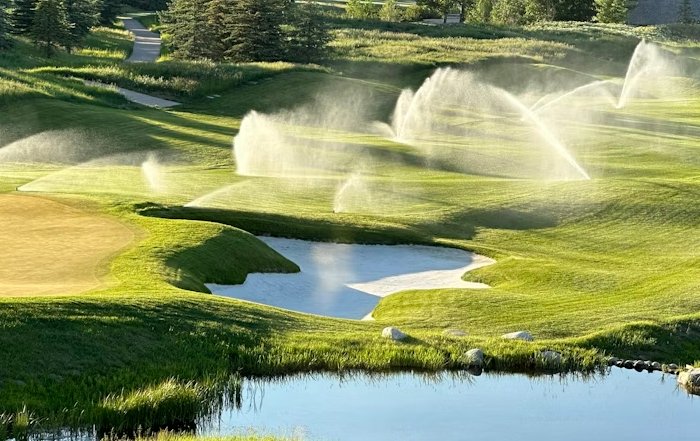
The most visible transformation in water conservation is the move from uniform, schedule-based irrigation to highly targeted, sensor-informed, and weather-responsive systems. Modern central control platforms, variable frequency drive pumps, and individually controlled sprinkler heads allow superintendents to apply water only where and when it is needed, with a degree of precision that would have been unimaginable a generation ago.
Leading irrigation manufacturers and technology providers now integrate soil moisture sensors, evapotranspiration (ET) data, and hyperlocal weather forecasts into dynamic irrigation models. Professionals can study the underlying agronomic principles through organizations such as The Irrigation Association, which offers technical resources on smart irrigation practices. In regions such as California, Arizona, and parts of Spain, courses have documented water savings of 20-40 percent after upgrading from legacy hydraulic systems to fully mapped, zone-controlled networks with high-efficiency nozzles and pressure regulation.
The integration of satellite imagery, drone-based thermal mapping, and Internet of Things (IoT) sensor grids further refines decision-making, enabling course managers to identify localized dry spots, leaks, or distribution uniformity issues before they become visible to the naked eye. This convergence of agronomy and digital technology reflects a broader trend covered frequently on SportyFusion's technology pages, where sports venues increasingly operate as data-rich environments in which resource efficiency, performance, and user experience are optimized simultaneously.
Alternative Water Sources and On-Site Treatment
In many jurisdictions, reliance on potable municipal water for golf irrigation is no longer socially or economically acceptable. Courses in water-scarce regions, and increasingly in temperate zones, are turning to alternative sources such as treated wastewater (recycled water), stormwater harvesting, brackish groundwater, and desalinated blends. This diversification reduces pressure on drinking water supplies and can offer greater long-term security, albeit with new technical and regulatory complexities.
Global organizations such as UN-Water and the Food and Agriculture Organization (FAO) have long advocated for the reuse of treated wastewater in agriculture and landscapes, and their analyses of non-conventional water resources provide a useful reference for golf managers evaluating similar options. In Singapore, Israel, and parts of Spain and Australia, reclaimed water has become a mainstream irrigation source, supported by strict quality standards and monitoring to protect soil health, turf quality, and human safety.
On-site treatment systems, from constructed wetlands to advanced filtration and disinfection units, allow some facilities to capture and reuse washdown water, runoff, and drainage, effectively closing loops within the property boundary. These investments often align with broader sustainability strategies that courses share with their communities and sponsors, supporting the narratives explored on SportyFusion's brands section, where leading sports brands and venues increasingly position themselves as innovators in circular resource management.
Rethinking Course Design, Renovation, and Playable Area
Water conservation in golf is not merely a question of technology and agronomy; it is also a matter of design philosophy. Architects and renovation specialists are re-evaluating the scale, layout, and planting schemes of courses to reduce irrigated acreage, eliminate redundant turf, and integrate more native vegetation and low-input landscapes. This reflects a broader movement in sports facility design toward climate-adaptive, context-sensitive solutions that respect local ecosystems and cultural expectations.
The American Society of Golf Course Architects (ASGCA) and similar bodies in Europe and Asia have documented numerous case studies in which courses reduced irrigated turf by thousands of square meters by converting out-of-play areas to native grasses, wildflower meadows, or xeriscaped zones. Interested readers can explore background on sustainable landscape principles via institutions such as the American Society of Landscape Architects, which has highlighted best practices for water-smart design in recreational spaces. These changes not only save water but often enhance biodiversity, visual interest, and strategic shot values.
For existing courses, phased renovation programs-relining lakes, reshaping fairways to improve drainage and capture stormwater, installing new irrigation mainlines, or rebuilding greens to modern USGA specifications-allow operators to integrate water efficiency improvements into capital planning cycles. On SportyFusion, where business and jobs intersect with sport, these projects are increasingly framed as long-term asset upgrades that protect property value, reduce operating risk, and create skilled employment opportunities in green construction, environmental consulting, and turf management.
Digital Monitoring, Benchmarking, and Performance Culture
A defining characteristic of water-smart golf operations in 2026 is the emphasis on measurement, benchmarking, and continuous improvement. Courses now routinely track water withdrawals, irrigation efficiency, leak losses, and weather-adjusted consumption, often integrating these metrics into broader environmental management systems. This data-driven approach supports internal decision-making while also providing credible evidence for external stakeholders, from regulators and sponsors to players and local communities.
Global initiatives such as the Golf Environment Organization (GEO Foundation), which supports sustainable golf certification, encourage facilities to adopt standardized metrics and share progress transparently. Professionals can learn more about these frameworks and case studies through the GEO Foundation's resources. By aligning with recognized standards, courses demonstrate not only technical competence but also commitment to accountability and continuous learning, key components of trustworthiness in the modern sports business landscape.
Within the SportyFusion ecosystem, this performance culture resonates strongly with readers who follow training and performance content, as the same analytical mindset that underpins elite athletic preparation is now being applied to environmental and operational metrics. Superintendents and general managers increasingly view water conservation as a strategic performance domain, with targets, feedback loops, and innovation cycles comparable to those seen in high-performance sport.
Economic and Operational Benefits Beyond Environmental Compliance
While regulatory compliance and reputational considerations are important drivers of water conservation, the economic logic is equally compelling. Water, energy, and chemical inputs are among the largest controllable operating costs for golf courses, and reductions in water use often cascade into savings on pumping energy, fertilizer leaching, and disease control. As energy prices fluctuate and carbon pricing mechanisms expand in regions such as the EU, the financial case for efficient water management strengthens further.
Industry analyses and case studies compiled by organizations like the National Golf Foundation (NGF) and the European Golf Course Owners Association (EGCOA) show that courses investing in modern irrigation, drought-tolerant turf, and smart monitoring typically achieve payback periods that are attractive on a purely financial basis. To understand how these dynamics play out within the broader context of sustainable business models, readers may wish to learn more about sustainable business practices, as promoted by the United Nations Environment Programme (UNEP), which emphasizes resource efficiency as a core pillar of competitive advantage.
For multi-course operators and resort chains with properties across North America, Europe, Asia, and Oceania, portfolio-level water strategies are emerging, harmonizing procurement, standards, training, and reporting. This professionalization of water management aligns closely with trends in corporate sustainability and ESG disclosure, reinforcing the themes regularly explored on SportyFusion's world and news sections as sport converges with global policy and finance.
Player Expectations, Culture, and Communication
Technical excellence in water management must be matched by effective communication with golfers, staff, and local communities. Many of the most impactful conservation measures-reduced irrigated rough, browner fairways in summer, or native areas encroaching on previously manicured turf-represent visible changes to the course aesthetic and playing experience. Without careful explanation, these shifts can be misinterpreted as cost-cutting or neglect rather than deliberate, science-based stewardship.
Clubs and resorts that succeed in this transition often invest in signage, digital storytelling, member briefings, and staff training to articulate the rationale, benefits, and long-term vision behind water-smart practices. They highlight connections to global challenges documented by bodies such as the Intergovernmental Panel on Climate Change (IPCC), whose climate impact assessments underscore the urgency of adaptation in water-stressed regions. By situating local course decisions within this global context, managers help players understand that their experience of firmer, more natural playing conditions is part of a broader evolution in how sport responds to environmental realities.
For SportyFusion readers who follow social and cultural dimensions of sport, this communication challenge is particularly significant. It touches on identity, tradition, and perceptions of quality, raising questions about what golf should look and feel like in Japan, South Korea, Brazil, or Scandinavia as climate patterns shift. Courses that engage players as partners in sustainability, rather than passive customers, often find that water conservation becomes a shared point of pride rather than a source of friction.
Skills, Careers, and the Professionalization of Sustainable Golf Management
The transformation of water management in golf is creating new demands for expertise, training, and cross-disciplinary collaboration. Modern superintendents and course managers require not only traditional agronomic knowledge but also fluency in data analytics, irrigation engineering, regulatory frameworks, and stakeholder engagement. Educational institutions and professional bodies have responded by updating curricula, certifications, and continuing education programs to reflect these evolving competencies.
In regions such as North America, Europe, and Asia-Pacific, universities and technical colleges now offer specialized courses in sports turf management with strong emphasis on water conservation, climate resilience, and integrated pest management. Prospective and current professionals can explore broader trends in green jobs and sustainable careers through resources such as the International Labour Organization's work on green jobs, which situates roles like golf course superintendent within a wider shift toward environmentally aligned employment. On SportyFusion's jobs pages, these developments are increasingly reflected in listings and career advice that highlight the value of sustainability credentials in sports facility management.
This professionalization reinforces the sport's credibility and trustworthiness. When clubs can demonstrate that their water strategies are overseen by qualified experts following recognized best practices, it becomes easier to secure community support, regulatory approvals, and partnerships with environmentally conscious sponsors and brands. In turn, this creates a virtuous cycle in which investment in people and knowledge drives better outcomes for water, ecosystems, and business performance.
Integrating Water Conservation into Holistic Sustainability
Although water is a critical focus, the most effective golf course strategies treat it as one dimension of a broader sustainability framework encompassing biodiversity, carbon, waste, social inclusion, and ethical governance. Courses that adopt integrated environmental management plans are better positioned to identify synergies, such as how native planting reduces both water and chemical use, or how efficient pumps lower both energy bills and emissions.
Global initiatives like the UN Sustainable Development Goals (SDGs) provide a useful reference point for this holistic approach, particularly goals related to clean water and sanitation, climate action, life on land, and sustainable cities and communities. Professionals interested in how these global goals intersect with local sports facilities can explore the UN SDG overview, which offers a framework that many forward-looking clubs now use in their sustainability reporting. On SportyFusion, where ethics and responsibility are recurring themes, golf's evolving relationship with water is seen not in isolation but as part of its broader journey toward ethical, inclusive, and environmentally aligned practice.
For operators, this integrated mindset helps avoid unintended consequences, such as water-saving measures that harm habitat quality or energy-intensive desalination solutions that increase carbon footprints. By embedding water conservation within a comprehensive sustainability strategy, courses can balance trade-offs transparently and make decisions that stand up to scrutiny from regulators, communities, and informed audiences across North America, Europe, Asia, Africa, and Oceania.
The Role of Media and Platforms Like SportyFusion
Specialized media and digital platforms play a crucial role in accelerating the diffusion of best practices, shaping expectations, and connecting stakeholders across regions. As a hub for readers interested in sports, health, technology, business, and environment, SportyFusion is uniquely positioned to highlight case studies from courses in the United States, United Kingdom, Germany, Canada, Australia, Japan, South Africa, Brazil, and beyond, illustrating how water conservation strategies can be adapted to different climates, cultures, and market segments.
By featuring interviews with superintendents, architects, regulators, and players, as well as in-depth analysis of emerging technologies and policies, SportyFusion can help demystify the technical aspects of water management and present them in a way that resonates with business leaders, athletes, and fans alike. Its coverage can bridge the gap between high-level policy discussions-such as those found in World Bank water security reports-and the day-to-day decisions made on fairways and greens, translating global trends into actionable insights for practitioners.
In doing so, platforms like SportyFusion contribute directly to the sport's experience, expertise, authoritativeness, and trustworthiness. They provide a space where innovation is documented, scrutinized, and celebrated, and where the narrative of golf's relationship with water evolves from one of consumption and controversy to one of stewardship, adaptation, and shared responsibility.
What's New and Coming in for Golf in a Thirstier World?
The trajectory is clear: golf courses that embrace water conservation as a strategic imperative will be better equipped to navigate regulatory change, climate uncertainty, and shifting social expectations across Global, European, Asian, African, and American markets. The most resilient facilities will combine advanced irrigation technologies, drought-resilient turf, alternative water sources, and intelligent design with transparent communication, strong professional skills, and integrated sustainability planning.
For readers of SportyFusion who care about fitness and health, culture and lifestyle, sports performance, and the future of the game, water conservation in golf course management is more than a technical issue; it is a lens through which the sport's capacity to adapt, innovate, and lead can be assessed. The choices made today by course owners, managers, and governing bodies will shape not only the look and feel of golf in 2026 but its viability and relevance in the decades to come, in a world where every drop of water-and every decision about how it is used-matters more than ever.