

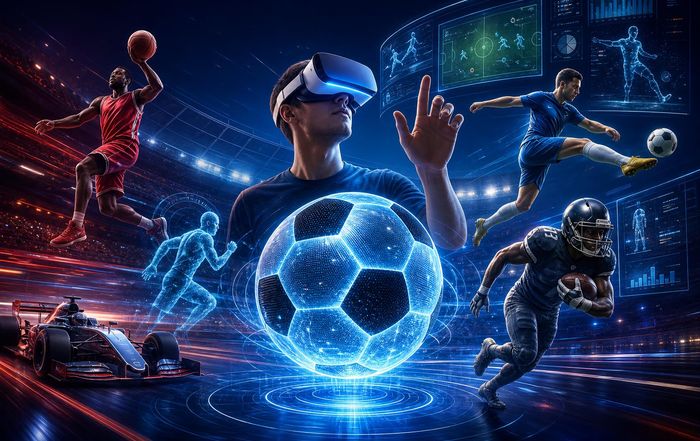
The Future of Digital Sports Experiences
A New Arena: How Digital is Rewriting the Sports Experience
Unless you've been sleeping for the last 10 years, you will have noticed that digital technology has transformed global sport from a primarily physical, location-bound spectacle into a hybrid ecosystem where live arenas, connected homes, and immersive virtual spaces coexist. For the sporting community, who are gratefully frequenting on SportyFusion-who move fluidly between training apps, performance wearables, esports platforms, and live stadiums-this shift is not an abstract trend but a daily reality that shapes how they train, compete, work, and consume culture. The future of digital sports experiences is emerging at the intersection of athletic performance, media innovation, data science, and global business strategy, and it is redefining what it means to be a fan, an athlete, a brand, and a rights holder.
As the industry looks ahead, the most forward-thinking organizations are no longer asking whether digital will change sport, but how to design experiences that are more immersive, more personalized, more ethical, and more inclusive. From the National Basketball Association (NBA) and Premier League to emerging esports leagues and fitness platforms, the leaders in this space are building an integrated landscape where physical performance and digital engagement reinforce one another. For SportyFusion, which sits at the educational knowledge convergence of sports and performance, fitness and health, and technology and business, this moment offers both a lens on the future and a roadmap for responsible innovation.
The Hybrid Fan: Always On, Always Connected
The archetypal sports fan of the past was someone who watched weekend broadcasts, read newspaper results, and occasionally attended live matches. In contrast, the 2026 fan operates in a continuous digital environment, engaging with multiple platforms before, during, and after events. Streaming services, social media, fantasy sports, esports, and real-time data dashboards have created a hybrid fan who expects high-quality content, instant access, and interactive control.
Major leagues and broadcasters have responded by investing heavily in direct-to-consumer platforms such as NFL+ and NBA League Pass, while global streaming players like Amazon Prime Video, Apple TV+, and DAZN have expanded their live sports portfolios. At the same time, social platforms including YouTube, TikTok, and Instagram have become crucial distribution channels for short-form highlights and behind-the-scenes content, allowing fans to follow their favorite athletes and clubs with unprecedented intimacy. Those who want to understand the broader context can explore how digital media is reshaping fan behavior through resources such as Pew Research Center's reports on online video consumption.
For SportyFusion readers, this shift is not only about where sports are watched, but also how they are experienced across devices, time zones, and cultures. The hybrid fan might follow the English Premier League from the United States, track NBA statistics from Germany, and stream League of Legends esports from South Korea, all while engaging in local fitness communities and training programs. This global, multi-platform consumption pattern is driving new forms of personalization and pushing rights holders to design experiences that feel tailored, context-aware, and culturally sensitive.
Immersive Media: From Broadcast to Presence
The future of digital sports experiences is moving beyond linear video into formats that create a sense of presence rather than passive viewing. High-definition, multi-angle streaming has become standard, but the real frontier lies in extended reality (XR), volumetric capture, and spatial computing. With the emergence of advanced headsets and mixed reality devices from companies like Apple, Meta, and Microsoft, fans can increasingly occupy virtual seats, switch vantage points, and overlay real-time statistics in their field of view.
Organizations such as LaLiga and the Bundesliga have experimented with augmented reality graphics and virtual advertising, while broadcasters like ESPN and Sky Sports are integrating real-time analytics into their coverage. Learn more about how immersive media is evolving through resources from the MIT Media Lab and its work on future interfaces. For SportyFusion, which bridges sports, technology, and culture, these developments are more than technical curiosities; they represent a redefinition of what a "live" sports moment can feel like when experienced from a living room in Toronto, a coworking space in Singapore, or a mobile device in São Paulo.
The next stage will likely involve fully virtualized venues where fans can attend digital twins of real-world events, interact with one another through avatars, and access exclusive camera angles and commentary layers. These environments, powered by real-time game data and high-fidelity 3D rendering, will blur the boundaries between traditional sports and gaming, making the viewing experience more participatory and social. As this evolution unfolds, the challenge for rights holders and platforms will be to preserve the authenticity and unpredictability that make live sport compelling, while leveraging immersive tools to deepen engagement rather than distract from the core competition.
Data-Driven Performance and the Quantified Athlete
On the field, data has become as integral to elite sport as coaching and conditioning. Wearable sensors, GPS trackers, force plates, computer vision systems, and advanced analytics platforms are now standard in top clubs and national teams across football, basketball, rugby, athletics, and beyond. Organizations such as Catapult Sports, Hawk-Eye Innovations, and STATS Perform provide the backbone for this performance revolution, offering detailed metrics on workload, biomechanics, tactics, and decision-making.
This shift is not limited to professionals. The rise of consumer wearables from Garmin, Apple, Whoop, and Polar, combined with platforms like Strava and Zwift, has created a global community of quantified athletes who track their training, recovery, and health indicators in granular detail. Those seeking a deeper understanding of how data and health intersect can explore the World Health Organization's guidance on physical activity and health. For SportyFusion readers, who often move between recreational sport, structured fitness, and competitive performance, the convergence of elite and everyday analytics is reshaping expectations of what "smart training" should look like.
In the future, data-driven performance will be increasingly personalized, predictive, and context-aware. Machine learning models are already being used to forecast injury risk, optimize training loads, and tailor nutrition plans based on individual physiology and game schedules. Platforms that integrate biometrics, sleep data, mental wellness indicators, and environmental variables will provide more holistic insights, moving beyond performance metrics to a broader understanding of athlete well-being. For those interested in the science behind these developments, resources from organizations such as the American College of Sports Medicine offer a rigorous foundation.
Personalized Fitness and the Consumerization of Elite Methods
The consumer fitness landscape has rapidly absorbed methodologies and technologies once reserved for elite athletes. Connected fitness platforms, AI-driven coaching, and adaptive training plans have made personalized programming accessible to millions of users worldwide. Companies like Peloton, Nike Training Club, and Freeletics have combined content, community, and data to offer workouts that adapt to user performance, preferences, and goals, while emerging AI tools analyze form and technique through smartphone cameras.
For the SportyFusion community, which frequently engages with fitness, health, and training content, the key trend is the democratization of expertise. Virtual coaches and digital platforms are translating sports science into actionable guidance for runners in London, cyclists in Melbourne, and strength athletes in Stockholm. Those who want to explore the broader wellness context can refer to research from the Harvard T.H. Chan School of Public Health.
Looking ahead, the most impactful digital fitness experiences will likely integrate multiple dimensions of well-being, including physical conditioning, mental resilience, sleep, and nutrition, rather than treating them as separate domains. Personalized recommendations will be shaped by continuous data streams and contextual factors such as travel schedules, work stress, and local climate conditions. However, this evolution also raises serious questions about data privacy, algorithmic transparency, and equitable access, which responsible platforms must address to maintain trust and credibility.
Esports and Gaming: Parallel Leagues of Influence
The rapid rise of esports has fundamentally altered the sports and entertainment landscape, particularly among younger demographics in regions such as Asia, Europe, and North America. Competitive titles like League of Legends, Counter-Strike 2, Valorant, and FIFA have built global ecosystems of teams, leagues, sponsors, and media rights that rival traditional sports in scale and engagement. Organizations such as Riot Games, Valve, and BLAST have invested in broadcast-quality production, franchised leagues, and fan-centric digital platforms.
For SportyFusion, which covers both sports and gaming, esports represents not a competitor to traditional sport but a parallel ecosystem that shares many of the same dynamics: performance optimization, fan engagement, sponsorship, and media innovation. Learn more about the structure and growth of the esports industry through resources from the Esports Insider and Newzoo's gaming market insights.
The future of digital sports experiences will increasingly involve crossovers between physical sports and gaming. Professional clubs are building esports divisions, athletes are streaming on platforms like Twitch, and hybrid experiences such as virtual cycling races and connected rowing competitions are blending physical exertion with game mechanics. This convergence creates new opportunities for brands, broadcasters, and training providers to reach fans who move fluidly between stadiums, gyms, and virtual arenas, and it challenges traditional definitions of athleticism and fandom in ways that are still being negotiated culturally and commercially.
Globalization, Culture, and the Digital Sports Economy
Digital platforms have accelerated the globalization of sport, allowing fans in Tokyo to follow LaLiga, supporters in Lagos to stream the UEFA Champions League, and basketball enthusiasts in Berlin to consume NBA content in real time. This global reach has significant implications for cultural exchange, talent pathways, and commercial strategy. Leagues and clubs are investing in localized content, language-specific feeds, and regionally relevant storytelling to build deeper connections with international audiences.
For the audience of SportyFusion, which engages with world and culture content as much as with domestic leagues, the digital sports economy is a lens on broader geopolitical and cultural dynamics. The expansion of major events into markets such as the Middle East, East Asia, and North America, alongside the growth of women's sports and para-sports, reflects shifting power centers and evolving values. Those seeking a broader perspective on the global sports marketplace can explore analysis from organizations like the OECD and Deloitte's sports business group.
At the same time, digital sports experiences are amplifying questions about cultural representation, language diversity, and the preservation of local sporting traditions. The challenge for global rights holders and platforms is to balance scale with sensitivity, ensuring that digital expansion does not flatten distinct sporting cultures but instead gives them new channels for expression and growth. For SportyFusion, which tracks sports, culture, and lifestyle across continents, this tension between global reach and local identity is central to understanding where the industry is heading.
Business Models, Brands, and the New Revenue Playbook
The digital transformation of sport has reshaped business models, shifting value from pure media rights to a more diversified mix of direct-to-consumer subscriptions, digital advertising, in-app purchases, sponsorship activations, and experiential offerings. As linear television audiences fragment, leagues and clubs are increasingly turning to owned platforms, membership programs, and data-driven marketing to build sustainable revenue streams. Those interested in the financial underpinnings of this evolution can consult resources from the International Olympic Committee and its reports on the economics of the Olympic Movement.
For brands, digital sports experiences offer richer storytelling opportunities and more precise targeting. Partnerships are evolving from static logo placements to integrated content collaborations, virtual product activations, and performance-based sponsorships measured by engagement metrics rather than pure reach. Companies such as Adidas, Nike, Puma, and Under Armour are leveraging athlete-driven digital campaigns, while technology firms like Intel and Cisco are positioning themselves as infrastructure partners for smart venues and connected broadcasts. Learn more about sustainable business practices and sponsorship strategies through resources from the World Economic Forum.
The future business playbook will reward organizations that can integrate data, content, and community into coherent ecosystems. For SportyFusion, with its focus on business and brands within sport, the critical question is how rights holders, sponsors, and platforms can create value without overwhelming fans with intrusive monetization. Subtlety, relevance, and authenticity will be key, as will transparent data practices and respect for fan agency in how their information is used.
Ethics, Privacy, and the Governance of Digital Sport
As digital sports experiences become more immersive and data-intensive, ethical considerations move from the margins to the center of strategic decision-making. Athlete tracking, biometric monitoring, facial recognition in stadiums, and AI-driven performance analysis raise complex questions about consent, ownership, and surveillance. Fans, too, are increasingly conscious of how their viewing habits, location data, and behavioral profiles are collected and monetized by platforms and advertisers.
Regulatory frameworks such as the European Union's General Data Protection Regulation (GDPR) and emerging AI governance initiatives are shaping how sports organizations handle data and algorithmic tools. Those seeking a structured overview of digital ethics can refer to resources from the European Commission's digital policy portal and the IEEE Global Initiative on Ethics of Autonomous and Intelligent Systems. For SportyFusion, which engages with ethics and social responsibility in sport, this is not an abstract debate but a core dimension of trustworthiness.
Future-ready organizations will need robust governance frameworks that define clear boundaries for data use, protect athlete and fan rights, and ensure that AI tools are transparent, explainable, and free from discriminatory bias. Independent oversight, athlete representation in decision-making, and open dialogue with fans will be critical to maintaining legitimacy. As digital experiences become more personalized and predictive, the line between empowerment and manipulation can become blurred; responsible actors in the sports ecosystem must navigate this terrain with care and accountability.
Sustainability, Environment, and the Digital Footprint of Sport
Digital transformation is often framed as a cleaner alternative to physical travel and infrastructure, but the reality is more complex. High-definition streaming, data centers, blockchain-based ticketing, and immersive technologies all have energy and environmental footprints that must be considered in the broader context of sustainable sport. Organizations such as World Rugby, Formula 1, and the International Olympic Committee have made public commitments to reduce emissions and promote sustainable practices, yet the growth of digital consumption introduces new variables.
For those who want to understand the environmental implications of digital infrastructure, resources from the International Energy Agency and the UN Environment Programme provide essential context. The challenge for the sports industry is to design digital experiences that are not only engaging and profitable but also aligned with climate goals and resource efficiency. This includes optimizing streaming technologies, leveraging renewable energy for data centers, and considering the lifecycle impact of connected devices and venue technologies.
For SportyFusion, which covers environmental issues in sport, sustainability is an integral part of the future digital playbook. Fans and athletes in markets such as Scandinavia, Germany, Canada, and New Zealand are increasingly attuned to environmental concerns, and they expect organizations to demonstrate credible action rather than superficial messaging. The convergence of performance, technology, and sustainability will define which brands and leagues are seen as leaders in the coming decade.
Work, Talent, and the Future Jobs of Digital Sport
The digitalization of sport is also reshaping career paths and labor markets. New roles have emerged across data science, performance analytics, digital content production, esports management, fan engagement, and virtual event operations. Universities in the United States, United Kingdom, Germany, and Singapore are expanding programs in sports analytics, esports business, and sports technology, while professional organizations are offering specialized certifications and training.
For professionals and aspiring entrants into the field, understanding these shifts is crucial. Learn more about evolving sports careers and digital skills through resources from the Sports Business Journal and the International Association of Sports Economists. Within the SportyFusion ecosystem, readers exploring jobs and career development in sport are increasingly seeking guidance on how to combine technical expertise with domain knowledge in performance, media, or business.
The future workforce of digital sport will be multidisciplinary, blending competencies in data, storytelling, design, and ethics. Organizations that invest in continuous learning, cross-functional collaboration, and inclusive hiring practices will be better positioned to innovate responsibly. For individuals, the most valuable asset will be adaptability: the ability to navigate new tools, platforms, and formats while maintaining a grounded understanding of what makes sport meaningful to participants and fans across cultures.
Moving and Converging Landscape
As digital sports experiences continue to evolve, platforms that can connect performance, culture, technology, and ethics will become increasingly important. SportyFusion occupies a distinctive growing position in this landscape, speaking to an audience that is as interested in sports and live competition as in health, lifestyle, and social impact. By curating insights from athletes, technologists, business leaders, and researchers, SportyFusion can help readers navigate a complex ecosystem where innovation and responsibility must advance together.
In the coming years, the platform's role will be to translate cutting-edge developments-whether in AI-driven performance analytics, immersive fan experiences, sustainable venue design, or inclusive esports ecosystems-into practical understanding for professionals, enthusiasts, and decision-makers. The emphasis on originality and trustworthiness will remain central, ensuring that coverage is not only timely but also grounded in rigorous analysis and diverse perspectives. Readers who want to explore the full breadth of this converging world can begin at the SportyFusion home page, where content spans performance, business, culture, and beyond.
The future of digital sports experiences will not be defined by any single technology or platform, but by the quality of the connections they enable: between athletes and fans, data and decision-making, local cultures and global audiences, innovation and ethics. For a global community that stretches from the United States and Europe to Asia, Africa, and South America, this future offers unprecedented opportunities to participate, to perform, and to belong. The task now, for all stakeholders in sport and for activity based websites like SportyFusion, is to shape that future with intention, integrity, and a clear understanding that the essence of sport-human effort, shared emotion, and collective memory-must remain at the center of every digital evolution.