

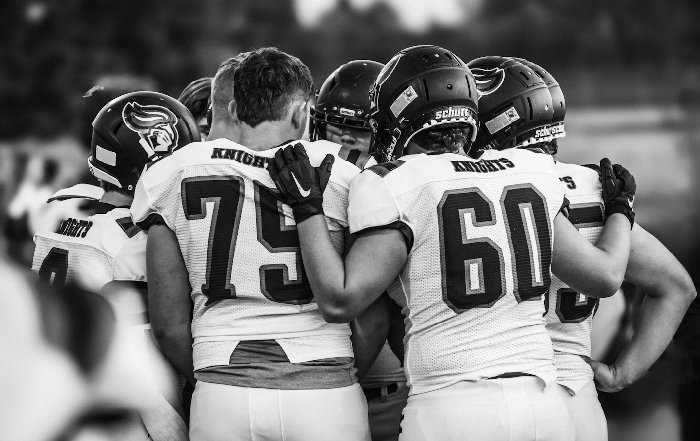
The Art of Team Dynamics and Cohesion in a High-Performance World
Redefining Teamwork in 2026
In 2026, the meaning of teamwork has expanded far beyond the locker room or the traditional office floor, and nowhere is this more visible than in the hybrid world that SportyFusion.com serves, where athletic performance, digital innovation, and global business culture intersect. From elite sports franchises in the United States and Europe to fast-growing technology startups in Singapore and Seoul, leaders are discovering that the art of team dynamics and cohesion is now a strategic capability, not a soft skill, and that the same principles that drive a championship team on the field can be translated into competitive advantage in the boardroom, the studio, the lab, and even the gaming arena. As high-performance environments become more complex, distributed, and data-driven, organizations are turning to evidence-based approaches grounded in psychology, neuroscience, sports science, and organizational behavior to build teams that are resilient, adaptive, and deeply aligned around a shared purpose, while still leaving room for individual excellence and creativity.
At SportyFusion.com, this convergence is particularly visible because the platform sits at the intersection of sport and performance culture, business strategy, and global lifestyle trends, engaging audiences who are equally interested in the latest insights from Harvard Business School as they are in cutting-edge sports analytics from FC Barcelona or innovation stories from Silicon Valley. For these readers, team dynamics are not an abstract concept but a daily reality: they lead cross-border project teams, coach youth sports, manage remote creative squads, build esports rosters, or coordinate health and wellness initiatives inside multinational corporations, and they recognize that cohesion is the invisible infrastructure that makes complex collaboration possible across time zones, disciplines, and cultures.
The Science Behind Cohesion: Why Teams Outperform Individuals
The modern science of team dynamics has moved well beyond simplistic notions of "chemistry" or "team spirit" and now draws on a rich body of research from organizations such as MIT, Stanford University, and Google, which have systematically studied what differentiates high-performing teams from average ones. Studies highlighted by the American Psychological Association and the Harvard Business Review consistently demonstrate that cohesive teams are more innovative, more resilient under pressure, and more capable of sustained high performance, particularly when facing complex, ambiguous challenges where no single expert holds all the answers. In sports, this is reflected in the way well-integrated squads outperform star-studded lineups that lack alignment, a pattern visible in the success of teams like Leicester City FC in the English Premier League or the collective systems used by national teams in the FIFA World Cup, where cohesion and tactical understanding often defeat raw individual talent.
From a health and wellness perspective, cohesive teams also buffer individuals against stress and burnout, a finding that has become especially important in the wake of the global shifts in work and training practices that accelerated after the COVID-19 pandemic, as documented by organizations such as the World Health Organization and the International Labour Organization. In high-pressure environments, whether in elite sport, high-stakes trading floors, or fast-paced technology firms in Germany, Canada, or South Korea, team members who feel psychologically safe, supported, and connected are more likely to maintain their mental and physical well-being over time, which is why performance-focused platforms like SportyFusion Health and SportyFusion Fitness increasingly emphasize social and team-based approaches to training and recovery.
Psychological Safety: The Invisible Foundation of High-Performance Teams
One of the most influential insights in recent years has been the recognition that psychological safety-the shared belief that a team is safe for interpersonal risk-taking-is a critical foundation for cohesion and sustained performance. Research popularized by Dr. Amy Edmondson of Harvard Business School, and echoed in large-scale internal studies by Google, shows that teams where members feel free to ask questions, admit mistakes, and challenge assumptions without fear of ridicule or punishment are far more likely to innovate, adapt, and learn quickly. This concept resonates deeply in both sports and business: a footballer who fears criticism will avoid risky but potentially game-changing passes, just as a product manager in a London or Berlin startup might withhold a bold idea if they anticipate negative consequences for being wrong.
For global organizations operating across continents-from North America to Asia-Pacific-the challenge is to cultivate psychological safety across diverse cultural norms and communication styles, which requires intentional leadership behaviors and clear norms rather than generic "team-building" exercises. Leaders who model vulnerability, acknowledge their own fallibility, and invite dissenting views help to create an environment where team members in Tokyo, New York, and Amsterdam feel equally empowered to contribute, even when they are working virtually and rarely meet in person. Platforms like SportyFusion Culture and SportyFusion Social increasingly highlight these leadership practices as part of a broader shift toward more human-centric performance cultures that recognize that trust is not a soft concept but a measurable driver of outcomes.
Role Clarity and Complementarity: Designing Teams Like High-Performance Systems
While psychological safety provides the emotional foundation for cohesion, the structural side of team dynamics is built on role clarity and complementarity, which ensure that individual strengths are harnessed effectively and that the team as a whole functions as a coherent system. In elite sports, coaches and performance directors invest significant effort into defining roles with precision, from the pressing responsibilities of a forward in a German Bundesliga club to the tactical duties of a defensive specialist in the NBA, and they use data from organizations like Stats Perform or Opta to refine these roles in response to evolving opposition strategies. The same principle applies in high-performance business teams, where clearly defined responsibilities, decision rights, and interfaces between functions reduce friction, confusion, and duplication of effort, particularly in complex projects that span engineering, marketing, finance, and operations across multiple geographies.
Modern organizational design thinking, as discussed by institutions such as the Institute for Corporate Productivity and the Chartered Institute of Personnel and Development, emphasizes the importance of constructing teams with diverse but complementary skill sets, cognitive styles, and backgrounds, while ensuring that everyone understands how their contribution fits into the broader mission. This is particularly relevant for cross-functional innovation teams in technology and gaming, where designers, developers, data scientists, and community managers must collaborate seamlessly to deliver compelling experiences. For readers of SportyFusion Technology and SportyFusion Gaming, this systemic view of team design mirrors the way high-level esports organizations in South Korea, China, and Europe now structure their rosters, coaching staff, analysts, and support personnel to function like integrated performance ecosystems rather than loose collections of individual stars.
Communication Rhythms and the Tempo of Collaboration
Beyond roles and psychological safety, the tempo and quality of communication within a team are decisive factors in determining whether collaboration fuels performance or becomes a source of friction and fatigue. High-performing teams, whether in Australian rugby, French cycling, or Canadian fintech, develop deliberate communication rhythms that balance synchronous and asynchronous interactions, ensuring that critical information flows quickly while deep work and recovery are protected. Research from the MIT Human Dynamics Lab and insights published by the McKinsey Global Institute highlight that effective teams manage their "collaboration load" carefully, avoiding the constant context-switching and meeting overload that have plagued many hybrid workplaces since 2020.
In sports, this rhythm is visible in the cadence of pre-match briefings, in-game communication, halftime adjustments, and post-match reviews, all of which are designed to ensure that information is shared at the right moment and in the right format to support decision-making and learning. In global business environments, the equivalent might be a structured weekly rhythm of stand-ups, deep-dive sessions, and asynchronous updates via digital platforms, tailored to the needs of teams spread across time zones from New York to Singapore. For the SportyFusion.com audience, many of whom operate in high-intensity sectors where speed and precision matter, understanding how to architect communication rhythms that support performance rather than erode it has become a central leadership capability, one that intersects with both business strategy and workplace well-being.
Data, Analytics, and the Quantification of Team Dynamics
One of the most striking developments by 2026 is the extent to which team dynamics, once considered intangible, can now be measured, visualized, and optimized through advanced analytics, drawing on techniques from sports performance analysis, organizational network analysis, and behavioral science. In elite sport, organizations such as FC Bayern Munich, Manchester City, and Golden State Warriors have pioneered the use of tracking data, video analytics, and wearable technologies to understand not only individual performance but the collective patterns of movement, spacing, and decision-making that underpin team cohesion, working with technology providers and research institutions across Europe and North America. Similarly, in corporate settings from Zurich to São Paulo, companies use organizational network analysis tools to map collaboration patterns, identify bottlenecks, and reveal informal influence structures that often differ from formal hierarchies, as documented by the MIT Sloan Management Review.
However, the rise of data-driven team management also raises important ethical and privacy considerations, particularly when biometric data, communication metadata, or behavioral analytics are involved. Responsible organizations are increasingly guided by frameworks such as those promoted by the OECD and the World Economic Forum to ensure that data is used to empower teams rather than to surveil or control individuals. For a platform like SportyFusion Ethics, this intersection of performance analytics, human autonomy, and digital rights is an emerging focal point, especially as wearable technologies, AI coaching tools, and immersive training environments become mainstream across sports, fitness, and knowledge work.
Culture, Identity, and the Social Fabric of Teams
While structures, processes, and data are essential, the deepest layer of team cohesion lies in culture and identity-the shared stories, rituals, values, and norms that give a team its distinctive character and bind its members together across victories, defeats, and transitions. In global sport, this is visible in the way clubs like Liverpool FC, FC Barcelona, or Bayern Munich cultivate identities that transcend individual players and even generations, creating a sense of belonging that resonates with fans in South Africa, Brazil, and Thailand as strongly as with those in their home cities. Similarly, successful organizations in sectors as varied as technology, automotive, and luxury goods invest heavily in cultural narratives that align employees around a purpose, whether it is advancing sustainable mobility, democratizing financial services, or redefining digital entertainment.
Research from institutions such as the London Business School and the Center for Creative Leadership underscores that strong team cultures do not emerge by accident; they are intentionally shaped through leadership behaviors, selection and onboarding processes, recognition systems, and symbolic practices that reinforce desired norms. For the SportyFusion.com community, which spans high-performance athletes, business leaders, and creative professionals, the question is often how to build and sustain such cultures in environments characterized by rapid turnover, remote collaboration, and intense competitive pressure. Content on SportyFusion Culture and SportyFusion World increasingly highlights case studies of teams and organizations that successfully navigate these challenges, from Scandinavian tech firms that blend flat hierarchies with strong collective identity to Japanese sports academies that balance tradition with innovation.
Training for Teamwork: From Practice Fields to Corporate Learning Labs
In both sport and business, there is growing recognition that teamwork is not a static trait but a set of skills and habits that can be developed deliberately through training, reflection, and feedback. Elite sports organizations in countries such as the United States, the United Kingdom, and Australia have long understood that tactical drills, scenario-based training, and simulated pressure situations are essential for building not only individual capabilities but also shared mental models and automatic coordination patterns, particularly in high-speed, high-stakes environments. Increasingly, corporations and public-sector organizations are adopting similar approaches, using simulations, cross-functional projects, and experiential learning programs to develop collaborative skills, as highlighted by the Association for Talent Development and the European Foundation for Management Development.
For readers of SportyFusion Training, this shift means that team development is no longer confined to off-site retreats or occasional workshops but is embedded into daily workflows, with leaders acting as coaches who design learning experiences that stretch and support their teams. This might involve structured post-project reviews that mirror post-game analyses in professional sport, peer coaching circles that enable mutual feedback, or cross-border rotations that expose individuals to different cultural and functional perspectives. The key principle is that cohesion grows through shared experiences, especially those that require teams to navigate ambiguity, manage conflict constructively, and adapt under pressure, rather than through superficial bonding activities.
Diversity, Inclusion, and the Competitive Edge of Varied Perspectives
As organizations operate in increasingly interconnected markets across Europe, Asia, Africa, and the Americas, the composition of teams has become more diverse in terms of nationality, gender, age, professional background, and cognitive style, and this diversity can be a powerful driver of innovation and resilience when combined with strong cohesion. Research synthesized by the World Bank and the OECD indicates that diverse teams are better at problem-solving and risk assessment, particularly in complex environments where multiple perspectives are required to anticipate unintended consequences. In sport, this is reflected in the success of clubs and national teams that integrate players from different cultural and tactical traditions, creating hybrid styles of play that are difficult to predict and defend against.
However, diversity without inclusion can undermine cohesion, leading to fragmentation, miscommunication, and unequal participation, which is why forward-looking organizations invest in inclusive leadership training, bias awareness, and structural changes to recruitment and promotion practices. For the SportyFusion.com audience, many of whom operate in global hubs such as London, New York, Berlin, Singapore, and Johannesburg, the challenge is to create environments where differences are not merely tolerated but actively leveraged, with clear norms that ensure all voices are heard and respected. Content on SportyFusion Social and SportyFusion Jobs increasingly explores how inclusive team dynamics intersect with talent attraction, retention, and employer branding, particularly among younger generations who prioritize belonging and purpose.
Sustainability, Ethics, and the Long-Term Health of Teams
In 2026, discussions about team dynamics and cohesion cannot be separated from broader conversations about sustainability, ethics, and the long-term health of people and organizations. High-performance cultures that ignore the limits of human endurance or treat individuals as expendable resources may achieve short-term results but often suffer from burnout, reputational damage, and talent exodus, as seen in several high-profile corporate and sporting scandals over the past decade. Institutions such as the United Nations Global Compact and the International Olympic Committee increasingly emphasize responsible leadership, athlete welfare, and sustainable business models as essential components of long-term success.
For SportyFusion.com, which covers not only performance and business but also environmental impact and ethical considerations, the art of team cohesion is inseparable from questions such as how training loads are managed, how psychological support is provided, how data is used, and how organizations balance competitive ambition with social responsibility. Teams that integrate ethical reflection into their decision-making processes, that prioritize transparent communication about trade-offs, and that invest in the holistic well-being of their members are better positioned to maintain trust, attract partners and sponsors, and adapt to evolving regulatory and societal expectations. This perspective resonates strongly in regions like the European Union, where regulatory frameworks around sustainability and worker protections are tightening, as well as in emerging markets where rapid growth must be balanced with social stability and community engagement.
The Future of Team Dynamics: Hybrid, Augmented, and Borderless
Looking ahead, the art of team dynamics and cohesion will continue to evolve as technology reshapes how people collaborate, train, and compete across borders. Advances in artificial intelligence, virtual and augmented reality, and real-time translation are already enabling new forms of distributed teamwork, from remote coaching in elite sport to global product development sprints that span time zones from Los Angeles to Tokyo. Organizations such as Microsoft, Meta, and Tencent are investing heavily in platforms that support immersive collaboration, while research institutions and think tanks, including the Brookings Institution, explore the societal implications of increasingly virtual work and learning environments.
For the global community that turns to SportyFusion.com for insights at the intersection of sports, technology, business, and lifestyle, the central challenge will be to harness these tools to enhance, rather than erode, the human elements of teamwork: trust, empathy, shared purpose, and collective resilience. Hybrid teams that blend in-person and virtual interactions will need new rituals, new performance metrics, and new leadership competencies to maintain cohesion, particularly when members rarely share the same physical space. At the same time, the democratization of high-performance methodologies-from sports science to behavioral analytics-means that more organizations, from small startups in Nairobi or Bogotá to community sports clubs in rural France or New Zealand, can access the knowledge and tools once reserved for elite institutions.
In this emerging landscape, the art of team dynamics and cohesion will remain a decisive differentiator, but it will also become more accessible, more measurable, and more deeply integrated into how people live, work, and play. For SportyFusion.com, the mission is to continue serving as a bridge between disciplines and regions, translating insights from elite sports, cutting-edge research, and pioneering businesses into practical wisdom for teams everywhere, whether they are chasing world records, market share, social impact, or simply the shared satisfaction of doing meaningful work together.