

How Iconic Sporting Moments Continue to Shape a Changing World in 2026
Sport in 2026 remains one of the few truly global languages, cutting through borders, politics, and cultural divides with a clarity that few other human activities can match. From Olympic stadiums in Europe and Asia to football pitches in South America and community courts across North America and Africa, the most iconic sporting moments are remembered not simply as victories or defeats but as turning points in how societies see themselves, their values, and their future. On sportyfusion.com, where the worlds of fitness, culture, health, sports, business, and technology intersect, these moments are treated not as isolated highlights but as living case studies in resilience, leadership, ethics, and human performance that continue to influence boardrooms, training facilities, and social movements worldwide.
The greatest sporting events endure because they embody the core principles of experience, expertise, authoritativeness, and trustworthiness. The athletes involved have honed their craft over years of disciplined training; the institutions that host these events have developed governance frameworks, commercial models, and ethical codes; and the narratives that emerge from these moments help shape how individuals, organizations, and even governments think about excellence, inclusion, and long-term strategy. As global audiences from the United States, the United Kingdom, Germany, Canada, Australia, China, Brazil, South Africa, and beyond continue to consume sport through streaming platforms, smart devices, and immersive technologies, the historical benchmarks of greatness take on renewed relevance, offering lessons for a digital, data-driven, and increasingly values-conscious era.
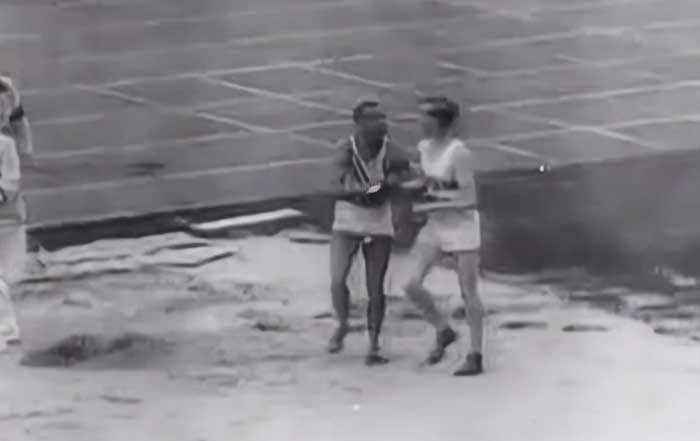
Jesse Owens in 1936: Sport as a Moral Counterweight
When Jesse Owens stepped onto the track at the 1936 Berlin Olympics, he did so in a geopolitical environment defined by propaganda, racial ideology, and mounting global tension. His four gold medals in the 100 meters, 200 meters, long jump, and 4x100 relay did more than disrupt the competitive expectations of the International Olympic Committee; they publicly challenged the racial doctrines of Nazi Germany in front of a worldwide audience. Contemporary analyses from platforms such as the Olympic Museum and historical archives underscore how Owens' performance became an early demonstration of sport as a moral counterweight to authoritarian narratives, illustrating that measurable excellence on the track could undermine unscientific and discriminatory ideologies off it.
For readers of sportyfusion.com who follow global world events and their cultural implications, Owens' story remains a foundational example of how performance and principle can align. It highlights how data-driven preparation, mental resilience, and personal integrity can converge to create a moment that still informs modern debates about athlete activism, representation, and the responsibilities of global sporting bodies. In an era where organizations increasingly look to frameworks like the UNESCO Charter of Physical Education, Physical Activity and Sport to guide policy, Owens' legacy continues to serve as a benchmark for how sport can support human rights and equality.
Pelé and 1970: Football as a Global Cultural Export
The 1970 FIFA World Cup in Mexico, and particularly the performances of Pelé for Brazil, transformed football from a popular sport into a global cultural export. Pelé's creativity, vision, and technical mastery helped Brazil secure its third World Cup title and permanently shaped the brand of the "beautiful game," a concept that still defines how fans and marketers alike describe the sport. The final against Italy, immortalized in the archives of FIFA and discussed extensively by analysts at outlets like BBC Sport, remains a reference point for how style, teamwork, and national identity can merge into a powerful global narrative.
From a business and branding perspective, Pelé's era foreshadowed modern sport's commercial and diplomatic potential. The image of Brazil as a nation of flair and resilience became intertwined with Pelé's personal story, and this association influenced tourism, media rights, and sponsorship models that are still evolving today. For companies and executives following business trends on sportyfusion.com, the 1970 World Cup serves as a case study in how a single tournament can redefine a country's global perception, catalyze the growth of sports marketing, and inspire the kind of cross-border engagement now seen in major leagues and international tournaments across Europe, Asia, and North America.
Muhammad Ali's Rumble in the Jungle: Identity, Power, and Narrative
The 1974 Rumble in the Jungle between Muhammad Ali and George Foreman in Kinshasa was more than a heavyweight title bout; it was a convergence of sport, geopolitics, and cultural identity. Ali's "rope-a-dope" strategy and eventual knockout victory have been analyzed not only in boxing circles but also in political and cultural studies, with institutions such as the Smithsonian and leading universities examining how Ali's persona and principles reshaped the role of the athlete in public life.
Ali's willingness to challenge political norms, speak against war, and embrace his identity as an African American and global Muslim figure positioned him as a prototype for the modern socially engaged athlete. The Kinshasa setting, in what is now the Democratic Republic of Congo, added a symbolic layer of post-colonial empowerment, linking African pride with global sport. For sportyfusion.com's audience, which often considers ethics, social impact, and leadership, Ali's story illustrates how narrative control, authenticity, and strategic communication can be as influential as physical performance, shaping how brands, communities, and movements align around sport.
The Miracle on Ice: Underdogs, Systems, and National Confidence
The Miracle on Ice at the 1980 Winter Olympics in Lake Placid, where the United States men's ice hockey team defeated the dominant Soviet Union, remains a defining example of how underdog victories can restore national confidence and challenge entrenched systems. The Soviet team, with its quasi-professional structure and tactical sophistication, represented a model of centralized sporting excellence that had dominated the International Ice Hockey Federation (IIHF) landscape. The American team, composed largely of college players, succeeded through cohesion, preparation, and belief at a time when the United States was grappling with economic uncertainty and geopolitical tension.
Analyses from outlets such as ESPN show how this single game influenced youth participation, commercial interest in ice hockey, and the narrative of American resilience. For organizations and leaders who follow performance and team dynamics on sportyfusion.com, the Miracle on Ice underscores how culture, leadership, and system design can sometimes offset resource imbalances, offering lessons that extend into corporate strategy, talent development, and national high-performance models across Europe and Asia.
Diego Maradona in 1986: Genius, Flaws, and the Drama of Sport
The 1986 World Cup quarterfinal between Argentina and England, featuring Diego Maradona's infamous "Hand of God" goal followed by the "Goal of the Century," encapsulates the duality that makes sport so compelling. The first goal, enabled by officiating error, sparked controversy that still resonates in debates about technology and fairness, now partly addressed by tools such as VAR and goal-line systems promoted by FIFA and analyzed by organizations like the International Football Association Board. The second goal, a breathtaking solo run past multiple defenders, remains a benchmark of individual brilliance, frequently cited in coaching, scouting, and tactical discussions.
For sportyfusion.com's readers who engage with technology, gaming, and tactical analysis, Maradona's dual legacy highlights how sport blends artistry and imperfection. It has influenced how simulations, analytics platforms, and coaching tools model creativity and risk, and it has informed ethical debates about gamesmanship, officiating standards, and the role of video review in maintaining trust in competitive outcomes.
Usain Bolt and Michael Phelps: Redefining Human Limits
The late 2000s and 2010s saw Usain Bolt and Michael Phelps redefine what the world believed possible in track and swimming. Bolt's world records and triple-triple Olympic achievement, chronicled extensively by World Athletics and platforms such as World Athletics' official site, combined extraordinary biomechanical efficiency with charismatic showmanship that attracted global audiences from Jamaica to Japan and from the United Kingdom to South Africa.
Simultaneously, Phelps' unprecedented 23 Olympic gold medals and rigorous training regime, documented by organizations like USA Swimming and covered by The New York Times, became templates for high-performance systems that integrate sports science, nutrition, recovery, and mental conditioning. For sportyfusion.com, which regularly explores training, health, and long-term athlete development, these two athletes exemplify the application of data, expertise, and multidisciplinary support to push physiological boundaries, while also highlighting the importance of managing mental health and post-career transitions in a high-pressure environment.
Serena Williams and Roger Federer: Leadership, Longevity, and Brand Power
In tennis, Serena Williams and Roger Federer have come to represent not only excellence but also longevity, adaptability, and global brand influence. Williams' 23 Grand Slam singles titles and her role in advancing conversations about gender equity, representation, and body image have been widely discussed by the Women's Tennis Association (WTA) and leading media such as The Guardian. Her impact extends across culture, lifestyle, and business, influencing sponsorship strategies and inspiring new generations of athletes and entrepreneurs in the United States, Europe, and beyond.
Roger Federer, often described as the "gentleman of tennis," combined technical mastery with a global philanthropic footprint through the Roger Federer Foundation, which focuses on education initiatives in Africa and Switzerland and is profiled on platforms like World Economic Forum. His rivalries with Rafael Nadal and Novak Djokovic helped create a golden era for men's tennis, driving broadcast rights, ticket demand, and digital engagement across continents. For sportyfusion.com's business and brands readers, Williams and Federer demonstrate how authenticity, consistency, and clear values underpin sustainable brand equity in an increasingly scrutinized and socially aware marketplace.
Lionel Messi's 2022 World Cup: Closure, Legacy, and Global Reach
The 2022 FIFA World Cup in Qatar delivered a final that many analysts, including those at The Athletic, describe as one of the greatest matches ever played. Lionel Messi's leadership in guiding Argentina to victory against a formidable French team led by Kylian Mbappé brought narrative closure to a career already rich with club achievements. The 3-3 draw and subsequent penalty shootout showcased the emotional intensity, tactical complexity, and commercial magnitude that modern football can achieve.
From a strategic perspective, the tournament highlighted the globalization of talent pipelines, the influence of advanced analytics, and the growing importance of ethical debates around hosting rights, labor standards, and sustainability. For the global audience of sportyfusion.com, particularly in Europe, Asia, and the Americas, Messi's triumph is both a sporting milestone and a lens through which to examine how mega-events shape infrastructure investment, media ecosystems, and social discourse.
Tiger Woods' Masters Comeback and the Power of Redemption
When Tiger Woods won the Masters in 2019, more than two decades after his first triumph at Augusta, the victory resonated far beyond golf. Years of injuries, surgeries, and personal challenges had led many analysts to assume his era was over. Yet his return to the pinnacle of the sport, documented by the PGA Tour and covered widely by outlets such as Golf Digest, became a global story of resilience and reinvention.
For corporate leaders, performance coaches, and high-achieving professionals who follow sportyfusion.com, Woods' comeback underscores that reputational recovery, physical rehabilitation, and strategic career management are possible even after severe setbacks. It also illustrates how trust can be gradually rebuilt with fans, sponsors, and stakeholders when performance, humility, and consistent behavior realign over time, a lesson that extends into corporate governance and executive leadership across sectors.
Simone Biles and the Paralympic Movement: Redefining Strength
The rise of Simone Biles and the growing visibility of the Paralympic Games have transformed global perceptions of strength, courage, and human capability. Biles' record-breaking gymnastics achievements, recognized by the International Gymnastics Federation (FIG) and documented in detail by NBC Sports, pushed technical boundaries while her decision at the Tokyo 2020 Games (held in 2021) to prioritize mental health reframed expectations placed on elite athletes.
In parallel, Paralympic champions such as Tatyana McFadden and Jonnie Peacock have demonstrated that adaptive sport is not a secondary category but a premier stage of innovation, resilience, and performance. The International Paralympic Committee and platforms like Paralympic.org have played a central role in elevating these stories, influencing policy changes, facility design, and inclusive programming in countries from the United Kingdom and Germany to Japan, Brazil, and South Africa. For sportyfusion.com, which frequently explores environment, infrastructure, and inclusive design, the evolution of the Paralympics illustrates how accessibility and high performance can be mutually reinforcing rather than competing priorities.
Women's Football, Naomi Osaka, and the Era of Athlete Activism
The 2019 Women's World Cup in France, led by figures such as Megan Rapinoe and Alex Morgan, marked a turning point in the commercial and cultural status of women's sport. Record audiences, robust sponsorship interest, and increased coverage by organizations like UEFA and media such as CNN demonstrated that women's football is both a powerful entertainment product and a platform for advocacy around pay equity, representation, and governance. For readers of sportyfusion.com interested in jobs and career trends, the growth of women's sport is also expanding opportunities in coaching, analytics, marketing, and administration across Europe, North America, and Asia-Pacific.
Naomi Osaka's rise, particularly her 2020 U.S. Open victory accompanied by visible support for racial justice causes, further cemented the role of athletes as influential social actors. Her actions, acknowledged by organizations such as the United Nations and discussed widely in outlets like Time, exemplify a new generation of competitors who view their platforms as tools for broader change. This evolution aligns with a global shift toward stakeholder capitalism and ethical branding, themes frequently examined in sportyfusion.com's coverage of ethics and social responsibility.
Eliud Kipchoge and the Fusion of Technology, Science, and Endurance
When Eliud Kipchoge completed a marathon in under two hours in Vienna in 2019, supported by advanced pacing strategies, customized footwear from Nike, and a carefully controlled environment, he demonstrated the potential of integrating cutting-edge technology with elite endurance training. Although the time was not recognized as an official world record, organizations such as World Athletics and scientific institutions like MIT Technology Review have analyzed the achievement as a landmark in human performance engineering.
For sportyfusion.com, where readers follow technology, fitness, and performance innovation, Kipchoge's run illustrates how data analytics, materials science, and collaborative planning can extend human limits while raising important questions about fairness, regulation, and access. It also reinforces the importance of narrative: Kipchoge's phrase "No human is limited" has become a guiding motto for athletes, entrepreneurs, and professionals across continents who seek to align physical, mental, and strategic preparation in pursuit of ambitious goals.
Why These Moments Still Matter for SportyFusion Readers in 2026
In 2026, as global sport continues to evolve through new formats, digital platforms, and emerging markets in Asia, Africa, and South America, the historic moments described above remain deeply relevant. They inform how leagues structure competitions, how brands build trust, how governing bodies address ethics and inclusion, and how individuals approach their own development in sport, business, and everyday life.
On sportyfusion.com, these stories are not archived as static history but integrated into ongoing coverage of news, sports, lifestyle, and high-performance culture. They guide editorial perspectives on topics as varied as sustainable event management, athlete mental health, digital fan engagement, and cross-border investment in clubs and leagues. They also help readers across the United States, Europe, Asia, Africa, and the Americas understand how their own values-resilience, fairness, creativity, and ambition-are reflected and tested in the global arena of sport.
Ultimately, the enduring power of these iconic sporting moments lies in their ability to connect billions of people through shared emotion and collective memory while simultaneously offering practical lessons in leadership, strategy, and ethics. Whether one is analyzing a World Cup final, a marathon breakthrough, or a historic Olympic performance, the themes are consistent: disciplined preparation, courageous decision-making, and the willingness to perform under scrutiny. In that sense, the world's greatest sporting moments are not just about who won or lost; they are about how humanity continues to explore its potential, redefine its limits, and build bridges across cultures and generations-values that sit at the heart of sportyfusion.com's mission and its global community of readers.