

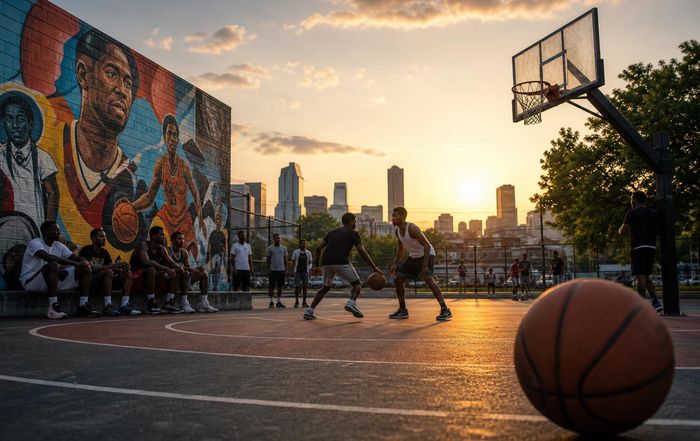
Street Basketball in the United States: Courts, Culture, and Community
Street basketball in the United States is more than an informal version of the professional game; it is a public stage, a neighborhood meeting point, and a training ground where style, toughness, and creativity matter as much as the final score. From fenced-in courts under New York high-rises to sun-faded blacktop in Los Angeles, pickup hoops shape local identity, bridge social divides, and influence how the sport is played at every level. For athletes and fans who see sport as a lifestyle, streetball sits at the intersection of performance, culture, and community life, revealing how a simple court can anchor an entire ecosystem of music, fashion, and social connection.
How U.S. Streetball Evolved Into a Cultural Force
Street basketball's roots in the United States stretch back to the early 20th century, when urbanization, racial segregation, and limited access to formal facilities pushed many communities-especially Black and immigrant neighborhoods-toward public playgrounds and schoolyards. As basketball spread after its invention in 1891, cities like New York, Philadelphia, Chicago, and Detroit saw outdoor hoops become informal hubs where young players could compete without paying club fees or joining school teams. Over time, the lack of formal structure encouraged experimentation: players developed new dribbling moves, flashy passes, and acrobatic finishes that would have been frowned upon in more rigid coaching environments. Those courts became laboratories for the crossovers, step-backs, and above-the-rim plays that now define the modern game.
By the 1960s and 1970s, legendary playgrounds such as Rucker Park in Harlem had turned into proving grounds where neighborhood stars could test themselves against college players and, at times, future or current NBA pros. Tournaments drew crowds that felt closer to block parties than organized sporting events, with DJs, MCs, and local vendors creating a carnival-like atmosphere. That fusion of basketball, music, and street style later fed directly into the rise of hip-hop culture, with artists referencing courts and players in lyrics and videos. Organizations like USA Basketball and the Naismith Memorial Basketball Hall of Fame now acknowledge how much of the sport's creativity and swagger came from this outdoor scene, even if many early street legends never made it to the professional spotlight.
The 1990s and early 2000s brought a new wave of visibility through mixtapes and touring teams. The AND1 Mixtape Tour, built around streetball stars and highlight-reel moves, turned playground legends into global celebrities, while cable networks and major brands amplified the aesthetic of baggy shorts, flashy handles, and high-flying dunks. Even as the NBA tightened rules around carrying and traveling, many of the moves once seen only on blacktop courts-hesitation dribbles, euro-steps, deep pull-up threes-filtered into mainstream coaching. For modern players training for performance or simply playing for joy, streetball's influence is visible in everything from warm-up routines to signature sneakers.
Iconic Courts: From Rucker Park to Venice Beach
Some outdoor courts in the United States have taken on near-mythical status, attracting players and visitors from around the world. In New York City, Rucker Park in Harlem remains the most famous, with summer tournaments that have featured stars like Julius Erving, Kobe Bryant, and Kevin Durant alongside local heroes. Further downtown, West 4th Street-often called "The Cage"-is known for its tight, fenced-in space and highly physical games, where spectators are close enough to feel every collision. These courts are not just venues; they function as open-air arenas where reputations are made and lost in a few possessions.
On the West Coast, Venice Beach in Los Angeles has become synonymous with open-air hoops against a backdrop of palm trees and the Pacific. The courts there blend competitive play with a performance element, as tourists, fitness enthusiasts, and local artists share the same stretch of beachfront. In Chicago, parks on the South and West Sides have long histories of producing tough, skilled guards and wings, while in Philadelphia, playgrounds connected to high schools and recreation centers have fed into a strong high school and college basketball tradition. Cities like Washington, D.C., Baltimore, and Seattle also host respected summer leagues and outdoor runs that attract pros and top amateurs.
These iconic venues have been documented and romanticized in films, documentaries, and photo essays, but they also exist alongside thousands of anonymous neighborhood courts that matter just as much to local communities. A cracked rim tucked behind a public school in Detroit or a half-court under a freeway in Houston may never appear on television, yet they can be just as critical to a young athlete's development or a neighborhood's social fabric. For readers interested in how such spaces fit into wider urban life, the interplay between courts, parks, and city planning connects naturally to broader culture, environment, and lifestyle conversations.
Courts as Community Centers and Social Safety Nets
Public basketball courts often function as informal community centers, particularly in neighborhoods where formal resources are limited. For young people, they provide a safe, supervised space-often overseen by older players, volunteer coaches, or recreation staff-where they can spend hours after school or work. This unstructured but socially rich environment allows teens and young adults to build friendships, learn conflict resolution, and form mentoring relationships that might not emerge in more formal settings. Coaches and older players frequently step into roles that resemble youth workers or community organizers, steering younger kids away from trouble and modeling discipline, resilience, and teamwork.
Nonprofit organizations and city recreation departments across the United States have recognized this role. Groups such as Up2Us Sports, Boys & Girls Clubs of America, and local YMCA branches use basketball as a hook to deliver academic support, life-skills training, and mental health resources. The Aspen Institute's Project Play has highlighted how low-cost, accessible sports like pickup basketball can help address physical inactivity and social isolation among youth, particularly in low-income communities. At the same time, health agencies such as the Centers for Disease Control and Prevention and the World Health Organization emphasize that regular physical activity-including informal sports-is linked to lower rates of obesity, cardiovascular disease, and depression, making courts important public health assets as well as social ones.
Streetball spaces also foster intergenerational and cross-cultural interaction. It is common to see teenagers sharing the court with older adults, recent immigrants, and players from different racial and socioeconomic backgrounds. The code of pickup-calling your own fouls, "winners stay," and the expectation that newcomers will be tested but ultimately welcomed-can create a sense of shared identity that transcends other divisions. For cities grappling with segregation or social tension, supporting public basketball infrastructure can be a relatively low-cost way to encourage everyday contact among groups that might otherwise remain isolated. For readers interested in the broader social impact of sport, this intersects with our coverage of social issues and world trends.
Style of Play: Freedom, Creativity, and Toughness
On the court, street basketball in the United States is defined by a blend of creativity and physicality that differs from organized high school or college play. Without referees or formal coaches, players negotiate their own rules and style, leading to a game that is often faster, more improvisational, and more emotionally charged. Crossovers, behind-the-back dribbles, no-look passes, and step-back threes are not just tolerated but celebrated, especially when they embarrass a defender or ignite the crowd. Trash talk and showmanship are part of the culture, functioning as a test of mental toughness and a way to assert identity within the group.
At the same time, the absence of formal officiating can make the game more physical. Contact that would be a clear foul in organized basketball is often ignored or contested, rewarding players who can absorb bumps, finish through contact, and maintain composure under pressure. This environment can sharpen skills that translate directly to higher levels of competition: reading defenses quickly, making decisions in traffic, and adapting to different playing styles from one game to the next. Many American professionals, from Allen Iverson to Kyrie Irving, have credited their playground experiences with shaping their ball-handling, confidence, and competitive edge.
For players focused on performance and training, blending streetball with structured practice can be powerful. Pickup games provide real-time feedback and conditioning that is difficult to replicate in drills, while formal strength and skill work helps ensure that flashy moves are supported by solid fundamentals. Resources from organizations like USA Basketball and the National Strength and Conditioning Association offer guidance on how to structure training, while local gyms and trainers often build programs that respect the creativity of street play. Readers interested in optimizing their own game may find additional ideas in our training and performance coverage, which often bridge formal sport science with real-world pickup habits.
Health, Safety, and Access: Who Gets to Play?
Despite its benefits, street basketball raises important questions about health, safety, and equitable access. Outdoor courts are exposed to weather and wear, and poorly maintained surfaces can increase the risk of ankle sprains, knee injuries, and falls. Cracked pavement, bent rims, and missing nets may discourage use or send players to less safe alternatives, such as makeshift hoops in parking lots or streets. City budgets and local politics often determine which neighborhoods receive regular maintenance or new facilities, and research from organizations like the Urban Institute and Trust for Public Land suggests that low-income and minority communities are more likely to have under-resourced parks and recreation spaces.
Safety concerns also extend beyond injuries. In some areas, courts can be located near high-traffic roads, poorly lit spaces, or areas with higher rates of crime. Community advocates and local governments have responded with strategies such as improved lighting, regular programming (like leagues and tournaments), and partnerships with police or community groups to create a safer environment. National organizations, including Parks & Recreation associations and youth-sport nonprofits, argue that investing in quality facilities and supervision is a relatively inexpensive way to promote public safety, particularly compared with the social and economic costs of youth disengagement.
Access is not just a physical issue but also a social one. Women and girls, LGBTQ+ players, and older adults may feel unwelcome or intimidated on courts where the culture is dominated by young men and hyper-competitive play. Initiatives like Girls on the Run, Women's Sports Foundation, and local LGBTQ+ sports leagues have worked to create more inclusive basketball spaces, sometimes by organizing dedicated pickup times or mixed-gender leagues. For players navigating these dynamics, understanding the unwritten rules of pickup and seeking out inclusive spaces can be as important as any crossover or jump shot. These questions of inclusion connect directly to wider conversations about ethics in sport and the responsibilities of cities, brands, and governing bodies to support equitable participation.
Streetball, Media, and the Business of Culture
Street basketball's visibility has been amplified by media and technology, turning local courts into global showcases. Social platforms like Instagram, TikTok, and YouTube are filled with highlight clips from New York, Los Angeles, and smaller cities, often shot and edited by independent creators. This user-generated ecosystem has given rise to new kinds of streetball celebrities who may not play professionally but attract large online followings, sponsorship deals, and appearances in brand campaigns. Companies such as Nike, Adidas, and Under Armour have long drawn inspiration from playground culture, using outdoor courts as backdrops for commercials and signing athletes whose style resonates with street audiences.
Traditional media and streaming platforms have also played a role. Documentaries and series from outlets like ESPN, Netflix, and HBO have profiled playground legends, community tournaments, and the tensions between streetball authenticity and commercial interests. At the same time, major basketball organizations-from the NBA to FIBA-have experimented with formats like 3x3 basketball that borrow elements of street play, such as smaller teams, faster games, and music-driven atmospheres. FIBA's 3x3 format, now an Olympic discipline, echoes the half-court games familiar to anyone who has played pickup in a crowded park, highlighting how outdoor culture can shape global sport structures.
The commercialization of streetball has sparked debate within communities. Some players and organizers welcome investment, seeing it as a way to improve facilities, create opportunities, and recognize grassroots talent. Others worry that corporate branding and media attention can dilute local control or prioritize marketable narratives over everyday community needs. For readers interested in the intersection of sport, business, and brands, street basketball offers a case study in how culture is monetized-and how communities negotiate that process.
Technology, Data, and the Modern Pickup Player
Technology is reshaping how players experience and organize street basketball. Apps and platforms help people locate nearby courts, schedule games, and rate playing conditions, reducing the barrier to finding competitive runs in a new city. Wearable devices and smartphone sensors allow athletes to track workload, heart rate, jump counts, and movement patterns even in unstructured pickup games, blurring the line between casual play and high-level training. For performance-focused players, tools from companies like Catapult Sports, Whoop, and Polar-along with consumer wearables from Apple and Garmin-offer ways to monitor recovery and avoid overuse injuries that can come from playing long hours on hard surfaces.
Video technology has also democratized scouting and self-analysis. A single camera on a tripod or a phone propped against a fence can capture footage that players later review to refine footwork, shot mechanics, or decision-making. Online training platforms and coaching resources, including materials from USA Basketball, NBA-affiliated programs, and independent coaches on platforms like Coursera or YouTube, provide frameworks that players can combine with outdoor reps. For athletes who see streetball as part of a broader fitness and health routine, this mix of tech and tradition allows them to treat a pickup session as both social time and data-informed training.
However, access to these tools is uneven. Players in wealthier neighborhoods or with personal devices may benefit from wearables and video analysis, while others rely on peer feedback and experience. Some purists argue that overemphasis on metrics can undermine the instinctive, creative side of streetball that makes it unique. The challenge for modern players is to use technology as a complement rather than a replacement for the feel and improvisation that define outdoor hoops.
The Future of Street Basketball in U.S. Cities
Looking ahead, the role of street basketball in American life will be shaped by broader trends in urban planning, public health, and youth sport. Cities facing budget constraints must decide whether to prioritize maintenance and programming for outdoor courts, while developers and planners weigh the value of including playable spaces in new housing or mixed-use projects. Organizations like the National Recreation and Park Association and Trust for Public Land advocate for "parks equity," arguing that every child should live within walking distance of safe, high-quality play spaces. Basketball courts, because they serve teens and adults as well as younger children, often sit at the center of these debates.
At the same time, youth sport in the United States has become increasingly professionalized, with club teams, travel tournaments, and private trainers consuming time and money that might otherwise go to informal play. The Aspen Institute's Project Play and similar initiatives warn that this shift can exclude lower-income families and reduce the unstructured play that fosters creativity and intrinsic motivation. Street basketball offers a counterbalance: it remains free, flexible, and open to anyone willing to step on the court and call "next." For athletes juggling club commitments and school teams, regular pickup runs can help maintain a love of the game that is not tied to rankings or scholarships.
Climate and environmental considerations will also matter. Hotter summers, air quality issues, and extreme weather events can make outdoor play more challenging in some regions, prompting discussions about shade structures, cooling centers, and hybrid indoor-outdoor facilities. These questions sit at the intersection of sport, environment, and technology, and they will influence how future generations experience pickup hoops.
Yet despite these uncertainties, the core appeal of street basketball in the United States is unlikely to fade. As long as there are open courts, a ball, and a mix of strangers and friends willing to compete, the game will continue to serve as a shared language that cuts across background, status, and geography. For active people who see sport as both performance and culture, those fenced-in rectangles of asphalt remain some of the most powerful spaces in American public life-places where bodies are tested, communities are built, and the game keeps evolving one possession at a time.