

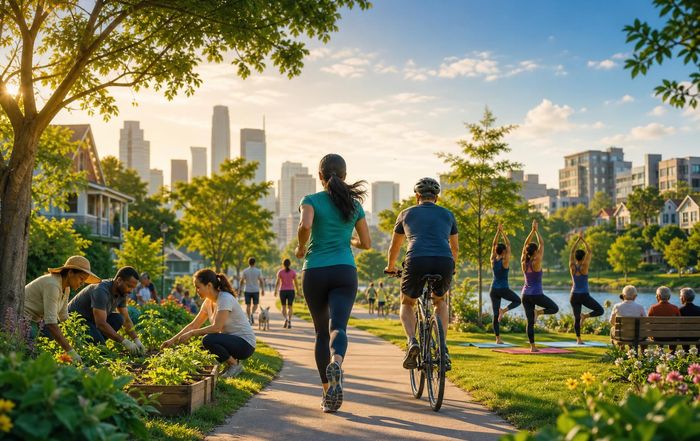
How Active Communities Shape Healthier Futures
The Strategic Power of Movement in a Fragmented World
As organizations and policymakers struggle to navigate geopolitical uncertainty, economic volatility, digital overload and widening health inequalities, one of the most powerful levers for resilience and long-term value creation remains surprisingly simple: active communities. From local running clubs in Berlin and park basketball leagues in Johannesburg to corporate wellness networks in New York and esports-plus-fitness hybrids in Seoul, communities built around movement are becoming critical infrastructure for healthier people, stronger economies and more cohesive societies. For SportyFusion.com, whose super sports news fans live at the intersection of sports, fitness, health, culture and business, the emergence of active communities is not a lifestyle trend but a structural shift that is reshaping how individuals work, connect, consume and perform.
The global data underpinning this shift is compelling. The World Health Organization estimates that physical inactivity costs health systems hundreds of billions of dollars each year and contributes to millions of preventable deaths, yet it also highlights that community-based interventions can dramatically increase activity levels when they are inclusive, culturally relevant and supported by local institutions. Readers can explore the latest evidence on how movement reduces noncommunicable diseases and improves quality of life by reviewing the WHO's guidance on physical activity and health. The strategic question for businesses, cities and sports organizations in 2026 is no longer whether active communities matter, but how to design, scale and govern them in ways that generate measurable health, social and economic outcomes.
Redefining Health: From Individual Fitness to Collective Capacity
For much of the past two decades, the global fitness conversation was dominated by individual optimization, quantified-self devices and hyper-personalized training plans. While these remain important, a more holistic understanding of health has taken hold, one that aligns closely with the editorial focus of SportyFusion.com on integrated fitness, health and performance. In this broader view, a healthy community is not simply a collection of fit individuals; it is a network of people, spaces, institutions and cultures that make the active choice the easy, enjoyable and socially rewarding choice.
Research from organizations such as Harvard T.H. Chan School of Public Health has shown that social connections and community belonging significantly influence longevity and mental health, often as strongly as traditional risk factors like smoking or obesity. Readers can examine how social support and group norms affect behavior by accessing Harvard's resources on social relationships and health. When physical activity is embedded in a social system-whether a walking group in Tokyo, a workplace cycling challenge in London or a neighborhood football tournament in Lagos-it becomes more resilient to the motivational dips and life disruptions that often derail individual training plans.
This collective lens also reframes how policymakers and businesses think about return on investment. Instead of treating sports and recreation as discretionary spending, governments from Canada to Singapore increasingly treat active infrastructure as a core component of public health and social policy. The Organisation for Economic Co-operation and Development (OECD) has highlighted the productivity and well-being benefits of healthier populations, demonstrating that investments in prevention and movement yield dividends across healthcare, labor markets and education. Those interested in the economic case can review OECD analysis on health, productivity and inclusive growth. For a business audience, the implication is clear: supporting active communities is not a corporate perk, but a strategic asset for workforce resilience and brand trust.
The Built Environment: Cities as Movement Platforms
Active communities do not emerge in a vacuum; they are shaped by the streets, parks, transport systems and digital layers that define daily life. In 2026, leading cities in Europe, North America and Asia are increasingly designing urban environments as platforms for everyday movement, recognizing that infrastructure decisions can either enable or constrain community-based activity. From protected cycling networks in the Netherlands to open-street initiatives in Bogotá and Barcelona, the most progressive urban strategies treat pedestrians and cyclists as central users rather than residual stakeholders.
Organizations such as C40 Cities and the World Resources Institute have documented how walkable, bike-friendly, green cities deliver co-benefits for air quality, climate resilience and social cohesion. Business leaders and planners can study best practices in active mobility and public space design through resources on sustainable urban transport. These insights are particularly relevant for readers of SportyFusion.com who follow world and environment developments, because the same infrastructure that supports cycling to work also underpins community running events, outdoor fitness classes and youth sports programs.
The built environment story is not limited to megacities. Smaller towns in Scandinavia, regional hubs in Australia and rapidly growing secondary cities in Africa and South America are experimenting with low-cost interventions such as "play streets," community-designed parks and multi-use sports courts that can be shared by different age groups and cultural communities. Guidance from UN-Habitat and the World Bank on inclusive public space and active mobility helps local leaders understand how to prioritize investments that maximize health and social outcomes, and readers can explore these themes through UN-Habitat's work on public space and city health. For active communities, these physical settings become the stage on which daily routines are transformed into opportunities for movement, interaction and shared identity.
Technology as an Enabler, Not a Substitute
The digital transformation of sport and fitness has accelerated since the early 2020s, with connected wearables, AI-driven coaching platforms, virtual racing environments and hybrid physical-digital experiences redefining how people train and compete. Yet the most successful active communities in 2026 are not those that replace in-person engagement with screens, but those that use technology to lower barriers to participation, personalize support and connect people across geographies. This perspective aligns with the way SportyFusion.com approaches technology and gaming, emphasizing human performance and social experience over pure gadgetry.
Leading sports technology companies and research institutions are demonstrating that when data is shared ethically and transparently, it can strengthen trust and motivation within communities. Platforms that allow local clubs to benchmark their activity levels, compare progress and celebrate collective milestones are gaining traction in markets from the United States to Japan. For those interested in the broader context of digital health, the U.S. National Institutes of Health provides extensive resources on wearables, behavior change and health outcomes. Meanwhile, organizations such as MIT Sloan School of Management analyze how digital platforms reshape fan engagement, sponsorship models and the economics of sport, and their insights into sports analytics and business innovation are highly relevant for executives seeking to build or sponsor active communities.
However, as more communities rely on apps and platforms for coordination, privacy and equity concerns become central. The ethical handling of biometric data, algorithmic transparency in training recommendations and accessibility for lower-income or older participants are no longer niche issues. Regulators in the European Union and jurisdictions such as Canada and Australia are tightening frameworks around digital health data, while organizations like Electronic Frontier Foundation advocate for responsible data practices in connected devices. Business leaders who wish to support active communities through technology must therefore invest in robust governance, clear communication and user education, aligning with the values discussed on SportyFusion.com's ethics channel.
Corporate Strategy: Active Communities as a Business Imperative
In boardrooms from London to Singapore, the conversation about employee well-being has matured from isolated wellness programs to integrated human capital strategies that encompass physical, mental and social health. The pandemic era exposed both the fragility of workforce health and the limitations of top-down initiatives that fail to engage employees in meaningful ways. By 2026, leading employers in sectors such as financial services, technology, logistics and manufacturing increasingly recognize that active communities-running clubs, company sports leagues, cross-functional hiking groups, virtual cycling teams-offer a scalable and culturally adaptable way to enhance engagement, reduce burnout and build cross-hierarchy relationships.
Reports from McKinsey & Company and Deloitte have repeatedly shown that organizations with strong well-being cultures outperform peers on retention, innovation and financial metrics, and their analyses of workplace health and productivity provide a quantitative foundation for investment decisions. For the audience of SportyFusion.com, which closely follows business and jobs trends, the key insight is that active communities function as both wellness infrastructure and informal leadership academies. Employees who organize and sustain these communities often develop skills in communication, conflict resolution, inclusion and change management that translate directly into business performance.
Moreover, brands in sportswear, nutrition, technology and consumer goods increasingly compete not just on products but on ecosystems of participation. Companies such as Nike, Adidas, Lululemon, Decathlon and Under Armour have all expanded their community engagement strategies, investing in local events, digital communities and partnerships with grassroots organizations. Market analysis from Euromonitor International and industry coverage by outlets like Financial Times highlight that consumers, particularly younger demographics in Europe, North America and Asia, are more loyal to brands that facilitate meaningful experiences rather than simply selling gear or subscriptions. Those interested in the intersection of branding and active lifestyles can explore insights on sports business and fan engagement from specialized industry platforms.
Culture, Inclusion and the Politics of Participation
Active communities are never purely physical or economic phenomena; they are deeply cultural and political. Who feels welcome on a running trail in Paris, a cricket ground in Mumbai or a skate park in Los Angeles is shaped by histories of race, gender, class, disability and migration. In 2026, there is growing recognition that inclusive design and governance of active communities are essential not only for equity but also for scale, because communities that systematically exclude or marginalize groups will struggle to maintain legitimacy and access public or private funding.
Organizations such as Women in Sport in the United Kingdom, Sport Inclusion Australia, and Right To Play working across Africa, Asia and the Middle East have demonstrated that targeted programs for girls and women, people with disabilities, refugees and low-income youth can dramatically expand participation when combined with culturally competent coaching and safe spaces. Academic research from institutions like Loughborough University and University of Toronto has further examined how gender norms, religious practices and urban safety perceptions affect participation rates, and readers can explore these issues in greater depth through resources on sport, gender and inclusion provided by UN Women.
For a platform like SportyFusion.com, which covers culture, social issues and global sport, this intersection is particularly salient. From the rise of women's professional leagues in football, cricket and basketball to the visibility of para-athletes at the Paralympic Games and regional competitions, the cultural narratives around who is "allowed" to be active are being rewritten. Yet progress is uneven, and in many regions of the world-whether conservative parts of the Middle East, underserved neighborhoods in North American cities or rural areas in South Asia-structural barriers such as lack of facilities, safety concerns and restrictive norms still constrain community activity. Addressing these challenges requires collaboration between sports bodies, NGOs, local governments and private sponsors, all of whom must commit to long-term engagement rather than short-term campaigns.
Performance, Talent Pipelines and the Elite-Grassroots Continuum
While the health and social benefits of active communities are compelling, their impact on performance and talent development is equally significant. Elite athletes in football, athletics, cycling, swimming and esports often emerge from vibrant grassroots ecosystems where play, experimentation and informal competition are abundant. National federations in countries such as Germany, Norway, Japan and New Zealand have long understood that their international success depends on the strength of community clubs and school programs, not just high-performance centers and professional academies.
Organizations like UK Sport, Sport Canada and Australian Institute of Sport have invested heavily in long-term athlete development models that emphasize fun, multi-sport participation and physical literacy in early years, followed by progressive specialization. Interested readers can explore frameworks such as Canada's Long-Term Development in Sport and Physical Activity to understand how community programs feed into elite pathways. For readers of SportyFusion.com's sports and performance sections, this continuum underscores that supporting local clubs and school leagues is not charity; it is strategic investment in the future of national teams and professional leagues.
At the same time, elite athletes and teams have a powerful role to play in reinforcing active communities. When stars from NBA, Premier League, Bundesliga, La Liga, Serie A, UEFA Women's Champions League or World Athletics engage authentically with grassroots programs-whether through clinics, storytelling, digital mentoring or co-designed community initiatives-they can inspire participation and help shift norms. However, the most effective initiatives are those that are embedded in long-term partnerships and co-governed with local organizations, rather than one-off appearances. This is an area where SportyFusion.com's coverage of brands and sponsorship can help readers distinguish between performative marketing and genuine community investment.
The Environmental Dimension: Active Communities in a Warming World
As climate impacts intensify across continents-from heatwaves in Europe and North America to flooding in Asia and droughts in Africa and South America-the relationship between physical activity, environment and infrastructure has become more complex. On one hand, active mobility and outdoor recreation can significantly reduce carbon emissions, improve air quality and build public support for green spaces. On the other hand, extreme heat and pollution can make outdoor exercise unsafe, particularly for vulnerable populations, and damage sports facilities and trails.
Reports from the Intergovernmental Panel on Climate Change (IPCC) and organizations such as Climate Central highlight how heat stress and air quality are already affecting outdoor labor, sport and recreation, and those seeking a deeper understanding can review IPCC findings on climate change and health. Forward-looking sports federations, city governments and event organizers are responding with a combination of schedule adjustments, shade and cooling infrastructure, surface materials that reduce heat absorption, and early warning systems for pollution and extreme weather. For example, marathon organizers in cities such as Chicago, Tokyo and Cape Town are increasingly using real-time environmental data to modify start times or routes to protect participants.
Active communities also have an important role to play in local environmental stewardship. Running clubs that adopt river clean-ups, surf communities that champion ocean protection, cycling groups that advocate for safe bike lanes and trail associations that maintain forests are all examples of how movement and sustainability can reinforce each other. Platforms like SportyFusion.com, particularly through its environment and lifestyle coverage, can amplify these stories and help shift norms toward more sustainable sports tourism, lower-impact events and responsible consumption of gear and nutrition products. Readers interested in the broader business case for sustainability in sport can explore resources from UN Sports for Climate Action Framework, which outlines commitments for clubs, leagues and brands to align with the Paris Agreement and promote low-carbon, climate-resilient practices.
Governance, Measurement and Trust: Making Impact Visible
For active communities to shape healthier futures at scale, they must be supported by governance structures and measurement frameworks that are transparent, credible and adaptable. Municipalities, sponsors and philanthropic funders increasingly demand evidence that investments in community sport and physical activity deliver tangible outcomes in health, inclusion, education and employment. At the same time, community leaders are wary of overly bureaucratic reporting requirements that distract from frontline engagement and volunteer energy.
Global organizations such as Sport for Development and Peace International Working Group, Laureus Sport for Good and Commonwealth Secretariat have developed toolkits and indicators to help programs measure impact in areas such as physical literacy, social cohesion, gender equality and employability. Those interested can review guidance on monitoring and evaluation in sport for development from the international community of practice. For business stakeholders, integrating these metrics into environmental, social and governance (ESG) reporting provides a structured way to communicate how support for active communities aligns with broader corporate responsibility and risk management strategies.
Trust is the intangible but essential component that enables these systems to function. Participants must trust that their data will be handled responsibly, that coaches and organizers are qualified and accountable, and that sponsors and authorities will honor long-term commitments rather than withdrawing support when budgets tighten or headlines fade. New media community hubs like SportyFusion.com, with a mandate to provide rigorous, up-to-date cross-disciplinary coverage of news, ethics and performance, play a vital role in scrutinizing claims, highlighting best practices and giving voice to both participants and practitioners. By curating stories from diverse regions-whether youth football in Nigeria, community cycling in the Netherlands, surf therapy in South Africa or workplace wellness in Canada-SportyFusion can help build a shared understanding of what trustworthy, high-impact active communities look like.
A Master Agenda for 2030 and Beyond
Looking toward 2030, the convergence of demographic shifts, technological innovation, climate pressures and geopolitical fragmentation will continue to test societies' capacity to maintain health, cohesion and opportunity. Active communities-rooted in local cultures yet increasingly connected through global networks-offer a pragmatic and hopeful response. They transform abstract policy goals around prevention, inclusion and sustainability into lived experiences: a lunchtime walking group that reduces diabetes risk in a Singapore office; a girls' basketball league in rural Spain that builds confidence and educational aspirations; a veterans' cycling community in the United States that supports mental health; a multi-generational tai chi circle in Shanghai that strengthens balance and social ties.
For business leaders, policymakers, coaches, technologists and media professionals, the strategic imperative is to move beyond viewing physical activity as a niche or optional domain. Instead, it must be recognized as a foundational element of human capital, social infrastructure and environmental resilience. That recognition demands investment in safe and accessible spaces, ethical and inclusive technologies, long-term partnerships and robust measurement, but it also requires a shift in narrative-from individual willpower to collective design, from elite spectacle to everyday participation, from short-term campaigns to generational commitments.
As SportyFusion.com excitingly continues to expand its well researched news coverage across fitness, health, sports, culture, technology, business and social impact, it is uniquely positioned to document and shape this transformation. By connecting insights from research institutions, global organizations, local innovators and everyday participants, and by highlighting how active communities across continents are already building healthier futures, SportyFusion can help its worldwide audience see movement not just as a personal choice, but as a shared responsibility and a strategic opportunity. In a decade defined by uncertainty, active communities offer one of the clearest pathways to more resilient bodies, organizations and societies-and the time to invest in them, thoughtfully and ambitiously, is now.