

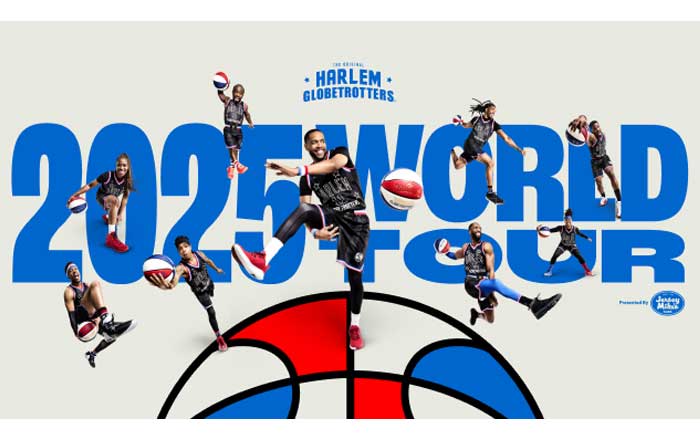
The Harlem Globetrotters: A Century of Sport, Culture, and Business Innovation
A Global Story That Fits SportyFusion's Moment
By 2026, the story of the Harlem Globetrotters has matured into one of the most compelling case studies in global sports, culture, and business. What began in the 1920s as a barnstorming basketball team traveling across the United States has evolved into a powerful, recognizable brand whose influence stretches from the hardwood courts of North America to the urban playgrounds of Europe, the arenas of Asia, and emerging sports markets in Africa and South America. For the worldwide audience of sportyfusion.com, whose interests span fitness, culture, health, technology, business, environment, and performance, the Globetrotters offer a uniquely integrated example of how sport can function simultaneously as entertainment product, cultural bridge, and commercial enterprise, while still maintaining a strong ethical and social mission.
The Globetrotters' red, white, and blue aesthetic, their signature use of "Sweet Georgia Brown," and their blend of competitive basketball with theatrical comedy have become part of the shared global vocabulary of sport, as instantly recognizable as the logos of NBA franchises or the anthem of FIFA tournaments. Yet behind the spectacle lies a layered narrative that intersects with the history of civil rights in the United States, the professionalization and commercialization of sport, the rise of global sports media, and the accelerating digital transformation that now defines fan engagement in 2026. As readers explore related themes across sportyfusion.com, from fitness and performance to sports business and careers, the Globetrotters' journey offers enduring lessons in experience, expertise, authoritativeness, and trustworthiness that remain relevant to athletes, entrepreneurs, and policymakers alike.
Origins: From Chicago Roots to a Symbolic Harlem Identity
The origins of the Harlem Globetrotters trace back to 1926, when Abe Saperstein, a London-born Jewish immigrant who had settled in Chicago, recognized both the sporting excellence and the commercial potential of African American basketball players who were largely excluded from mainstream professional leagues. Initially organized as the Savoy Big Five, named after the Savoy Ballroom in Chicago, the team played local and regional games at a time when segregation and racial discrimination sharply limited opportunities for Black athletes. Saperstein's decision to rebrand the team with the Harlem name, despite its Midwestern base, was a deliberate and strategic choice: Harlem was emerging as a global symbol of Black creativity, pride, and cultural renaissance, and attaching that identity to the team projected a powerful message to audiences and promoters across the United States.
In the late 1920s and 1930s, the team operated as a barnstorming unit, traveling extensively, playing multiple games per week, and competing against local teams in small towns and big cities alike. Their style of play quickly distinguished them from other touring squads. While they were fiercely competitive and technically advanced, they also began to incorporate elements of humor, choreographed routines, and crowd interaction. This early fusion of performance and competition foreshadowed the modern concept of sports entertainment, long before that term entered the vocabulary of leagues and media companies. For readers interested in how sport and culture intersect and evolve together, it is instructive to compare this period with broader developments in American arts and society, including the Harlem Renaissance documented by institutions such as the Smithsonian National Museum of African American History and Culture.
Breaking Racial Barriers and Reshaping American Sport
In the pre-World War II and immediate postwar period, the Harlem Globetrotters were already challenging the racial hierarchies embedded in American sport. While Major League Baseball's integration through Jackie Robinson in 1947 is widely acknowledged as a defining moment in civil rights history, the Globetrotters had, by that point, spent years filling arenas with predominantly white audiences who came to witness the athletic brilliance of Black players. Their success forced promoters and venue owners to recognize that segregation was not only unjust but also economically irrational, as fans were clearly willing to pay to see African American athletes perform at the highest level.
The team's landmark victories over the Minneapolis Lakers, led by George Mikan, in 1948 and 1949, played a particularly important role in changing perceptions. These games, which pitted the Globetrotters against one of the most dominant white professional teams of the era, demonstrated that Black players were not mere entertainers but elite competitors capable of defeating the best in the professional game. Historians and organizations such as the Naismith Memorial Basketball Hall of Fame have highlighted how these contests helped pave the way for the integration of the NBA, contributing to the eventual signing of African American players like Earl Lloyd, Chuck Cooper, and Nat "Sweetwater" Clifton. For readers of sportyfusion.com, this period underscores how sport can act as a catalyst for structural change, a theme that resonates across our coverage of sports and ethics and the broader social responsibilities of athletic institutions.
Architects of Sports Entertainment
Long before leagues began to describe themselves as entertainment companies, the Harlem Globetrotters were building a business model that treated each game as a live theatrical event. Their now-famous "Magic Circle" warm-up, where players would pass the ball in intricate patterns to the tune of "Sweet Georgia Brown," set the tone for a performance that blended technical excellence with comedic timing and audience participation. Figures like Meadowlark Lemon, known as the "Clown Prince of Basketball," and Curly Neal, whose dribbling artistry became legendary, refined a form of basketball that was not constrained by traditional rules of play, yet still required extraordinary levels of skill, conditioning, and creativity.
This format anticipated many elements of what is now called sports entertainment, a sector that has grown into a multibillion-dollar global industry. Modern franchises and leagues-from the NBA to WWE and beyond-incorporate elaborate pregame shows, halftime performances, fan contests, and digital activations that extend the experience beyond the game itself. Analysts at organizations such as Deloitte and PwC, in their sports industry outlooks, have noted how experiential elements have become central to revenue generation and fan retention, echoing the Globetrotters' early insight that sport must be both competitive and emotionally engaging. For those exploring performance innovation and technology in sport on sportyfusion.com, the Globetrotters' model serves as an early prototype of the modern fan-centric entertainment ecosystem.
Global Tours and Cultural Diplomacy
From the mid-twentieth century onward, the Harlem Globetrotters became one of the United States' most visible cultural exports. They toured extensively in Europe, Latin America, Asia, and Africa, often reaching countries where basketball was still relatively unknown. In the context of the Cold War, their tours acquired a diplomatic dimension. The team played in the Soviet Union, Eastern Europe, and later the People's Republic of China, offering international audiences a vision of American culture that combined athleticism, humor, and racial diversity. This made the Globetrotters de facto cultural ambassadors, a role recognized by institutions such as the U.S. Department of State and chronicled in scholarship on sports diplomacy.
In newly independent African nations during the 1960s and 1970s, the presence of a predominantly Black American team performing at an elite level carried particular symbolic weight, aligning with broader movements for self-determination and cultural affirmation. Across Western Europe-from the United Kingdom and Germany to France, Italy, and Spain-the Globetrotters helped ignite interest in basketball, contributing to the eventual growth of domestic leagues and the pipeline of European talent that would later shape the NBA. In Asia, their visits to Japan, South Korea, Thailand, Singapore, and eventually China demonstrated how sport could operate as a shared language beyond politics and ideology, a theme that continues to resonate in contemporary discussions of global sport in the world section of sportyfusion.com.
Building a Durable Sports Business Brand
The commercial architecture of the Harlem Globetrotters offers a rich case study for executives, investors, and entrepreneurs who follow sports business trends. Under Abe Saperstein and subsequent leadership, the organization built a self-contained touring model that did not depend on a traditional league structure. Revenue streams were diversified across ticket sales, merchandising, licensing, and sponsorship, while the brand identity-anchored in the team's uniforms, music, and family-friendly ethos-remained consistent and easily recognizable across markets.
The Globetrotters were early adopters of branded merchandise, long before global sportswear giants such as Nike, Adidas, and Puma turned replica jerseys and lifestyle apparel into core profit centers. Their partnerships with schools, community groups, and charities also served a dual purpose: expanding reach and reinforcing a reputation for trustworthiness and positive social impact. In this respect, their approach anticipated what is now widely discussed as purpose-driven branding, where organizations are evaluated not only on financial performance but also on their environmental, social, and governance (ESG) commitments. Reports from bodies such as the World Economic Forum and the OECD underline how these dimensions have become central to stakeholder expectations in the sports industry, and the Globetrotters' long record of community engagement positions them as a precursor to this shift.
Media, Pop Culture, and the Athlete as Cross-Platform Icon
The Harlem Globetrotters were also pioneers in leveraging emerging media to extend their influence beyond the arena. Their animated television series produced by Hanna-Barbera in the 1970s introduced the team to a new generation of children across North America, Europe, and beyond, many of whom had never seen a live game. Appearances on Scooby-Doo, guest roles in television specials, and later film and commercial work embedded the Globetrotters in the broader ecosystem of global pop culture. This strategy foreshadowed the multi-platform careers of modern athletes, who now operate simultaneously as competitors, media personalities, and entrepreneurs.
In the current era, where stars such as LeBron James, Serena Williams, and Cristiano Ronaldo maintain extensive digital footprints and content businesses, the Globetrotters' early embrace of cross-media storytelling appears prescient. Contemporary research from organizations like the Pew Research Center and Nielsen has documented how younger audiences consume sports primarily through highlights, social media snippets, and streaming platforms rather than traditional broadcast alone, a trend that rewards brands with adaptable, narrative-rich identities. For sportyfusion.com readers interested in sports culture and lifestyle, the Globetrotters' media history illustrates how athletic performance can be translated into enduring cultural capital.
The Players Behind the Legend
Behind the institutional brand of the Harlem Globetrotters stand generations of players whose skills and personalities transformed the team into a living, evolving narrative. Meadowlark Lemon brought a unique blend of timing, improvisation, and charisma that allowed him to connect with audiences in the United States, Europe, Africa, and Asia in equal measure. Curly Neal, with his extraordinary ball-handling and signature look, turned dribbling into a form of performance art that influenced playgrounds from New York to London, Berlin, and beyond. Earlier figures like Goose Tatum helped define the comedic and acrobatic aspects of the Globetrotters' style, while the brief tenure of Wilt Chamberlain with the team underscored the level of talent within the organization, as he would go on to become one of the most dominant players in NBA history.
These individuals did more than entertain; they became reference points for how athletes could embody brand values and serve as ambassadors for both sport and social causes. Contemporary marketing strategies that build campaigns around star athletes-whether in North America, Europe, or Asia-Pacific markets such as Australia, Japan, and Singapore-owe much to the template established by the Globetrotters. For those following brands and identity in sport, the team's history demonstrates the importance of authenticity, consistency, and personal narrative in constructing enduring athlete brands.
Cultural Influence on the Global Game of Basketball
As the global basketball ecosystem has expanded, with professional leagues thriving in the United States, Europe, China, and beyond, analysts and historians have increasingly recognized the Harlem Globetrotters' influence on the evolution of the sport's style and culture. Their emphasis on speed, creativity, and flair prefigured the up-tempo, perimeter-oriented style that now dominates both the NBA and international play. Moves that once seemed outlandish-no-look passes, behind-the-back dribbles, alley-oops, and long-range shots from well beyond the three-point line-have become standard elements of highlight reels and grassroots play.
The rise of streetball cultures reflects this same ethos of self-expression and spectacle, blending competitive intensity with showmanship. Organizations such as FIBA have acknowledged the importance of these cultural forms through formats like 3x3 basketball, now an Olympic discipline, which prioritizes pace, creativity, and accessibility. The Globetrotters' contributions to this cultural shift align with the themes explored in sportyfusion's coverage of training methodologies and high-level performance, where innovation, adaptability, and creativity are increasingly recognized as core competencies for athletes at all levels.
Community Impact, Health, and Social Responsibility
Beyond their impact on professional sport and entertainment, the Harlem Globetrotters have maintained a long-standing commitment to community outreach and social development, an aspect of their legacy that resonates strongly in 2026. Their visits to schools, youth centers, and hospitals across the United States, Canada, the United Kingdom, Germany, South Africa, Brazil, and many other countries have focused on promoting physical activity, resilience, anti-bullying messages, and educational achievement. These efforts align closely with public health priorities identified by organizations such as the World Health Organization and the Centers for Disease Control and Prevention, which emphasize the importance of active lifestyles and positive role models in combating rising rates of sedentary behavior and mental health challenges among young people.
The Globetrotters' programs often incorporate practical demonstrations of basketball skills with discussions about teamwork, respect, and perseverance, reinforcing the idea that sport can serve as a vehicle for life skills and social cohesion. For sportyfusion.com readers who follow health and social impact, the team's track record offers a credible, long-term example of how sports organizations can balance commercial objectives with meaningful contributions to community well-being.
Sustainability, Technology, and the Modern Era (2020-2026)
In the current decade, the Harlem Globetrotters have continued to adapt to a rapidly changing global environment shaped by digital innovation, heightened awareness of environmental challenges, and evolving fan expectations. The COVID-19 pandemic accelerated the adoption of livestreaming, virtual events, and hybrid experiences across the sports industry, trends that the Globetrotters have embraced by integrating interactive digital elements into their shows and experimenting with augmented reality (AR) and virtual reality (VR) to enhance fan engagement. Industry analyses from organizations such as McKinsey & Company and the MIT Sloan Sports Analytics Conference highlight how data, technology, and immersive media are reshaping sports consumption, and the Globetrotters' willingness to innovate positions them well within this landscape.
Simultaneously, the organization has increasingly aligned its touring and operational practices with environmental considerations, reflecting broader sustainability movements within global sport. Initiatives such as reducing travel-related emissions where possible, partnering with environmentally conscious sponsors, and using their platform to raise awareness about climate change place the Globetrotters within a growing cohort of sports entities that view environmental stewardship as integral to their brand. This trajectory resonates with sportyfusion's focus on the environment and ethical leadership in sport, illustrating how an entertainment-focused organization can still contribute to broader societal goals.
Looking Ahead: Relevance and Opportunity in a Global Sports Economy
As of 2026, the Harlem Globetrotters occupy a distinctive position within the global sports economy. They are neither a conventional club competing in a domestic league nor a purely entertainment troupe detached from competitive sport; instead, they occupy a hybrid space that allows them to operate across markets and demographics in ways that more traditional organizations often cannot. With basketball continuing to grow in popularity in emerging markets such as China, India, Southeast Asia, and parts of Africa, as well as maintaining strong footholds in North America, Europe, and Oceania, the Globetrotters' brand of accessible, family-oriented, and culturally flexible entertainment retains considerable strategic value.
Future opportunities likely lie in deeper digital integration, including partnerships with gaming platforms and esports ecosystems, where basketball-themed titles and virtual experiences can extend the Globetrotters' reach to younger, tech-savvy audiences. For readers interested in gaming and interactive entertainment, the convergence of live sport, gaming, and virtual communities presents a logical next step for a brand that has always been comfortable at the intersection of performance and innovation. At the same time, ongoing collaborations with educational institutions, NGOs, and global brands focused on diversity, inclusion, and youth development will ensure that the team's social mission remains aligned with contemporary ethical expectations.
Why the Globetrotters' Story Matters for SportyFusion's Audience
For the diverse, globally distributed audience of sportyfusion.com-from professionals exploring sports business in the United States and Europe, to fans following cultural trends in Asia, to athletes and coaches in Africa, South America, and beyond-the Harlem Globetrotters represent more than a nostalgic entertainment act. Their century-long journey integrates many of the themes that define modern sport: the pursuit of excellence, the fight for equality, the commercialization and globalization of athletic performance, the blending of physical and digital experiences, and the increasing emphasis on health, ethics, and social responsibility.
Their story underscores that sports organizations can build enduring value by cultivating deep expertise in their craft, demonstrating consistent authoritativeness in their domain, and earning trust through long-term commitments to communities and causes beyond the court. As readers navigate sections such as sports, business, culture, and world news, the Harlem Globetrotters stand as a touchstone for understanding how sport can be both a product and a platform: a product that entertains and captivates, and a platform that connects people across borders, generations, and cultures.
In this sense, the Globetrotters' legacy aligns closely with the mission that underpins sportyfusion.com itself: to explore how fitness, performance, culture, technology, ethics, and business intersect in a world where sport is no longer confined to the playing field but is woven into the fabric of global society. Their history is not simply a chapter in basketball's past; it is a living framework for thinking about the future of sport, entertainment, and human connection in an increasingly interconnected world.