

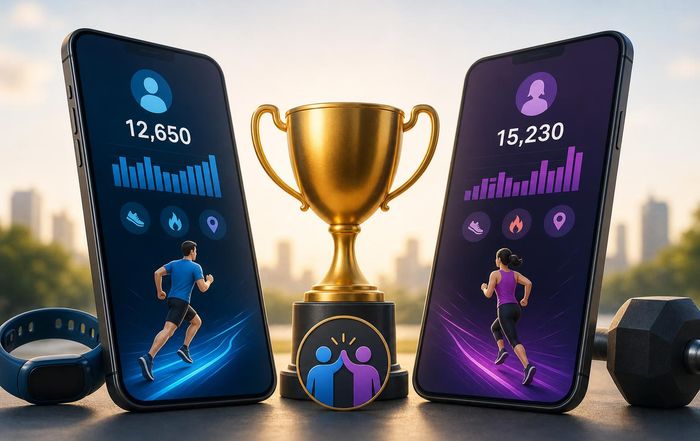
How Fitness Apps Encourage Healthy Competition in 2026
The New Competitive Arena: From Stadiums to Smartphones
The landscape of competition in sport, fitness, and everyday health has shifted decisively from physical arenas to digital platforms, with fitness applications becoming the de facto playing field for millions of people worldwide. Where competitive drive was once largely confined to organized sport or corporate wellness challenges, it is now embedded in the daily routines of office workers in New York, students in Berlin, entrepreneurs in Singapore, and amateur athletes in São Paulo, all of whom track, compare, and share their performance through an ecosystem of apps that transform personal data into a social and motivational currency. For SportyFusion.com, which lives at the unique intersection of sports, fitness, health, and global digital culture, this shift is not just a technological trend; it is a profound redefinition of how individuals understand progress, accountability, and community in their pursuit of performance and well-being.
The rise of fitness apps as competitive platforms is underpinned by the ubiquity of smartphones and wearables, the maturation of cloud infrastructure, and the normalization of data sharing in both consumer and corporate environments. According to global analyses from organizations such as the World Health Organization, inactivity remains a major risk factor for chronic disease, yet the same period has seen explosive growth in digital health tools that use competition, goal setting, and social accountability to counter sedentary lifestyles and encourage sustainable behavior change. As fitness applications integrate with platforms like Apple Health, Google Fit, and connected devices from Garmin and Polar, they create a unified, real-time scoreboard for everyday life, turning steps, heart rate variability, and sleep quality into metrics that can be compared, celebrated, and improved upon in structured and psychologically sophisticated ways.
The Psychology of Healthy Competition in a Digital World
Healthy competition, as distinguished from toxic rivalry, is characterized by intrinsic motivation, mutual respect, and a focus on self-improvement rather than humiliation or dominance. In the context of fitness apps, this distinction is critical, because the same mechanics that can inspire a sedentary user in London to walk an extra 3,000 steps can, if poorly designed, trigger anxiety, overtraining, or disengagement. Research in behavioral science and sports psychology, summarized by organizations such as the American Psychological Association, emphasizes that competition becomes healthy when users perceive goals as attainable, feedback as constructive, and comparisons as fair and contextualized rather than absolute. Fitness apps that carefully calibrate these elements are able to harness the energizing aspects of competition-focus, persistence, and accountability-without amplifying shame or unhealthy perfectionism.
In 2026, many leading applications embed principles drawn from self-determination theory, which highlights autonomy, competence, and relatedness as drivers of sustained motivation. By allowing users to set personalized targets, adjust difficulty levels, and choose whether to compete with friends, colleagues, or broader communities, these platforms support a sense of control and self-direction. Simultaneously, dynamic feedback on streaks, personal records, and progress over time reinforces competence, while social features such as team challenges and shared leaderboards create relatedness that extends beyond physical proximity. When integrated with editorial perspectives and training insights from platforms like SportyFusion Training, this psychological design allows competition to act as a scaffold for long-term habit formation rather than a short-lived burst of enthusiasm.
Gamification: Turning Everyday Movement into a Performance Game
The most visible mechanism through which fitness apps encourage healthy competition is gamification, a term that has moved from buzzword to standard practice in digital product design. Gamification involves the application of game design elements-points, levels, badges, quests, and narratives-to non-game contexts, and in the fitness domain it has proven particularly effective because physical activity lends itself naturally to measurable progress and incremental achievements. Developers draw on learnings from the gaming industry, including insights from platforms like Steam and Xbox Live, to craft experiences where each run, workout, or yoga session contributes not only to health but also to a sense of advancement within a structured game-like environment.
In practice, gamification in 2026 has evolved beyond simple step counts and generic badges. Leading apps now deploy adaptive challenges that respond to a user's history, biometric data, and even environmental conditions such as weather or air quality, drawing on sources like OpenWeather or local environmental agencies to propose context-aware goals. A runner in Tokyo might receive a "Cool Evening Tempo Challenge" tailored to moderate temperatures and low pollution, while a cyclist in Amsterdam receives a rain-adapted indoor training quest. The competitive aspect emerges when these personalized missions are shared within small groups or corporate cohorts, where colleagues compare completion rates, time to completion, or consistency over a month. By integrating such challenges with curated performance content from SportyFusion Performance, organizations and individuals gain a framework where competition is grounded in informed training rather than arbitrary metrics.
Social Features and Community: From Individual Tracking to Collective Progress
If gamification is the engine of engagement, social features are the connective tissue that transforms isolated activity into shared experience. Fitness apps now routinely include friend lists, group chats, team challenges, and community events that mirror the dynamics of recreational leagues and running clubs, but with a scale and accessibility that extends across borders and time zones. A user in Sydney can participate in the same step challenge as a cousin in Toronto and a colleague in Munich, all while following the same structured program published on SportyFusion Fitness, thereby turning personal goals into collective narratives that cross continents.
Major platforms such as Strava, Nike Run Club, and Adidas Running have developed extensive club and event ecosystems, enabling users to join virtual clubs based on city, sport, or interest, and to compete in time-bound challenges that award digital trophies and public recognition. These communities often spill over into offline meetups, charity races, and brand-sponsored events, supported by partnerships with local organizations and municipalities. Insights from global sports bodies like World Athletics and FIFA increasingly influence how these digital communities are structured, particularly regarding inclusivity, integrity, and anti-doping principles adapted for amateur contexts. For SportyFusion's audience, which spans world news and culture and is deeply attuned to how sport reflects social dynamics, these app-based communities represent a new layer of cultural infrastructure where identity, belonging, and performance intersect.
Corporate Wellness and the New Workplace Scoreboard
The integration of fitness apps into corporate wellness strategies has transformed how organizations in the United States, United Kingdom, Germany, and across Asia-Pacific think about employee health, productivity, and employer branding. Large employers increasingly partner with platforms like Virgin Pulse, Wellable, and Limeade, as well as with insurers such as UnitedHealthcare and Bupa, to deploy app-based programs that reward physical activity, sleep hygiene, and mindfulness with tangible incentives ranging from gift cards to premium reductions. These programs often center around team-based competitions, where departments, regions, or project teams accumulate points through steps, logged workouts, or participation in educational modules on nutrition and mental health.
Healthy competition in this context hinges on careful design and ethical data governance. Guidelines from organizations such as the World Economic Forum and the International Labour Organization emphasize that wellness programs must respect privacy, avoid discrimination, and ensure that participation is genuinely voluntary rather than implicitly required. Leading companies now rely on anonymized, aggregated reporting rather than individual-level data to track program outcomes, and they collaborate with human resources and legal teams to align initiatives with labor regulations in regions from Europe to South Africa. For readers of SportyFusion Business, these developments highlight a strategic shift: competition is no longer confined to sales targets or performance reviews, but extends into health metrics that, when responsibly managed, can reduce absenteeism, enhance engagement, and support employer value propositions in competitive talent markets.
Data, Privacy, and Trust: The Foundations of Sustainable Competition
As fitness apps increasingly act as gatekeepers of health and performance data, trust becomes a crucial currency. Users are asked to share sensitive information such as heart rate, GPS routes, sleep patterns, and even menstrual cycles, and they often connect these apps to corporate systems, social media platforms, or healthcare providers. Regulatory frameworks like the EU General Data Protection Regulation (GDPR) and the California Consumer Privacy Act (CCPA) have set high standards for consent, transparency, and data minimization, and reputable app providers now prominently feature privacy dashboards, clear data retention policies, and options to export or delete personal data. Organizations such as the Electronic Frontier Foundation and Future of Privacy Forum continue to scrutinize these practices, pushing the industry toward more robust protections and user education.
For SportyFusion's fitness community, which engages with ethics, social impact, and the broader implications of technology, the question is not only whether fitness apps are effective, but whether they are trustworthy stewards of highly personal data. Healthy competition depends on users feeling safe to participate without fear that their information will be misused by employers, insurers, or third-party advertisers. Leading platforms now adopt differential privacy techniques, encryption at rest and in transit, and strict internal access controls, while some partner with academic institutions and public health agencies to contribute anonymized insights to research on physical activity trends, obesity, and cardiovascular risk, as highlighted by sources such as the Centers for Disease Control and Prevention and the National Institutes of Health. This alignment of user benefit, societal value, and regulatory compliance is fast becoming a differentiator in a crowded market.
Global Adoption and Cultural Nuance: Competition Across Regions
Healthy competition does not manifest identically in North America, Europe, Asia, and Africa; cultural norms around individualism, collectivism, hierarchy, and public recognition profoundly shape how users engage with fitness challenges. In the United States and Canada, apps often emphasize personal records, leaderboards, and visible achievement badges, aligning with cultural narratives of individual success and self-optimization. In Japan, South Korea, and Singapore, team-based challenges and workplace-oriented programs may resonate more strongly, reflecting group-oriented values and the importance of harmonious collaboration. Meanwhile, in Brazil, South Africa, and emerging markets across Asia and Africa, community-based competitions tied to local clubs, schools, and faith organizations are increasingly popular, often leveraging low-bandwidth features and SMS integration to reach users with limited smartphone access.
Global organizations such as UNESCO and OECD have highlighted the importance of culturally sensitive design in digital health initiatives, noting that language, imagery, and reward structures must reflect local realities to avoid reinforcing inequalities or excluding marginalized groups. For SportyFusion.com, which covers culture, world events, and the social dimensions of sport, the global diffusion of fitness apps represents both an opportunity and a responsibility: an opportunity to foster shared narratives of health and performance across borders, and a responsibility to spotlight best practices that respect cultural diversity, gender equity, and accessibility for users with disabilities or chronic conditions.
Technology, AI, and the Future of Personalized Competition
By 2026, advances in artificial intelligence and edge computing have begun to reshape how fitness apps structure competition, moving from static leaderboards and generic challenges to highly personalized, adaptive ecosystems. Machine learning models, trained on vast datasets of anonymized workout logs, biometric signals, and environmental context, can now predict when users are likely to disengage, overtrain, or plateau, and can adjust challenge intensity, rest recommendations, and motivational messaging accordingly. Platforms draw on research from institutions such as MIT, Stanford University, and Imperial College London to refine these models, incorporating insights from sports science, chronobiology, and behavioral economics.
This technological sophistication enables new forms of healthy competition that prioritize safety and long-term progress. Instead of ranking a 55-year-old beginner in Milan against a 25-year-old triathlete in Melbourne, AI-driven systems can group users into dynamic cohorts based on fitness level, training history, and risk factors, creating fairer and more meaningful comparisons. Virtual coaches, powered by natural language processing, can provide context-sensitive feedback that encourages users to celebrate incremental gains, respect recovery periods, and avoid the trap of chasing metrics at any cost. For active readers who follow technology and gaming coverage on SportyFusion, this convergence of AI, game design, and sports science represents a frontier where digital experiences become more humane, responsive, and aligned with evidence-based training principles.
Environmental and Social Responsibility: Competing for a Better Planet
Healthy competition in fitness apps increasingly extends beyond personal performance to encompass environmental and social impact, reflecting a broader shift in consumer expectations and corporate responsibility. Some platforms now integrate carbon-conscious features, such as rewards for choosing active transport over car use, or for participating in community clean-up runs and charity rides. Organizations like UN Environment Programme and The Nature Conservancy have inspired collaborations where step challenges or distance-based goals are linked to tree-planting initiatives, ocean conservation projects, or support for climate resilience programs in vulnerable regions. Users in Denmark, Netherlands, and New Zealand, where cycling and outdoor recreation are deeply embedded in national culture, are particularly active in such initiatives.
SportyFusion's top focus on environment, lifestyle, and ethical consumption aligns strongly with this trend, as readers seek ways to ensure that their pursuit of personal bests contributes to broader societal good. Fitness apps that allow users to convert points or achievements into donations, volunteer hours, or advocacy actions demonstrate that competition can be reframed as a collective effort to improve both human and planetary health. This approach also resonates with younger demographics in France, Spain, and Norway, who are increasingly vocal about climate justice and social equity, and who expect brands and digital platforms to take clear, measurable stands on these issues.
Strategic Implications for Brands, Employers, and Sports Organizations
For brands, employers, and sports organizations navigating the competitive landscape of 2026, fitness apps are no longer peripheral tools; they are strategic assets that shape brand perception, employee engagement, and fan relationships. Sportswear companies like Nike, Adidas, and Puma use their apps as direct-to-consumer channels that blend training programs, product recommendations, and community challenges, while technology giants such as Apple, Samsung, and Huawei integrate fitness ecosystems into broader hardware and service portfolios. Professional clubs and leagues, from Premier League teams in the United Kingdom to NBA franchises in the United States, increasingly launch co-branded challenges that invite fans to "train like the team," creating new data-driven touchpoints that extend beyond match days.
For employers, the strategic question is not simply whether to adopt fitness apps, but how to integrate them into holistic well-being frameworks that address physical, mental, and social health, in line with guidance from bodies like the World Economic Forum and Chartered Institute of Personnel and Development. For sports federations and community organizations, the challenge lies in leveraging digital competition to broaden participation, particularly among women, older adults, and underrepresented communities, while safeguarding against exclusion, harassment, or data misuse. SportyFusion's coverage across news, brands, and jobs underscores that expertise in digital engagement, data ethics, and behavioral science is rapidly becoming as important as coaching and facility management in the modern sports economy.
Conclusion: Building a Culture of Healthy, Informed, and Inclusive Competition
As sport seasons unfold, fitness apps stand at a crossroads between empowerment and exploitation, between genuine health promotion and superficial gamification. The most successful platforms, and the organizations that deploy them, will be those that embrace a philosophy of healthy competition grounded in scientific evidence, robust data protection, cultural sensitivity, and long-term well-being rather than short-term engagement metrics. They will design challenges that respect individual differences, foster supportive communities, and integrate seamlessly with broader ecosystems of sport, healthcare, and social impact, reflecting the interconnected priorities that define the SportyFusion audience.
For SportyFusion, the story of how fitness apps encourage healthy competition is ultimately a story about how technology, sport, and human aspiration converge. It is about runners in Zurich chasing personal bests alongside friends on other continents, office workers in Johannesburg transforming step counts into charitable contributions, and companies in Tokyo reimagining wellness as a shared, data-informed journey rather than a compliance exercise. It is about recognizing that competition, when framed thoughtfully and ethically, can be one of the most powerful forces for personal growth, community cohesion, and global health. As readers explore the intersections of performance, culture, and technology across the SportyFusion network, from the home page at SportyFusion to dedicated sections on fitness, business, and ethics, the evolving world of fitness apps offers both a mirror and a roadmap for what healthy, inclusive, and purpose-driven competition can look like in the digital age.