

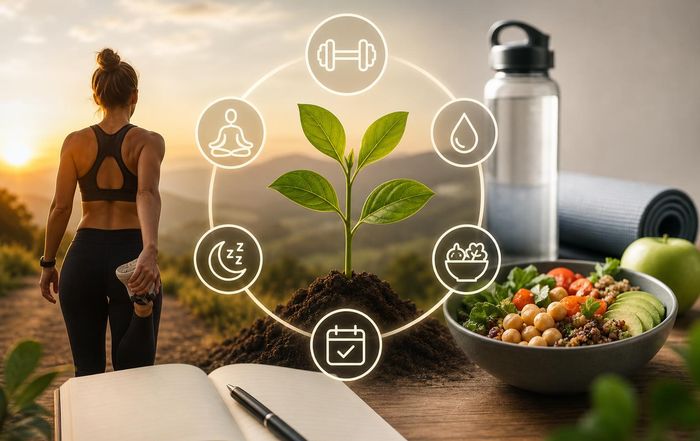
Building Sustainable Active Fitness Habits for Life
The New Definition of Lifelong Fitness
Oh yeah, you might have realised the global understanding of fitness has shifted from short-term transformation to long-term sustainability, with athletes, professionals and everyday enthusiasts increasingly recognizing that enduring health is built not on extreme programs but on consistent, evidence-based habits that can be maintained through changing life stages, careers and environments. In this evolving landscape, SportyFusion has positioned itself as a hub for integrating sport, culture, technology and performance, helping readers translate complex science and industry trends into practical routines that can genuinely last a lifetime.
Across the United States, Europe, Asia and beyond, fitness is now viewed less as an isolated activity and more as a central pillar of overall wellbeing, closely connected to mental health, work performance, social identity and even environmental responsibility, a shift supported by research from institutions such as the World Health Organization and the U.S. Centers for Disease Control and Prevention, which emphasize that regular physical activity significantly reduces the risk of chronic disease and premature mortality. Learn more about global physical activity guidelines on the World Health Organization website. For the growing sports reading members of SportyFusion's health coverage, this changing paradigm raises a central question: how can individuals in demanding careers, competitive sports or dynamic urban environments build fitness habits that are not only effective today but remain realistic, enjoyable and resilient for decades?
From Short-Term Programs to Long-Term Systems
The traditional model of fitness, built around 8-week challenges, seasonal diets and intensive boot camps, has repeatedly failed to deliver sustainable results, as shown in longitudinal studies from organizations such as Harvard T.H. Chan School of Public Health, which highlight the high rate of regression when interventions are overly restrictive or disconnected from daily life. Readers can explore these insights further through resources on Harvard's public health portal. In contrast, the emerging best practice is to design systems rather than goals: instead of focusing solely on losing a specific number of kilograms or completing a single race, individuals are encouraged to construct daily and weekly routines that automatically move them toward better health, regardless of short-term fluctuations in motivation or external circumstances.
For the global audience following SportyFusion's fitness insights, this systems-based approach means thinking in terms of identity and environment rather than one-off targets. When people begin to see themselves as "someone who trains three times a week" or "someone who walks or cycles as default transport," the behavioural patterns become self-reinforcing, a concept supported by behavioural science research from institutions like University College London and Stanford University, which show that stable environmental cues and identity-based habits are more predictive of long-term adherence than willpower alone. Further reading on habit formation research is available via Stanford's Behavioural Lab.
The Science of Habit Formation in Fitness
Building sustainable fitness habits for life requires understanding how habits are formed at the neurological and psychological level, particularly the cue-routine-reward loop that drives much of human behaviour, a model popularized by journalists and further refined by researchers at institutions such as MIT and Duke University. Neuroscientific studies indicate that repetition in a stable context gradually transfers control of behaviour from deliberative brain regions to more automatic circuits, meaning that what initially feels like effortful discipline can, over time, become as routine as brushing teeth or commuting to work. Readers interested in the underlying science can explore accessible summaries through platforms such as the National Institutes of Health.
In practice, this means that sustainable fitness does not depend on constant motivation but on designing routines that are triggered reliably by existing parts of the day, such as exercising immediately after waking, during lunch breaks or after leaving the office, and then pairing these routines with rewards that reinforce the behaviour, whether that is social connection, measurable progress or genuine enjoyment of the activity. The mental health dimension is especially critical, with organizations such as Mind in the United Kingdom and the American Psychological Association emphasizing the bi-directional relationship between exercise and emotional wellbeing, and readers can learn more about this connection on the American Psychological Association's exercise and mental health page. For the SportyFusion community, which spans high-pressure professional environments in cities like London, New York, Singapore and Berlin, understanding and leveraging this loop is a foundational step toward habits that endure through career shifts, family changes and global disruptions.
Designing a Sustainable Training Framework
A lifelong fitness plan must be adaptable, periodized and grounded in evidence, rather than rigidly tied to a single sport or training philosophy, and this is particularly relevant to the performance-focused readers of SportyFusion's training coverage, who often balance competitive ambitions with work and family responsibilities. Sports science organizations such as UK Sport, Australian Institute of Sport and German Olympic Sports Confederation consistently advocate for structured periodization, where training cycles fluctuate in intensity and volume to allow for recovery, adaptation and injury prevention, rather than maintaining maximum effort year-round. More detail on these frameworks can be found through resources such as the Australian Institute of Sport performance pages.
Within this framework, sustainable fitness for life typically includes a balanced combination of cardiovascular conditioning, strength training, mobility work and recovery practices, each tailored to age, goals and health status. The American College of Sports Medicine and NHS UK recommend that adults integrate both aerobic and resistance training weekly, while also minimizing prolonged sedentary time, guidance that can be reviewed on NHS physical activity guidelines. For readers of SportyFusion's performance channel, this balance is not only about aesthetics or competition but about preserving functional capacity, joint health and metabolic resilience into later decades, enabling individuals to continue skiing in Switzerland, surfing in Australia or hiking in South Africa well into their 60s and beyond.
Integrating Fitness with Work and Modern Lifestyles
In 2026, hybrid work models, global mobility and digital collaboration have reshaped how people structure their days, creating both obstacles and opportunities for sustainable fitness habits. On one hand, remote work and extended screen time have contributed to increased sedentary behaviour, as reported by organizations such as OECD and Eurostat, leading to concerns about rising cardiometabolic risk in white-collar populations; on the other hand, flexible schedules and reduced commuting time offer new windows for training, active transport and recovery. Analysis of these trends can be found through OECD's health and work reports.
For the SportyFusion audience, which includes professionals from New York to Tokyo navigating demanding careers in technology, finance, media and sport, the key challenge is to integrate movement into the rhythm of each day rather than treating fitness as a separate, optional activity. This might involve structuring walking meetings, using standing desks, adopting active commuting by bicycle or public transport, or leveraging micro-workouts throughout the day, approaches aligned with guidance from organizations such as the American Heart Association, which advocates for accumulating activity in shorter bouts when necessary. Readers can review these recommendations on the American Heart Association's physical activity page. By aligning with the realities of modern work patterns, SportyFusion helps readers design routines that are robust to travel schedules, time zone changes and shifting professional demands, rather than dependent on idealized conditions that rarely exist.
Cultural Perspectives on Lifelong Fitness
Sustainable fitness habits are shaped not only by individual choices but by cultural norms, urban design and national policies, which vary significantly across regions such as North America, Europe and Asia. In Scandinavian countries like Sweden, Norway and Denmark, active transport, outdoor recreation and community sports clubs are deeply embedded in culture, contributing to higher baseline levels of physical activity, a phenomenon documented by entities such as the Nordic Council of Ministers and public health agencies in these countries. Readers can explore comparative lifestyle data via Nordic Co-operation's health and welfare resources.
In contrast, urban environments in the United States, United Kingdom and parts of Asia often require more deliberate planning to incorporate movement, given car-centric infrastructure and long working hours, though cities like Amsterdam, Copenhagen and Tokyo are frequently cited as models for active design. For the international audience of SportyFusion's culture section, understanding these cultural differences is not simply academic; it informs how individuals can leverage or compensate for their environment, whether by joining local sports clubs in Germany, using public parks in Canada, or accessing community fitness programs in Singapore. Organizations such as UN-Habitat and The World Bank have emphasized that active cities, with safe walking and cycling networks and accessible green spaces, play a crucial role in enabling citizens to maintain lifelong fitness, a perspective elaborated on the World Bank's urban development pages.
Technology, Data and the Future of Sustainable Training
The rapid evolution of wearable technology, AI-driven coaching and digital platforms has fundamentally changed how people monitor and manage their fitness, creating both powerful tools and new risks for over-optimization or burnout. Companies such as Garmin, Apple, WHOOP and Polar have expanded the ability of individuals to track heart rate variability, sleep quality, training load and recovery status, often integrating with platforms like Strava to create social accountability and comparative performance metrics. For readers of SportyFusion's technology coverage, the central question is no longer whether to use technology, but how to use it wisely in ways that support sustainable habits rather than undermine them.
Sports science organizations, including the International Olympic Committee and FIFA's Medical Centre of Excellence, have highlighted the importance of interpreting data within context, emphasizing that metrics are only meaningful when aligned with individual goals, health status and subjective well-being. Learn more about athlete health and monitoring via the IOC consensus statements. In practice, sustainable use of fitness technology involves using data to guide gradual progression, avoid overtraining, and identify early signs of fatigue or injury, while resisting the temptation to chase daily records or compete constantly with others. For SportyFusion readers in high-tech markets such as the United States, Germany, Japan and South Korea, this balanced approach allows technology to act as a coach and safeguard rather than a source of pressure, supporting the long-term consistency that underpins lifelong fitness.
Health, Recovery and the Role of Sleep and Nutrition
No discussion of sustainable fitness habits can ignore the foundational roles of sleep, nutrition and recovery, which collectively determine the body's capacity to adapt to training and maintain performance over time. Research from organizations such as the National Sleep Foundation, World Sleep Society and European Society of Cardiology consistently shows that inadequate sleep undermines hormonal balance, immune function and injury risk, while also impairing decision-making and motivation, making it significantly harder to sustain regular exercise. Readers can review global sleep health recommendations on the National Sleep Foundation website.
Similarly, nutrition strategies that rely on extreme restriction or short-term trends are unlikely to support lifelong fitness, whereas balanced, culturally appropriate dietary patterns such as the Mediterranean diet, traditional Japanese cuisine or plant-forward approaches have been associated with longevity and cardiometabolic health, as documented by institutions like Harvard Medical School and Mayo Clinic. Learn more about sustainable nutrition approaches via Mayo Clinic's healthy lifestyle nutrition pages. For the SportyFusion audience, which spans diverse culinary traditions across Europe, Asia, Africa and the Americas, sustainable nutrition is less about universal rules and more about consistent principles: adequate protein for muscle maintenance, sufficient micronutrients from varied whole foods, and energy intake aligned with activity levels, supported by hydration and mindful eating practices that reduce emotional or stress-driven consumption.
Environmental and Social Dimensions of Active Living
Lifelong fitness does not exist in a vacuum; it is increasingly intertwined with environmental sustainability and social responsibility, themes that resonate strongly with the readers of SportyFusion's environment section and social coverage. Active transport, such as cycling and walking, not only improves personal health but also reduces carbon emissions and urban air pollution, a synergy emphasized by organizations such as the United Nations Environment Programme and European Environment Agency, which advocate for policies that make active mobility safe and attractive. Learn more about the links between mobility and sustainability on the UN Environment Programme's mobility pages.
At the same time, the global sports and fitness industry is being challenged to reduce its own environmental footprint, from the manufacturing of equipment and apparel to the construction of facilities and the hosting of mega-events, with organizations like IOC, FIFA and World Athletics publishing sustainability frameworks and climate commitments. These shifts influence how brands and clubs operate, and they also shape consumer expectations, as athletes and enthusiasts increasingly seek products and services that align with both performance and environmental values. Readers can explore sustainable sport initiatives through the IOC sustainability portal. For SportyFusion, this intersection of performance and responsibility is central: encouraging readers not only to build sustainable habits for their own bodies, but also to consider how their choices in equipment, travel and participation contribute to broader ecological and social outcomes.
Career, Identity and the Business of Fitness
The rise of the global fitness economy has created new career paths, business models and brand ecosystems, all of which influence how individuals engage with fitness across their lifespan. The growth of boutique studios, digital training platforms, corporate wellness programs and performance-focused apparel has been documented by analysts at McKinsey & Company, Deloitte and PwC, who note that the wellness market now spans technology, hospitality, nutrition, apparel and media. Business-focused readers can delve into industry analyses via McKinsey's wellness industry insights. For the audience of SportyFusion's business section and brands coverage, understanding these dynamics is not only an economic interest but a practical one, as the structure of the industry shapes access, pricing, inclusivity and innovation.
On an individual level, more people than ever are building identities and careers around fitness, whether as coaches, physiotherapists, content creators or sports technologists, which raises questions about work-life balance, burnout and long-term employability in a field that can be physically demanding. Organizations such as ACSM, CIMSPA and national coaching bodies have emphasized the importance of professional standards, ongoing education and ethical practice to protect both practitioners and clients, guidance that can be reviewed on the ACSM professional resources page. For SportyFusion readers exploring opportunities in the sector, the jobs channel offers context on how to navigate this expanding ecosystem while maintaining personal health and avoiding the paradox of sacrificing one's own wellbeing in the pursuit of promoting fitness to others.
Building a Personal Framework with SportyFusion
Ultimately, building sustainable fitness habits for life requires a synthesis of science, culture, technology, environment and personal values, and this is where SportyFusion aims to serve as a trusted sports news partner rather than a prescriptive news authority. By curating insights across sports, lifestyle, ethics and global news, the platform encourages readers to design their own frameworks that align with their unique circumstances in cities from New York to London, Singapore to São Paulo, Sydney to Johannesburg. The emphasis is not on perfection or rigid adherence, but on consistent, adaptable routines that can weather career transitions, family changes, injuries and even global disruptions.
For a reader in Canada balancing a demanding technology role with family responsibilities, sustainable fitness might mean structured strength training twice a week, active commuting and weekend outdoor activities; for a semi-professional athlete in Germany, it might involve periodized training, careful load monitoring and long-term career planning; for a student in Singapore, it could be about building foundational habits of regular movement, adequate sleep and balanced nutrition that can be carried into future professional life. In every case, the principles remain constant: align routines with identity, build on evidence rather than trends, leverage technology without becoming dependent on it, respect recovery, and consider the broader social and environmental impact of fitness choices.
As SportyFusion continues to expand its global active health and fitness news coverage across world sport and culture and deepen its expertise in performance, health and technology, the platform's central commitment remains clear: to help readers not only train harder or look better in the short term, but to build habits that will sustain their bodies, minds and communities for life. In a world where change is constant and uncertainty is the norm, sustainable fitness becomes not just a personal goal but a strategic asset, enabling individuals and organizations alike to navigate the future with resilience, clarity and enduring strength.