

How Artificial Intelligence Is Transforming Sports Analysis?
The New Competitive Edge: Data, Algorithms and Human Insight
Competitive advantage in sport is no longer defined solely by superior talent, coaching intuition or financial resources; it is increasingly shaped by the intelligent use of data and artificial intelligence. From elite football clubs in Europe and Asia to basketball franchises in North America and high-performance training centers in Australia and South Africa, organizations are rebuilding their performance models around AI-driven insight. For SportyFusion, which sits at the intersection of sports, fitness, health, technology and business, this transformation is not an abstract technological trend but a daily reality that influences how athletes train, how teams compete and how fans experience sport.
Artificial intelligence in sports analysis now extends far beyond basic statistics or simple video review. Machine learning, computer vision, natural language processing and predictive analytics are combining to create an ecosystem where every movement on the field, every biometric signal from a wearable sensor and every tactical decision can be quantified, contextualized and evaluated in real time. Global institutions such as FIFA, UEFA, the NBA, the NFL and the International Olympic Committee (IOC) are investing heavily in data infrastructure and analytics partnerships, while technology leaders like Google, Microsoft, IBM and Amazon Web Services are embedding sports-specific solutions into their cloud platforms. Readers can see how this mirrors broader trends in digital transformation by exploring how leading organizations use AI to improve decision-making.
For athletes, coaches and performance directors who follow the coverage on fitness and performance, the key question is no longer whether AI will influence sport, but how to harness it responsibly, effectively and ethically. The answer lies in understanding the concrete ways AI augments human expertise rather than replaces it, and in appreciating the new skills, governance frameworks and cultural shifts required to unlock its full potential.
Tracking Every Movement: Computer Vision and Performance Analytics
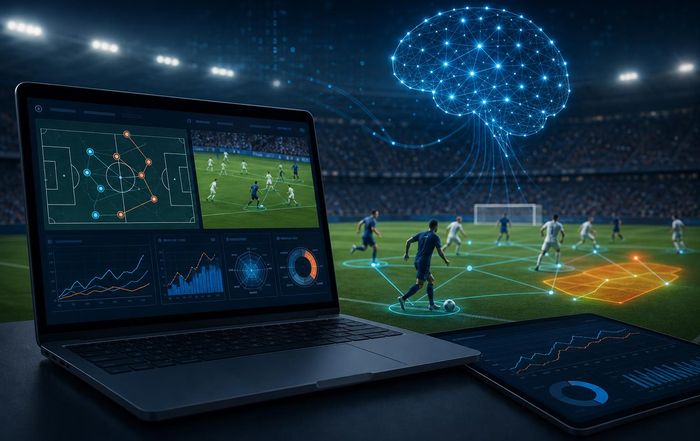
One of the most visible developments in sports analysis has been the rapid maturation of computer vision. High-definition cameras combined with AI models now track players, officials and the ball continuously, generating positional data at millisecond resolution across football, basketball, tennis, rugby and many other disciplines. Systems developed by companies such as Second Spectrum, Hawk-Eye Innovations (a Sony company) and Stats Perform are embedded in major leagues and tournaments worldwide, transforming raw video into structured datasets that analysts and coaches can interrogate with unprecedented precision. To understand the technological foundation of these systems, readers can examine how computer vision research has advanced.
In football stadiums across the United Kingdom, Germany, Spain, Italy and France, multi-camera setups feed AI models that automatically identify players, classify actions such as passes, shots or interceptions and map tactical structures such as pressing shapes or defensive blocks. This data is no longer accessible only to top-tier clubs; lower league teams, women's teams and national federations in regions such as South America, Africa and Asia increasingly rely on cloud-based platforms that offer subscription access to advanced tracking and analytics. For coaches and analysts, this means that subjective impressions of a match can be cross-checked against objective metrics, enabling more rigorous post-match reviews and more targeted training plans, a theme that aligns closely with the insights shared in SportyFusion's training section.
In the NBA and other basketball leagues, tracking data has become foundational to strategy. AI models evaluate shot quality, spacing, off-ball movement and defensive rotations, allowing coaching staffs to quantify the value of different offensive schemes or line-up combinations. Organizations such as Kirk Goldsberry's analytics team and research groups affiliated with universities in the United States and Europe have shown how spatial analytics can challenge long-held assumptions about optimal shot selection and defensive tactics. Those interested in the broader analytics movement can explore case studies in sports analytics produced by leading academic and industry conferences.
What distinguishes the 2026 landscape from earlier phases of the analytics revolution is the degree of automation and integration. Instead of manually tagging events, analysts increasingly rely on AI systems that process entire matches overnight, flag key patterns and even generate draft reports summarizing tactical themes. This frees human experts to focus on interpretation, communication and creative problem-solving, rather than repetitive data work. For a business-oriented audience, this parallels how AI is reshaping knowledge work across sectors, as outlined in recent discussions on AI-driven productivity in enterprises.
From Wearables to Digital Twins: AI and Athlete Health
Performance analysis is no longer limited to what happens on the field; it now encompasses the entire physiological and psychological profile of the athlete. Advances in wearable technology, smart textiles and biometric monitoring have created a continuous stream of health and performance data, from heart rate variability and sleep quality to neuromuscular fatigue and training load. AI models are increasingly tasked with making sense of this complex, high-frequency data to support injury prevention, recovery planning and long-term athlete development. Readers who follow SportyFusion's health coverage will recognize how this trend aligns with broader movements in digital health and personalized medicine.
Elite organizations in the United States, United Kingdom, Germany, Australia and Japan now maintain "digital twins" of their athletes: dynamic models that integrate biomechanics, physiology, training history and medical records to simulate how different workloads or schedule changes might affect performance and injury risk. Research from institutions such as Aspetar Orthopaedic and Sports Medicine Hospital, Australian Institute of Sport and U.S. Olympic & Paralympic Committee has helped build evidence-based frameworks for load management, which AI systems can operationalize by continuously updating risk scores and recommending individualized training adjustments. Those interested in the scientific foundations can review consensus statements on load management published in leading sports medicine journals.
The COVID-19 pandemic accelerated the adoption of remote monitoring and telemedicine, and by 2026 these practices have become standard even as global health conditions have stabilized. AI-assisted platforms allow medical and performance teams to track athletes across international travel, off-season periods and rehabilitation phases, ensuring continuity of care. This is particularly valuable for multinational clubs and national teams whose athletes are dispersed across leagues in Europe, North America and Asia. Such platforms are increasingly aligned with global health guidelines, as emphasized by organizations like the World Health Organization, whose recommendations on physical activity and health inform many high-performance programs.
From a trust and ethics perspective, managing sensitive health data demands robust governance. Leading clubs and federations are drafting clear policies on consent, data ownership and access controls, often referencing frameworks such as the General Data Protection Regulation (GDPR) in Europe and emerging AI regulations in regions like the European Union, Canada and Singapore. Business leaders and sports executives who read SportyFusion's ethics and governance coverage will recognize that building athlete trust is as critical as building sophisticated models.
Tactical Foresight: Predictive Models and Strategy Design
Beyond describing what has happened, AI is increasingly tasked with predicting what is likely to happen next. Predictive models now inform tactical planning, scouting and in-game decision-making, drawing on vast historical datasets and real-time information. In football, for example, expected goals (xG) and related metrics have become mainstream, but by 2026 many clubs rely on more granular models that estimate the probability of scoring or conceding under different tactical configurations, substitution patterns or set-piece designs. Analysts can learn more about advanced football analytics methodologies through specialized publications that bridge data science and tactical analysis.
In cricket, AI systems simulate thousands of match scenarios based on pitch conditions, weather, opposition line-ups and historical performance, helping captains and coaches in England, India, Australia and South Africa refine their strategies for batting orders, bowling changes and field placements. Similarly, in American football, machine learning models estimate the win probability impact of play calls on fourth down, two-point conversion attempts or clock management decisions, contributing to more analytically informed coaching across the NFL and collegiate football. Many of these models are built and validated using open-source tools and methodologies shared in communities like Kaggle's sports analytics competitions, which have become a talent pipeline for professional teams.
The most advanced organizations are integrating these predictive insights into their day-to-day workflows rather than treating them as occasional add-ons. Pre-match preparation may include AI-generated reports that highlight opposition weaknesses, suggest pressing triggers or propose set-piece routines with high expected value. During matches, some leagues permit real-time analytics on the bench, with staff receiving live dashboards that update probabilities and risk assessments as the game evolves. For SportyFusion readers, this convergence of technology and coaching craft underscores how tactical innovation is increasingly a multidisciplinary endeavor, bringing together data scientists, performance analysts and traditional coaches in new collaborative structures, a theme that resonates strongly with the platform's business and jobs coverage.
Global Talent Identification: AI in Scouting and Recruitment
AI-driven sports analysis is also reshaping how talent is identified, evaluated and recruited across the world. Clubs and federations have long relied on networks of scouts to discover promising athletes in local leagues, academies and schools, but the volume of global competition and the expansion of digital video archives have made traditional methods insufficient on their own. Machine learning models now scan thousands of hours of match footage, extracting performance indicators and comparing players across leagues in Europe, North America, Asia, Africa and South America.
For example, football recruitment departments in the English Premier League, Bundesliga, La Liga and Serie A increasingly use AI tools to shortlist players whose statistical and tactical profiles match specific game models, budget constraints and squad needs. These systems can surface undervalued players in smaller leagues such as the Eredivisie, Primeira Liga or J1 League, helping clubs build more sustainable transfer strategies. Analysts interested in the economic dimension of this shift can explore research on data-driven recruitment and transfer markets in academic and industry publications.
In basketball, AI-enhanced scouting platforms evaluate prospects from the NCAA, G League, European leagues and international youth tournaments, combining box-score statistics, tracking data and biomechanical analysis from pre-draft workouts. Similar approaches are emerging in rugby, hockey, baseball and even esports, where performance data is inherently digital. For organizations covered in SportyFusion's brands and business section, this data-centric approach to recruitment represents both an opportunity to gain competitive advantage and a challenge to ensure that biases embedded in historical data do not perpetuate inequities in access or representation.
Responsible use of AI in scouting requires careful calibration. While models can highlight patterns that human scouts might miss, they cannot fully capture character, adaptability, cultural fit or off-field behavior. Leading clubs therefore emphasize a hybrid approach, using AI to filter and prioritize but relying on experienced scouts and coaches to conduct holistic assessments, meet players and understand their personal contexts. This balance between algorithmic efficiency and human judgment is central to the trustworthiness of AI-driven sports analysis, and it mirrors best practices in other sectors where AI supports, rather than replaces, critical hiring decisions.
Enhancing Fan Experience and Media Coverage
The influence of AI on sports analysis is not confined to locker rooms and training facilities; it is also transforming how fans consume and understand sport. Media organizations, streaming platforms and rights holders are deploying AI to generate personalized highlight reels, interactive visualizations and real-time insights tailored to individual viewers. For a global audience spanning the United States, United Kingdom, Germany, Canada, Australia, Singapore, Japan, Brazil and beyond, this means that the same match can be experienced in many different ways, depending on a fan's preferred team, player, statistic or narrative. Readers can see how personalization reshapes digital media by exploring broader trends in data-driven content recommendation.
AI-driven commentary assistants can surface contextual statistics, historical comparisons and tactical explanations for broadcasters and journalists, enabling richer and more informed coverage. Some networks already experiment with alternative commentary streams that focus on analytics, offering a deeper dive for data-savvy viewers without overwhelming casual fans. Written journalism also benefits from AI tools that help reporters quickly analyze large datasets, visualize trends and verify claims, while still relying on human editorial judgment to craft compelling narratives and maintain accuracy. For those interested in media innovation, organizations such as Reuters, BBC and The New York Times regularly share how they incorporate AI into newsroom workflows.
For SportyFusion.com, which serves a community passionate about sports, fitness, health, culture and technology, AI-enhanced storytelling opens new possibilities. Interactive articles can allow readers to explore how different tactical choices might have altered match outcomes, while performance-focused features can show how marginal gains in training load, sleep or nutrition translate into measurable on-field improvements. By integrating insights from its sports, fitness and technology sections, the platform can help readers navigate the increasingly data-rich world of modern sport without losing sight of the human stories at its core.
Sustainability, Governance and the Business of AI in Sport
Behind the performance gains and fan engagement innovations lies a substantial business and governance story. Building and operating AI-driven sports analysis systems requires significant investment in data infrastructure, cloud computing, cybersecurity and specialized talent. Clubs, leagues and federations must negotiate complex partnerships with technology providers, analytics firms and broadcasting companies, balancing competitive secrecy with the need for standardization and interoperability. Business leaders and investors who follow SportyFusion's business coverage will recognize that AI in sport is now a mature commercial ecosystem rather than an experimental side project.
Sustainability has become a central concern as well. High-resolution tracking, video processing and machine learning training can be computationally intensive, raising questions about energy consumption and environmental impact. Forward-looking organizations are exploring more efficient algorithms, green data centers and responsible scheduling of compute-heavy tasks, aligning with broader efforts to reduce the carbon footprint of digital technologies. For stakeholders interested in the intersection of sport, environment and technology, this aligns with the themes regularly explored in SportyFusion's environment section.
Governance frameworks are also evolving. International bodies such as the Council of Europe, the European Commission and national sports authorities in countries including Norway, Denmark, Canada and South Korea are examining how existing regulations on data protection, labor rights and competition law apply to AI-driven sports analysis. Questions arise around who owns performance data, how it can be commercialized, what safeguards are needed to protect athletes from intrusive surveillance and how to ensure fairness when some organizations can afford more advanced AI systems than others. Thought leadership from institutions like the OECD and UNESCO, which publish guidelines on trustworthy and human-centric AI, is increasingly influential in shaping sports policy discussions.
For SportyFusion's global readership, many of whom work in or around the sports industry, understanding these governance and sustainability dimensions is essential to evaluating long-term risk and opportunity. AI-driven sports analysis is not merely a technical upgrade; it is a strategic transformation that touches organizational culture, stakeholder relations and brand reputation.
Skills, Culture and the Human Side of AI Adoption
As AI becomes embedded in sports analysis, the human skills required to leverage it effectively are changing. Performance analysts now need fluency in data science concepts, statistical reasoning and basic programming, while data scientists entering sport must learn the nuances of specific games, training methodologies and athlete psychology. Organizations across Europe, North America, Asia and Oceania are investing in upskilling programs, cross-functional teams and partnerships with universities to build this hybrid expertise. Those interested in career pathways can explore educational programs in sports analytics and related fields that have emerged in response to industry demand.
Cultural adaptation is equally important. Coaches who built their careers on intuition and experience may initially view AI-driven recommendations with skepticism, particularly if they are presented as black-box outputs without clear explanations. Successful organizations focus on building trust by ensuring transparency, involving coaches in model development and emphasizing that AI is a decision-support tool rather than an inflexible directive. Athletes, too, need to understand how their data is used, how it benefits their performance and what rights they retain over their personal information. SportyFusion's social and culture coverage often highlights how these human factors shape the real-world impact of technological change.
In practice, the most effective AI implementations in sport are characterized by iterative experimentation, open dialogue and a willingness to adjust or abandon models that do not align with on-field realities. This approach mirrors agile practices in technology companies and reflects a broader shift toward evidence-informed but adaptable decision-making. As AI tools become more accessible, even smaller clubs, academies and training centers can participate in this learning process, reducing the risk that only the wealthiest organizations benefit from advanced analytics.
How About Responsible Innovation for the Next Decade?
AI-driven sports analysis has moved from the frontier to the mainstream, yet the field remains in a state of rapid evolution. Emerging technologies such as generative AI, multimodal models that integrate video, text and sensor data and edge computing for real-time analysis at stadiums and training facilities promise further transformation. Research labs at institutions such as ETH Zurich, MIT, Imperial College London and University of Tokyo are exploring how to combine biomechanics, robotics and AI to better understand human movement and performance limitations, which may in turn influence training methods and injury prevention strategies.
At the same time, the ethical stakes are rising. As models become more powerful and pervasive, the risk of misuse, over-reliance or unintended bias grows. Stakeholders across the sports ecosystem-athletes, coaches, executives, regulators, fans and technology providers-must engage in ongoing dialogue about acceptable uses, red lines and accountability mechanisms. Platforms like this, with its integrated new focus on sports, health, technology and ethics, are well placed to facilitate this conversation, bringing together perspectives from different regions, disciplines and professional backgrounds.
For the global sports community, the path forward is neither to embrace AI uncritically nor to resist it defensively, but to cultivate informed, principled and pragmatic adoption. That means investing in expertise, building robust governance, prioritizing athlete welfare, respecting cultural and regional diversity and maintaining a clear focus on the human values that make sport meaningful: fairness, resilience, teamwork, creativity and joy. AI can illuminate patterns, reveal hidden opportunities and reduce uncertainty, but it cannot replace the passion that drives athletes to compete or the emotional connection that binds fans to their teams.
As SportyFusion continues to chronicle the evolution of sport, fitness and performance in this AI-augmented era, one conclusion is increasingly clear: the organizations that will thrive are those that blend technological sophistication with deep domain knowledge and a strong ethical compass. In that synthesis of experience, expertise, authoritativeness and trustworthiness lies the true competitive edge for the decade ahead.