

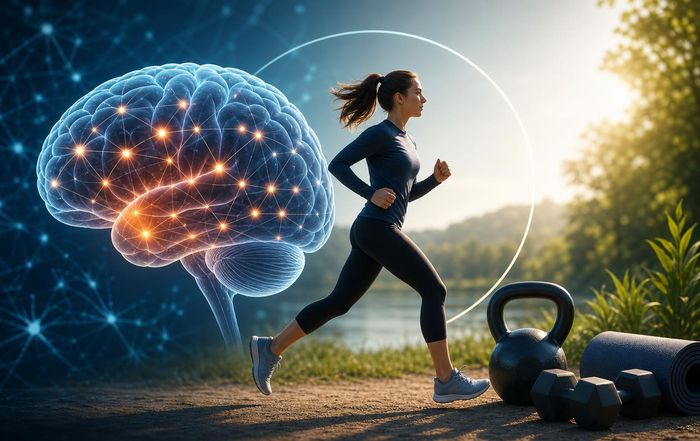
The Connection Between Exercise and Brain Health: What SportyFusion Readers Need to Know
Why Brain Health Has Become a Performance Priority
The global conversation around performance has shifted decisively from muscles to minds. Elite athletes, fitness enthusiasts, executives, gamers and creative professionals now speak less about "getting in shape" and more about "staying sharp," "protecting focus" and "extending cognitive prime." For the community around SportyFusion-a readership that spans high-performance sport, fitness, business and culture-the connection between exercise and brain health is no longer a side note; it is a central strategic concern that influences how people train, work and live.
Scientific advances from institutions such as Harvard Medical School, Mayo Clinic, University College London and Stanford University have converged on a clear conclusion: regular physical activity is one of the most powerful, reliable and cost-effective interventions for maintaining and enhancing brain function across the lifespan, from childhood learning to peak professional performance and healthy ageing. Readers exploring the performance-focused resources on SportyFusion Performance increasingly recognize that every workout is not only sculpting the body but also rewiring the brain, influencing attention, memory, emotional balance and resilience to stress.
At the same time, macro trends in work, technology and global health have made this connection more urgent. The rise of remote and hybrid work has intensified screen time and cognitive load, while demographic ageing in regions such as Europe, North America, Japan and South Korea has elevated dementia and cognitive decline to critical policy issues. Organisations from the World Health Organization to national health systems in the United States, United Kingdom, Germany and Japan now recommend structured physical activity as a core component of brain health strategies. In this context, SportyFusion's global audience is increasingly asking a sophisticated question: not "Does exercise help the brain?" but "How can exercise be designed, timed and integrated to systematically build and protect cognitive capital?"
How Exercise Changes the Brain: The Science Behind the Sweat
The modern understanding of exercise and brain health is grounded in neuroscience rather than motivational slogans. Research from Harvard Health Publishing and the National Institutes of Health has shown that movement triggers a cascade of biochemical and structural changes in the brain that can be measured, replicated and optimized. These changes extend far beyond the familiar release of endorphins that improve mood after a workout.
At the cellular level, aerobic and mixed-intensity exercise increase the production of brain-derived neurotrophic factor (BDNF), often described as "fertilizer for the brain" because it supports the growth, survival and plasticity of neurons. Studies from Johns Hopkins Medicine and Cleveland Clinic have demonstrated that higher levels of BDNF are associated with better memory performance, faster learning and greater resilience to age-related cognitive decline. Learn more about how neuroplasticity underpins lifelong learning and adaptation through resources from Johns Hopkins Medicine.
In parallel, regular physical activity improves cerebral blood flow, delivering more oxygen and nutrients to brain tissue and enhancing the efficiency of energy metabolism. Research published through American Heart Association channels has linked cardiorespiratory fitness with structural preservation of key brain regions, particularly the hippocampus, which is critical for memory formation and spatial navigation. Longitudinal studies have shown that individuals who maintain consistent moderate-to-vigorous physical activity across midlife have larger hippocampal volumes and slower rates of cortical thinning in later decades, correlating with lower risk of dementia and better executive function.
Inflammation and oxidative stress, increasingly recognized as drivers of neurodegenerative diseases, are also modulated by exercise. Work summarised by Alzheimer's Association indicates that physically active individuals show lower levels of systemic inflammation markers and may benefit from delayed onset or reduced severity of cognitive impairment. For readers following global health trends on SportyFusion Health, this connection between movement, inflammation and neuroprotection is reshaping how prevention is understood: lifestyle is no longer seen as a soft variable but as a strategic, evidence-based mechanism for long-term cognitive security.
Aerobic Training, Strength Work and the Brain: Different Paths to Cognitive Gains
While the early narrative around brain health and exercise focused heavily on endurance activities such as running and cycling, the evidence landscape in 2026 is more nuanced and favourable to a broader range of training modalities. For a performance-oriented audience that values both strength and conditioning, this is a significant development.
Aerobic training remains the most extensively studied modality for cognitive benefit. Regular moderate-intensity activities-such as brisk walking, running, swimming or cycling-have been shown by Mayo Clinic and NHS researchers to improve processing speed, attention and working memory in adults of various ages. Learn more about recommended physical activity levels and their impact on cardiovascular and brain health through resources from the World Health Organization. These activities are particularly effective at enhancing vascular health and BDNF production, which explains their strong association with improved executive function and reduced risk of depression.
Strength training, once seen primarily as a musculoskeletal intervention, is now recognized as a powerful contributor to cognitive performance as well. Studies from University of Sydney and other institutions have found that resistance training two to three times per week can improve attention, conflict resolution and memory in older adults, and may slow the progression from mild cognitive impairment to more severe forms of dementia. The mechanisms appear to involve hormonal pathways, including growth factors and improved insulin sensitivity, which have downstream effects on brain function. Readers interested in how modern strength protocols intersect with cognition can explore applied perspectives in SportyFusion Fitness, where training is increasingly framed as a whole-system intervention rather than a purely aesthetic pursuit.
High-intensity interval training (HIIT) and hybrid protocols that combine aerobic and resistance components are also gaining attention. Research disseminated by American College of Sports Medicine suggests that these formats can deliver efficient cognitive benefits, particularly for time-pressed professionals, by maximizing cardiovascular stress and recovery cycles that stimulate neurochemical adaptations. However, the intensity must be managed carefully to avoid excessive stress responses, especially in populations already dealing with chronic workload or sleep deprivation, which is a reality for many in the SportyFusion community operating in high-pressure business and technology roles.
Exercise, Mood and Mental Health: The Emotional Side of Cognitive Performance
Brain health is not limited to memory and focus; emotional regulation, resilience and mental health are integral to any realistic definition of cognitive performance. The global mental health burden, amplified by geopolitical uncertainty, economic volatility and rapid technological change, has made this dimension particularly salient for readers following SportyFusion World and SportyFusion News.
A robust body of evidence compiled by World Health Organization and National Health Service systems in the UK and Europe shows that regular physical activity can reduce symptoms of mild to moderate depression and anxiety, often with effect sizes comparable to first-line pharmacological treatments for some individuals. Learn more about how movement is being integrated into mental health care pathways through resources from the National Institute of Mental Health. These findings have led to the rise of "exercise prescriptions" in countries such as Sweden, Norway and Canada, where physicians formally recommend structured movement as part of mental health treatment plans.
The mechanisms are multifactorial. Exercise modulates neurotransmitter systems, including serotonin, dopamine and norepinephrine, which influence mood and motivation. It also reduces levels of stress hormones such as cortisol and improves sleep quality, which in turn supports emotional stability and cognitive clarity. Social forms of exercise-team sports, group classes, running clubs and workplace wellness programs-add an additional layer of benefit by combating loneliness and strengthening social identity, a theme increasingly explored in SportyFusion Social.
For high-performance professionals in sectors such as finance, technology, media and elite sport, the mental health dimension of exercise is no longer viewed as a "nice-to-have." Organisations like McKinsey & Company and Deloitte have documented the cost of burnout, presenteeism and cognitive fatigue on productivity and innovation. Learn more about sustainable high-performance cultures and the role of wellbeing interventions through analyses from McKinsey. In this context, exercise is being reframed as a strategic asset for emotional regulation and decision quality under pressure, not merely as an individual wellness choice.
Brain Health Across the Lifespan: From Youth Development to Active Ageing
One of the most compelling aspects of the exercise-brain connection is its relevance across the entire lifespan. For SportyFusion's global audience, which includes young athletes, mid-career professionals and older adults committed to staying active, the message is consistent but tailored: movement matters at every age, though the emphasis shifts with life stage.
In children and adolescents, physical activity has been repeatedly linked to better academic performance, attention and behavioural regulation. Research highlighted by Centers for Disease Control and Prevention in the United States and UNESCO globally shows that students who engage in regular sports or active play tend to have improved executive function, which underpins planning, impulse control and flexible thinking. Learn more about how active schools and physical education support learning outcomes through resources from UNESCO. For parents and educators following SportyFusion Culture, this evidence supports the integration of structured movement into school timetables rather than viewing physical education as expendable.
In midlife, often defined as the period between 40 and 65, the focus shifts towards building cognitive reserve and managing risk factors such as hypertension, obesity and metabolic syndrome, all of which are linked to later-life cognitive decline. Longitudinal studies summarised by Alzheimer's Society and National Institute on Aging suggest that individuals who maintain regular moderate-to-vigorous physical activity during these decades can significantly reduce their risk of Alzheimer's disease and other dementias. Learn more about lifestyle-based dementia prevention strategies through resources from the National Institute on Aging. For professionals in demanding careers, this reframes exercise from a short-term energy booster to a long-term cognitive insurance policy.
In older adults, physical activity becomes a critical tool for preserving independence, mobility and mental clarity. Programs that combine aerobic exercise, resistance training and balance work have been shown by World Health Organization and European Society of Cardiology to reduce falls, maintain functional capacity and support cognitive function. Importantly, even individuals who begin exercising later in life can experience significant brain health benefits, which is a powerful message for readers who may be restarting activity after periods of inactivity or injury. The active ageing movement, visible in cities from Tokyo and Seoul to Berlin, London, Toronto and Sydney, illustrates how exercise is increasingly seen as a social and cultural norm for older adults rather than an exception, a trend regularly explored across SportyFusion Lifestyle.
Technology, Data and the New Era of Cognitive Training Through Movement
By 2026, the intersection of exercise, brain health and technology has become one of the most dynamic frontiers in the performance ecosystem. Wearables, smart home fitness systems, AI-driven training platforms and cognitive assessment tools are converging to create a new category: movement-based neuroperformance. For SportyFusion's tech-savvy readership following SportyFusion Technology and SportyFusion Gaming, this convergence is reshaping how training is designed, tracked and experienced.
Advanced wearables from companies such as Garmin, Apple and Whoop now track not only heart rate, variability and sleep but also metrics that correlate with cognitive readiness, such as recovery indices and stress scores. Learn more about how physiological data can be used to manage cognitive load and performance through resources from the American College of Sports Medicine. These data streams are increasingly integrated with productivity tools and corporate wellness platforms, enabling individuals and organisations to align cognitively demanding work-such as strategy sessions, creative tasks or complex negotiations-with periods of optimal physiological readiness.
Virtual reality and exergaming platforms are also expanding the possibilities for combined physical and cognitive training. Research supported by Stanford Virtual Human Interaction Lab and other innovation hubs indicates that immersive environments can simultaneously challenge balance, coordination, reaction time and decision-making, offering potential benefits for both athletes and older adults undergoing rehabilitation. Learn more about how interactive technologies are being used in health and performance through updates from the Stanford VHIL. For gamers within the SportyFusion community, this blurs the line between entertainment and functional training, with esports organisations in South Korea, China, Europe and North America increasingly integrating physical conditioning into their performance programs to protect cognitive stamina and visual processing speed.
At the frontier, research collaborations between universities, sporting bodies and technology firms are exploring personalized exercise prescriptions based on genetics, brain imaging and continuous biometric monitoring. While these approaches are still emerging and must navigate complex ethical considerations, they signal a future in which exercise for brain health is not generic but highly individualized, aligned with personal risk profiles, cognitive goals and cultural contexts.
The Business and Policy Implications of an Active Brain
The recognition that exercise is a strategic lever for brain health has significant implications for business, policy and labour markets, areas of particular interest to fans following SportyFusion Business and SportyFusion Jobs. Organisations across the United States, Europe, Asia-Pacific and Africa are beginning to treat physical activity not merely as an HR benefit but as an investment in cognitive capital, innovation capacity and risk management.
Global consulting firms and business schools, including World Economic Forum and INSEAD, have highlighted how knowledge economies rely on sustained cognitive performance, creativity and adaptability. Learn more about future-of-work trends and the role of wellbeing in competitive advantage through insights from the World Economic Forum. In sectors such as technology, finance, media, healthcare and advanced manufacturing, errors driven by fatigue, stress or cognitive overload can have significant financial and reputational consequences. Integrating structured movement into workday design-through active commuting incentives, on-site or virtual training sessions, walking meetings and movement-friendly office layouts-is increasingly seen as a pragmatic response to these risks.
Public policy is also evolving. Governments in Canada, Australia, Singapore, Netherlands and Nordic countries are investing in infrastructure and campaigns that encourage active lifestyles as part of national dementia prevention and mental health strategies. Learn more about how urban planning and public health policies are aligning around active living through resources from the OECD. These initiatives acknowledge that the economic burden of cognitive decline, mental illness and chronic disease is unsustainable without large-scale behavioural shifts, and that exercise is one of the few interventions with cross-cutting benefits across physical, mental and economic health.
For brands operating at the intersection of sport, lifestyle and technology, the brain health narrative is reshaping product positioning and partnerships. Companies in apparel, equipment, nutrition and digital services are increasingly aligning with scientific institutions and health systems to validate claims and build trust, reflecting a broader emphasis on evidence-based performance and ethical marketing. Readers can explore how leading brands are adapting to this landscape through coverage on SportyFusion Brands, where the emphasis is on transparency, long-term value and authentic performance outcomes rather than short-term trends.
Building a Brain-Healthy Movement Culture
For the global community here, the connection between exercise and brain health is not an abstract research topic; it is a practical framework for daily decisions about training, work, recovery and lifestyle. Whether a reader is a young footballer in Spain, a fintech founder in London, a software engineer in Bangalore, a gamer in Seoul, a healthcare professional in Toronto or an active retiree in Melbourne, the core message is consistent: movement is one of the most powerful tools available to build, protect and extend cognitive potential.
Translating science into action requires more than individual discipline; it demands cultural narratives, role models and environments that make brain-healthy movement the norm rather than the exception. This is where super sites just like this play a distinctive role, by curating stories, analysis and practical frameworks that integrate sports, fitness, health, culture, technology, business and ethics into a coherent performance philosophy. Readers navigating SportyFusion Training can explore how to structure sessions that combine aerobic and strength elements for maximal cognitive benefit, while those following SportyFusion Ethics can engage with debates around data privacy, access and equity in emerging neuroperformance technologies.
As the frontier of research moves forward, with new findings from institutions across North America, Europe, Asia and Africa, one principle remains remarkably stable: the human brain evolved to function in a context of regular, varied physical activity. In a world increasingly defined by screens, automation and cognitive load, reintroducing deliberate movement into daily life is not nostalgia; it is a forward-looking strategy for sustainable high performance. For SportyFusion's audience, the opportunity in 2026 is clear: to treat every run, ride, lift or game not only as a step towards physical goals but as a deliberate investment in clarity, creativity, resilience and long-term brain health.