

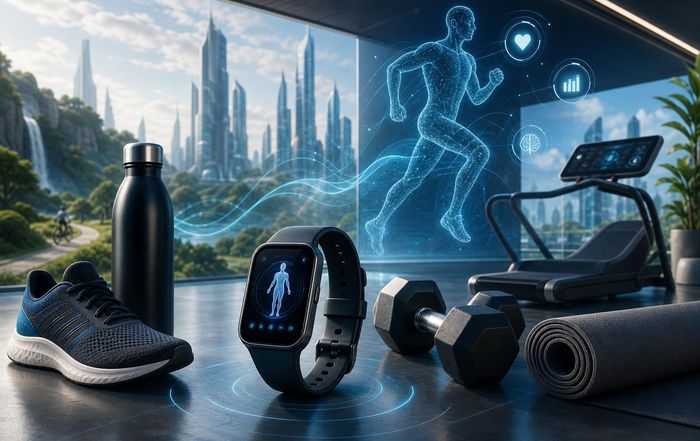
The Next Wave of Global Fitness Innovation
A New Era for Performance, Health and Business
The global fitness landscape has moved far beyond traditional gyms, step counters and isolated workout plans, entering a phase in which sport, health, technology, culture and business are converging into a single, data-driven performance ecosystem. From connected training environments in New York and London to AI-guided recovery studios in Tokyo, from outdoor performance parks in Berlin to hybrid fitness-gaming arenas in Seoul, a new wave of innovation is reshaping how individuals train, how organizations invest and how societies think about physical capability and wellbeing. For SportyFusion.com, whose fitness crazy community spans elite athletes, ambitious professionals and performance-driven organizations across North America, Europe, Asia and beyond, this transformation is not an abstract trend but a lived reality that influences daily decisions about training, technology adoption, brand partnerships and long-term health strategy.
Global investment in sports and fitness technology has accelerated since the early 2020s, supported by expanding digital infrastructure, maturing AI capabilities and a growing recognition among policymakers and employers that physical activity is a core driver of productivity, mental health and social cohesion. Reports from organizations such as the World Health Organization highlight that physical inactivity remains a major risk factor for noncommunicable diseases, yet they also emphasize how structured, accessible activity programs can reduce healthcare burdens and extend healthy life expectancy, particularly in rapidly aging societies in Japan, Germany and Italy. Learn more about the global health impact of physical inactivity at the World Health Organization. In this context, the fitness sector is no longer a peripheral lifestyle category; it is becoming a central pillar of national health strategies, corporate performance programs and urban planning initiatives.
From Wearables to Integrated Performance Ecosystems
The first generation of fitness innovation was defined by wearables that counted steps and tracked heart rate, but the current wave is characterized by integrated performance ecosystems in which sensors, software, coaching and services operate as a unified system. Today's leading platforms combine biometric data, movement analytics, sleep metrics and mental-health indicators to create multidimensional performance profiles, which can be continuously adjusted based on real-time feedback and long-term goals. Companies such as Apple, Garmin and Whoop have moved from selling devices to offering subscription-based performance services, while health systems in the United States, United Kingdom and Singapore are increasingly exploring how continuous monitoring can be integrated into preventive care programs. For an overview of how digital health ecosystems are evolving, readers can explore resources from the U.S. National Institutes of Health.
Within this ecosystem model, data is no longer confined to the individual device or app; it is shared, with consent, across platforms that connect athletes, coaches, physiotherapists, nutritionists and sports psychologists. On SportyFusion.com, this shift is reflected in the growing interest in cross-disciplinary performance content, from integrated fitness and training insights to advanced performance analytics and recovery strategies. Elite football clubs in Spain, cycling teams in France and basketball organizations in the United States are using centralized data platforms to monitor load management, injury risk and psychological readiness, leveraging research from institutions such as the Australian Institute of Sport to refine their models. The same principles are increasingly applied to ambitious recreational athletes and corporate wellness programs, narrowing the gap between professional and everyday performance management.
AI-Driven Coaching and Hyper-Personalized Training
Artificial intelligence has moved from a supporting role to the center of training design, enabling hyper-personalized programs that adapt continuously to the athlete's physiological and psychological state. Instead of static workout plans, AI-driven systems now analyze heart-rate variability, movement quality, training history, sleep data and even contextual factors such as travel schedules or environmental conditions to recommend specific intensities, volumes and recovery protocols. Organizations like Google DeepMind have demonstrated how advanced models can interpret complex biometric data sets, while sports science research published via platforms like PubMed has provided the evidence base for safe, adaptive programming.
In practice, AI-driven coaching manifests in multiple formats: smart mirrors that provide real-time form corrections in apartments in Toronto and Sydney, AI-guided cycling trainers in Amsterdam, and integrated strength systems in Los Angeles that automatically adjust load based on bar speed and fatigue markers. For the performance-focused audience of SportyFusion.com, this means that training is increasingly about orchestrating the right stimuli at the right time, rather than simply accumulating volume. Readers can explore how technology is reshaping training environments in more depth through the platform's dedicated technology coverage, which tracks emerging tools and evaluates their practical impact on performance and health.
The rise of AI coaching also raises questions about quality control, accountability and ethical design. While elite organizations often employ sports scientists and data analysts to validate algorithmic decisions, recreational users in Brazil, South Africa or Malaysia may rely entirely on consumer applications whose methodologies are not always transparent. Bodies such as the International Olympic Committee and national sports institutes in Norway, Denmark and Finland are beginning to discuss standards for AI-assisted training and injury prevention, recognizing that the line between helpful guidance and inappropriate risk can be thin when algorithms are optimized for engagement rather than long-term health.
Connected Gyms, Hybrid Spaces and the Reimagined Training Environment
The physical spaces in which people train have also been transformed. Traditional gyms have evolved into connected performance hubs where access control, equipment usage, environmental conditions and coaching interactions are all digitized and analyzed. In major cities such as New York, London, Berlin and Singapore, leading operators collaborate with technology providers to create environments where treadmills, strength machines, functional training stations and recovery areas are all integrated into a single data layer. Members can transition seamlessly from in-person coaching to remote sessions, with their training history and preferences following them across channels. The International Health, Racquet & Sportsclub Association has documented how this hybrid model has become the dominant growth driver in the global health club industry.
For SportyFusion.com, which serves readers navigating both in-club and digital experiences, the new training environment is less about choosing between home and gym and more about constructing a portfolio of experiences that align with personal goals, work schedules and cultural preferences. In Japan and South Korea, compact, tech-enabled micro-gyms cater to urban professionals who value privacy and efficiency, whereas in Canada, Australia and New Zealand, outdoor performance parks and trail networks support a culture of endurance sports and adventure racing. Learn more about how active design is reshaping cities through resources from the World Economic Forum. The next wave of innovation is likely to deepen this integration, with smart buildings that can adapt lighting, air quality and acoustics to optimize training outcomes and cognitive performance throughout the day.
The Convergence of Fitness, Health and Preventive Medicine
One of the most significant shifts since the early 2020s has been the integration of fitness into the broader healthcare and preventive medicine ecosystem. Health systems in the United States, United Kingdom, Germany and Singapore are experimenting with exercise-as-medicine programs, in which structured physical activity is prescribed as a first-line intervention for conditions such as type 2 diabetes, hypertension and mild depression. The American College of Sports Medicine and similar organizations in Europe and Asia have long advocated for this approach, but the combination of digital tracking, telehealth and outcome-based reimbursement models has made it operationally viable at scale.
For the global audience of SportyFusion.com, this convergence means that fitness decisions are increasingly linked to long-term health outcomes and economic incentives. Employers from Silicon Valley to Zurich and Singapore are investing in comprehensive wellness platforms that integrate physical activity, mental health support, nutrition coaching and sleep optimization, often supported by insurers who recognize the cost savings associated with a healthier workforce. Readers interested in understanding how these programs translate into practical habits can explore the platform's dedicated health coverage, which connects scientific evidence with real-world strategies for sustainable performance.
At the same time, this integration raises questions about data governance, medical oversight and equity. When fitness platforms collect medical-grade data, they enter a regulatory environment defined by agencies such as the U.S. Food and Drug Administration, the European Medicines Agency and national data protection authorities. Ensuring that innovation does not outpace safeguards is essential for maintaining trust, particularly in regions such as Europe where privacy regulations are stringent and consumer expectations around data protection are high.
Cultural Shifts and the Globalization of Performance Lifestyles
Fitness innovation is not only technological; it is also cultural. Over the past decade, a global performance lifestyle has emerged, blending elements of sport, fashion, gaming, wellness and social identity. In cities from Los Angeles to Stockholm, Seoul and Cape Town, athletic apparel is now business-casual attire, and conversations about training, recovery and mental health are part of everyday professional life. Brands such as Nike, Adidas, Lululemon and emerging performance labels from China and Brazil have helped normalize the idea that physical capability and aesthetic expression are intertwined. Learn more about the evolution of performance culture through analyses from the Business of Fashion.
For SportyFusion.com, whose editorial voice sits at the intersection of sport, culture and business, this cultural shift is central. The platform's culture section explores how music, film, esports and social media shape training motivations and identity, while its brands coverage examines how companies navigate authenticity, sustainability and inclusivity in their storytelling. In France, Italy and Spain, boutique studios have merged performance training with design-driven spaces and hospitality experiences; in Thailand and Malaysia, fitness festivals blend local cultural elements with global wellness trends; in South Africa and Brazil, community-driven sports programs are redefining what aspirational fitness looks like in rapidly changing urban environments.
This globalization of performance lifestyles is not uniform, and the next wave of innovation will depend on how effectively brands and platforms adapt to local contexts while maintaining global standards of quality and credibility. For audiences in North America and Europe, issues such as sustainable materials, ethical supply chains and mental-health support are increasingly central to brand choice, whereas in parts of Asia, Africa and South America, accessibility, affordability and community impact may be more decisive.
Sustainability, Environment and the Ethics of Performance
As the fitness industry scales, its environmental and ethical footprint is under increasing scrutiny. From the energy consumption of large training facilities to the lifecycle impact of athletic footwear and apparel, the sector is being challenged to align performance aspirations with sustainable business practices. Organizations such as the United Nations Environment Programme have highlighted the environmental cost of fast fashion, which includes a significant volume of sportswear, while independent research bodies in Sweden, Norway and Denmark are exploring circular models for textiles and equipment.
For SportyFusion.com, sustainability is not a peripheral theme but a strategic lens through which innovation is evaluated. The platform's environment coverage examines how brands and facility operators are investing in low-carbon infrastructure, recyclable materials and responsible sourcing, while its ethics section addresses issues such as labor practices, algorithmic bias in AI coaching tools and the responsible marketing of performance products to young athletes. In Germany, Netherlands and Switzerland, for example, several leading clubs and training centers are experimenting with energy-generating cardio equipment and carbon-neutral building designs, aligning with broader European climate targets. Learn more about sustainable business practices through resources from the World Resources Institute.
Ethical considerations also extend to data usage and psychological impact. As platforms gamify training and use behavioral science to drive engagement, questions arise about the potential for overtraining, burnout and unhealthy comparison. Regulatory bodies, academic institutions and industry associations are beginning to articulate guidelines for responsible design, but in many markets, self-regulation remains the primary mechanism. For performance-oriented readers, understanding these dynamics is essential to making informed choices about which platforms and brands to trust.
The Fusion of Fitness and Gaming: A New Performance Frontier
One of the most dynamic frontiers of fitness innovation lies at the intersection of physical training and gaming. Advances in extended reality (XR), motion tracking and haptic feedback have enabled experiences in which high-intensity physical activity is embedded within immersive, narrative-driven game environments. From virtual boxing arenas in London to rhythm-based cardio experiences in Tokyo and cooperative adventure workouts in Vancouver, fitness-gaming hybrids are attracting participants who might never have engaged with traditional gyms. Industry analyses from organizations such as Newzoo and commentary from the Entertainment Software Association illustrate how the global games market is increasingly intertwined with wellness and sport.
For SportyFusion.com, which covers this space through its dedicated gaming section, the key question is not whether fitness-gaming will grow-it already has-but how it can deliver meaningful, measurable performance outcomes rather than simply entertainment. In South Korea and Japan, esports organizations are integrating structured physical training into their player development programs, recognizing that cardiovascular fitness, posture, reaction time and stress management all influence competitive results. Learn more about the science of reaction time and performance through resources from the Cleveland Clinic. Meanwhile, hardware providers in China and Taiwan are developing motion-capture systems that can translate complex athletic movements into game mechanics, potentially enabling sophisticated skill acquisition for sports such as tennis, basketball or martial arts in virtual environments.
The challenge for this sector is to balance engagement with evidence-based design. Without careful calibration, gamified systems can either underload users, providing insufficient stimulus for adaptation, or overload them, increasing injury risk. As the technology matures, collaboration between game designers, sports scientists and healthcare professionals will be essential to ensure that the next generation of fitness-gaming platforms supports long-term health and performance.
Workforce, Skills and the Future of Fitness Jobs
The transformation of the global fitness ecosystem is reshaping the labor market, creating new roles while demanding new skills from existing professionals. Traditional personal trainers and group fitness instructors are increasingly expected to interpret data from wearables, operate digital coaching platforms and understand the basics of behavioral science and mental health. At the same time, new roles are emerging at the intersection of sports science, software engineering, product management and content creation, as companies build integrated experiences that span hardware, software and media. Analyses from the World Economic Forum have highlighted health and wellness as a key growth area in the future of work.
For the business-focused readership of SportyFusion.com, this evolution is both an opportunity and a challenge. The platform's jobs section tracks how organizations in North America, Europe and Asia are recruiting for hybrid roles such as performance data analyst, digital coaching specialist, community experience manager and wellness product strategist. In Canada and Australia, universities are expanding sports science and exercise physiology programs to include modules on AI, digital health and entrepreneurship, while in India, South Africa and Brazil, vocational programs are emerging to upskill trainers in digital tools and remote coaching methodologies.
This workforce transition has implications for quality, regulation and equity. Ensuring that professionals across regions-whether in New York, Nairobi or Bangkok-have access to high-quality education and recognized certifications is crucial for maintaining trust and safety. Organizations such as the National Academy of Sports Medicine, the European Register of Exercise Professionals and national coaching councils are updating their frameworks to reflect digital competencies, while employers and platforms must invest in continuous learning to keep pace with rapid technological change.
Business Models, Investment and the Economics of Innovation
Behind the visible transformation of training experiences lies a complex shift in business models and capital flows. The early 2020s saw a surge of investment in direct-to-consumer connected fitness hardware, followed by a correction as markets matured and competition intensified. By 2026, the dominant models emphasize diversified revenue streams-combining subscriptions, hardware leasing, digital content, corporate partnerships and health system integrations-rather than relying on single product lines. Analysts at McKinsey & Company and Deloitte have documented how successful fitness and wellness companies are increasingly operating as platforms rather than pure manufacturers or service providers. Learn more about the evolving wellness economy through insights from the Global Wellness Institute.
For SportyFusion.com, whose business section tracks these dynamics, the key narrative is one of convergence. Sportswear brands are investing in digital coaching platforms; health insurers are partnering with fitness apps; technology giants are entering the space through health-centric devices and services; and venture capital is flowing into startups that promise to integrate training, nutrition, sleep and mental health into unified experiences. In United States and Europe, regulatory developments around health data, digital therapeutics and reimbursement are shaping the competitive landscape, while in Asia, super-apps and telecommunications providers are embedding fitness services into broader digital ecosystems.
The economics of innovation also raise questions about accessibility and inclusion. While premium platforms in Switzerland or Singapore may offer cutting-edge experiences, the global burden of physical inactivity is often highest in regions with limited resources and infrastructure. Public-private partnerships, community-based programs and open-source tools will be critical to ensuring that the benefits of innovation are not limited to affluent urban populations. Organizations such as the World Bank and regional development agencies are beginning to explore how sport and physical activity can be integrated into broader development strategies, from urban planning to education and public health.
Shifting Fast Ahead: SportyFusion's Perspective on the Next Decade
As the next wave of global fitness innovation unfolds, the central challenge for individuals, organizations and policymakers is to navigate complexity without losing sight of fundamentals. At its core, performance is still driven by consistent training, adequate recovery, sound nutrition and a supportive environment; technology, culture and business models are powerful amplifiers, but they cannot replace the underlying human effort and discipline. For the worldwide community that turns to SportyFusion.com for insight-from athletes in New York and London to entrepreneurs in Berlin, coaches in Tokyo, wellness leaders in Cape Town and innovators in São Paulo-the goal is to translate rapid change into actionable, trustworthy guidance.
The platform's integrated coverage across sports, fitness, health, technology, business and culture ensures that readers can see connections rather than silos, understanding how AI-driven coaching affects injury risk, how sustainability concerns influence brand strategy, how gaming reshapes engagement, and how global economic shifts create new opportunities and pressures in the performance ecosystem. Learn more about how these themes intersect across regions through the platform's world coverage, which situates local developments within a global context.
Looking toward 2030, several trajectories appear decisive. The integration of fitness into healthcare will deepen, making exercise prescriptions and performance monitoring a standard part of preventive medicine in many countries. AI systems will become more sophisticated yet more regulated, with clearer standards for safety, transparency and accountability. Urban environments will continue to evolve toward active design, supporting daily movement as a default rather than an exception. And the definition of an athlete will broaden further, encompassing not only traditional sports participants but also knowledge workers, gamers, creators and leaders who recognize that physical capability is a strategic asset in an increasingly demanding world.
In this evolving landscape, trust will be the ultimate currency. Audiences will gravitate toward platforms, brands and organizations that demonstrate experience, expertise, authoritativeness and a genuine commitment to long-term wellbeing. For SportyFusion.com, the mission is to remain a reliable, independent and unique content based, globally minded guide through this transformation, connecting data with judgment, innovation with ethics and ambition with sustainable performance for readers from North America to Europe, Asia, Africa and South America. As the next wave of global fitness innovation gathers momentum, the opportunity-and the responsibility-is to ensure that progress serves not only faster times and higher outputs, but healthier, more resilient and more connected societies.