

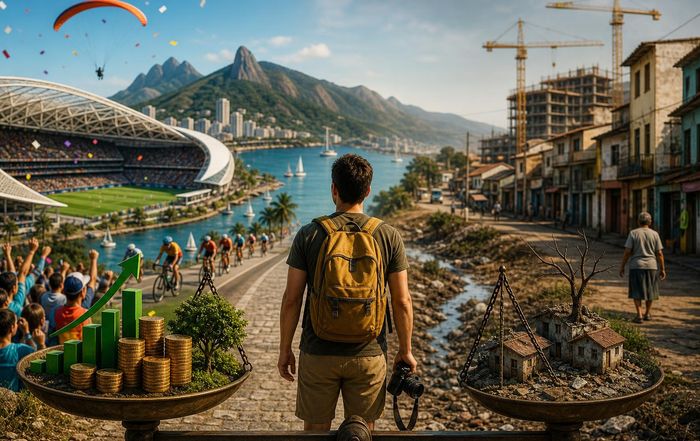
Sports Tourism: Economic Engine, Local Strain
Sports tourism has become one of the fastest-growing segments of the global travel industry, cutting across elite competitions, mass-participation races, youth tournaments, and fan pilgrimages to iconic venues. From the Olympics and FIFA World Cup to surfing festivals, esports majors, and city marathons, people are increasingly willing to travel not just for leisure or business, but specifically for sport-either as participants, spectators, or both. This surge is reshaping local economies, urban planning, and community life in host destinations. Yet the same events that fill hotels and generate headlines can inflate rents, strain public services, and accelerate environmental and social pressures if they are not managed carefully.
For cities and regions courting this market, the central question is no longer whether sports tourism can deliver economic benefits-it clearly can-but under what conditions those gains outweigh the costs, and who actually shares in them. Understanding that balance is crucial for policymakers, event organizers, local communities, and the athletes and fans whose travel decisions drive the industry.
What Counts as Sports Tourism Today?
Sports tourism is often divided into three overlapping categories: travel to watch major events, travel to participate in organized competitions, and travel built around visiting sport-related attractions or experiences. Classic examples include flying to another country to attend the Olympic Games, joining a destination marathon, or planning a holiday around golfing, skiing, surfing, or visiting a legendary stadium. Increasingly, it also includes newer formats such as esports tournaments, fitness festivals, and hybrid events that blend competition, music, and lifestyle culture in one package.
Industry bodies such as the World Tourism Organization at the UN highlight that sports tourism sits at the intersection of travel, entertainment, and health, and has expanded well beyond a niche for hardcore fans. Large-scale events can attract hundreds of thousands of visitors, while smaller recurring competitions-from youth football tournaments to regional triathlons-create more modest but steady flows of participants and families. In parallel, many destinations are positioning themselves as year-round active lifestyle hubs, using trail networks, cycling infrastructure, or water sports facilities to attract visitors who want to train and compete away from home. For readers interested in how this intersects with broader travel and culture trends, related coverage sits naturally alongside our sports and culture sections.
The Economic Upside: From Visitor Spending to City Branding
The clearest benefit touted by host destinations is visitor spending. Fans and athletes pay for flights, accommodation, food, local transport, event tickets, and merchandise, creating a short-term injection of demand that can be significant even for large cities. Organizations such as the World Travel & Tourism Council and OECD point out that tourism spending has a strong multiplier effect: revenue captured by hotels and restaurants flows into wages, local suppliers, and tax receipts, which in turn support jobs and public services. For smaller communities, even a single well-timed event can help extend the tourist season and stabilize businesses that otherwise depend on a narrow summer window.
Beyond immediate spending, sports tourism often accelerates investment in infrastructure. Host cities may upgrade airports, public transit, broadband, and public spaces, or build new stadiums and training facilities. When well-planned, these investments can improve residents' daily lives long after the final whistle. The International Olympic Committee and FIFA both emphasize legacy planning in their bidding requirements, encouraging venues that can be repurposed for community use, local clubs, or future events. Destinations that succeed in this area often see improved public health infrastructure, expanded green spaces, and new opportunities for everyday physical activity, themes that connect directly to our fitness and health coverage.
There is also a powerful branding effect. Hosting a global tournament broadcasts a curated image of the city or country to millions of viewers. Tourism boards and economic development agencies use this spotlight to market the destination not just to future leisure visitors but also to investors, students, and employers. The World Tourism Organization notes that major events can reposition lesser-known cities on the global map, while recurring annual races or tournaments-such as marathons, cycling tours, or surf championships-gradually build a distinctive identity that attracts a loyal international following and strengthens the local business ecosystem around sport, hospitality, and creative industries.
Jobs, Skills, and the Local Sports Economy
On the labor side, sports tourism can create a wide range of jobs, from event management and sports marketing to hospitality, security, and transportation. While many of these roles are temporary or seasonal, they can still provide valuable income and training, especially for young people or those re-entering the workforce. Large events often rely heavily on volunteers, but they also require paid professionals in logistics, media production, catering, medical services, and technical operations. Organizations like Eurostat and national tourism ministries in countries such as the UK, Australia, and Canada have documented the contribution of sports and recreation to overall employment in the visitor economy.
A less visible benefit is skills transfer. Hosting complex international events forces local teams to develop expertise in areas like crowd management, digital ticketing, broadcasting, and sustainability reporting. Over time, this can strengthen a city's broader events industry, attracting conferences, concerts, and other cultural festivals. Local clubs and federations may gain access to improved coaching, sports science support, and connections with international governing bodies such as World Athletics or World Rugby, which can raise performance standards and participation at grassroots level. For athletes and coaches, exposure to high-level competition on home soil can be a catalyst for long-term development, something we explore frequently in our performance and training coverage.
Sports tourism also supports a growing ecosystem of specialized small businesses: running tour operators, cycling guides, local gear shops, physiotherapists, nutritionists, and sports-focused accommodation such as training camps. When events are embedded into a broader active lifestyle strategy, these enterprises can thrive year-round instead of relying on a single mega-event. That diversification helps reduce the economic volatility that often comes with one-off spectacles.
Environmental Pressures and Sustainability Gaps
The same dynamics that generate economic gains also produce environmental strain. Long-haul flights for fans and teams contribute to greenhouse gas emissions, and large events concentrate tens or hundreds of thousands of people in one place, increasing energy use, water consumption, and waste. Research aggregated by bodies like the Intergovernmental Panel on Climate Change and national environment agencies underscores the climate impact of aviation in particular, raising questions about the sustainability of flying fans across continents for short stays.
On the ground, poorly managed events can leave behind overflowing landfills, damaged natural areas, and infrastructure that is under-used once the crowds depart. Coastal surf festivals, mountain trail races, and ski events can accelerate erosion or disturb wildlife if routes and facilities are not planned with ecological sensitivity. Organizations such as the International Union for Conservation of Nature and UN Environment Programme have warned that tourism development in fragile ecosystems demands careful limits on visitor numbers, strict waste management, and meaningful local consultation.
In response, many sports bodies and event organizers have begun to adopt sustainability frameworks. The IOC, for example, now requires Olympic bid cities to present detailed environmental plans, while federations like World Athletics promote sustainable event certification programs. Practical measures include shifting to renewable energy for venues, eliminating single-use plastics, promoting public transport and active travel to events, and using existing infrastructure rather than building from scratch. Some destinations are also experimenting with carbon budgeting and offset schemes, though critics argue that offsets should not replace direct emissions reductions. For readers tracking how sport intersects with climate and urban planning, our environment and world sections follow these debates closely.
Social Disruption, Gentrification, and Inequality
Economic benefits and global visibility do not automatically translate into improved quality of life for residents. One of the most common local complaints is the disruption caused by large events: road closures, noise, crowding on public transport, and the temporary reorientation of public space around visitor needs. For people living near venues or fan zones, everyday routines-from commuting to accessing local parks-can be significantly affected, sometimes for weeks or months.
More structurally, the build-up to mega-events can accelerate gentrification. New stadiums, transport links, and waterfront redevelopments often target higher-income residents and tourists, pushing up property values and rents in surrounding neighborhoods. Academic studies and reporting by outlets such as The Guardian, BBC, and Al Jazeera have documented cases where low-income communities were displaced or saw public housing demolished to make way for event-related projects. While the exact dynamics vary by city, a recurring pattern is that those who bear the greatest disruption are not always those who reap the largest economic rewards.
Inequality can also appear within the sports economy itself. High-end hotels, international chains, and major sponsors may capture a large share of event spending, while smaller local businesses struggle to access contracts or meet complex procurement requirements. Informal workers-street vendors, casual laborers, rideshare drivers-may benefit from extra demand, but they are also vulnerable to crackdowns or exclusion zones designed to protect official sponsors. Civil society organizations and academic researchers frequently call for more transparent impact assessments and inclusive planning processes so that local voices, including those of marginalized groups, are heard early in the bidding and design stages.
From a cultural perspective, there is a risk that local traditions and community sport are overshadowed by global brands and standardized fan experiences. Some destinations respond by weaving local music, food, and art into fan zones and opening ceremonies, turning events into platforms for cultural expression rather than mere commercial showcases. Others are experimenting with community-owned clubs, supporter trusts, and social-enterprise models that ensure a greater share of profits is reinvested locally, connecting to wider debates around ethics and social responsibility in sport.
Managing Infrastructure: White Elephants vs. Everyday Assets
Few images have become as symbolic of sports tourism's pitfalls as the "white elephant": gleaming stadiums or arenas built at great expense, only to sit largely empty after a single mega-event. High maintenance costs, limited local demand, and poor integration with everyday urban needs can turn such facilities into long-term fiscal burdens. Examples from past Olympics and World Cups have been widely reported by outlets such as Reuters and The New York Times, fueling skepticism about ambitious infrastructure promises in new bids.
Yet there are also counterexamples where venues have been successfully integrated into local sports ecosystems. Multi-purpose arenas that host concerts, community events, and domestic leagues, or stadiums designed with modular seating that can be downsized after a tournament, are more likely to remain financially and socially viable. Urban planners increasingly advocate for "event-ready" cities that prioritize flexible public spaces, robust public transport, and existing clubs over single-use monuments. The World Bank and regional development banks often stress that infrastructure should be justified by long-term local demand, not just by a few weeks of global attention.
Transport systems are a critical part of this equation. Rail, bus, and cycling networks expanded for events can dramatically improve residents' mobility if fares remain affordable and services are maintained. However, if operating costs prove too high or routes were designed primarily for visitor flows, new lines can become under-used. Integrating active travel-walking and cycling routes-to stadiums and fan zones can help reduce congestion and emissions while encouraging everyday physical activity, aligning with broader public health goals.
Health, Safety, and Public Services Under Pressure
Large sports events place intense short-term pressure on health, safety, and emergency services. Local hospitals and clinics must be prepared for surges in injuries, heat-related illness, and routine medical needs from visiting fans and athletes. Public health agencies such as the World Health Organization and national centers for disease control emphasize the importance of risk assessments covering everything from food safety and water quality to infectious disease surveillance and crowd management. The COVID-19 pandemic brought these issues into sharp focus, forcing event organizers and authorities to grapple with questions about mass gatherings, vaccination requirements, and contingency planning.
Crowd safety is another major concern. Tragic incidents at stadiums and fan zones over past decades have led to stronger regulations and design standards, but risks remain whenever large numbers of people converge. Coordinated planning between event organizers, police, fire services, and medical teams is essential to prevent crushes, manage evacuations, and respond quickly to emergencies. Digital tools such as real-time crowd monitoring, mobile alerts, and integrated command centers are increasingly used to anticipate and manage risks, though they raise additional questions about data privacy and surveillance.
For host communities, the challenge is ensuring that the extra resources mobilized for events leave a positive legacy. Investments in emergency response capacity, medical equipment, and staff training can strengthen everyday resilience if they are not dismantled once the event ends. Public health campaigns around events-promoting physical activity, mental health, or responsible alcohol consumption-can also have lasting benefits when they are embedded into broader community programs, linking to the kind of long-term lifestyle change explored in our lifestyle and social coverage.
Towards Fairer and More Sustainable Sports Tourism
Balancing economic opportunity with local well-being requires deliberate policy choices rather than assuming that any event is automatically beneficial. Many international organizations now recommend that host cities adopt a "triple bottom line" approach, weighing economic, social, and environmental impacts together. Practical steps include transparent cost-benefit analyses, public consultations before bidding, and independent evaluations after events to assess what worked and what did not. Institutions such as the OECD, UNESCO, and national audit offices in several countries have published guidelines and case studies that cities can draw on when designing their own frameworks.
At the event level, organizers can prioritize existing or temporary venues, set clear sustainability targets, and work with local communities to co-create cultural and legacy programs. Ticketing strategies that reserve affordable seats for residents, procurement policies that favor local suppliers, and volunteer programs that include training and accreditation can all help ensure that benefits are more widely shared. For mass-participation events, designing routes that showcase local neighborhoods and businesses-rather than bypassing them-can spread spending more evenly across the city.
Travelers themselves also play a role. Fans and athletes can choose lower-carbon transport options where feasible, support locally owned accommodation and food providers, respect community norms, and engage with the destination beyond the event bubble. The rise of digital platforms, from official tourism portals to independent media such as National Geographic and Outside Online, makes it easier to research the social and environmental context of events and destinations before booking. For those building active lifestyles that include regular travel for sport, thinking about impact is increasingly part of being a responsible participant.
Ultimately, sports tourism sits at a crossroads of passion and policy. The excitement of a packed stadium, the shared effort of a marathon, or the quiet focus of a mountain trail run are powerful human experiences that can inspire healthier, more connected communities. Whether they also deliver lasting economic and social value depends on choices made long before the opening ceremony-and on how closely those choices are aligned with the needs and voices of the people who call host cities home.