

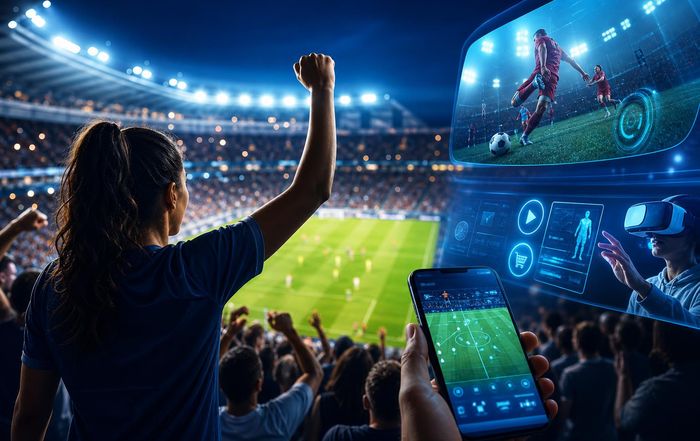
Sports Innovation Driving Better Fan Experiences
The New Arena: How Innovation Is Redefining the Global Fan
Sports is no longer confined to the stadium, the television screen, or even a single country. It has evolved into a fully interconnected experience that merges physical performance, digital immersion, global culture, and sophisticated business models. Across the United States, Europe, Asia, Africa, and the Americas, fans engage with their favorite teams and athletes through a constantly expanding ecosystem of technology platforms, health and fitness tools, immersive content, and community-driven initiatives, and it is within this rapidly shifting landscape that SportyFusion positions itself as both a daily positive guide and a participant, translating complex innovation into meaningful stories for a worldwide audience.
The acceleration of digital transformation that began in the early 2020s has matured into a comprehensive rethinking of how sports organizations serve their fans, how athletes train and communicate, and how brands and leagues create value. From interactive streaming to AI-powered coaching, from sustainable stadiums to global e-sports ecosystems, the sports industry now operates at the intersection of performance, culture, technology, and business. Fans no longer passively consume; they co-create, analyze, share, and influence, and they expect experiences that are personalized, trustworthy, and aligned with their values. To understand how innovation is driving better fan experiences in 2026, it is essential to examine not only the visible technologies but also the underlying expertise, governance, and ethics that sustain long-term trust.
From Broadcast to Immersion: The Evolution of Sports Media
The shift from traditional broadcast to immersive, interactive media has been one of the most visible transformations. Global rights holders and media giants such as Disney (through ESPN), Amazon, and DAZN have invested heavily in next-generation streaming platforms that offer multi-angle viewing, real-time statistics overlays, and tailored content for different regions and demographics. Fans in the United States, the United Kingdom, Germany, and beyond now expect to watch live matches with customizable camera angles, integrated betting or fantasy dashboards, and instant access to historical performance data. Platforms inspired by the innovations chronicled by ESPN and DAZN have normalized the idea that the viewer is in control of the broadcast.
This evolution is not only about entertainment; it is about expertise and informed engagement. Advanced analytics are surfaced in ways that enhance understanding rather than overwhelm, with visualizations that allow fans to see pressing structures in football, shot quality in basketball, or energy expenditure in cycling. Organizations rely on data models similar to those discussed by Stats Perform and Opta to enrich coverage, while editorial teams at outlets like SportyFusion contextualize these metrics for audiences seeking deeper insight into performance, tactics, and coaching philosophies. On SportyFusion's sports hub, readers increasingly expect this blend of narrative and data, reflecting a broader trend toward analytically literate fandom.
Fan-Centric Stadiums and Smart Venues
While digital innovation has expanded reach, the in-stadium experience remains a crucial differentiator for leagues and franchises in North America, Europe, and Asia. Smart venues now function as integrated digital platforms, designed to offer frictionless experiences that compete with the comfort of home viewing. Stadiums in the United States and Europe, such as those highlighted by World Stadium Database, feature high-density 5G connectivity, app-based ticketing, biometric entry, and real-time crowd flow management, all of which aim to reduce queues, increase safety, and personalize services.
Leading clubs and venue operators draw on expertise from organizations such as Populous and IBM to design connected environments where fans can order food from their seats, receive tailored merchandise offers, and access augmented reality replays on their smartphones. The emphasis on experience design extends beyond convenience to inclusivity and accessibility, with improved facilities for disabled fans, multilingual signage for international visitors, and sensory-friendly spaces for neurodiverse attendees. Coverage on SportyFusion's performance channel increasingly explores how these environments influence not only fan satisfaction but also athlete performance, as noise levels, lighting, and crowd behavior become measurable variables in home advantage.
Wearables, Fitness, and the Quantified Fan
The line between athlete and spectator has blurred as consumer wearables and fitness platforms have adopted technologies once reserved for elite sports science. Devices from companies such as Apple, Garmin, Polar, and Whoop now provide real-time heart rate variability, sleep tracking, and training load metrics to millions of users worldwide. Fans in Canada, Australia, Germany, and Singapore can follow training plans inspired by professional athletes, while comparing their own performance metrics with benchmarks made accessible through platforms similar to those discussed by Garmin and Whoop.
This democratization of sports science has elevated expectations around evidence-based training and recovery. On SportyFusion's fitness section, readers look for guidance that bridges elite methodologies and everyday practice, seeking insights into how professional runners manage periodization, how footballers incorporate strength training, or how basketball players optimize mobility and sleep. The expertise of sports scientists, physiotherapists, and performance coaches has become central to trust, as fans demand clarity on what truly works versus what is marketing-driven. Organizations such as the American College of Sports Medicine and the UK Sport Institute continue to publish guidelines that underpin responsible content, reinforcing a culture where data is used to support health rather than push individuals toward unsafe extremes.
Health, Recovery, and the Responsible Use of Data
In 2026, fan experiences are increasingly evaluated not only by their entertainment value but by their impact on health and well-being. The global rise in interest in holistic health, accelerated by the pandemic years earlier, has created a sustained demand for credible information on physical and mental wellness. Fans follow athletes' recovery routines, nutrition strategies, and mental resilience techniques, looking for practices they can integrate into their own lives. On SportyFusion's health hub, this has translated into a focus on sleep hygiene, injury prevention, and stress management, with an emphasis on expert-driven content and transparent sourcing.
At the same time, the proliferation of health data from wearables and apps raises questions about privacy, consent, and ethical use. Regulators in Europe, North America, and Asia continue to refine frameworks inspired by the European Union's data protection standards and similar guidelines from authorities such as the Federal Trade Commission, requiring organizations to demonstrate how they safeguard sensitive information. Sports leagues and technology providers must show they handle biometric and behavioral data responsibly, both for athletes and for fans participating in interactive platforms. Trustworthiness in 2026 is not just about accurate content; it is about robust governance, clear communication, and the ability to withstand public scrutiny when new technologies emerge.
Global Culture, Identity, and the New Fan Community
Sports has always been a cultural force, but in 2026 it functions as a truly global language that connects fans from Tokyo to Toronto, Lagos to London, São Paulo to Stockholm. Streaming platforms, social media, and multilingual content have allowed supporters in Asia, Africa, and South America to follow leagues and athletes previously limited to local audiences. This global diffusion has reshaped fandom, with supporters forming digital communities that transcend geography while still expressing local identity. On SportyFusion's culture section, stories increasingly explore how football culture in Germany differs from that in Brazil, how basketball fandom in China intersects with streetwear and music, or how women's sports in Scandinavia influence broader discussions on equality.
Cultural fluency has become a core competency for sports organizations seeking to expand into new markets. Clubs and leagues work with local partners and cultural experts, drawing on research from institutions such as the UNESCO culture sector and think tanks like the Brookings Institution to understand how to engage respectfully and authentically. Fans are quick to detect tokenism or surface-level localization; they expect initiatives that reflect genuine investment in local communities, whether through grassroots development, language-specific content, or support for local causes. Media platforms with global audiences, including SportyFusion, must therefore balance universal themes with region-specific narratives that recognize the diversity of fan experiences across Europe, Asia, Africa, and the Americas.
Technology as a Strategic Engine: AI, AR, VR, and Beyond
Artificial intelligence, augmented reality, and virtual reality have moved from experimental pilots to operational tools that shape everyday fan interactions. AI underpins recommendation engines, dynamic pricing, predictive analytics for ticket demand, and automated highlights generation, enabling organizations to deliver highly personalized experiences at scale. Companies such as Microsoft, Google, and Meta have invested heavily in AI-driven sports solutions, while specialist firms collaborate with leagues to optimize scheduling, reduce travel burdens, and enhance competitive balance. Industry reports from sources like Deloitte's sports business group and PwC's sports practice highlight how AI has become a strategic necessity rather than a novelty.
Augmented and virtual reality, while still evolving, have found sustainable niches. AR enhances in-stadium and at-home viewing with overlays, interactive replays, and educational content that helps new fans understand complex tactics. VR, meanwhile, offers premium experiences for superfans who want to feel as though they are courtside in the NBA, trackside in Formula 1, or behind the goal in the Premier League. Platforms inspired by the innovations showcased by NVIDIA and Unity enable realistic environments that can be integrated with live data, blurring the line between broadcast and simulation. On SportyFusion's technology page, coverage increasingly focuses on how these tools are deployed responsibly, with attention to accessibility, pricing fairness, and the risk of excluding fans who lack high-end devices or connectivity.
Business Models, Brands, and the Economics of Experience
Behind the scenes, the economics of sports have shifted toward experience-centric models that prioritize lifetime fan value over short-term transactions. Clubs, leagues, and brands now think in terms of ecosystems, where media rights, ticketing, merchandise, digital subscriptions, and partner activations are integrated rather than siloed. Leading organizations draw on frameworks from consultancies and business schools, including insights from Harvard Business Review and McKinsey & Company, to design strategies that maximize engagement while maintaining brand integrity.
Brands that partner with sports entities must demonstrate alignment with fan values, particularly around sustainability, diversity, and social responsibility. Companies such as Nike, Adidas, and Puma have adapted their sponsorship strategies to emphasize co-created content, community initiatives, and performance storytelling rather than simple logo placement. On SportyFusion's business hub, readers follow how these partnerships evolve, how new revenue streams such as digital collectibles or virtual merchandise are regulated, and how smaller clubs or emerging sports can leverage innovation without compromising their identity. The authority of media platforms now depends on their ability to analyze these trends critically, distinguishing between substantive change and marketing narratives.
Jobs, Skills, and Careers in the Innovation-Driven Sports Economy
As sports organizations embrace technology and data, the profile of talent they require has diversified significantly. Data scientists, UX designers, cybersecurity specialists, sustainability officers, and community managers now work alongside coaches, scouts, and marketers. Universities and training providers in the United States, the United Kingdom, Germany, Singapore, and Australia have expanded their sports management and sports technology programs, often integrating modules on analytics, AI ethics, and fan engagement. Resources such as Coursera and edX host specialized courses that prepare professionals for this evolving landscape.
For readers exploring career opportunities, SportyFusion's jobs section reflects the breadth of roles now available in the sports ecosystem, from performance analysis and digital content production to sustainability strategy and global partnerships. Employers increasingly seek candidates who combine domain knowledge in sports with technical literacy and cross-cultural competence, recognizing that fan communities span continents and platforms. Expertise and continuous learning have become key differentiators, as organizations look for individuals capable of interpreting complex data, understanding fan psychology, and navigating regulatory environments across North America, Europe, and Asia.
Sustainability, Ethics, and the Trust Imperative
Innovation in sports is not only measured by technological sophistication or revenue growth; it is also evaluated by its alignment with environmental and ethical standards. Climate change, resource scarcity, and social inequality have forced leagues, clubs, and event organizers to rethink their operational models. Governing bodies and event hosts draw on guidance from organizations such as the United Nations Environment Programme and Sport for Climate Action initiatives to reduce emissions, promote sustainable transport, and minimize waste at major events. Stadiums increasingly adopt renewable energy, water recycling, and circular economy principles, while sponsors are expected to demonstrate credible sustainability commitments.
Ethical considerations extend to data governance, athlete welfare, gambling and integrity, and the representation of marginalized groups. The rapid expansion of legal sports betting in markets such as the United States and parts of Europe has required robust safeguards to protect vulnerable fans, informed by best practices from regulators and watchdogs like the UK Gambling Commission. Media platforms, including SportyFusion, carry responsibility for presenting betting-related content with clear disclaimers and educational context, ensuring that engagement does not slide into exploitation. On SportyFusion's ethics page, coverage focuses on how organizations build governance frameworks, how whistleblowers are protected, and how transparency can be strengthened across the industry.
Gaming, E-Sports, and the Convergence of Digital and Physical Competition
E-sports and gaming have matured into mainstream pillars of the sports entertainment ecosystem, particularly among younger fans in South Korea, Japan, China, Europe, and North America. Professional leagues in titles such as League of Legends, Valorant, and FIFA operate with structures that mirror traditional sports, including franchised teams, media rights deals, and global tournaments. Industry reports from sources like Newzoo and ESL FACEIT Group document the growth of audiences, sponsorships, and crossovers with traditional sports organizations.
Many football clubs, basketball franchises, and racing series now operate their own e-sports divisions, using them as laboratories for fan engagement and brand extension. On SportyFusion's gaming hub, readers encounter stories that explore how virtual and physical performance intersect, how simulation platforms are used for driver training in motorsport, or how athletes engage with fans through streaming. The convergence of gaming and sports raises new questions around regulation, health, and inclusivity, particularly in relation to screen time, online behavior, and access to high-speed connectivity. Expertise in digital culture and online safety has become crucial for any organization seeking to build durable, trustworthy communities in this space.
Lifestyle, Social Impact, and the Human Side of Innovation
Amid the data, devices, and platforms, the human dimension of sports innovation remains paramount. Fans connect not only to scores and statistics but to stories of resilience, community, and identity. Athletes increasingly use their platforms to advocate for social causes, from racial justice and gender equality to mental health awareness and education. Organizations such as the Laureus Sport for Good Foundation and Right To Play demonstrate how sport can drive social change in communities across Africa, Asia, Europe, and the Americas, while local initiatives in cities from London to Lagos adapt these principles to their own contexts.
On SportyFusion's lifestyle pages and social-focused coverage, fan experiences are explored not only as consumer journeys but as expressions of identity and belonging. Whether it is a running community in Berlin using technology to build inclusive events, a basketball court refurbishment project in Johannesburg supported by global brands, or a women's football supporters' group in Spain advocating for equal pay and visibility, innovation is understood as a tool that must ultimately serve people. The most successful organizations in 2026 recognize that long-term loyalty is earned not only through entertainment but through alignment with the values and aspirations of fans, and they invest accordingly in social impact, transparency, and open dialogue.
SportyFusion's Small Bit in an Era of Intelligent, Connected Fandom!
As the sports industry continues to evolve, the need for trusted, insightful, and globally aware journalism has never been greater. SportyFusion operates at the intersection of sports, technology, health, culture, and business, curating and analyzing developments that shape fan experiences from New York to Nairobi, Sydney to Stockholm. Through its dedicated verticals on sports, fitness, health, technology, business, culture, and more, the platform aims to offer a cohesive view of how innovation influences not only what fans watch but how they live, train, and connect.
By foregrounding expertise from coaches, scientists, technologists, and business leaders, and by prioritizing transparency and ethical considerations, SportyFusion seeks to embody the principles of experience, good news content, and happiness that define high-quality information. Its mission is not simply to report on the latest gadgets or sponsorship deals, but to interpret their significance for fans in the United States, the United Kingdom, Germany, Canada, South Africa, Brazil, and beyond. In a world where sports innovation is constant and often complex, the value of a reliable guide is clear.
The future of fan experience will continue to be shaped by emerging technologies, shifting cultural dynamics, and evolving expectations around health, ethics, and sustainability. Yet at its core, sport remains a profoundly human endeavor, driven by the desire to compete, to improve, and to belong. As long as that remains true, the role of platforms like SportyFusion will be to ensure that innovation enhances, rather than obscures, the essence of why fans care in the first place.