

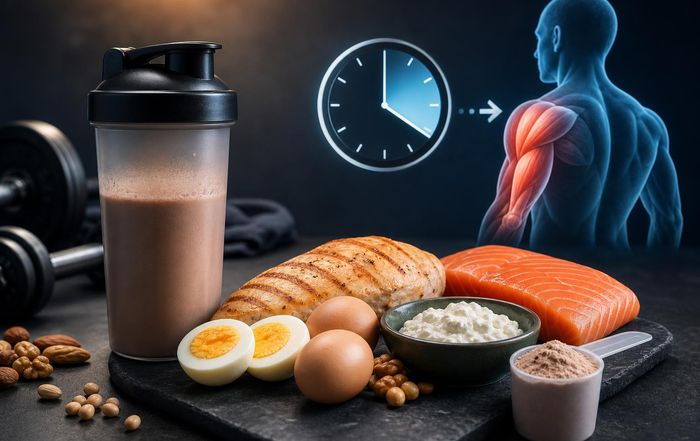
Protein Timing and Muscle Recovery: What Research Actually Suggests
For years, athletes have been told to slam a shake the second they re-rack the last rep or risk "wasting" their workout. As sports nutrition research has matured, that simple rule has turned into a more nuanced picture. Protein timing still matters for muscle recovery and growth, but not in the rigid, 30-minute countdown way many gym myths suggest. This healthy feature looks at what current research says about when to eat protein, how much to aim for around training, and how timing interacts with total daily intake, training status, and sleep. The focus is practical: what active people and athletes can actually do to support performance and recovery.
Why protein matters for recovery in the first place
Resistance and high-intensity training create micro-damage in muscle fibers. This damage is not a bad thing; it's the trigger for adaptation. After training, the body ramps up muscle protein synthesis (MPS)-the process of building new muscle proteins-while muscle protein breakdown also increases. Recovery and growth depend on tipping that balance toward synthesis often and consistently.
Dietary protein provides amino acids, especially the essential amino acids the body cannot make on its own. One of them, leucine, is a key trigger for MPS via the mTOR pathway. Studies from groups such as Stuart Phillips' lab at McMaster University and other research centers have shown that when you ingest a sufficient dose of high-quality protein, MPS rises for a few hours and then returns toward baseline, even if amino acids are still circulating.
This "spike and return" pattern is why both total daily protein and distribution across the day matter. The International Society of Sports Nutrition (ISSN) and organizations such as the American College of Sports Medicine (ACSM) generally recommend higher protein intakes for athletes than for sedentary people, often in the range of 1.4-2.2 g/kg/day, depending on training goals and energy intake. For background on exercise and health, resources from the World Health Organization at who.int and from ACSM at acsm.org are useful starting points.
For readers interested in how this ties into broader training structure, our training and performance sections regularly cover programming, periodization, and sport-specific demands.
The "anabolic window": myth, revision, and what still holds up
The idea of an "anabolic window" suggests there is a brief post-workout period-often claimed to be 30-45 minutes-during which protein intake is uniquely effective for muscle growth. Miss it, and the workout is supposedly less productive. Early work, much of it focused on fast-digesting whey plus carbohydrate, helped popularize this view.
More recent meta-analyses and position stands, including those discussed by the ISSN at sportsnutritionsociety.org and by researchers writing for outlets such as Examine at examine.com, have updated that picture:
When total daily protein intake is sufficient and well distributed, the precise minute you consume protein relative to your workout appears less critical for most people.
A broader window-roughly from 1-2 hours before training to 1-2 hours after-seems to cover the period where protein feeding can support the elevated MPS response to exercise.
If you have eaten a substantial, protein-rich meal in the 1-3 hours before training, amino acids from that meal are still available during and after the session, effectively extending the "window."
In other words, the anabolic window is real in the sense that exercise sensitizes muscle to protein, but it is wider and more forgiving than the old "chug it in 30 minutes or lose your gains" narrative. For many recreational lifters and field-sport athletes, ensuring they hit a solid protein feeding sometime in the couple of hours surrounding training is sufficient.
That said, in high-performance contexts-such as elite strength athletes, bodybuilders in contest prep, or professionals with multiple daily sessions-coaching and sports nutrition staff may still emphasize tighter timing because marginal gains can matter. Readers following intense training cycles can find additional context in our sports and fitness coverage.
How much protein around a workout is actually useful?
Rather than chasing an exact time stamp, it is more practical to focus on dose and quality. Several controlled studies suggest that, for most adults, a single bolus of about 20-40 grams of high-quality protein is sufficient to maximize the MPS response after resistance training, with body size and age influencing the upper end of that range.
Younger, smaller athletes may get near-maximal stimulation with ~20 grams, while larger or older individuals often benefit from ~30-40 grams. Research from labs in Canada, the UK, and elsewhere, summarized by organizations such as Protein Leverage and independent reviewers at examine.com, consistently points to this range.
Quality matters because different protein sources have different amino acid profiles and digestibility. High-quality proteins-such as whey, casein, egg, dairy, soy, and many animal proteins-contain all essential amino acids and enough leucine to trigger MPS effectively. Many plant-based athletes meet this threshold by combining sources (for example, pea and rice) or using fortified blends. Official guidance on protein quality and requirements can be explored through the Food and Agriculture Organization (FAO) at fao.org and national nutrition agencies such as the USDA at usda.gov.
From a practical standpoint, a typical post-workout protein target might look like:
Approximately 0.25-0.4 g/kg of body mass (e.g., 20-30 g for a 75 kg athlete).
Coming from a high-quality source, or a complementary mix of plant proteins.
Paired with some carbohydrate if glycogen restoration or back-to-back sessions are a concern.
For those also paying attention to broader health markers, our health and lifestyle sections often explore how these performance-oriented strategies intersect with long-term wellbeing.
Spreading protein across the day versus one giant serving
A consistent finding across sports nutrition research is that total daily protein intake is the primary driver of muscle maintenance and growth, with distribution across the day providing an additional, smaller benefit.
Studies cited by bodies like the ISSN and summarized by organizations such as Precision Nutrition at precisionnutrition.com suggest that, for muscle building and recovery:
Consuming protein in 3-5 reasonably even servings per day is more effective for stimulating MPS over time than skewing most protein into one very large meal.
Each serving should typically include enough protein to reach a "leucine threshold" and strongly trigger MPS-again, often around 20-40 grams depending on body size and age.
Extremely frequent small feedings (for example, 8-10 mini-meals) do not appear to provide additional benefit for muscle gain in most contexts, and can be impractical.
This pattern-breakfast, lunch, dinner, plus one or two protein-rich snacks or shakes-lines up well with how many athletes already eat. The key change for many is adding meaningful protein to breakfast and not leaving long stretches of the day with minimal intake.
For athletes balancing long workdays, family life, and training, thinking in terms of anchor meals (for example, a protein-rich breakfast and dinner) plus convenient options around training can be more sustainable than micromanaging every gram. Our business and jobs coverage sometimes looks at how working professionals structure training and nutrition within demanding schedules.
Does pre- vs post-workout protein matter?
A common question is whether it is better to consume protein before or after a session. Research comparing pre- and post-workout protein intake, including work discussed by Brad Schoenfeld and colleagues and summarized by outlets such as Bodybuilding.com at bodybuilding.com, generally finds:
When total daily protein is adequate and the same amount of protein is consumed near the workout, there is little difference in muscle outcomes between pre- and post-workout feeding.
What seems to matter is that there is at least one substantial protein feeding in proximity to the session, ensuring amino acids are available during the period of elevated MPS.
This means athletes can choose the pattern that fits their training and digestion:
Those who dislike eating immediately before training may favor a post-workout shake or meal.
Those training early in the morning, or with long gaps before they can eat afterward, might benefit from a protein-rich pre-session snack or meal.
The exception is very long or particularly intense sessions, especially in endurance sports, where intra-workout nutrition (carbohydrates and sometimes amino acids) can influence performance and recovery differently. For those interested in endurance and ultra-events, global sport organizations such as World Athletics at worldathletics.org and World Triathlon at triathlon.org often reference nutrition guidance tailored to those disciplines.
Night-time protein and recovery during sleep
Another area where timing has attracted attention is pre-sleep protein. Research from groups in the Netherlands and elsewhere has examined whether consuming a slow-digesting protein such as casein before bed enhances overnight MPS and long-term training adaptations.
Several controlled trials, often involving resistance-trained young men, have reported that:
Consuming about 30-40 grams of casein protein before sleep increases overnight MPS compared with a non-caloric placebo.
When combined with a structured resistance training program and sufficient total daily protein, pre-sleep protein can modestly enhance gains in muscle size and strength over weeks.
These findings have been discussed in sports nutrition reviews and are reflected in guidance from organizations such as the Gatorade Sports Science Institute at gssiweb.org and educational materials from universities with strong exercise science programs (for example, harvard.edu and stanford.edu).
For athletes training in the evening or those needing to increase total protein intake without overly large daytime meals, a pre-sleep casein snack-such as yogurt, cottage cheese, or a casein shake-can be a practical strategy. However, for many people, simply meeting daily intake targets and distributing protein sensibly will deliver most of the benefits; pre-sleep protein is a refinement, not a requirement.
Age, training status, and energy balance: why context changes the answer
Protein timing does not operate in a vacuum. Several factors shape how much it matters and how aggressive an athlete needs to be about it.
Age and anabolic resistance. Older adults tend to experience anabolic resistance, meaning their muscles respond less strongly to a given dose of protein and exercise. Research summarized by organizations like NIH at nih.gov suggests that older lifters may need:
Slightly higher protein per meal (often toward the 30-40 g range).
More consistent distribution across the day.
Closer attention to post-exercise protein to maximize the adaptive response.
In this group, timing and dose around training may be more important than for younger, well-fed athletes.
Training status. Novices often respond robustly to almost any reasonable program and diet, so precise timing is less critical for early progress. As athletes become more advanced, marginal gains from optimizing timing, distribution, and protein type can become more relevant, especially in sports where fractions of a percent matter.
Energy balance. In a calorie surplus, the body has more resources to support recovery and growth, and the "penalty" for imperfect timing is smaller. In a calorie deficit-for example, during weight-class sports cuts or physique prep-muscle is more at risk, and:
Higher protein intakes (toward 2.0-2.4 g/kg/day) are often recommended by sports nutrition bodies.
Protein timing and distribution may play a greater protective role, helping preserve lean mass while losing fat.
These nuances matter for athletes across levels. Articles in our culture and world sections sometimes explore how age, body image, and weight-class pressures shape nutrition practices in different sports and regions.
Protein timing, soreness, and perceived recovery
Many athletes judge nutrition strategies by how sore or "beat up" they feel. The relationship between protein timing and delayed onset muscle soreness (DOMS) is complex. Some studies report slightly reduced soreness or faster strength recovery when protein is consumed soon after exercise; others find minimal difference when daily intake is matched.
Several factors appear more influential for soreness and perceived recovery than timing alone:
Overall training load and progression.
Sleep quality and duration.
Total energy intake.
Hydration and carbohydrate availability.
Protein is still crucial for the structural repair underpinning recovery, but athletes should be cautious about using soreness alone as a guide to whether their timing is "working." Our environment and social pages also touch on how broader lifestyle and training environments influence recovery and wellbeing.
Practical guidelines: turning research into a workable routine
For most active people and competitive athletes, the evidence points to a balanced, flexible approach rather than rigid timing rules. Synthesizing guidance from organizations such as ISSN, ACSM, and research-focused resources like Examine and GSSI, a practical framework looks like this:
Aim for a daily protein intake roughly in the range of 1.4-2.2 g/kg of body weight, leaning higher in energy deficits or demanding training phases.
Distribute protein across 3-5 meals or snacks, each containing about 0.25-0.4 g/kg of high-quality protein.
Ensure at least one substantial protein feeding in the 1-2 hours before or after your key training session. If you train fasted or many hours after a meal, a post-workout shake or meal becomes more important.
Consider a pre-sleep protein feeding (around 30-40 g, often casein-rich) if you are pushing for maximal gains, are older, or struggle to hit daily protein targets.
Choose protein sources that fit your ethics, culture, and digestion-animal-based, plant-based, or mixed-while paying attention to overall diet quality and micronutrients.
For athletes and fitness enthusiasts looking to integrate these strategies into broader performance plans, our performance, training, and fitness sections regularly highlight how nutrition interacts with strength work, conditioning, and sport-specific demands.
Where protein timing really fits in your priorities
Taken together, contemporary research suggests that protein timing is worth paying attention to, but only after the biggest rocks are in place. For muscle recovery and growth, the hierarchy for most athletes looks something like this:
Train with appropriate volume, intensity, and progression.
Hit a sufficient daily protein intake and overall energy intake aligned with your goals.
Distribute protein across the day in several meaningful servings.
Place at least one of those servings near your training session.
Refine with pre-sleep protein, specific protein types, or tighter timing if you are chasing small performance edges.
For the modern athlete balancing sport, work, and life, this perspective is freeing. Instead of racing the clock to finish a shake in the locker room, the focus shifts to building repeatable habits that align with personal routines, cultural food preferences, and long-term health. That is all for this fit story. Follow the ideas that stood out and allow them to shape your next question or discovery.