

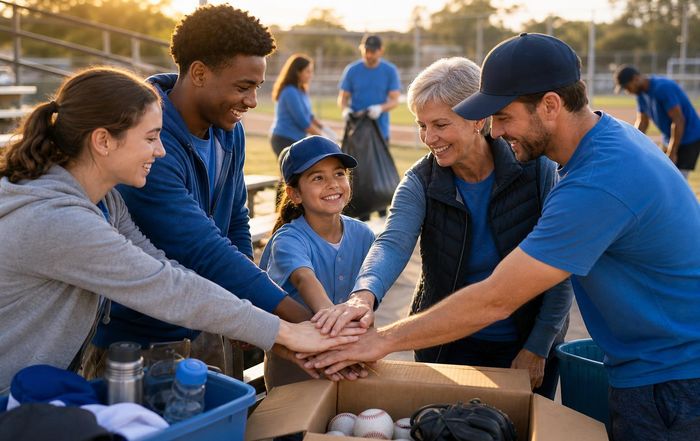
How Sports Volunteering Builds Community Connections
SportyFusion's View: Why Volunteering Matters More Than Ever
As communities across North America, Europe, Asia and beyond continue to recalibrate after years of social and economic disruption, sports volunteering has emerged as one of the most powerful and practical ways to rebuild connection, trust and shared purpose. From grassroots football pitches in the United Kingdom to youth basketball courts in the United States and community running clubs in Germany and Japan, unpaid contributors are quietly sustaining the very infrastructure that keeps sport accessible, inclusive and socially meaningful. For SportyFusion and its global audience, this is not an abstract trend but a lived reality that intersects with interests in sports, fitness, health, culture, business and technology, as well as with the evolving expectations of fans, athletes and citizens who increasingly demand that sport serve a broader societal role.
International bodies such as the International Olympic Committee highlight community engagement and legacy as central pillars of major events, and volunteering is at the core of those ambitions, from the Olympic Games to local marathons. Readers and newsletters subscribers who follow top developments on platforms like the United Nations Department of Economic and Social Affairs will recognize that sports volunteering now sits at the intersection of social cohesion, health promotion and sustainable development, making it an essential lens for understanding how modern societies can strengthen their social fabric while addressing economic and demographic pressures.
The Social Architecture of Sports Volunteering
Sports volunteering is often described in terms of hours donated, events supported or money saved, but its real value lies in the invisible social architecture it creates within and between communities. When a parent in Canada agrees to coach a youth hockey team, or when a retiree in Spain becomes a marshal at a local cycling race, they are not only enabling physical activity but also building networks of mutual recognition and support that extend far beyond the field of play. Research summarized by Sport England shows how regular participation in community sport, supported by volunteers, is associated with increased social trust and reduced feelings of isolation, reinforcing the idea that volunteering is a catalyst for social capital rather than a mere logistical necessity; readers can explore this perspective further through resources available from Sport England.
In multicultural cities from London and Berlin to Singapore and Sydney, sports volunteering also creates neutral spaces where individuals from different cultural, linguistic and socioeconomic backgrounds can collaborate around a shared objective. This is particularly important in countries such as the United Kingdom, Germany and Canada, where policymakers and local authorities are searching for practical mechanisms to foster integration and belonging. The OECD has repeatedly emphasized the importance of social cohesion and civic engagement for resilient democracies, and sports volunteering offers one of the most accessible pathways for ordinary citizens to participate in that project; those interested in the policy backdrop can learn more about social cohesion and civic engagement from the OECD's social policy resources.
Health, Wellbeing and the Volunteer-Athlete Ecosystem
The health benefits of sports participation are widely documented, but the health benefits of sports volunteering are only now receiving comparable attention. Volunteers who coach, officiate or organize events often increase their own physical activity levels, expand their social circles and gain a sense of purpose that contributes to mental wellbeing. The World Health Organization has underscored the importance of physical activity in combating noncommunicable diseases and improving mental health, and it acknowledges the role that community sport programmes play in making activity accessible to all; readers can explore WHO guidance on physical activity and community health to understand how volunteering underpins these initiatives.
For SportyFusion's audience, which is deeply engaged with performance, fitness and lifestyle, the volunteer-athlete ecosystem is particularly relevant. Coaches, strength and conditioning volunteers and community trainers often operate at the interface between amateur sport and personal health improvement, translating high-performance knowledge into practical routines for everyday participants. On platforms such as SportyFusion's training section, the stories of these individuals demonstrate how expertise developed in elite environments is diffused into local clubs and community centres, ensuring that best practices in injury prevention, nutrition and periodization are not confined to professional athletes but benefit weekend runners in France, student footballers in Italy and master swimmers in Japan.
Mental health is another area where sports volunteering exerts a powerful influence. When volunteers create inclusive and supportive environments, they help reduce stigma and encourage open conversations about stress, anxiety and burnout, especially among young people. Organizations like Mind in the UK and similar mental health charities worldwide have partnered with sports clubs to integrate mental health awareness into coaching and competition, reflecting a broader shift towards holistic athlete care. Those interested in the clinical and public health dimensions can review WHO resources on mental health and community support, which increasingly reference the role of community-based activities, including sport, in prevention and recovery.
Cultural Bridges: Diversity, Inclusion and Shared Identity
In 2026, sport is one of the few cultural arenas that still consistently brings people together across political, ethnic and generational divides, and volunteers are the custodians of this bridging function at the grassroots level. When a local football club in the Netherlands recruits volunteer coaches from migrant communities, or when a running event in South Africa trains volunteers to support participants with disabilities, they are not simply improving operational capacity; they are reconfiguring who feels entitled to belong within the sporting space. This is particularly evident in programmes supported by organizations such as UNESCO, which promotes sport as a vehicle for intercultural dialogue and peacebuilding; interested readers can learn more about sport for development and peace through UNESCO's dedicated sport initiatives.
For SportyFusion, whose readership spans cultures and continents, these stories of cultural bridge-building resonate strongly with ongoing conversations about representation, equity and identity in sport. Coverage in the culture section of SportyFusion frequently highlights how volunteers help reframe traditional narratives, for example by supporting women's football in countries where female participation has historically been marginalized, or by organizing inclusive esports tournaments in South Korea and Brazil that welcome participants from diverse backgrounds. In each case, volunteers act as both cultural translators and practical enablers, ensuring that the values of inclusion and respect are not merely stated in policy documents but enacted in everyday practice.
The role of volunteers in disability sport and adaptive programmes is particularly critical. Organizations such as ParalympicsGB, U.S. Paralympics and their counterparts in Australia, Japan and Brazil rely on volunteers for classification, event management and athlete support, enabling individuals with disabilities to access competitive and recreational opportunities that might otherwise be unavailable. The International Paralympic Committee provides extensive resources and guidance on inclusive sport, and those interested can explore the IPC's work on para sport development to see how volunteers underpin both elite and grassroots initiatives.
Economic Value and Business Relevance of Sports Volunteering
While the social and cultural benefits of sports volunteering are profound, the economic dimension is equally significant and increasingly recognized by policymakers and businesses. In many countries, from the United States and United Kingdom to Australia and Sweden, the financial value of volunteer hours in sport runs into billions of dollars or euros annually, effectively subsidizing public health, youth development and community cohesion. Organizations like Deloitte and PwC have produced impact assessments showing how major sporting events, from marathons to world championships, depend on volunteer labour to remain financially viable, while also generating tourism, hospitality and retail activity that benefits local economies; readers can explore Deloitte's insights on the sports business landscape to understand how volunteering fits into the broader value chain.
For corporate leaders and entrepreneurs who follow SportyFusion's business coverage, sports volunteering is increasingly seen as a strategic domain for corporate social responsibility, talent development and brand positioning. Companies in sectors ranging from technology and financial services to consumer goods now encourage employees to volunteer at sporting events as part of structured programmes that aim to build teamwork, leadership and cross-cultural competence. At the same time, brands seeking authenticity in their engagement with fans recognize that supporting volunteer-led initiatives-rather than only high-profile sponsorships-can strengthen trust and loyalty among consumers who value community impact. The Harvard Business Review has examined how purpose-driven initiatives influence employee engagement and corporate reputation, and those interested can learn more about purpose and performance in business through its analyses.
From a labour market perspective, sports volunteering also functions as an informal training ground for future professionals in coaching, event management, sports medicine and digital media. Young people in countries such as Canada, Singapore and New Zealand often gain their first leadership experiences by managing small teams, coordinating schedules or handling communications for local clubs. As the sports industry professionalizes globally, with growing demand for expertise in areas such as data analytics, fan engagement and sustainability, these volunteer experiences become valuable entries on résumés, aligning closely with opportunities highlighted in SportyFusion's jobs section. Platforms like LinkedIn and Indeed increasingly recognize structured volunteering as a legitimate component of professional profiles, reinforcing the message that community contribution and career development can be mutually reinforcing rather than competing priorities.
Technology, Innovation and the Digital Volunteer
The technological transformation of sport, from wearable devices and performance analytics to streaming platforms and fan engagement apps, has reshaped the nature of sports volunteering as well. In 2026, volunteers are just as likely to be managing social media channels, analyzing GPS data from community runs or coordinating logistics through cloud-based platforms as they are to be marking lines on a field. This evolution reflects broader trends in digital transformation and remote collaboration, trends that are chronicled in SportyFusion's technology coverage and that mirror developments in other industries documented by organizations such as McKinsey & Company; readers can explore McKinsey's perspectives on digital transformation to understand parallels between sport and the wider economy.
Digital tools have also expanded access to volunteering for individuals who might previously have been excluded due to geography, disability or caregiving responsibilities. A volunteer in rural Finland can now assist with the digital marketing of a national sports federation, while a data-savvy fan in India can contribute to performance analysis projects for clubs in Europe or North America. Platforms such as GitHub and open-source analytics communities have demonstrated how distributed collaboration can generate high-quality outputs, and similar models are emerging in sport, where volunteers contribute code, visualizations and research to support coaching and fan engagement. Those interested in the intersection of technology, data and sport can learn more about sports analytics and innovation through resources associated with institutions like MIT, which hosts influential conferences and research initiatives in this field.
At the same time, the rise of esports and gaming has created new forms of sports volunteering, from community tournament organizers and shoutcasters to moderators of online leagues. These roles, often highlighted in SportyFusion's gaming section, require a blend of technical proficiency, community management skills and ethical sensitivity, particularly when dealing with issues such as online harassment, inclusivity and fair play. Organizations like ESL Gaming and national esports federations are beginning to formalize volunteer pathways, recognizing that the long-term credibility and sustainability of competitive gaming depend on robust community governance as much as on commercial investment.
Ethics, Governance and Trust in Volunteer-Led Sport
As the scale and complexity of sports volunteering grow, so too does the need for robust ethical frameworks, governance structures and safeguards that protect both participants and volunteers. Scandals involving abuse, discrimination or financial mismanagement in sports organizations have underscored the importance of clear codes of conduct, transparent oversight and accessible reporting mechanisms. Volunteers often occupy frontline positions where they can either perpetuate harmful practices or act as early warning systems and advocates for change, making their ethical training and support a matter of strategic importance for the sector. Resources from organizations such as UK Sport and SafeSport in the United States provide guidance on safeguarding and governance, and those seeking to deepen their understanding can review SafeSport's approach to athlete protection as an example of evolving best practice.
For SportyFusion, which covers the ethical dimensions of sport in its dedicated ethics section, the role of volunteers in upholding integrity is a recurring theme. Whether addressing match-fixing risks in lower-tier competitions, ensuring equitable access to facilities in under-resourced communities or challenging discriminatory behaviour on the sidelines, volunteers are increasingly recognized as co-stewards of sport's moral compact with society. Their proximity to participants, parents and local stakeholders positions them to influence norms and expectations in ways that top-down regulations alone cannot achieve.
Trust is also central to the relationship between volunteers and the organizations they serve. Transparent recruitment processes, clear role descriptions, recognition of contributions and opportunities for feedback all contribute to a culture in which volunteers feel valued and empowered rather than exploited. Guidance from bodies such as Volunteer Canada and the National Council for Voluntary Organisations in the UK emphasizes the importance of mutual respect and shared responsibility, and those interested can learn more about effective volunteer management practices through sources that synthesize global experience across sectors, including sport.
Sustainability, Environment and the Future of Volunteer-Led Events
Environmental sustainability has become a defining issue for sports organizations and events worldwide, from local road races to global championships. Volunteers play a pivotal role in implementing and normalizing sustainable practices on the ground, whether by managing waste and recycling stations, supporting active travel initiatives, or helping to monitor and reduce the environmental footprint of facilities and events. The International Olympic Committee and FIFA have both integrated sustainability into their strategic frameworks, recognizing that the legitimacy of major events increasingly depends on their environmental responsibility; readers can explore the IOC's sustainability strategy to understand how volunteer engagement is woven into these efforts.
For communities and readers focused on climate and environmental issues, SportyFusion's environment coverage often highlights how volunteer-driven initiatives, such as community clean-up runs, low-carbon local tournaments and educational campaigns, demonstrate that sport can be a laboratory for sustainable practices rather than a source of unchecked consumption. Collaborations with organizations like WWF and The Climate Coalition illustrate how sports clubs and governing bodies in countries such as Norway, Denmark and New Zealand are leveraging volunteer enthusiasm to advance broader climate goals, from energy-efficient facilities to biodiversity protection around sporting venues. Those wishing to learn more about sustainable business practices can consult resources from the UN Environment Programme, which provide a broader context for understanding how sport fits into global sustainability agendas.
Looking ahead, the sustainability of sports volunteering itself will depend on the sector's ability to adapt to demographic shifts, changing work patterns and evolving expectations of civic engagement. Younger generations in Europe, North America, Asia and Africa often seek flexible, project-based opportunities that align with their values and allow them to develop skills relevant to their careers, while older volunteers may face health or caregiving constraints that limit traditional long-term commitments. Organizations that succeed in this environment are those that invest in digital infrastructure, inclusive governance and meaningful recognition, ensuring that volunteering remains both accessible and rewarding. The experiences shared across SportyFusion's lifestyle section illustrate how individuals are weaving volunteering into complex lives, treating it not as an optional extra but as a core component of a balanced, purpose-driven lifestyle.
Daily Updated Content in Amplifying Volunteer Stories and Impact
As a premium sports website dedicated to the intersections of sport, fitness, health, culture, technology and business, SportyFusion occupies a unique position in the global conversation about sports volunteering. By curating stories from communities in the United States, United Kingdom, Germany, Canada, Australia, South Africa, Brazil, Japan and beyond, it brings visibility to the individuals and networks that sustain sport's social, cultural and economic contributions. Through dedicated sections on world sport and global perspectives and breaking news and analysis, SportyFusion can track how policy changes, technological innovations and cultural shifts are reshaping the volunteer landscape, while also highlighting best practices that can be replicated across contexts.
The need for trustworthy, expert-driven independent and impartial coverage of these issues is more acute than ever. Misinformation, polarization and economic uncertainty have eroded confidence in many institutions, yet sports volunteering continues to demonstrate that local, relationship-based initiatives can still generate tangible benefits and restore a sense of shared purpose. By foregrounding the experience and expertise of volunteers, coaches, administrators and community leaders, and by connecting their stories to broader evidence and analysis from reputable organizations such as the World Health Organization, OECD, UNESCO and leading research institutions, SportyFusion contributes to a richer, more nuanced understanding of how sport can help societies navigate complexity and change.
Ultimately, sports volunteering builds community connections not only by enabling games to be played and events to be staged, but by cultivating habits of cooperation, empathy and responsibility that extend into workplaces, schools, neighbourhoods and digital spaces. For fans and followers of SportyFusion across continents-from the stadiums of North America and Europe to the community fields of Africa, Asia and South America-the invitation is clear: participation in sport as a volunteer is not merely an act of generosity but an investment in the health, resilience and integrity of the communities to which they belong.