

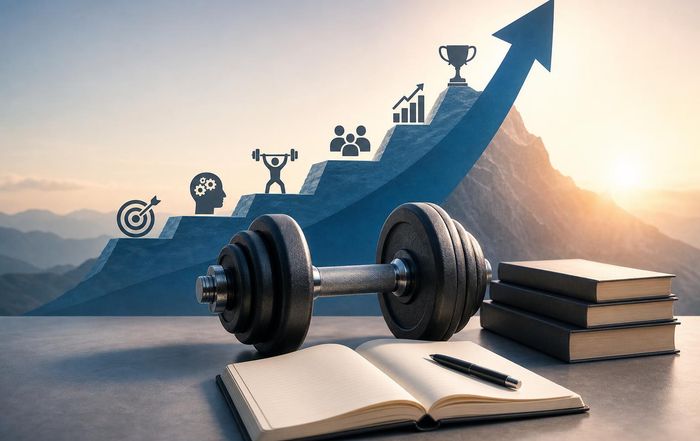
Business Lessons From High-Performance Training
High-Performance Thinking in a High-Pressure World
The language of elite sport has become the default vocabulary of global business, from New York and London to Singapore, Sydney and São Paulo, and the executives, founders and investors who follow SportyFusion increasingly recognise that the gap between high-performance training and high-performance management is no longer conceptual but operational, measurable and strategically decisive. As organisations confront volatile markets, rapid technological disruption and shifting cultural expectations across the United States, Europe, Asia and beyond, they are discovering that the frameworks used by Olympic coaches, performance directors and sports scientists provide a rigorous, evidence-based blueprint for building resilient, adaptive and sustainable businesses that can compete at world-class level.
For a daily updated premium platform like SportyFusion, which sits at the intersection of sports and performance, fitness and health and the evolving realities of global business, this convergence is not a metaphorical comparison but a practical lens through which leaders can reframe strategy, culture, talent and innovation. The same principles that underpin the training environments of FC Barcelona, New Zealand Rugby, Team GB or USA Track & Field are now informing boardroom decisions in Microsoft, Adidas, Nike, BMW and emerging technology scale-ups from Berlin to Bangalore, and the lessons are becoming clearer with every competitive season and every financial quarter.
From Training Cycles to Strategic Cycles
Elite athletes do not prepare for major championships with vague intentions; they follow periodised training plans that break the year into macro, meso and micro cycles, each with a specific objective, measurable milestones and defined recovery phases. This structured approach, codified in sports science research and widely used in Olympic programmes across Europe, Asia and North America, offers a powerful analogy for corporate planning in a world where annual budgets and static five-year strategies are increasingly obsolete. Leaders seeking to understand how to design adaptive strategic cycles can explore detailed frameworks through resources such as the Harvard Business Review and performance-oriented analysis from the MIT Sloan Management Review.
Translating this into business practice, high-performance training suggests that companies should move away from continuous, undifferentiated effort and instead embrace clearly defined performance blocks that alternate between phases of intense execution, targeted capability building and deliberate consolidation. In the same way that endurance athletes will peak for the Tour de France or the Olympic Games rather than trying to maintain race-level intensity all year, high-performing organisations are learning to identify their own "competition windows" - product launches, regulatory deadlines, seasonal peaks or funding cycles - and to structure resources, staffing and decision-making around those critical periods. This mindset is particularly relevant for technology-driven firms in hubs such as Silicon Valley, London, Berlin, Singapore and Seoul, where product roadmaps, regulatory change and capital markets move at a pace that punishes static planning and rewards disciplined adaptability.
The Science of Load Management and Sustainable Performance
In modern sport, the concept of load management has moved from the fringes of coaching to the core of performance strategy, as clubs and national teams across football, basketball and rugby use advanced monitoring to balance training intensity, competition demands and recovery in order to prevent injury and maximise long-term output. Organisations such as the NBA, Premier League and Bundesliga have invested heavily in analytics, sports medicine and wearable technologies to understand how much stress an athlete can absorb before performance declines or injury risk spikes, and their findings are reshaping how businesses think about human capital in high-pressure environments. Those interested in the evolving science behind these practices can explore research summaries and insights via FIFA's medical resources and performance analysis from outlets such as The British Journal of Sports Medicine.
For companies, particularly those operating in knowledge-intensive sectors such as technology, finance, consulting and media, the corporate equivalent of load management involves understanding cognitive and emotional fatigue, not just physical strain. Long hours, endless digital communication and always-on expectations can erode decision quality and creativity in ways that are just as damaging as a hamstring injury for a sprinter. Progressive employers in the United States, Canada, Germany and the Nordic countries are experimenting with structured rest periods, deep-work blocks and flexible scheduling, recognising that sustained high performance requires cycles of recovery. Leaders can deepen their understanding of the health and productivity implications through resources such as the World Health Organization and OECD reports on work, wellbeing and economic output, while SportyFusion continues to translate these top findings into practical guidance in its health and performance coverage.
Data, Feedback and the Culture of Continuous Improvement
High-performance training environments are defined by relentless feedback loops, where every training session, competition and recovery period generates data that is analysed, discussed and translated into micro-adjustments. From GPS tracking in football to power meters in cycling and force plates in strength training, elite athletes and coaches rely on objective metrics to validate intuition and guide decision-making. This data-rich culture, grounded in sports science and biomechanics, has clear parallels with the rise of analytics, AI and real-time dashboards in business, as organisations seek to move beyond intuition-based leadership towards evidence-informed management. Executives interested in the broader implications of data-driven decision-making can explore thought leadership from the World Economic Forum and technical perspectives from Stanford University and other leading research institutions.
In the corporate context, the lesson from high-performance training is not simply to collect more data but to embed structured feedback into the daily rhythm of work, in a way that enhances learning rather than creating surveillance or anxiety. Just as a coach uses video analysis and performance metrics to facilitate constructive dialogue with an athlete, effective leaders use regular check-ins, project retrospectives and transparent KPIs to help teams understand where they stand and how they can improve. This approach is particularly relevant for global teams distributed across time zones from New York to Tokyo, where digital tools can either fragment communication or, if used thoughtfully, create a shared language of performance. On SportyFusion, the exciting intersection of technology and performance is explored through case studies that show how AI, wearables and analytics are reshaping both elite sport and high-stakes business operations.
Coaching, Mentorship and the Modern Performance Ecosystem
One of the most striking features of contemporary high-performance sport is the complexity of the support ecosystem surrounding elite athletes, which now typically includes head coaches, assistant coaches, sports psychologists, nutritionists, strength and conditioning experts, data analysts and medical staff. Organisations such as UK Sport, Australian Institute of Sport and U.S. Olympic & Paralympic Committee have formalised these multidisciplinary structures to ensure that athletes can access specialised expertise while maintaining a coherent performance strategy. Readers seeking to understand how these systems operate at scale can learn more through the International Olympic Committee and national high-performance institutes that share best practices and frameworks.
For businesses, the analogy is clear: high performers rarely succeed in isolation, and the most effective organisations invest not only in individual talent but in the coaching infrastructure that supports career-long development. In a world where hybrid work, automation and demographic shifts are reshaping labour markets from London and Berlin to Shanghai and Johannesburg, structured mentorship and coaching programmes are becoming critical differentiators in attracting and retaining top talent. Companies that draw from the high-performance training model are building layered support systems that combine formal leadership development, peer coaching, external experts and digital learning platforms, ensuring that employees at every level have access to guidance comparable to what elite athletes receive from their performance teams. This perspective aligns with the evolving conversation around meaningful work and career growth that SportyFusion covers in its jobs and lifestyle sections, where the focus is increasingly on sustainable, purpose-driven high performance.
Culture, Identity and the Power of Shared Standards
Elite teams and training groups, whether in football clubs across Europe, rugby squads in the Southern Hemisphere or national Olympic programmes in Asia, invest heavily in building cultures that align individual ambition with collective standards. Organisations such as All Blacks, Bayern Munich and Team USA are often cited not only for their on-field success but for the clarity of their values, rituals and expectations, which guide behaviour even when external conditions are volatile. Cultural architects in sport draw on insights from psychology, anthropology and leadership research, much of which is documented in resources available through institutions such as INSEAD and London Business School, where case studies of high-performing teams are used to teach future executives.
For businesses, especially those operating across multiple regions from North America and Europe to Asia-Pacific and Africa, the lesson is that culture cannot be reduced to slogans or off-site workshops; it must be lived in the daily "training environment" of meetings, performance reviews, hiring decisions and informal interactions. In the same way that an elite training centre in Colorado Springs or St. Moritz is designed to make the desired behaviours the easiest behaviours, high-performing companies are creating systems, spaces and digital tools that reinforce shared standards. This includes aligning incentives with long-term performance, ensuring psychological safety for candid feedback and embedding ethical considerations into product and strategy decisions. On SportyFusion, the huge role of culture in high performance is examined not only in sport and fitness but also in culture and social impact, where the platform explores how identity, belonging and values shape outcomes in both arenas.
Resilience, Mental Health and the New Definition of Toughness
The last decade has seen a profound shift in how toughness is defined in elite sport, as high-profile athletes from Simone Biles and Naomi Osaka to leading footballers and rugby players in Europe and South America have spoken openly about mental health, pressure and the need for psychological support. This evolution, supported by sports psychologists and medical professionals, has reframed resilience not as stoic endurance but as the capacity to adapt, seek help and recover from setbacks without sacrificing long-term wellbeing. Those interested in the broader mental health implications can explore guidance from organisations such as Mental Health America and the National Health Service in the United Kingdom, which provide insights relevant to both athletes and professionals.
Businesses, particularly in high-stress sectors such as investment banking, consulting, technology and media in cities like New York, London, Hong Kong and Dubai, are gradually recognising that the old model of heroic overwork is incompatible with sustainable high performance. Drawing lessons from high-performance training, progressive companies are integrating mental health resources, resilience training and psychological skills development into their leadership and talent programmes, treating cognitive and emotional skills as trainable capabilities rather than fixed traits. This shift aligns with SportyFusion's focus on health, ethics and social impact, where the platform highlights how responsible performance cultures can enhance both competitive advantage and human wellbeing.
Technology, Innovation and the Edge of Regulation
The fusion of technology and high-performance training has accelerated dramatically by 2026, as AI-driven analytics, computer vision, virtual reality and biometric sensors reshape how athletes train, recover and compete. Organisations such as Catapult Sports, WHOOP and Hawk-Eye Innovations have become integral to elite programmes in football, tennis, cricket and athletics, while governing bodies from FIFA to World Athletics grapple with how to regulate new technologies without stifling innovation. Those seeking to understand the regulatory and ethical challenges can explore perspectives from the Court of Arbitration for Sport and policy analysis from the European Commission, which increasingly addresses the intersection of technology, sport and competition law.
For businesses, the lesson from high-performance sport is that technology is not a strategy in itself but an amplifier of underlying clarity and discipline. AI tools, automation platforms and advanced analytics can enhance decision-making and execution only when organisations have clearly defined goals, trustworthy data and a culture that values experimentation and learning. Companies across North America, Europe and Asia are looking to the training environments of Formula 1 teams, America's Cup sailing crews and esports organisations as models of how to integrate real-time data, simulation and human expertise into a coherent performance system. SportyFusion, with its coverage spanning technology, gaming and performance, is uniquely positioned to document how these innovations migrate from the track, pitch and virtual arena into the boardroom and factory floor.
Sustainability, Environment and the Long Game of Performance
High-performance training has traditionally focused on individual and team outcomes, but in recent years the environmental and social context of sport has come into sharper focus, as climate change, resource constraints and public expectations reshape how global events and organisations operate. From the Olympic Games adapting to heat and weather challenges to football leagues in Europe and Asia adjusting schedules and infrastructure, sustainability has become a performance variable rather than a peripheral concern. Leaders and practitioners can learn more about the intersection of sport, climate and sustainability through initiatives documented by the United Nations Environment Programme and specialised organisations such as Sport and Sustainability International.
For businesses, particularly those with global supply chains stretching from manufacturing hubs in Asia to consumer markets in North America, Europe and Africa, the lesson is that long-term high performance is inseparable from environmental stewardship and social responsibility. In the same way that elite athletes must manage their physiological resources to avoid burnout, companies must manage natural and social resources to maintain their licence to operate and ability to attract talent and customers. SportyFusion reflects this perspective in its environment and brands coverage, where it examines how forward-looking organisations are integrating sustainability metrics into their performance dashboards and strategic planning, treating climate risk, social equity and ethical governance as core components of competitive advantage rather than compliance issues.
Global Talent, Diversity and the High-Performance Mosaic
Elite sport has long been a global marketplace for talent, with footballers moving from South America and Africa to Europe, basketball players circulating between North America, Europe and Asia, and Olympic athletes training in specialised centres far from their home countries. This cross-border flow has created high-performance environments where diverse perspectives, languages and cultural norms must be integrated into a coherent whole, and where success depends on the ability of coaches and leaders to harness difference rather than suppress it. Researchers and practitioners interested in the dynamics of multicultural high-performance teams can find valuable insights through platforms such as McKinsey & Company and Deloitte Insights, which analyse the relationship between diversity and performance across sectors.
In business, especially for companies operating across regions such as the United States, United Kingdom, Germany, China, India, Brazil and South Africa, the analogy is direct: global high performance requires building teams that reflect the markets they serve and the complexity of the problems they tackle. Drawing from high-performance training, leaders are learning to treat diversity as a performance asset that enhances creativity, resilience and decision quality, provided that inclusion is actively cultivated through psychological safety, equitable opportunity and culturally intelligent leadership. SportyFusion, with its world and news reporting, continually highlights how the most successful sports and business organisations in 2026 are those that combine world-class standards with genuinely global perspectives.
Translating High-Performance Training into Everyday Business Practice
The central lesson for readers of SportyFusion is that the principles of high-performance training are not reserved for Olympians or elite professionals; they can be translated into the everyday practices of teams, departments and organisations across industries and geographies. Periodised planning can inform how projects are structured and resourced, load management can guide policies on working hours and digital communication, data-driven feedback can reshape performance reviews, and coaching ecosystems can redefine how leadership and expertise are developed. Those seeking additional frameworks for this translation can explore resources from the Chartered Institute of Personnel and Development and the Society for Human Resource Management, which increasingly incorporate high-performance insights into their guidance.
So now the convergence between sport and business performance is no longer a trend but a structural reality, and new emerging top sports news platforms like SportyFusion play a pivotal role in connecting the dots for a loyal daily audience that spans athletes, executives, entrepreneurs, technologists and policymakers. As the site continues to expand its coverage across sports, business, training and social impact, it offers a uniquely integrated vantage point on how high-performance thinking is reshaping not only how people compete and work, but how they live, collaborate and build the institutions that will define the next decade. In this evolving landscape, the organisations that learn from the discipline, science and humility of high-performance training will be best placed to navigate uncertainty, seize opportunity and deliver results that are both exceptional and enduring.