

Adaptive Sports Programs for Veterans: Performance, Purpose, and the Future of Inclusive Sport
The New Landscape of Veteran Recovery Through Sport
Adaptive sports have moved from the margins of rehabilitation policy into the mainstream of veteran care, reshaping how military communities, health systems and performance-driven brands think about recovery, identity and human potential. Across the United States, the United Kingdom, Germany, Canada, Australia and far beyond, structured adaptive sports programs are no longer treated as recreational add-ons; they are now recognized as strategic pillars within broader ecosystems of veteran health, social integration and workforce reinvention, a shift that aligns closely with the performance and lifestyle focus that defines the editorial vision of SportyFusion and its global sports news audience.
From the pioneering work of the U.S. Department of Veterans Affairs and the U.S. Olympic & Paralympic Committee to the expanding initiatives of Help for Heroes in the United Kingdom and the Invictus Games Foundation worldwide, adaptive sports are proving that elite performance can coexist with disability, trauma and long-term health conditions, and that physical training can be a bridge to renewed purpose rather than a reminder of lost capabilities. As readers who follow the intersection of fitness and performance already understand, the metrics of success now extend far beyond podium finishes, encompassing mental resilience, employability, community leadership and ethical approaches to inclusion that are reshaping sport and business alike.
Defining Adaptive Sports in a High-Performance Era
Adaptive sports, sometimes referred to as para sports or disability sports, are disciplines that have been modified in rules, equipment or format to enable participation by individuals with physical, sensory or cognitive impairments, yet this year the term increasingly signals much more than equipment adaptation; it embodies a performance philosophy that treats every athlete, including veterans with complex injuries, as capable of progression, competition and high-level achievement. Organizations such as World Para Athletics under World Athletics and the International Paralympic Committee have set rigorous standards around classification, competition and safety, and their frameworks now inform many national veteran programs that seek to train participants not only for rehabilitation but for elite events like the Paralympic Games and the Invictus Games.
In North America and Europe, adaptive sports for veterans span a wide range of disciplines including wheelchair basketball, sitting volleyball, indoor rowing, para powerlifting, cycling, alpine and Nordic skiing, snowboarding, archery, wheelchair rugby, swimming and multi-sport events such as paratriathlon, with organizations like Move United in the United States and Canadian Adaptive Snowsports building integrated pathways from entry-level participation to high-performance competition. Learn more about international standards in para sport through the International Paralympic Committee, which has become an influential reference for national veteran agencies and sports ministries across Europe, Asia and the Americas.
How Adaptive Sports Are Integrated into Veteran Health Systems
In the United States, the U.S. Department of Veterans Affairs (VA) has embedded adaptive sports into a continuum of care that spans inpatient rehabilitation, outpatient clinics, community-based programs and national-level events, with the VA Adaptive Sports Program partnering with national governing bodies and community organizations to provide grants, equipment and coaching support; readers can explore the VA's approach to whole-person rehabilitation through the VA adaptive sports overview, which outlines how clinical referrals, mental health services and physical therapy are synchronized with sport-based interventions.
The United Kingdom has followed a similarly integrated model through the National Health Service (NHS) in collaboration with the Ministry of Defence and charities such as Help for Heroes and Blesma, where adaptive sports are embedded into residential recovery centers and community hubs that serve veterans across England, Scotland, Wales and Northern Ireland. In Canada, the Canadian Armed Forces Transition Group and Soldier On have become key actors in linking adaptive sports to broader transition services, while in Australia the Australian Defence Force and Department of Veterans' Affairs have invested in programs that connect sport, mental health support and vocational planning, a model that aligns with the performance and wellbeing coverage at SportyFusion Health.
Across continental Europe, countries such as Germany, France, Italy, Spain, the Netherlands and the Nordic nations increasingly integrate adaptive sports into military medical centers and veteran rehabilitation clinics, often drawing on the expertise of the European Paralympic Committee and national Paralympic committees. Learn more about integrated rehabilitation approaches through the World Health Organization, which provides guidance on rehabilitation in health systems that many defense and veteran agencies now reference when designing sport-based interventions for those injured in service.
Physical Benefits: From Rehabilitation to Peak Performance
For veterans recovering from limb loss, spinal cord injuries, traumatic brain injury (TBI) or chronic musculoskeletal conditions, adaptive sports deliver measurable improvements in strength, cardiovascular capacity, flexibility and functional mobility, often exceeding the outcomes seen in conventional physiotherapy alone, particularly when programs are progressive, goal-oriented and supported by qualified coaches and clinicians. The U.S. Centers for Disease Control and Prevention (CDC) has documented the role of regular physical activity in reducing the risk of cardiovascular disease, diabetes and obesity, and these benefits are especially critical for veterans whose mobility limitations and medication regimes can increase metabolic risk; readers can review the CDC's guidance on physical activity and disability to understand why structured sport is now considered a preventive health strategy rather than a recreational luxury.
Beyond general health, adaptive sports programs for veterans increasingly adopt performance metrics borrowed from elite sport and high-performance training, including power output, lactate thresholds, agility measures and sport-specific skill indices, thereby giving participants concrete benchmarks that support motivation and long-term commitment. This performance orientation is evident in initiatives like the USOPC Paralympic Sport Development Program and national high-performance centers in countries such as Germany, Canada and Japan, where veterans are scouted and developed for national teams, a pathway that resonates strongly with the performance narratives featured at SportyFusion Sports.
For aging veterans and those managing chronic pain or degenerative conditions, low-impact adaptive sports such as rowing, cycling, swimming and yoga-based mobility programs can significantly improve joint health, posture and functional independence, enabling longer participation in the workforce and community activities. Learn more about evidence-based exercise recommendations for older adults and individuals with chronic conditions through the American College of Sports Medicine (ACSM), which provides detailed guidance on exercise prescription that many adaptive sports practitioners use when designing veteran programs.
Mental Health and Cognitive Resilience
The psychological benefits of adaptive sports for veterans are now as well documented as the physical ones, particularly with respect to post-traumatic stress disorder (PTSD), depression, anxiety and moral injury, conditions that have affected service members in the United States, the United Kingdom, Canada, Germany and many other countries engaged in prolonged overseas operations. Participation in structured sport provides a framework of routine, mastery and social support that can counteract isolation and rumination, while the physiological effects of exercise on neurotransmitters and stress hormones contribute to improved mood and sleep patterns; the National Institute of Mental Health (NIMH) outlines the role of physical activity as an adjunctive treatment in its resources on depression and anxiety, which are increasingly referenced by clinicians working with veteran populations.
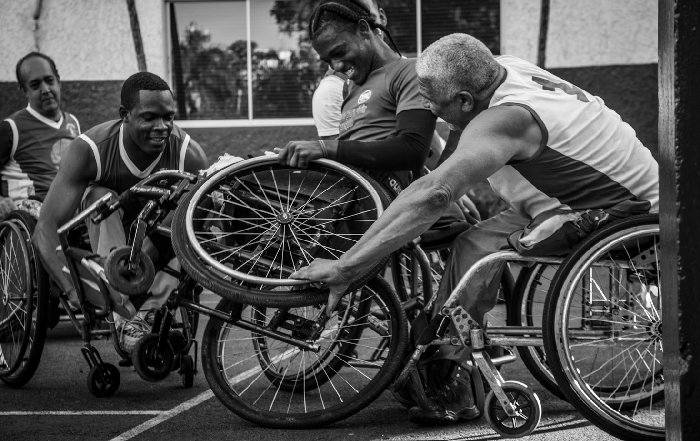
Adaptive sports also demand focus, strategic thinking and rapid decision-making, qualities that can help veterans with mild TBI or cognitive impairments rebuild executive function and attention span in a real-world, engaging context. In sports such as wheelchair basketball, sitting volleyball or para ice hockey, athletes must process complex tactical information while coordinating movement and communication, a combination that can be more cognitively stimulating than traditional cognitive training tasks; research summarized by Harvard Medical School in its coverage of exercise and the brain underscores how such multi-modal challenges can support neuroplasticity and cognitive resilience.
Crucially, adaptive sports offer veterans opportunities to reclaim identity beyond injury or diagnosis, enabling them to see themselves as athletes, teammates and leaders rather than patients or beneficiaries, a shift that aligns with the values of autonomy and high performance that regularly feature in SportyFusion lifestyle and culture coverage. This identity transformation is often reinforced by public recognition at events such as the Invictus Games, where global media attention and support from leaders like Prince Harry, The Duke of Sussex, have elevated adaptive sport to a platform of dignity and visibility for wounded, injured and sick service members worldwide; readers can explore the story and mission of these games via the Invictus Games Foundation.
Social Reintegration, Culture and Community
Beyond individual health outcomes, adaptive sports programs play a central role in social reintegration for veterans transitioning from military to civilian life in regions as diverse as North America, Europe, Asia and Africa. Teams, clubs and community-based programs foster a sense of belonging and shared mission that many veterans miss after leaving uniformed service, and this communal dimension is especially important for those who feel misunderstood or disconnected from civilian peers. Local clubs affiliated with organizations such as Move United, British Rowing, Deutscher Behindertensportverband, Parasport Canada and Australian Paralympic Committee often provide multi-generational spaces where veterans train alongside civilians with and without disabilities, creating inclusive cultures that challenge stereotypes and normalize difference; this evolving culture sits at the intersection of sport and society that SportyFusion explores in its culture and social sections.
In many countries, adaptive sports events have become focal points for civic engagement, philanthropy and corporate social responsibility, drawing sponsors, volunteers and spectators who see in these competitions a compelling narrative of resilience and teamwork. Learn more about how sport supports social inclusion and community cohesion through resources from the United Nations Office on Sport for Development and Peace, whose work on sport and social inclusion has influenced policy frameworks in Europe, Asia and Africa and has informed many of the partnerships that make veteran adaptive sports programs sustainable.
Technology, Equipment and Innovation
The rapid evolution of sports technology has transformed what is possible in adaptive performance, with prosthetic limbs, wheelchairs, exoskeletons and sensor-based training tools enabling veterans to push boundaries that, a decade ago, would have seemed unreachable. High-performance running blades, carbon-fiber racing wheelchairs and customized sit-skis are now engineered with the same computational modeling and materials science used in Formula 1 and aerospace, and companies such as Össur, Ottobock and Sunrise Medical have become synonymous with elite para sport equipment, working closely with national Paralympic committees and military rehabilitation centers to refine athlete-specific solutions.
Digital innovation is equally significant, as wearable devices, motion-capture systems and data analytics platforms allow coaches and clinicians to track workload, technique and recovery in real time, providing veterans with objective feedback that can reduce injury risk and accelerate skill acquisition. Learn more about how technology is reshaping sport and rehabilitation through the MIT Sports Lab, which publishes insights on sports technology and analytics, and consider how these trends parallel the broader performance-technology stories regularly featured at SportyFusion Technology.
In addition, virtual reality (VR) and gaming-inspired training tools are increasingly used to introduce veterans to new sports in a low-risk environment, bridging the worlds of esports, rehabilitation and physical training that are of growing interest to the SportyFusion gaming community. Platforms that simulate rowing, cycling or skiing environments allow veterans in urban centers from New York and London to Singapore and Tokyo to experience sport-specific movement patterns before transitioning to real-world venues, thereby reducing anxiety and improving confidence.
Business, Brands and the Economics of Adaptive Sport
From a business perspective, adaptive sports programs for veterans sit at the intersection of health, performance, branding and workforce strategy, creating a complex ecosystem that extends from public agencies and NGOs to global sportswear companies and technology firms. Major brands such as Nike, Adidas, Puma, Under Armour and Decathlon have recognized the cultural and commercial significance of inclusive design and representation, investing in adaptive product lines, athlete sponsorships and marketing campaigns that feature veterans as ambassadors of resilience and innovation; readers can explore how inclusive design is reshaping the apparel and footwear sector through Nike's coverage of FlyEase and adaptive products, which has influenced competitors and collaborators alike.
For companies seeking to align with environmental and social governance (ESG) frameworks, adaptive sports partnerships offer a tangible way to demonstrate commitment to inclusion, wellbeing and community development, particularly when programs are co-designed with veteran organizations and evaluated against transparent impact metrics. Learn more about the broader context of sustainable and inclusive business through the World Economic Forum, which regularly publishes insights on ESG and stakeholder capitalism that can guide corporate decision-makers considering investments in veteran sport initiatives, an area of growing interest for readers of SportyFusion Business.
At the same time, adaptive sports programs generate direct and indirect economic value through event tourism, equipment manufacturing, coaching and support services, and facility development, creating jobs and business opportunities in sectors ranging from sports technology to hospitality. This economic dimension is particularly relevant in regions undergoing industrial transition, where investment in sport and recreation can support urban regeneration and workforce reskilling, themes that connect closely with the employment and career coverage at SportyFusion Jobs.
Ethics, Access and Global Equity
As adaptive sports for veterans expand globally, ethical questions around access, representation and fairness become increasingly prominent, and these issues resonate strongly with SportyFusion's focus on ethics in sport and business. In wealthier countries such as the United States, Canada, Germany, the United Kingdom and the Nordic nations, veterans may benefit from sophisticated rehabilitation centers, advanced equipment and comprehensive insurance coverage, while in parts of Africa, Asia and South America access to even basic adaptive gear or safe training facilities can be limited, raising concerns about a two-tiered system of opportunity.
Classification systems, designed to ensure fair competition among athletes with different impairments, also raise ethical and practical challenges, particularly when medical documentation is incomplete or when technology blurs the line between restoration and enhancement. Organizations like the World Anti-Doping Agency (WADA) and the International Paralympic Committee have worked to harmonize rules around performance-enhancing substances and technologies, but debates continue around what constitutes a level playing field in a world of rapidly advancing prosthetics and assistive devices; readers can explore WADA's evolving policies through its resources on anti-doping in Paralympic sport.
There is also a cultural and ethical imperative to ensure that adaptive sports programs are shaped by veterans themselves rather than imposed from above, with co-design, informed consent and respect for diverse identities-including gender, race, ethnicity and sexual orientation-forming the foundation of trustworthy practice. The United Nations Convention on the Rights of Persons with Disabilities (CRPD) underscores the right to participate in cultural life, recreation, leisure and sport, and its principles provide a framework for evaluating whether veteran programs in Europe, Asia, Africa and the Americas are genuinely inclusive; learn more about these rights through the UN's CRPD resources on disability and sport.
Environmental and Infrastructural Considerations
The growth of adaptive sports for veterans also intersects with environmental and infrastructural questions, especially as outdoor sports like skiing, snowboarding, sailing and cycling rely on natural environments that are increasingly affected by climate change. In regions such as the Alps, the Rockies, Scandinavia and Japan, shorter snow seasons and unpredictable weather patterns complicate planning for winter sports events and training camps, while heat waves in parts of North America, Europe, Asia and Africa raise concerns about safe participation in summer sports for athletes with thermoregulatory challenges or cardiovascular conditions.
Sport facility design is evolving to address both accessibility and sustainability, with universal design principles, renewable energy systems and low-impact materials becoming standard in new venues and retrofits. Learn more about sustainable facility design through the Green Sports Alliance, which provides case studies on sustainable sports venues that are increasingly relevant for municipalities and organizations planning adaptive sports hubs, a topic that echoes the environmental coverage at SportyFusion Environment.
For veterans and program designers, these environmental considerations are not abstract: they influence where and when training can occur, what equipment is needed, and how resources are allocated between indoor and outdoor activities, making environmental literacy an emerging competency within adaptive sports leadership.
The Role of Media, Storytelling and Culture
Media coverage and storytelling have played a decisive role in normalizing and celebrating adaptive sports for veterans, and digital platforms such as SportyFusion are central to this cultural shift, offering nuanced perspectives that go beyond inspirational tropes to examine training methodologies, technology, business models and ethical questions. Global broadcasters like BBC Sport, NBC Sports, Channel 4 in the UK and ARD/ZDF in Germany have expanded their coverage of Paralympic and veteran events, while streaming platforms and social media channels allow individual athletes from the United States, Brazil, South Africa, Japan, South Korea and beyond to build their own audiences and influence.
Learn more about inclusive storytelling in sport through the BBC's coverage of Paralympic sport on BBC Sport Paralympics, which has become a benchmark for balanced and informed reporting that respects athletes as competitors first rather than solely as symbols of adversity. For a business-savvy audience, this media evolution also signals shifting consumer expectations around representation, authenticity and brand alignment, topics that SportyFusion explores across its news and world sections as it tracks how different regions approach veteran and disability narratives.
What Comes Next: Strategic Priorities for Now and Beyond
As adaptive sports programs for veterans mature in 2026, several strategic priorities emerge for policymakers, health systems, coaches, brands and community leaders who wish to maximize impact while maintaining integrity and trust. First, there is a need to strengthen data collection and evaluation frameworks that measure not only participation rates but long-term outcomes in physical health, mental wellbeing, employment and social integration, enabling evidence-based investment and continuous improvement; this aligns with the performance analytics mindset familiar to readers of SportyFusion Fitness.
Second, cross-sector partnerships must deepen between defense ministries, health agencies, sports federations, universities, technology companies and non-profits, creating integrated pathways from clinical rehabilitation to community sport and elite performance, with clear roles and shared standards. Third, global equity must remain in focus, with wealthier nations and brands supporting capacity building in regions where veterans and civilians with disabilities lack access to basic sport opportunities, ensuring that adaptive sports do not become another marker of global inequality.
Finally, the voices of veterans themselves must remain at the center of program design, governance and storytelling, ensuring that adaptive sports continue to evolve as spaces of agency, innovation and high performance rather than as symbolic showcases. For a global, performance-minded readership that moves between sport, technology, lifestyle and business, the evolution of adaptive sports programs for veterans offers a compelling lens on how societies value service, respond to trauma and redefine excellence, and it is a space where the core values of experience, expertise, authoritativeness and trustworthiness are tested not in theory but in the lived realities of athletes who have already given more than most in the service of their countries.