

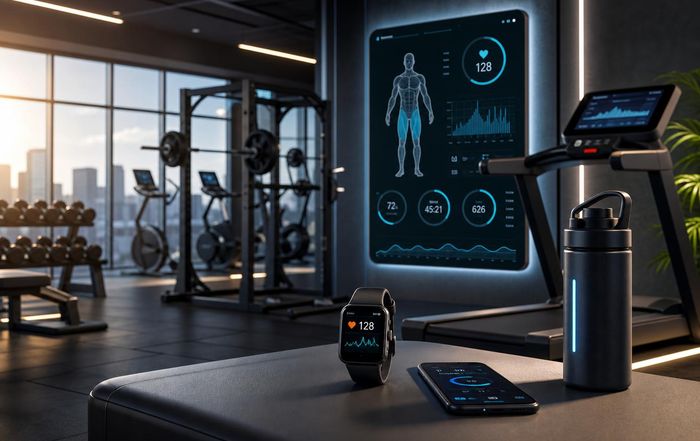
The Rise of Smart Gyms and Connected Workouts
A New Era of Performance: How Smart Gyms Are Redefining Sport and Fitness
Pay attention, because the global fitness landscape has shifted decisively toward a connected, data-driven model in which smart gyms, intelligent wearables and immersive digital platforms are no longer niche innovations but core infrastructure for athletes, fitness enthusiasts and health-conscious professionals. For people whose interests span sports, fitness, health, culture, technology and business-this transformation is not an abstract technological trend but a daily reality that reshapes how they train, compete, recover and even work.
The rapid convergence of sensor technology, artificial intelligence, cloud computing and high-speed connectivity has enabled a new generation of fitness environments that respond in real time to individual performance, biometrics and goals. From elite athletes in the United States and Europe to recreational gym-goers in Asia-Pacific and emerging markets in Africa and South America, the rise of smart gyms and connected workouts is redefining what it means to train intelligently, recover efficiently and live an active lifestyle grounded in measurable outcomes rather than vague aspirations. Readers who follow the evolving intersection of performance and technology on the fitness and performance channels are witnessing a structural shift that will shape the next decade of sport and wellness.
Defining the Smart Gym: From Equipment to Ecosystem
A smart gym in 2026 is best understood not as a room filled with internet-enabled machines but as a fully integrated performance ecosystem in which hardware, software, data and human expertise are tightly linked. Traditional cardio machines and weight stacks have been augmented or replaced by connected equipment capable of tracking power output, range of motion, heart rate variability, movement quality and even fatigue markers, while cloud-based platforms aggregate these metrics into personalized training profiles that follow users across locations and devices. Organizations such as Technogym, Peloton, Les Mills and Life Fitness have contributed to this evolution, but the most advanced facilities increasingly layer their own proprietary analytics and coaching tools on top of commercial solutions to differentiate their offerings.
The conceptual shift is similar to the transformation seen in other industries where the product has become a service. Instead of simply selling access to equipment, smart gyms deliver ongoing, adaptive training experiences supported by data, expert programming and digital engagement. The model resembles the connected health ecosystems promoted by institutions such as the World Health Organization, which emphasizes integrated approaches to physical activity and chronic disease prevention; readers can explore how these frameworks are influencing global policy by reviewing the WHO's latest guidance on physical activity and health. For SportyFusion, this ecosystem perspective aligns with the platform's broader editorial focus on how sport, technology and health intersect in real-world contexts rather than as isolated topics.
The Technology Stack Behind Connected Workouts
The backbone of connected workouts is an increasingly sophisticated technology stack that extends from the gym floor to the cloud and back to the user's wrist, smartphone or smart glasses. At the hardware level, modern equipment integrates multiple sensors-accelerometers, gyroscopes, optical heart rate monitors, force plates and cameras-to capture granular data on movement and physiology. Companies like Garmin, Apple, Samsung and Whoop have driven adoption of wearable sensors that provide continuous monitoring outside the gym, enabling a 24/7 view of stress, sleep, readiness and recovery. Those interested in the technical evolution of wearables can review the latest industry analysis from IDC's wearable device research.
On the software side, machine learning models trained on vast datasets of human movement and performance are now capable of detecting subtle deviations in form, estimating injury risk, recommending load adjustments and generating personalized training plans in real time. Cloud platforms from Microsoft Azure, Amazon Web Services and Google Cloud provide the computational infrastructure necessary to process and secure large volumes of biometric data, while edge computing capabilities embedded directly in equipment and wearables reduce latency for feedback that must be delivered instantaneously during a set or sprint. For readers tracking the broader AI landscape, the OECD offers useful frameworks on trustworthy AI and data governance, which can be explored through its work on AI policy and regulation.
Connectivity is the final critical layer. The rollout of 5G networks across North America, Europe and parts of Asia, combined with improved Wi-Fi 6 and 6E standards within facilities, has made it feasible to stream high-resolution video coaching, synchronize multi-user sessions and maintain low-latency data flows between devices and cloud platforms. Organizations such as the GSMA document the global expansion of mobile infrastructure; interested readers can learn more about how 5G is reshaping digital services in the GSMA's reports on mobile economy trends. For SportyFusion, this connectivity is not merely a technical detail but a prerequisite for the seamless experiences that modern athletes and fitness consumers now expect.
Personalization at Scale: From Generic Programs to Adaptive Coaching
One of the most significant advantages of smart gyms and connected workouts is the ability to deliver highly personalized training experiences at scale, bridging the gap between elite coaching and mainstream fitness. Historically, bespoke programming and close monitoring were reserved for professional athletes or high-net-worth individuals with access to dedicated trainers and sports scientists. Today, intelligent platforms can ingest data from wearables, smart equipment and health records, then generate adaptive plans that adjust session by session based on performance, recovery and lifestyle factors such as sleep and stress.
This shift is particularly evident in markets like the United States, United Kingdom, Germany and Australia, where consumers are accustomed to subscription-based digital services and are willing to pay a premium for demonstrable results. Platforms that integrate evidence-based guidelines from organizations such as the American College of Sports Medicine and NHS Digital can align their recommendations with clinical best practice, enhancing credibility and outcomes. Readers who follow health policy can deepen their understanding by reviewing current recommendations on exercise prescription and chronic disease management from the U.S. Centers for Disease Control and Prevention.
For SportyFusion, which frequently explores performance optimization and training innovation on its training and health pages, the key narrative is that personalization is no longer a luxury but an expectation. Whether a user in Singapore is preparing for a marathon, a professional in Canada is managing back pain or a recreational athlete in Brazil is pursuing strength and mobility, connected platforms can tailor progression, volume, intensity and recovery strategies in ways that static programs never could.
From Gym Floor to Living Room: Hybrid and Omnichannel Fitness
The pandemic era of the early 2020s accelerated the adoption of home workouts and virtual training, but by 2026 the market has matured into a hybrid ecosystem in which physical and digital experiences complement rather than compete with each other. Smart gyms increasingly extend their services beyond the four walls of the facility, offering members app-based programming, live-streamed classes, on-demand content and remote coaching that travels with them across time zones and continents. This omnichannel approach reflects broader shifts in consumer behavior documented by organizations such as McKinsey & Company, whose insights on consumer digital adoption provide useful context for understanding the evolution of fitness consumption.
For individuals who travel frequently between hubs such as New York, London, Berlin, Singapore and Sydney, the ability to maintain continuity in their training programs is a decisive factor in membership decisions. Smart gym platforms that synchronize data across locations and integrate with hotel gyms, coworking spaces and corporate wellness facilities are well positioned to capture this mobile, high-value segment. On SportyFusion's world and business pages, this trend is increasingly framed as part of the broader globalization of sport and wellness services, in which physical presence is only one component of a more extensive digital relationship between brand and user.
At the same time, the maturation of connected home equipment-from smart bikes and rowers to compact strength systems-has enabled more people in markets such as Japan, South Korea, the Netherlands and the Nordic countries to maintain high-quality training routines despite space constraints or demanding schedules. Reports from the World Economic Forum on future of work and wellness highlight how hybrid work models are reshaping daily routines, creating new windows of opportunity for short, high-intensity or recovery-focused sessions that can be delivered seamlessly through connected platforms.
Data, Health and Performance: Turning Metrics into Meaning
The proliferation of sensors and connected devices has made it easy to generate vast quantities of data, but the real value for athletes, coaches and health-conscious individuals lies in transforming this raw information into actionable insight. Smart gyms that succeed in 2026 are those that help users move beyond simple metrics such as steps or calories toward a more sophisticated understanding of performance, readiness and long-term health trajectories. This involves integrating training load, heart rate variability, sleep quality, nutrition logs and subjective wellness scores into coherent dashboards that highlight patterns and suggest interventions.
Sports performance centers in the United States, United Kingdom, Germany and South Africa are increasingly aligning their analytics frameworks with research from institutions such as Harvard Medical School, Stanford Human Performance Lab and Australian Institute of Sport, where studies on load management, injury prevention and recovery strategies inform best practice. Readers interested in the science behind these approaches can explore resources from Harvard Health Publishing on exercise physiology and longevity. For SportyFusion, whose coverage often intersects with cutting-edge sports science on its sports and lifestyle verticals, the central message is that data must be contextualized, not simply collected.
There is also a growing recognition that mental health and cognitive performance are integral components of athletic and professional success. Connected platforms are beginning to integrate stress monitoring, mindfulness sessions and cognitive training modules alongside physical workouts, drawing on frameworks from organizations like the American Psychological Association and Mental Health Foundation. Those who wish to delve deeper into the relationship between physical activity and mental well-being can review current research on exercise and mental health. This holistic perspective aligns closely with SportyFusion's editorial emphasis on the interconnectedness of body, mind and environment.
Business Models, Brands and Competitive Dynamics
The rise of smart gyms and connected workouts has reshaped the competitive landscape for fitness operators, equipment manufacturers, technology providers and consumer brands. Traditional gym chains across North America, Europe and Asia have been compelled to invest heavily in digital infrastructure, member apps and connected equipment to remain relevant, while new entrants-often backed by venture capital or strategic investors-have built fully digital-first or hybrid propositions from the ground up. Analysts from Deloitte and PwC have documented this transition in their reports on the global sports and fitness market, highlighting the growing importance of recurring digital revenue streams and data-driven personalization.
For brands, the smart gym ecosystem presents both opportunities and challenges. On one hand, connected platforms create new touchpoints for engagement, from in-app content and sponsored challenges to integrated nutrition and recovery services. On the other hand, the dominance of a few major technology providers raises questions about data ownership, interoperability and bargaining power. Companies that succeed in this environment are those that can articulate a clear value proposition grounded in expertise, trust and measurable outcomes rather than relying solely on aesthetics or celebrity endorsements. SportyFusion's brands coverage increasingly focuses on how legacy sportswear and equipment companies are repositioning themselves as performance and data partners rather than simple product vendors.
Smart gyms are also reshaping labor markets within the fitness industry. Trainers, coaches and sports scientists are expected to be proficient not only in programming and human interaction but also in interpreting data, managing digital communities and collaborating with AI-driven tools. This evolution has implications for education and certification frameworks across regions such as the United States, United Kingdom, Germany and Singapore, where institutions are updating curricula to reflect the new skill sets required. Readers interested in the future of fitness careers can follow developments on SportyFusion's jobs section, where the platform tracks emerging roles at the intersection of sport, technology and data science.
Ethics, Privacy and Trust in a Hyper-Connected Training World
As with any data-intensive sector, the growth of smart gyms and connected workouts raises critical ethical and regulatory questions around privacy, consent, algorithmic transparency and equitable access. Users are entrusting platforms with sensitive biometric data that can reveal not only their fitness levels but also potential health conditions, stress patterns and lifestyle habits. Ensuring that this information is collected, stored and used responsibly is essential to maintaining trust and avoiding misuse. Regulatory frameworks such as the European Union's General Data Protection Regulation and evolving privacy laws in regions like California, Brazil and South Korea set important baselines, but companies must often go beyond legal minimums to meet user expectations.
Independent organizations and think tanks, including the Electronic Frontier Foundation and Future of Privacy Forum, provide guidance on best practices for responsible data stewardship in consumer technology. Readers who wish to understand the broader digital rights context can explore resources on data privacy and consumer technology. For SportyFusion, which has increasingly highlighted ethical questions around sports technology on its ethics and technology pages, the central challenge is balancing innovation with accountability. Platforms must be transparent about how algorithms make recommendations, how data is shared with third parties and how users can control or delete their information.
There is also a growing conversation about algorithmic bias and inclusivity in connected fitness. If training recommendations are based on datasets that under-represent certain age groups, genders, body types or ethnic backgrounds, the resulting models may deliver suboptimal or even harmful guidance to those populations. Research centers such as the Alan Turing Institute and MIT Media Lab are exploring methods to mitigate bias in AI systems, and their work has implications for any company deploying machine learning in health and performance contexts. SportyFusion's social coverage increasingly examines how these issues intersect with broader questions of equity and access in global sport and wellness.
Sustainability, Environment and the Smart Facility
Beyond performance and convenience, smart gyms are also influencing the environmental footprint of the fitness industry. Connected equipment and building management systems can optimize energy usage through features such as demand-responsive lighting, intelligent HVAC control and regenerative braking on cardio machines that feed electricity back into the grid. Facilities in countries such as Germany, Denmark, Sweden and the Netherlands have been early adopters of green building standards, often aligning with frameworks from organizations like the U.S. Green Building Council and World Green Building Council. Those interested in the intersection of sustainability and infrastructure can learn more about green building practices.
However, the increased reliance on digital infrastructure, cloud computing and connected devices also raises questions about electronic waste, resource consumption and the carbon footprint of data centers. Leading cloud providers are investing heavily in renewable energy and efficiency improvements, while some smart gym operators are exploring circular economy models for equipment lifecycle management and refurbishment. On SportyFusion's environment section, these developments are framed as part of a broader conversation about responsible growth in the sports and fitness sector, recognizing that performance gains cannot come at the expense of planetary health.
For users, sustainability considerations are increasingly influencing brand preferences, particularly among younger demographics in Europe, North America and Asia-Pacific. Smart gym operators that can credibly demonstrate environmental responsibility-through transparent reporting, third-party certifications and tangible initiatives-are better positioned to attract and retain members who view fitness as part of a broader lifestyle commitment to health, community and the environment.
Cultural Shifts: Community, Gaming and the Sportification of Everyday Life
Beyond technology and business, the rise of smart gyms and connected workouts is reshaping cultural norms around exercise, competition and community. Digital platforms have enabled new forms of social interaction, from virtual group classes and leaderboards to cross-border challenges that connect participants in cities as diverse as Los Angeles, London, Tokyo, São Paulo and Johannesburg. These experiences blend elements of sport, gaming and social media, creating what some commentators have called the "sportification of everyday life," where performance metrics and achievements become part of personal identity and social currency.
The integration of game design principles-points, levels, achievements, narrative progression-into fitness experiences has been particularly influential among younger users and those who might not have engaged with traditional gym environments. Companies such as Zwift and Supernatural have demonstrated the potential of immersive, game-like workouts, while virtual reality and mixed reality platforms continue to expand the boundaries of what a "workout" can feel like. Readers interested in this convergence can explore broader trends in gaming and interactive media through organizations like the International Game Developers Association. On SportyFusion's gaming and culture pages, these developments are often discussed as part of a larger narrative about how digital natives experience sport and physicality.
At the same time, there is a countervailing movement emphasizing mindfulness, presence and intrinsic motivation, particularly in markets like Japan, Scandinavia and New Zealand where outdoor activity and nature are deeply embedded in cultural norms. Smart platforms that can reconcile performance tracking with more contemplative or experiential forms of movement-such as trail running, yoga or outdoor functional training-are likely to resonate with users who seek balance rather than constant optimization. SportyFusion's global readership, spanning continents and cultures, reflects this diversity of motivations, reminding brands and operators that there is no single archetype of the connected athlete.
Going Ahead = The Next Phase of Smart Fitness
As the rise of smart gyms and connected workouts appears less like a temporary trend and more like a foundational shift in how societies approach sport, fitness and health. The integration of advanced sensors, AI-driven personalization, hybrid delivery models and robust data analytics has created new possibilities for performance enhancement, injury prevention and long-term well-being across geographies and demographics. Yet the future trajectory of this ecosystem will depend on how effectively industry stakeholders address challenges around privacy, equity, sustainability and human-centered design.
For this fit and happy community, which follows these new trends across news, sports, business and technology, the key question is how to harness the benefits of connected fitness while preserving the human elements that make sport meaningful: authentic community, personal growth, resilience and joy in movement. Smart gyms and connected workouts can provide unprecedented insight and convenience, but their long-term impact will be measured not only in performance metrics and market valuations but also in healthier, more active societies across North America, Europe, Asia, Africa and South America.
As new generations grow up with connected workouts as a default rather than a novelty, organizations that combine technological sophistication with genuine expertise, ethical responsibility and cultural sensitivity will define the next chapter of global fitness. In this evolving landscape, we will continue to serve as a key updated site where athletes, professionals, innovators and enthusiasts can explore how smart gyms and connected workouts are reshaping not just how people train, but how they live. Readers can follow this ongoing transformation across the full spectrum of original reporting at SportyFusion's home page, where sport, technology, culture and performance converge in a single, connected narrative.