

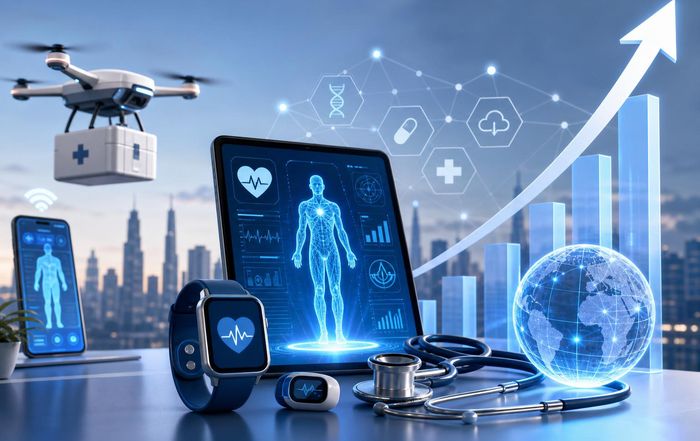
The Business Opportunities in Health Technology
Health Technology at a Global Inflection Point
By 2026, health technology has shifted from being a niche segment of the broader technology market to a central pillar of global economic and social transformation, reshaping how individuals train, how teams perform, how organizations design benefits, and how governments think about public health, particularly in sports-centric and performance-oriented communities such as those that gather around SportyFusion. What began a decade ago with basic step counters and calorie-tracking apps has evolved into a complex, data-rich ecosystem that connects wearable devices, telehealth platforms, artificial intelligence diagnostics, virtual coaching, and high-performance analytics, creating a powerful convergence between sports, fitness, health, and business.
For the audience of SportyFusion, which spans elite athletes, fitness professionals, performance-driven executives, and health-conscious consumers across the United States, Europe, Asia, and beyond, the rise of health technology is more than a technological trend; it is an operational and strategic reality that influences training regimens, corporate wellness strategies, sponsorship decisions, and even national health policy. In this context, understanding the business opportunities in health technology requires a holistic view that connects innovation with regulatory frameworks, data governance, consumer expectations, and the high-performance culture that underpins modern sport and fitness. Readers seeking ongoing coverage of this intersection can follow dedicated analysis through the SportyFusion business and technology verticals, where emerging models and case studies are regularly explored.
Market Dynamics and Investment Momentum
The global health technology market has benefited from structural tailwinds that accelerated during and after the COVID-19 pandemic, with telemedicine, remote monitoring, and digital therapeutics moving from experimental pilots to mainstream care channels. Organizations such as McKinsey & Company and Deloitte have consistently highlighted that digital health adoption in markets like the United States, the United Kingdom, Germany, and Singapore has stabilized at levels far higher than pre-2020 baselines, reflecting a permanent behavioral and institutional shift rather than a temporary crisis response. Investors have responded accordingly, with venture capital and private equity funds increasingly focusing on health technology platforms that can scale across geographies and regulatory regimes, particularly those that integrate sports, wellness, and chronic disease management.
For business leaders and entrepreneurs, these dynamics create a dual opportunity: first, to build or invest in new platforms that address gaps in access, affordability, and performance, and second, to embed existing health technologies into corporate and sports ecosystems to improve outcomes and reduce costs. Analysts at the World Economic Forum have emphasized that digital health is now a key component of national competitiveness, as countries from South Korea to Sweden race to build infrastructure, data standards, and innovation clusters that can support both domestic health systems and exportable health technology solutions. Those seeking a macroeconomic perspective on these shifts can review overviews from institutions such as the World Economic Forum and the Organisation for Economic Co-operation and Development, which track digital health adoption and policy frameworks across continents.
Wearables, Performance Analytics, and the SportyFusion Edge
Nowhere is the convergence of health, performance, and business more visible than in the wearable technology and performance analytics segment, which has become integral to the way athletes, teams, and fitness enthusiasts train and compete. Devices from companies such as Apple, Garmin, WHOOP, and Oura now offer continuous monitoring of heart rate variability, sleep stages, oxygen saturation, and recovery scores, data that is increasingly integrated into training platforms used by professional clubs in the English Premier League, the NBA, the Bundesliga, and elite Olympic programs. This data-rich environment has created new roles for sports scientists, performance analysts, and data engineers, as well as new business models built around subscription analytics, premium coaching, and team-wide performance dashboards.
For a platform like SportyFusion, which focuses on the intersection of sports, fitness, and technology, the growth of this segment is particularly relevant, as readers seek to understand not only which devices to adopt but how to interpret and act on the data they generate. Articles in the SportyFusion performance and training sections increasingly explore how AI-driven insights can individualize load management, prevent injury, and optimize periodization for athletes from grassroots clubs in Canada to professional teams in Italy and Japan. Industry observers can complement this perspective with technical insights from organizations such as the American College of Sports Medicine and the European College of Sport Science, which provide evidence-based guidelines on exercise physiology and performance monitoring.
Telehealth, Remote Coaching, and Hybrid Care Models
The integration of telehealth into mainstream care has opened a parallel path for sports medicine, physiotherapy, and performance coaching, enabling athletes and active consumers to access expertise regardless of geography. Platforms that began as general telemedicine solutions in markets like the United States and Australia have evolved to include specialized services for orthopedic consultations, post-injury rehabilitation, and even psychological support tailored to high-performance environments. In parallel, remote coaching platforms have proliferated, allowing strength and conditioning coaches, nutritionists, and mental performance experts to work with clients in South Africa, Brazil, or Norway from centralized hubs in London, New York, or Singapore.
This hybrid model, where in-person assessments are complemented by ongoing digital follow-up, has proven particularly effective for managing overuse injuries, monitoring return-to-play protocols, and sustaining behavioral change in fitness and weight management programs. For business stakeholders, the opportunity lies in building integrated ecosystems that connect telehealth providers, wearable data, and coaching workflows, creating end-to-end experiences that deliver measurable outcomes. Readers interested in the healthcare policy and reimbursement side of this transformation can explore resources from institutions such as the World Health Organization, which tracks digital health strategies globally, and the U.S. Centers for Medicare & Medicaid Services, which has been instrumental in shaping telehealth reimbursement in the United States.
Digital Therapeutics and Chronic Disease in Active Populations
While health technology is often associated with elite performance and lifestyle optimization, some of the most significant business opportunities arise in the management of chronic diseases that affect active and sedentary populations alike, including diabetes, cardiovascular disease, and musculoskeletal conditions. Digital therapeutics companies, many of which are now regulated as medical devices in jurisdictions like the European Union and the United States, offer app-based interventions that combine behavioral coaching, data tracking, and clinician oversight to reduce disease progression and improve quality of life. For employers, sports organizations, and insurers, these solutions offer a pathway to reduce long-term healthcare costs while supporting the health of employees, athletes, and fans.
This intersection is particularly relevant for SportyFusion readers who operate at the boundary between performance and population health, such as corporate wellness directors, sports federation executives, and fitness chain operators. Integrating evidence-based digital therapeutics with fitness and training programs can create differentiated offerings that target both performance enhancement and risk reduction, especially in markets with aging populations such as Japan, Germany, and Italy. Those seeking clinical and regulatory context can review guidance from the U.S. Food and Drug Administration and the European Medicines Agency, which outline the frameworks for digital health products in their respective regions.
Data, AI, and the New Competitive Advantage
Artificial intelligence and machine learning have become the backbone of advanced health technology platforms, enabling predictive analytics, personalized recommendations, and automated triage at scales that would be impossible with human labor alone. In the sports and fitness domain, AI models ingest real-time data from wearables, GPS trackers, and video analysis systems to forecast injury risk, recommend training adjustments, and even optimize tactics based on player load and fatigue. In broader healthcare settings, AI supports radiology diagnostics, triage in emergency departments, and population-level risk stratification for health systems in the United Kingdom, Canada, and Singapore.
The business opportunity lies not only in building the algorithms but in owning or orchestrating the data pipelines, user interfaces, and integration layers that make AI-driven insights usable and trustworthy. For organizations featured on SportyFusion, from global sports brands to regional fitness chains, the strategic question is how to partner with or build platforms that respect privacy and regulatory requirements while leveraging AI to differentiate offerings and deepen engagement. Specialists can explore technical and ethical frameworks through resources from the National Institutes of Health and policy discussions at the Brookings Institution, which frequently examine the implications of AI in healthcare and public policy.
Regulation, Ethics, and Trust as Strategic Assets
As health technology matures, the regulatory and ethical environment has become more complex and more central to business strategy, particularly in jurisdictions with strong data protection laws such as the European Union, the United Kingdom, and countries like Norway, Denmark, and Switzerland. Regulations such as the EU's General Data Protection Regulation and evolving health data laws in the United States and Asia impose strict requirements on how personal health information is collected, stored, and shared, especially when it involves biometric data from wearables or genetic information from consumer testing services. For companies operating across borders, compliance is no longer a back-office function but a core capability that influences product design, partnership structures, and market entry strategies.
Trust is especially critical in the sports and performance context, where athletes and teams may be reluctant to share sensitive health and performance data if they fear it could affect contracts, selection decisions, or public perception. Ethical frameworks that prioritize transparency, informed consent, and clear data governance can become competitive differentiators, particularly for brands that operate in multiple markets and sports. The SportyFusion ethics section increasingly highlights examples of best practice in this area, while organizations such as the International Association of Privacy Professionals and the European Data Protection Board provide detailed guidance on compliance and ethical standards for digital health and sports data.
Corporate Wellness, Talent Strategy, and the Future of Work
Health technology has moved to the center of corporate strategy in many industries, with employers in sectors as diverse as finance, technology, manufacturing, and professional sports using digital tools to support employee well-being, reduce absenteeism, and enhance productivity. Wearable-enabled wellness programs, mental health apps, and virtual fitness platforms have become standard components of benefits packages in markets like the United States, the United Kingdom, and Australia, while multinational corporations with operations in Asia, Africa, and South America are adapting these models to local contexts and regulatory environments. For many organizations, particularly those competing for scarce talent in technology and professional services, health technology offerings are now part of the employer value proposition.
This development creates a significant opportunity for companies that can deliver integrated, culturally sensitive solutions that combine physical activity, mental health support, and nutrition guidance, while aligning with corporate diversity, equity, and inclusion goals. Platforms that can demonstrate measurable improvements in health outcomes and performance metrics are particularly attractive to employers looking to link wellness investments with business results. The SportyFusion jobs and social channels offer ongoing commentary on how health technology is reshaping workplace culture and employer branding, complementing broader research from organizations such as the World Health Organization on workplace health promotion and from consulting firms that track global workforce trends.
Consumer Brands, Sponsorship, and the New Health Ecosystem
The rise of health technology has also transformed the strategies of consumer brands, sports leagues, and media platforms that operate at the intersection of performance, lifestyle, and entertainment. Global sportswear and equipment companies such as Nike, Adidas, and Puma have invested heavily in digital platforms, connected products, and data-driven communities, recognizing that the modern consumer in markets from the Netherlands to New Zealand expects personalized experiences that integrate training plans, social features, and health insights. At the same time, health technology companies are increasingly partnering with sports organizations, from major football clubs in Europe to cricket boards in India and rugby unions in South Africa, to validate their products and reach engaged audiences.
For media and content platforms like SportyFusion, this ecosystem shift creates opportunities to curate and interpret the flood of information, helping readers distinguish between evidence-based solutions and marketing-driven claims. The SportyFusion brands and lifestyle sections frequently profile collaborations between technology providers, sports organizations, and consumer brands, while broader industry context can be found through organizations such as Statista and the Global Wellness Institute, which track consumer spending patterns and wellness trends across regions and demographics.
Sustainability, Environment, and Responsible Innovation
As health technology scales, its environmental footprint and sustainability profile are receiving increased scrutiny from regulators, investors, and consumers, particularly in environmentally conscious markets such as the Nordics, Germany, and Canada. Wearable devices, connected fitness equipment, and digital infrastructure all have material and energy implications, from the rare earth elements used in sensors to the data center capacity required to process continuous health streams. Companies that operate in this space are under growing pressure to demonstrate responsible sourcing, energy-efficient design, and circular economy strategies for device lifecycle management.
This sustainability dimension intersects directly with the values of many SportyFusion readers, who often prioritize both personal health and environmental responsibility in their purchasing and partnership decisions. Health technology companies that can articulate credible sustainability strategies, supported by transparent reporting and third-party verification, will be better positioned to secure partnerships with sports federations, leagues, and brands that have their own climate and ESG commitments. The SportyFusion environment and world sections regularly highlight how climate and health intersect in sport and active lifestyles, while organizations such as the United Nations Environment Programme provide broader context on sustainable technology and responsible consumption.
Gaming, Esports, and the Health of Digital Athletes
An often-overlooked frontier of health technology lies in gaming and esports, where professional and semi-professional players face unique physical and mental demands that differ from traditional sports but are no less significant. Extended screen time, repetitive strain injuries, sleep disruption, and performance anxiety are common challenges for players in markets from South Korea and China to the United States and France, creating demand for specialized health solutions that address posture, vision, mental resilience, and lifestyle balance. Health technology companies are beginning to design interventions specifically for this population, including posture-monitoring wearables, cognitive training tools, and biofeedback-driven stress management solutions.
For SportyFusion, which covers the convergence of competition, performance, and technology, the health of digital athletes represents a natural extension of its focus, and the SportyFusion gaming and sports sections are well placed to document how health technology is professionalizing esports training and support structures. Industry stakeholders can complement this coverage with insights from organizations such as the International Esports Federation and health-focused initiatives within major leagues, which are increasingly recognizing that long-term competitive success depends on structured health and wellness programs, just as in traditional sports.
Strategic Considerations for Businesses in 2026 and Beyond
As of 2026, the business opportunities in health technology are both expansive and highly competitive, requiring clarity of positioning, deep domain expertise, and a commitment to evidence-based practice. For entrepreneurs and established companies alike, success often depends on identifying specific use cases and populations-elite athletes, recreational runners, corporate employees, esports professionals, aging populations-and building solutions that integrate seamlessly into their daily routines, cultural contexts, and regulatory environments. It also requires credible partnerships with healthcare providers, sports organizations, academic institutions, and regulators, as well as robust governance structures for data and ethics.
For the global audience of SportyFusion, which spans continents and cultures but shares a common focus on performance, well-being, and innovation, the rise of health technology represents both a toolkit and a strategic imperative. Whether a reader is evaluating new wearable platforms for a professional cycling team in Spain, designing a corporate wellness program for a multinational in Singapore, or exploring digital therapeutics for community health projects in South Africa or Brazil, the underlying questions remain consistent: how to harness technology to improve health and performance while maintaining trust, respecting individual autonomy, and contributing positively to society and the environment. As these questions evolve, SportyFusion will continue to provide in-depth coverage across its health, fitness, and news channels, helping decision-makers navigate a landscape where the boundaries between sports, health, and business are increasingly intertwined.
In this emerging era, health technology is no longer merely an adjunct to traditional care or a novelty in the sports world; it is a foundational layer of modern life and commerce, shaping how individuals train, how organizations compete, and how societies pursue longevity and quality of life. Companies and leaders who recognize this and invest in building trustworthy, evidence-based, and ethically grounded solutions will not only capture market share but also help define what high performance and well-being mean for a new generation across North America, Europe, Asia, Africa, and South America. For those following this transformation through SportyFusion, the coming years promise a rich interplay of innovation, regulation, and human ambition, where the most successful ventures will be those that align cutting-edge technology with the enduring values of sport, health, and collective progress.