

Sports Technology Trends Worth Watching
The New Performance Frontier: How Technology Is Rewriting Sport
Ok, so now we're talking about the convergence of advanced data analytics, connected devices, immersive media, and biotechnological innovation has transformed global sport from the grassroots level to elite competition, reshaping how athletes train, how fans engage, how businesses invest, and how regulators safeguard integrity. For SportyFusion.com, whose crazy active fitness community jumping from athletes, coaches, executives, and enthusiasts across North America, Europe, Asia, Africa, and South America, the most important question is no longer whether technology will redefine sport, but how to harness that transformation responsibly while preserving the essence of competition, culture, and human performance.
From the explosion of AI-driven performance analytics and smart wearables to the rise of immersive fan experiences, sustainable stadiums, and new job roles across the sports ecosystem, the trends now shaping 2026 are setting the foundation for the next decade of growth. Industry leaders are watching closely as organizations such as FIFA, the International Olympic Committee (IOC), and major leagues in the United States, United Kingdom, Germany, and beyond experiment with new tools, rules, and commercial models. At the same time, regulators, health authorities, and ethics bodies are working to ensure that innovation does not come at the expense of athlete welfare, competitive fairness, or societal trust.
Within this dynamic landscape, SportyFusion.com has positioned itself as a bridge between performance-focused innovation and broader cultural, business, and ethical questions, connecting developments in sports, fitness, health, and technology for a global audience that expects depth, clarity, and practical relevance.
AI, Data, and the Rise of Hyper-Intelligent Performance Systems
Artificial intelligence and advanced analytics now sit at the core of high-performance sport, from elite football clubs in Europe to basketball franchises in North America and Olympic training centers in Asia and Oceania. Using data gathered from GPS trackers, inertial sensors, and high-speed video, AI models can identify micro-patterns in movement, fatigue, and tactical behavior that were previously invisible to human analysts. Organizations inspired by the work of MIT Sports Lab and research discussed by institutions like Harvard Business School are building proprietary systems to optimize training loads, reduce injury risk, and refine game strategies, while teams consult resources such as the FIFA Innovation Programme to benchmark emerging tools.
For the community at SportyFusion.com, this shift means that performance conversations increasingly revolve around data literacy and algorithmic interpretation as much as physical conditioning. Athletes and coaches are learning to interrogate AI recommendations, understanding that while machine learning models can identify correlations in large datasets, human expertise is still required to contextualize those findings within the realities of travel schedules, psychological stress, and tactical intent. Those seeking to deepen their understanding of how analytics is changing sport can explore broader discussions on sports technology and innovation to see how leading organizations are integrating AI into decision-making while maintaining human oversight.
Importantly, this data revolution is no longer limited to the richest clubs in the United States or Europe. Cloud-based platforms and more affordable sensors are enabling semi-professional and youth academies in regions such as South America, Africa, and Southeast Asia to access performance tools once reserved for global giants, supporting a more inclusive talent pipeline and more evidence-based coaching practices at all levels of the game.
Smart Wearables and Connected Training Ecosystems
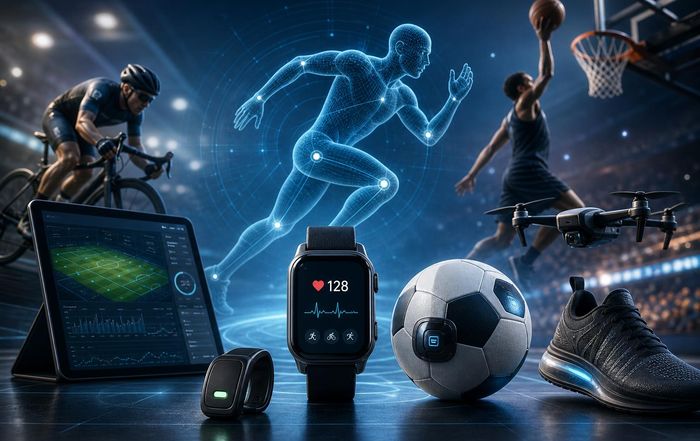
If AI provides the analytical brain of modern sports technology, smart wearables function as its sensory system, capturing real-time information about movement, exertion, and recovery. Devices that once measured only heart rate and step count now integrate multi-sensor arrays capable of tracking acceleration, joint angles, muscle activation estimates, and sleep quality, with companies like Garmin, Polar, Whoop, and Oura collaborating with sports scientists and institutions such as the Cleveland Clinic to validate their approaches and refine their algorithms. Readers can learn more about evidence-based sports medicine to understand how clinical research informs wearable design and interpretation.
For the training-focused audience of SportyFusion.com, this has redefined the relationship between athlete, coach, and data. Instead of relying solely on subjective reports of fatigue or pain, coaches can monitor training load trends through integrated dashboards, aligning strength sessions, conditioning drills, and tactical work to minimize injury risk while maximizing adaptation. On the athlete side, wearables support more personalized recovery strategies, guiding decisions on sleep hygiene, nutrition, and active recovery based on objective indicators rather than intuition alone. Those interested in practical applications across disciplines can explore the training insights and performance coverage that connect these technologies to day-to-day routines.
However, as the sophistication of wearables grows, so too do concerns about data privacy, consent, and long-term storage. In Europe, the General Data Protection Regulation (GDPR) has set a high bar for personal data protection, influencing how clubs and technology providers in the United Kingdom, Germany, France, Spain, Italy, and the Netherlands structure their contracts and data policies. In North America and Asia, leagues and players' associations are negotiating collective agreements that specify who owns biometric data, how it can be used commercially, and what happens when an athlete changes teams or retires. Organizations such as WADA and the World Players Association are contributing to these debates, highlighting the need for robust governance frameworks that protect athlete rights without stifling innovation. Readers can learn more about digital rights and data governance to understand the broader context surrounding these discussions.
Immersive Fan Experiences: From Stadium to Metaverse
While performance technology often captures headlines, the commercial engine of global sport increasingly depends on fan engagement, and in 2026, immersive technologies are rewriting what it means to watch and interact with competitions. Augmented reality overlays in stadiums, mixed-reality broadcasts, volumetric video, and personalized streaming feeds are becoming mainstream across major leagues in the United States, United Kingdom, Germany, and Asia, allowing fans to choose camera angles, access real-time statistics, and interact with other viewers in virtual lounges or gaming environments. Companies such as Meta, Apple, and Sony are partnering with leagues and broadcasters, while organizations like LaLiga Tech and NBA's Tech Lab push the boundaries of digital experience design.
For the global audience of SportyFusion.com, this evolution is not just about entertainment but also about culture and identity. Fans in Singapore, South Korea, Brazil, South Africa, and the Nordics can now experience local and international competitions in ways that reflect their language, traditions, and preferences, contributing to a more pluralistic global sports culture. Those seeking to understand the broader implications of this shift can explore how technology is reshaping culture and sport, where digital fandom, esports, and hybrid experiences converge.
Esports and gaming, once considered peripheral to traditional sport, now sit at the center of this immersive ecosystem. Professional leagues in titles such as League of Legends, Valorant, and FIFA football simulations have adopted many of the performance and data tools used in physical sport, while traditional clubs across Europe, North America, and Asia operate their own esports divisions. Platforms like Twitch and YouTube continue to innovate fan interaction and monetization models, and those who want to explore the intersection of gaming and sport can see how performance analytics, sponsorship, and fan culture are merging across these domains.
Health, Safety, and the Science of Longevity
As technology pushes the boundaries of performance, it also opens new opportunities to protect athlete health and extend careers, a topic of particular interest to the health-conscious readers of SportyFusion.com. Advances in concussion detection, load management, and injury prediction are helping leagues and clubs respond to growing evidence about long-term health risks, especially in collision sports such as American football, rugby, ice hockey, and combat sports. Organizations like the Centers for Disease Control and Prevention (CDC) and NHS England provide public guidance on concussion and brain health, and readers can explore these resources on sports-related injuries to better understand best practices for prevention and management.
In 2026, smart mouthguards, instrumented helmets, and high-speed video analysis are being used in the United States, United Kingdom, Australia, and New Zealand to flag potentially dangerous impacts in real time, enabling medical staff to remove players from the field for evaluation before symptoms escalate. Meanwhile, musculoskeletal imaging, force-plate testing, and AI-driven movement analysis are allowing practitioners to identify asymmetries and weaknesses that may predispose athletes to soft tissue injuries, informing individualized strength and conditioning programs. The emphasis on evidence-based practice is supported by organizations like The American College of Sports Medicine (ACSM), whose guidelines on training, recovery, and youth sport participation have become reference points for coaches and clinicians worldwide, and those who wish to learn more about sports health guidelines will find comprehensive resources.
Beyond acute injury prevention, sports technology is also helping address chronic health challenges, from cardiovascular risk to mental health. Wearables and telehealth platforms enable continuous monitoring of heart rate variability, sleep patterns, and mood indicators, supporting early detection of overtraining, anxiety, or depression. In Europe and North America, clubs increasingly partner with mental health organizations and digital therapeutics providers to offer confidential support, while governing bodies in Asia and Africa begin to integrate mental health frameworks into their high-performance programs. For readers focused on holistic well-being, SportyFusion.com offers dedicated health coverage that connects these advances to everyday fitness and lifestyle decisions.
Sustainability, Smart Venues, and the Environmental Imperative
The environmental impact of global sport has become impossible to ignore, from the carbon footprint of international travel to the resource demands of mega-events and large stadiums. In 2026, sustainability is no longer a peripheral corporate social responsibility initiative but a central strategic priority for leagues, clubs, and event organizers, particularly in Europe, North America, and regions highly exposed to climate risks such as Australia, South Africa, and parts of Asia. Organizations like UN Environment Programme (UNEP) and the UN Sports for Climate Action Framework are guiding industry commitments, and executives can learn more about sustainable business practices to align their strategies with global climate goals.
Smart stadium technologies now play a critical role in this transition. Energy-efficient lighting and HVAC systems, water recycling, on-site renewable energy generation, and advanced waste management platforms are being implemented in new and retrofitted venues across Germany, the Netherlands, the United States, and Japan. Data analytics platforms monitor real-time energy use and environmental conditions, enabling operators to adjust settings dynamically and reduce consumption without compromising fan comfort or pitch quality. For a deeper look at how sport intersects with climate action, readers can explore SportyFusion.com's environment coverage, where case studies from Europe, Asia, and the Americas highlight both progress and remaining gaps.
Sustainability is also influencing equipment and apparel. Major brands such as Nike, Adidas, Puma, and New Balance are investing in recycled materials, circular design models, and low-impact manufacturing processes, responding to consumer demand in markets like Canada, the United Kingdom, the Nordics, and Japan for more responsible products. Independent certifications and initiatives promoted by organizations such as B Lab, Fair Trade International, and Textile Exchange help verify environmental and social claims, and those who wish to understand responsible sourcing and certification can access detailed guidance. For SportyFusion.com, where brands and business coverage intersects with performance and ethics, these developments represent both an opportunity for innovation and a test of authenticity in marketing and reporting.
Business Models, Jobs, and the Evolving Sports Economy
Sports technology trends are reshaping not only how games are played and watched but also how money flows through the ecosystem and what types of jobs are in demand. In 2026, the sports economy spans traditional clubs and leagues, technology startups, media platforms, betting companies, health providers, and sustainability consultants, forming a complex network of stakeholders that crosses continents and industries. Reports from organizations such as Deloitte, PwC, and KPMG show that sports-related revenue continues to grow in regions like North America, Europe, and parts of Asia, driven by digital media rights, data monetization, and direct-to-consumer subscription models. Executives and investors can explore broader sports business insights to contextualize these shifts.
For professionals and aspiring entrants to the industry, this means that skills in data science, software engineering, cybersecurity, digital marketing, and sustainability management are now as valuable as traditional sports administration or coaching qualifications. Clubs in Germany, the United States, and the United Kingdom are hiring performance analysts, fan engagement specialists, esports managers, and partnership strategists, while startups in Singapore, South Korea, and Israel develop niche solutions in biomechanics, AI scouting, or virtual reality training. To navigate this evolving job market, readers can turn to SportyFusion.com's jobs section, where the intersection of sports, technology, and business creates new career paths.
At the same time, the commercialization of data and fan engagement tools raises complex questions about gambling, match integrity, and consumer protection. The expansion of legalized sports betting in markets such as the United States, parts of Europe, and Africa has created new revenue streams for leagues and data providers, but it has also increased pressure on regulators and integrity units to detect manipulation and protect vulnerable consumers. Organizations like INTERPOL, UNESCO, and the International Betting Integrity Association are working with sports bodies to develop monitoring systems and educational programs, and readers can learn more about integrity and governance in sport to understand the global policy landscape.
For SportyFusion.com, whose business coverage emphasizes transparency and long-term value creation, the challenge is to highlight opportunities in data-driven monetization while scrutinizing the ethical and regulatory frameworks that must accompany them.
Ethics, Governance, and the Human Dimension of Innovation
Behind every technological breakthrough in sport lies a set of ethical questions that cannot be ignored if trust and legitimacy are to be preserved. In 2026, debates around gene editing, performance-enhancing technologies, AI-based officiating, and data ownership are forcing governing bodies, athletes, and fans to reconsider what constitutes fair play and human excellence. Organizations such as WADA, the Court of Arbitration for Sport (CAS), and national governing bodies in countries like Canada, France, Japan, and South Africa are updating regulations to keep pace with technologies that blur the line between therapy and enhancement, or between assistance and automation.
For instance, advances in genetic testing and regenerative medicine raise the possibility of targeted interventions that could enhance strength, endurance, or recovery beyond natural baselines, challenging long-standing assumptions about doping and competitive balance. Similarly, AI-driven officiating systems, including semi-automated offside technology in football or automated line-calling in tennis, promise greater accuracy but also provoke concerns about transparency, accountability, and the erosion of human judgment. Readers interested in these dilemmas can explore SportyFusion.com's ethics coverage, where legal, scientific, and cultural perspectives are brought together to analyze real-world cases.
Data ethics remains a central pillar of this conversation. As clubs and technology providers collect increasingly granular information on athletes' bodies and behaviors, questions arise about informed consent, secondary use of data, and the potential for discrimination in selection, contract negotiations, or insurance. International frameworks from organizations like the OECD and World Economic Forum provide guidance on responsible AI and data governance, and those who wish to learn more about ethical AI principles can find comprehensive resources. For SportyFusion.com, which aims to foster a culture of transparency and respect across social and sporting communities, highlighting best practices in ethics and governance is as essential as reporting on performance and technology trends.
Regional Perspectives: A Truly Global Transformation
Although many sports technology trends are global, their adoption and impact vary significantly across regions, influenced by infrastructure, regulation, cultural preferences, and economic capacity. In North America, major leagues such as the NFL, NBA, MLB, and NHL are at the forefront of data analytics, fan engagement, and stadium innovation, leveraging large domestic markets and advanced media ecosystems. In Europe, football clubs in the United Kingdom, Germany, Spain, Italy, France, and the Netherlands are combining performance analytics with sophisticated talent identification networks, while cycling, motorsport, and winter sports invest heavily in aerodynamics, materials science, and environmental monitoring.
In Asia, countries like Japan, South Korea, China, and Singapore are emerging as hubs for sports technology startups, supported by strong electronics, gaming, and telecommunications industries. These markets are experimenting with 5G-enabled stadiums, AR-enhanced broadcasts, and integrated wellness platforms that combine fitness, health, and entertainment. Meanwhile, in Africa and South America, where passion for football, athletics, and combat sports runs deep, there is growing investment in affordable performance tools, talent development platforms, and digital media channels that allow local athletes and clubs to reach global audiences. International organizations such as FIFA, World Athletics, and the IOC are supporting development programs that incorporate technology and education, and readers can explore global sports development initiatives to see how these efforts are unfolding.
For the worldwide community of SportyFusion.com, which spans from the United States and Canada to Germany, the Nordics, South Africa, Brazil, Malaysia, and New Zealand, this diversity of approaches underscores the importance of context-sensitive analysis. A wearable or AI platform that is transformative in a well-funded European league may require adaptation to deliver value in a developing market, while regulatory frameworks that make sense in one jurisdiction may not translate directly to another. By combining global reporting with local insights, SportyFusion.com seeks to reflect this complexity rather than offering one-size-fits-all narratives.
What Comes Next? Preparing for the Future of Sport
Looking next, the trajectory of sports technology suggests that the next wave of change will be even more integrated, intelligent, and interdisciplinary. Advances in quantum computing, synthetic biology, advanced materials, and brain-computer interfaces are already on the horizon, raising both exciting possibilities and profound ethical questions. Strategic foresight work by organizations such as World Economic Forum, McKinsey & Company, and OECD indicates that sport will remain a powerful testing ground for new technologies, business models, and governance frameworks that later diffuse into broader society. Those who want to explore future-of-sport scenarios can gain a sense of how these forces may evolve.
For athletes, coaches, and performance professionals, the imperative is to develop a balanced mindset that embraces innovation while respecting the fundamentals of training, recovery, and human connection. For executives and investors, the challenge is to align technology adoption with clear strategic goals, robust risk management, and genuine commitments to sustainability and inclusion. For regulators and policymakers, the task is to keep pace with innovation without stifling it, protecting athlete welfare and competitive integrity while enabling responsible experimentation. And for fans, whose passion ultimately sustains the entire ecosystem, the opportunity lies in engaging with new experiences while demanding transparency, authenticity, and respect for the values that make sport meaningful.
Within this crazy changing landscape, SportyFusion.com will continue to serve as a sports news provider, with unique independent content as a trusted guide, connecting developments across performance, lifestyle, news, and world sport with a focus on experience, expertise, authoritativeness, and trustworthiness. By grounding its coverage in rigorous analysis, diverse perspectives, and a deep respect for the human side of sport, the platform aims to help its global audience not only watch these trends unfold but actively shape the future of sport, fitness, and culture in the years ahead.