

How Sports Ticket Pricing Really Shapes Fan Attendance
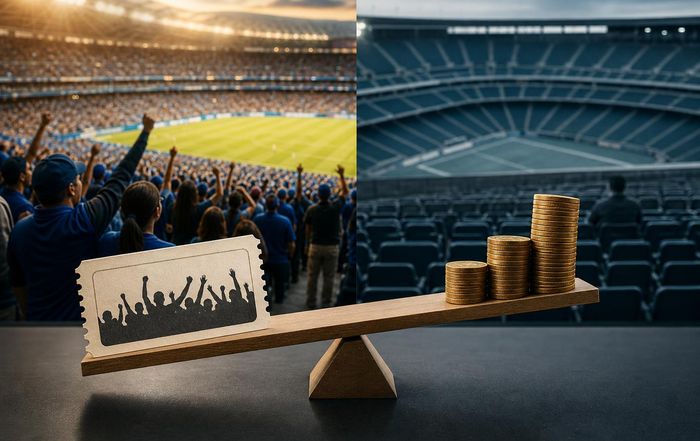
Ticket pricing has quietly become one of the most powerful levers in modern sport. It affects who shows up, how loud arenas feel, which fans get priced out, and even how teams perform on the field. Behind every "sold out" graphic is a strategy-sometimes sophisticated, sometimes blunt-that tries to balance revenue with loyalty, demand with access, and short-term gains with long-term fan culture. Sports fans take a seat and let's join together to look at how pricing strategies influence attendance, why some stadiums are full while others struggle, and what dynamic pricing, secondary markets, and media habits are doing to the in-person fan experience.
The economics behind a full (or half-empty) stadium
At the simplest level, ticket sales follow the same supply-and-demand logic that underpins most markets. Teams have a fixed number of seats in a stadium and must decide how to price them across different sections, games, and fan segments. When prices are too high relative to local demand, empty seats follow; when they are too low, tickets sell out quickly-but teams may leave millions in revenue on the table.
Major leagues and governing bodies-from Major League Baseball (MLB) and the NBA to UEFA and World Rugby-invest heavily in data to understand this balance. Organizations and analytics firms often use historical attendance, local income data, team performance metrics, and even weather forecasts to model demand. Academic work published through platforms like SSRN and research from institutions such as Harvard and MIT have repeatedly shown that fans are highly sensitive to price changes, especially for mid-tier and lower-profile games where demand is more elastic.
The challenge is that demand is not static. Winning streaks, star signings, rivalry narratives, and broader economic conditions can all shift willingness to pay within weeks. That's why many clubs have moved away from flat season-long price charts and toward more flexible models that adjust to real-time interest. For fans, this can mean very different price experiences from one season-or even one week-to the next, with clear implications for who ends up in the stands.
Dynamic pricing: airline logic comes to the terraces
Dynamic pricing-where ticket prices fluctuate based on demand, timing, and inventory-has become a defining feature of modern sports attendance. Borrowed from airlines and hospitality, this approach is now common in leagues like MLB, the NBA, and several top European football competitions.
Under dynamic pricing, a midweek game against a weaker opponent might be priced lower to stimulate demand, while a rivalry match or playoff-deciding fixture climbs sharply as interest surges. Teams often work with pricing technology providers that use algorithms similar to those used in travel and e-commerce, and insights from companies like Statista and Deloitte suggest this can significantly increase gate revenue.
From an attendance perspective, dynamic pricing cuts both ways. On one hand, it can help fill seats for less attractive fixtures by dropping prices closer to game day, creating opportunities for price-sensitive fans. On the other, it can push marquee games out of reach for many, especially when combined with service fees, resale mark-ups, and premium seating tiers. For clubs, the risk is that the most visible, high-energy games-those that shape TV perception and player experience-become dominated by corporate clients and high-income fans, while traditional supporter bases are gradually displaced.
For readers interested in how pricing intersects with performance metrics and in-game analytics, SportyFusion's performance and sports sections often explore similar data-driven shifts around the industry.
Secondary markets and the resale squeeze
No discussion of ticket pricing and attendance is complete without the secondary market. Platforms such as StubHub, SeatGeek, and Viagogo have turned ticket resale into a mainstream, technology-driven business. In many major leagues, a substantial share of "attendance decisions" now happens outside the primary box office.
Secondary markets influence fan turnout in several ways. When teams underprice high-demand games, resellers capture the gap between face value and what fans are willing to pay. That can drive prices far beyond official levels, dampening attendance among younger and lower-income fans. Conversely, for less popular fixtures, resellers may offload tickets below face value, helping fill seats that might otherwise sit empty.
Some clubs have responded by creating official resale exchanges, setting price caps, or using dynamic pricing on the primary side to reduce arbitrage opportunities. Regulators in several countries, including competition and consumer authorities, have scrutinized aspects of the resale industry, particularly around transparency and speculative listings. Organizations such as FIFA and UEFA tightly control resale for major tournaments, arguing that unmanaged secondary markets can undermine both security and affordability.
For fans, the result is a more volatile and sometimes confusing price environment. The "true" cost of attending a game may only become clear in the days before kick-off, and the difference between official and resale channels can be substantial. This volatility can discourage casual or family attendance, even when stadiums are not actually sold out.
Price discrimination: student sections, family zones, and premium tiers
While "price discrimination" sounds negative, in economics it simply means charging different prices to different customer segments based on their willingness or ability to pay. In sports, this can be a powerful tool for maintaining diverse attendance while still growing revenue.
Clubs routinely offer discounted tickets for students, seniors, and local community groups, as well as family bundles that combine multiple seats with concessions. Many North American franchises, for example, run "kids-go-free" or low-cost upper-deck promotions for selected games. These initiatives can be especially important in markets where average ticket prices have risen faster than wages, a trend documented by organizations such as ESPN and Forbes.
At the same time, the top end of the market has exploded. VIP lounges, field-level suites, and hospitality packages-often sold to corporations or high-net-worth individuals-can command prices that dwarf regular seats. This stratification allows clubs to extract high revenue per seat from a small cohort while keeping at least some inventory affordable. Yet it can also create visible divides inside stadiums, with premium sections sometimes less animated than traditional supporter areas, affecting atmosphere and perceived engagement.
From a culture and lifestyle perspective, these choices shape who sees themselves as "real" fans and who feels welcome. Readers interested in those cultural dynamics can find more discussion in our culture and lifestyle coverage.
Local income, cost of living, and international differences
Ticket pricing does not exist in a vacuum; it sits within broader economic realities. A price that feels steep but manageable in one city can be prohibitive in another, especially when factoring in travel, food, and merchandise. Research from organizations such as the OECD and World Bank highlights significant differences in disposable income and cost of living across regions, and clubs have to calibrate their strategies accordingly.
In North American leagues like the NFL and NHL, higher average ticket prices are often offset by the relative scarcity of home games and a culture that treats attendance as a major event. In many European football leagues, where clubs play at home every second week, pricing tends to be more tiered and season-ticket driven, with strong pressure from supporter groups to keep core sections affordable. Emerging leagues in Asia, the Middle East, and parts of Africa frequently use lower prices as a growth tool, prioritizing full stands and atmosphere to build long-term loyalty.
Economic downturns typically hit attendance hardest among price-sensitive fans, even when headline ticket prices do not change. Transport costs, parking, food inflation, and broader financial anxiety all feed into the decision to attend. That is why some clubs introduce flexible payment plans, partial season packages, or "pay what you can" games in challenging periods, trying to preserve turnout and community connection.
For readers following these global trends, the world and business sections often track how economic shifts intersect with the sports industry.
The TV and streaming factor: when staying home is cheaper
Another powerful influence on in-stadium attendance is the quality and affordability of watching from home. The rise of high-definition broadcasts, multi-angle replays, advanced analytics overlays, and second-screen experiences has made remote viewing more attractive than ever. Major broadcasters and platforms such as Sky, Amazon, DAZN, and ESPN+ compete to deliver comprehensive coverage at subscription prices that can be lower than a single in-person game, especially for families.
When fans compare a full day's cost-tickets, transport, food, parking, time-against a comfortable at-home setup, the perceived value of attending live can erode quickly. This does not mean stadiums will empty out; live sport still offers atmosphere, social connection, and immediacy that screens cannot replicate. But it does raise the bar for what counts as a "fair" ticket price, particularly for mid-table or non-decisive fixtures.
Teams increasingly respond by bundling experiences with tickets: on-field access, meet-and-greets, augmented reality features, or integrated gaming tie-ins. The logic is clear: if fans can get the game itself more cheaply at home, then the stadium must offer something unique. This trend intersects with technology and gaming culture, areas we cover regularly in our technology and gaming sections.
Atmosphere, home advantage, and the "right" crowd
From a purely financial perspective, maximizing revenue per seat seems rational. But sports performance research suggests that who occupies those seats matters. Studies referenced by organizations such as FIFA and UEFA, as well as independent academic work, indicate that noisy, engaged crowds can boost home advantage through psychological pressure on opponents and subtle influence on officiating decisions.
When pricing strategies tilt heavily toward corporate clients and occasional attendees, the composition of the crowd can shift. Long-time supporters who lead chants, travel to away games, and shape club identity may find themselves priced out of central or lower-bowl sections. The result can be a more passive atmosphere, even in sold-out arenas. Some clubs are acutely aware of this and keep designated "singing sections" or supporter areas at controlled prices, effectively subsidizing atmosphere as a competitive and cultural asset.
This trade-off-between short-term revenue and long-term identity-is one of the most contentious aspects of ticket policy. It surfaces whenever clubs announce price hikes after successful seasons or stadium redevelopments. Supporter trusts, fan unions, and advocacy groups often argue that loyalty should be rewarded, not monetized to the limit of what algorithms say the market will bear.
Equity, access, and the ethics of pricing out fans
Beyond economics and performance, ticket pricing raises ethical questions about who gets to participate in sports culture. When average ticket prices rise faster than wages, especially in working-class or historically marginalized communities that built many clubs' identities, attendance shifts from a weekly ritual to an occasional luxury. This has implications for social cohesion, youth engagement, and perceptions of fairness.
Some leagues and clubs have introduced explicit affordability policies: price freezes for certain sections, low-cost tickets for local residents, or quotas of community seats distributed through schools and charities. Others face criticism for aggressive increases or for prioritizing tourists and hospitality clients over local fans. Media outlets like The Guardian and BBC regularly cover these debates, highlighting how pricing can become a flashpoint for wider concerns about commercialization and inequality.
From a health and social perspective, live sport can play a role in community identity and active lifestyles. While attending a game is not the same as training, it often sits alongside participation in local clubs, youth leagues, and fitness activities. For sporty readers interested in that wider ecosystem, our fitness and health sections explore how sport intersects with wellbeing and everyday activity.
What smarter pricing could look like for fans and clubs
If pricing has such a strong influence on attendance, what does a more balanced approach look like? Many analysts argue for models that combine revenue optimization with explicit social and sporting goals. In practice, that could include several elements working together rather than a single "magic" strategy.
Teams can use dynamic pricing more transparently, with clear guardrails to prevent extreme spikes and with publicly stated commitments to maintain affordable sections. Season-ticket and membership schemes can reward loyalty with price protection, flexible sharing options, and guaranteed access to high-demand games without resale mark-ups. For less popular fixtures, creative bundles-such as including training-ground access, youth-team matches, or behind-the-scenes content-can add value without simply slashing prices.
Clubs can also gather better feedback about what different fan groups actually value. For some, proximity to the pitch matters most; for others, easier transport, family-friendly kick-off times, or healthier stadium food options are just as important as the ticket itself. Aligning pricing with these priorities can reduce the sense that fans are being treated purely as data points in a revenue model.
Ultimately, sustainable attendance depends on trust. When supporters believe that pricing is fair, transparent, and connected to long-term club health rather than short-term extraction, they are more likely to commit-through good seasons and bad. For sports organizations, that trust may be as valuable as any marginal revenue gain from pushing prices to the limit of what the market can bear.
As live sport competes with streaming, gaming, and countless other entertainment options, the way tickets are priced will continue to shape who fills stadiums, how games feel, and what it means to belong to a club. For athletes, executives, and fans alike, understanding that connection is now part of the modern playbook.