

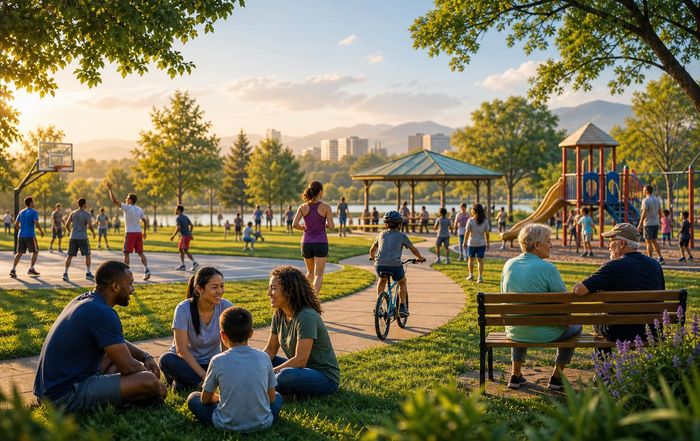
Building Stronger Communities Through Recreation in 2026
Recreation as a Strategic Asset for Modern Communities
In 2026, recreation has evolved from being perceived as a discretionary leisure activity to a strategic asset that shapes public health, economic resilience, cultural identity, and social cohesion across the globe. From neighborhood sports courts in the United States to urban cycling networks in the Netherlands and community fitness hubs in Singapore, the ways in which people move, play, and train are increasingly recognized as critical infrastructure for thriving societies. For the global audience of SportyFusion, which spans elite athletes, fitness enthusiasts, business leaders, and policy makers, recreation is no longer a side note to performance or entertainment; it is a central mechanism for building stronger, healthier, and more connected communities in every region of the world.
This shift is underpinned by a growing body of research from organizations such as the World Health Organization and OECD, which consistently links regular physical activity and inclusive recreational environments to lower healthcare costs, improved mental health, higher productivity, and reduced social isolation. As cities in Europe, Asia, Africa, and the Americas compete for talent and investment, the presence of accessible sports facilities, active transport networks, and community-based fitness programs has become a differentiating factor in urban planning and economic strategy. Within this context, SportyFusion positions itself not merely as a media platform, but as a trusted guide for understanding how recreation intersects with fitness and performance, public health, business innovation, and cultural transformation.
The Health and Fitness Foundation of Community Strength
The most direct and visible contribution of recreation to stronger communities lies in its impact on physical and mental health. Sedentary lifestyles remain a global challenge, with the World Health Organization continuing to warn that physical inactivity is a leading risk factor for noncommunicable diseases, including cardiovascular disease, diabetes, and certain cancers. At the same time, mental health concerns, ranging from anxiety and depression to burnout and loneliness, have intensified in many countries, particularly in high-pressure urban environments and among younger demographics navigating hybrid work and digital-first lifestyles.
Recreational sports and structured fitness programs provide a powerful counterbalance. Whether through community running clubs in London, public tai chi sessions in Shanghai, or neighborhood football leagues in São Paulo, accessible recreational opportunities encourage consistent, moderate-to-vigorous physical activity that aligns with global health recommendations. Regular participation has been shown to improve cardiovascular health, muscular strength, and metabolic function, while also supporting better sleep, stress management, and cognitive performance. For employers in the United States, Germany, and Singapore, this translates into reduced absenteeism and higher productivity, reinforcing the business case for workplace wellness initiatives that integrate recreational offerings such as subsidized gym memberships, on-site fitness classes, and team sports leagues.
On a community level, health-oriented recreation helps to reduce the burden on healthcare systems, particularly in aging societies such as Japan and Italy, where active aging policies emphasize movement and social engagement as protective factors against decline. Municipal leaders increasingly look to models like the Blue Zones research, which highlights the role of everyday movement and community connection in longevity, and adapt them into urban design and recreation planning. In this environment, platforms like SportyFusion, through its dedicated health coverage, play a key role in translating scientific evidence into practical guidance for communities, clubs, and organizations seeking to design programs that are both inclusive and impactful.
Sports as a Vehicle for Social Cohesion and Cultural Exchange
Beyond the individual health benefits, recreation-particularly in the form of organized sports-serves as a powerful social glue that binds diverse communities together. In multicultural cities such as Toronto, London, Sydney, and Singapore, local sports clubs often function as informal integration hubs where newly arrived residents and long-standing community members meet on equal footing, share experiences, and build trust that might not emerge in more formal or transactional settings. A community basketball league in New York, a futsal tournament in Madrid, or a cricket festival in Johannesburg can bring together participants across age, ethnicity, language, and socioeconomic background, cultivating shared narratives and mutual respect.
International events, from the Olympic Games to regional competitions like the UEFA European Championship and the Asian Games, amplify this dynamic on a larger scale, showcasing how sport can transcend political and cultural divides. While elite competition often dominates headlines on platforms such as BBC Sport and ESPN, the legacy of these events is increasingly measured by their impact on grassroots participation, infrastructure development, and community engagement. Cities that host major tournaments are now expected to demonstrate long-term plans for converting new stadiums, training centers, and public spaces into accessible recreational assets that serve local populations long after the final whistle.
Cultural norms around recreation also shape community identity. In Scandinavian countries like Sweden, Norway, and Finland, the concept of outdoor life and everyday movement is deeply embedded in social values, supported by extensive networks of trails, parks, and community sports facilities. In South Korea and Japan, school-based clubs and company teams foster a culture of discipline, teamwork, and lifelong engagement with physical activity. For readers of SportyFusion, the intersection of sports and culture offers rich insights into how communities can adapt global best practices while preserving local traditions, from indigenous games in New Zealand and South Africa to urban street sports scenes in France, Brazil, and the United States.
Recreation, Urban Design, and the Global Built Environment
In the world's leading cities, recreation has become a central consideration in urban planning and regeneration strategies. As governments and municipalities prioritize livability, sustainability, and resilience, investments in parks, sports fields, bike lanes, and waterfront promenades are increasingly viewed as essential infrastructure rather than optional amenities. Research from organizations such as UN-Habitat and the World Bank underscores the relationship between well-designed public spaces, social safety, and economic inclusion, noting that access to quality recreation can mitigate inequalities and support upward mobility in underserved neighborhoods.
Cities like Copenhagen and Amsterdam are often cited as benchmarks for active mobility and recreational integration, with extensive cycling networks and pedestrian-friendly design that encourage daily movement and community interaction. In North American cities such as Vancouver and Minneapolis, greenway systems and multi-use trails link residential areas to commercial districts and waterfronts, providing safe spaces for walking, running, and cycling while promoting environmental stewardship. Meanwhile, fast-growing urban centers in Asia and Africa are experimenting with multi-functional community hubs that combine sports courts, health clinics, and cultural spaces, reflecting an integrated approach to social infrastructure.
The global shift toward "15-minute cities," where essential services and recreational opportunities are accessible within a short walk or bike ride, further elevates the importance of local sports and fitness facilities. Urban planners and architects increasingly draw on evidence from academic institutions like Harvard T.H. Chan School of Public Health, which explores the health and social impacts of built environments, to advocate for designs that embed recreation into everyday life. For SportyFusion, whose coverage extends to world developments in sport and society, the story of recreation in 2026 is inseparable from broader conversations about sustainable cities, climate resilience, and equitable access to public space.
The Business of Recreation: Markets, Brands, and Jobs
Recreation has also become a major economic engine, generating revenue, employment, and innovation across multiple sectors, including sports equipment, apparel, digital platforms, tourism, and real estate. Global sports and recreation markets, tracked by organizations such as Statista and Deloitte, continue to expand as consumers in regions like North America, Europe, and Asia-Pacific allocate more of their discretionary spending to fitness memberships, outdoor gear, wellness travel, and experiential events. This growth creates opportunities for both established brands and emerging ventures to develop products and services that align with evolving consumer expectations around performance, sustainability, and social impact.
Leading companies such as Nike, Adidas, and Decathlon have long recognized the strategic value of community engagement, investing in grassroots sports programs, local tournaments, and inclusive design initiatives that make equipment and apparel more accessible. At the same time, a new generation of digital-first fitness and wellness companies, supported by advances in wearable technology, data analytics, and connected platforms, offers personalized training experiences that extend the reach of recreation beyond traditional gym or club environments. Learn more about how technology is reshaping active lifestyles through SportyFusion's technology insights, which explore trends from AI-driven coaching to immersive virtual reality training.
The expansion of the recreation economy is also reshaping labor markets. Careers in sports management, community programming, fitness instruction, outdoor education, and esports event operations are increasingly recognized as viable professional pathways, particularly for younger generations seeking purpose-driven work. Educational institutions and training providers are responding with specialized programs in sports business, recreation management, and exercise science, while employers look to platforms like SportyFusion's jobs section to connect with talent that combines technical expertise with a passion for community impact. For business leaders and investors, the key challenge in 2026 is to balance growth with responsibility, ensuring that commercial strategies enhance, rather than erode, the inclusive and community-building potential of recreation.
Technology, Data, and the New Recreational Experience
Technology has transformed the way individuals and communities engage with recreation, creating new possibilities for participation, monitoring, and collaboration. Wearable devices from companies such as Garmin, Apple, and Samsung, combined with platforms like Strava and Zwift, enable participants from Berlin to Bangkok to track performance metrics, join global challenges, and share progress with peers, thus blending local activity with worldwide digital communities. These tools not only support individual motivation and accountability but also provide valuable aggregate data that can inform public policy and facility planning.
For instance, anonymized movement and activity data help city officials understand which parks, trails, and routes are most heavily used, guiding investments in lighting, safety, and maintenance. Similarly, community organizations can analyze participation patterns to adapt programming for different age groups, genders, or cultural communities, ensuring that offerings remain relevant and inclusive. SportyFusion, through its coverage of performance trends and training innovation, highlights how data-driven approaches are enhancing both elite and grassroots sport, while also raising important questions about privacy, access, and digital equity.
Esports and gaming, once viewed as detached from physical recreation, are increasingly intersecting with active lifestyles. Motion-based games, virtual reality fitness platforms, and hybrid events that combine physical challenges with digital competition are building bridges between gaming communities and traditional sports. Organizations like the International Olympic Committee have experimented with virtual sports events, while national federations explore how to engage younger audiences through digital formats that still promote movement and social interaction. Readers interested in this evolving landscape can explore SportyFusion's gaming coverage, which examines how competitive gaming and physical recreation are converging in new community spaces, from dedicated esports arenas to multi-use youth centers.
Sustainability, Environment, and Ethical Responsibility
As climate change and environmental degradation intensify, the relationship between recreation and sustainability has moved to the forefront of strategic discussions among policy makers, businesses, and community leaders. Outdoor recreation, in particular, depends on the preservation of natural environments-trails, forests, coastlines, and mountains-that are increasingly vulnerable to extreme weather, pollution, and overuse. Organizations such as The Nature Conservancy and IUCN emphasize that responsible recreation must integrate conservation principles, from trail design that minimizes erosion to visitor education programs that promote leave-no-trace behavior.
Sports and recreation events, from local races to global tournaments, also face scrutiny regarding their environmental footprint, including energy consumption, waste generation, and travel-related emissions. In response, governing bodies and event organizers are adopting guidelines and certifications aligned with frameworks promoted by the UN Environment Programme, focusing on renewable energy, sustainable materials, and circular economy practices. Learn more about sustainable business practices in sport and recreation through SportyFusion's environment coverage, which profiles organizations and communities that are pioneering low-impact facilities, eco-conscious gear, and regenerative tourism models.
Ethical considerations extend beyond environmental impact to issues of equity, inclusion, and labor practices. Ensuring that recreational spaces and programs are accessible to people with disabilities, low-income families, and marginalized communities is increasingly seen as a core responsibility rather than a peripheral initiative. International frameworks such as the UN Convention on the Rights of Persons with Disabilities guide policy, while advocacy groups and local organizations work to remove physical, financial, and cultural barriers to participation. For readers of SportyFusion, the ethics section offers analysis of how clubs, brands, and governing bodies are being held accountable for their impact on communities, from fair pay and safe working conditions to anti-discrimination policies and inclusive design.
Culture, Lifestyle, and the Everyday Practice of Community
Recreation is not confined to formal sports leagues or structured workout programs; it is deeply woven into everyday culture and lifestyle. In many communities, informal activities such as pickup basketball, park yoga, group walks, dance sessions, and outdoor fitness circuits play a vital role in shaping daily routines and social rhythms. These activities often require minimal equipment and cost, relying instead on public space, social networks, and shared motivation, which makes them especially powerful tools for inclusion and community building.
Cultural attitudes toward time, work, and leisure significantly influence how recreation is integrated into daily life. In countries like France and Spain, where socializing around meals and public plazas remains central, evening strolls, cycling, and casual games in public squares create organic opportunities for movement and connection. In contrast, high-intensity work cultures in parts of East Asia and North America can limit recreational time, prompting innovation in micro-workouts, corporate wellness programs, and digital fitness solutions that fit into compressed schedules. Through its lifestyle coverage, SportyFusion explores how individuals and families across regions are reimagining their routines to prioritize movement, recovery, and community engagement.
Recreation also provides a platform for cultural expression and storytelling. Traditional dances, martial arts, and indigenous games carry histories and values that connect present-day participants with their heritage, while contemporary movements such as parkour, street workout, and urban cycling reflect the creativity and resilience of younger generations navigating dense, rapidly changing cities. Coverage of these trends on SportyFusion helps readers understand not only the physical techniques involved but also the social narratives and identity dynamics that make them meaningful in specific communities.
The Role of Media and Platforms like SportyFusion
In an era of abundant information and fragmented attention, trusted media platforms play a crucial role in shaping how communities understand and leverage recreation as a tool for development. SportyFusion, with its global perspective and integrated coverage across sports, business, social impact, and performance, occupies a unique position at the intersection of expertise, storytelling, and practical guidance. By highlighting evidence-based practices, profiling innovative programs, and amplifying voices from diverse regions, it supports decision-makers and practitioners who are designing and delivering recreational experiences on the ground.
This role is especially important in 2026, as misinformation and polarized discourse can obscure the nuanced realities of community development. Balanced reporting on topics such as youth sports specialization, technology's impact on attention and movement, or the trade-offs inherent in mega-event hosting helps stakeholders navigate complex choices. In addition, by connecting readers to authoritative external resources-from health guidance on WHO to policy analysis on OECD and urban design insights from UN-Habitat-SportyFusion reinforces a culture of informed decision-making grounded in credible evidence rather than trends alone.
Looking Ahead: Strategic Priorities for Stronger Recreational Communities
As communities worldwide look beyond 2026, several strategic priorities emerge for those who view recreation as a cornerstone of societal strength. First, there is a need to embed recreation into long-term planning across sectors, ensuring that health ministries, urban planners, educational systems, and businesses collaborate to create environments where physical activity is the default rather than the exception. This includes designing active transport networks, multi-use community hubs, and school curricula that integrate movement throughout the day.
Second, stakeholders must continue to invest in inclusive programs that reach underrepresented populations, recognizing that the benefits of recreation are maximized when participation is broad and diverse. This involves targeted outreach, culturally relevant programming, adaptive equipment, and pricing models that lower financial barriers, as well as leadership pathways that reflect the diversity of the communities being served. Third, the integration of technology should be pursued with care, leveraging data and digital platforms to enhance engagement and personalization while safeguarding privacy and ensuring access for those with limited connectivity or resources.
Finally, ethical and environmental considerations must remain central to the evolution of recreational ecosystems. As demand for sports tourism, outdoor adventure, and large-scale events grows, communities and organizations will be judged not only by the experiences they offer but also by their stewardship of people and planet. Transparent reporting, community consultation, and alignment with international sustainability frameworks will be essential to maintaining trust and legitimacy.
For the global community that turns to SportyFusion as a source of insight and inspiration, the message is clear: recreation is far more than a pastime. It is an essential infrastructure of modern life, a catalyst for health, cohesion, and opportunity that cuts across geography, culture, and industry. By understanding and investing in recreation with intention and expertise, communities from New York to Nairobi, Berlin to Bangkok, and Sydney to São Paulo can build stronger, more resilient futures-on the field, in the gym, in the streets, and in the everyday spaces where people move, connect, and grow together.