

Amateur Basketball in Spain: Inside Local Leagues and Club Culture
Amateur basketball in Spain sits in a unique space between neighborhood pastime and serious competitive pathway. Across cities, small towns, and coastal villages, thousands of players compete every weekend in local leagues that mirror the passion, tactical detail, and crowd energy usually associated with the professional Liga Endesa (ACB). Yet the heart of the game is not just performance; it is community. Clubs double as social hubs, youth-development systems, and cultural anchors that reflect how sport is woven into everyday Spanish life. Understanding how these leagues and clubs function offers a window into why Spain has become one of the world's most consistent basketball powers, and why the sport holds such a firm place alongside football in the country's sporting identity.
How Spain's Basketball Pyramid Supports the Amateur Game
To understand local basketball culture, it helps to see where it sits in Spain's wider competitive pyramid. At the top is the ACB, followed by the LEB Oro, LEB Plata, and Liga EBA, which are organized under the Spanish Basketball Federation (FEB). While these are considered professional or semi-professional, the structure beneath them-regional and provincial competitions-forms the backbone of the amateur game. Each autonomous community, from Catalonia and Madrid to Andalusia and the Basque Country, has its own federation organizing local leagues, age categories, and promotion-relegation systems that link grassroots competitions with national frameworks.
The FEB and regional federations act as regulators for rules, refereeing standards, and player licensing, and they also coordinate with FIBA Europe and FIBA for international guidelines. This formal structure means that even a modest adult amateur league in a provincial town often follows similar rules, scheduling formats, and disciplinary codes as higher divisions. For players coming from pickup basketball or casual corporate leagues in other countries, the Spanish system can feel surprisingly professionalized: rosters are registered, referees are certified, and many competitions require medical checks or insurance coverage. This creates a stable environment where players can commit to multi-year development, and clubs can think in terms of long-term planning rather than season-to-season improvisation.
From a performance perspective, this pyramid also matters because Spain is a global force in men's and women's basketball, with consistent success at Olympic Games, FIBA World Cups, and EuroBasket tournaments. The national team's depth is often credited to the quality and volume of competitive minutes that young players get in structured local leagues, long before they appear on professional radars. For readers focused on training or performance, these environments offer a case study in how a strong grassroots system can feed elite outcomes without losing its neighborhood feel.
The Role of Local Clubs: More Than Just Teams
At the heart of amateur basketball in Spain are multi-team clubs rather than isolated squads. A typical local club might run men's and women's senior teams, several junior age groups, and sometimes a veterans' team or mixed recreational side. These clubs are often organized as non-profit associations, with boards made up of volunteers, parents, former players, and local community figures. They handle everything from facility bookings and kit orders to sponsorship deals with nearby businesses and coordination with local government sports departments.
Clubs function as social ecosystems. Training sessions are not just about drills; they are weekly gatherings where friendships are formed across age and background. Parents often help with transport and game-day logistics, while older players may coach youth teams or assist with summer camps. In many Spanish towns, the club's colors and logo are visible in schoolyards, local bars, and community events. This sense of identity is part of what distinguishes Spanish amateur basketball from purely recreational models where teams assemble only for competition and then disperse.
Financially, clubs usually operate on a mix of membership fees, municipal support, and sponsorship. Local councils often subsidize court time in public sports halls, especially when clubs provide youth programs that align with public health and social-inclusion goals. Sponsorship from small and medium-sized businesses-cafés, logistics companies, local tech firms-is common, with brand names appearing on jerseys and banners. Compared with some North American or Northern European models, where pay-to-play costs can be prohibitive, many Spanish clubs work hard to keep fees accessible, though economic disparities still exist between wealthy urban areas and smaller or less affluent communities.
For readers interested in how sport intersects with community and lifestyle, these clubs are also cultural hubs. They organize end-of-season dinners, holiday tournaments, and charity events, and they often share space-both physical and social-with other sports like futsal or handball. This cross-pollination contributes to a broader active lifestyle culture, one that aligns closely with the kind of integrated sports and lifestyle coverage that modern athletes increasingly look for.
Regional Leagues: Different Flavors Across Spain
While the national framework provides consistency, regional leagues give Spanish amateur basketball its variety. In Catalonia, for example, the Catalan Basketball Federation oversees a deep and competitive network of divisions, with some top regional teams operating almost at semi-professional intensity. Training frequency can reach four sessions per week plus games, and tactical sophistication-especially in pick-and-roll defense and spacing-is often high. In Madrid, the density of clubs and players leads to a wide range of competition levels, from ambitious promotion-chasing teams to social sides that train once a week and prioritize post-game gatherings.
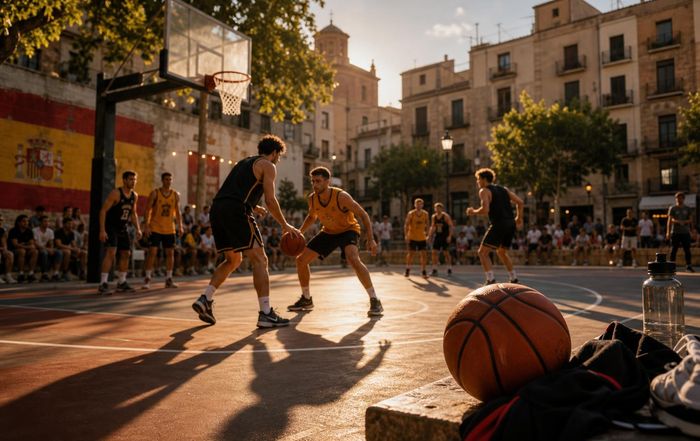
In coastal regions like Valencia or Andalusia, where outdoor courts are heavily used due to milder weather, the line between streetball and organized league play is especially thin. Many clubs recruit directly from open runs and neighborhood tournaments, and players often move fluidly between informal games and structured training. This constant play culture helps explain why Spanish guards and wings are often praised for their court vision and feel for the game, qualities that can be harder to cultivate in purely drill-based environments. In the north, including Galicia and the Basque Country, basketball has long-standing roots linked to school systems and industrial towns, with clubs that have existed for decades and maintain strong local identities.
These regional differences also extend to fan culture. In some towns, men's senior games on Saturday evenings draw multi-generational crowds, with grandparents, classmates, and local officials all in attendance. In others, youth games on Sunday mornings are the main attraction, especially in areas where football already dominates the Saturday calendar. The atmosphere is usually family-friendly but can be intense during derbies or promotion battles, and it is not unusual to see drums, chants, and banners even at the amateur level. For readers curious about sports culture beyond the professional spotlight, these gyms and pavilions offer some of the most authentic experiences in Spanish sport.
Youth Development: From Mini-Basket to Senior Teams
Youth development is where Spanish amateur basketball arguably has its greatest global impact. Children often start with mini-basket rules-lower rims, smaller balls, and shorter quarters-under the guidance of club coaches who are trained within the national coaching curriculum. The FEB and regional federations provide coaching courses and materials that emphasize fundamentals, decision-making, and team play rather than early specialization or overemphasis on physical dominance. This aligns with broader recommendations from organizations like the World Health Organization and many sports science bodies, which encourage age-appropriate training and a focus on long-term athlete development.
As players move into U14, U16, and U18 categories, competition intensifies. National youth championships, organized by the FEB, showcase talent from clubs across Spain and are scouted by professional teams and, increasingly, by college and professional recruiters from abroad. Yet most of these players will never become professionals. For them, the youth system still provides important benefits: structured physical activity, social belonging, and life skills like discipline and communication. For families, the club often becomes a key part of their weekly rhythm, with travel to away games turning into mini road trips that blend sport, tourism, and family time.
From a performance and training perspective, Spanish youth coaching is often praised for its emphasis on game intelligence. Many clubs encourage players to read the game, make extra passes, and understand spacing concepts from a young age. This is reflected in the national teams' style, which has historically relied on ball movement and balanced scoring rather than isolation-heavy play. For readers interested in training methodology, Spanish amateur clubs offer a live laboratory of how tactical education can be integrated into grassroots environments without sacrificing enjoyment.
Adult Amateur Leagues: Balancing Competition and Everyday Life
Adult amateur basketball in Spain stretches from highly competitive regional divisions to recreational municipal leagues. Many players who came through club youth systems stay in the game while studying or working, slotting training sessions around university schedules or office hours. Others return to basketball after a break, using it as a way to reconnect socially, stay fit, or manage stress. The typical senior team might include university students, teachers, engineers, healthcare workers, and freelancers, all sharing the same locker room and game-day routines.
Training frequency usually ranges from one to three sessions per week, depending on level and ambition. At the more competitive end, teams may film games, use scouting reports, and adopt advanced offensive systems, sometimes borrowing concepts from professional coaches or international basketball clinics. At the recreational end, emphasis is more on participation, but even then, the presence of certified referees and formal competition structures keeps a sense of seriousness that many players appreciate. This balance between structure and accessibility is one reason basketball competes strongly with five-a-side football and other sports for adult participants.
For those focused on fitness and health, adult leagues offer a cardiovascular and strength challenge that is often more engaging than solitary gym sessions. Full-court play demands repeated sprints, changes of direction, and upper-body engagement for rebounding and contact, aligning with many public-health recommendations for vigorous physical activity. At the same time, injuries-especially ankle sprains, knee issues, and overuse problems-are common. Some clubs partner with local physiotherapists or sports-medicine clinics, and Spain's broader healthcare system, including guidance from bodies like the Spanish Agency for Health Protection in Sport and international organizations such as the International Olympic Committee, informs best practices in prevention, warm-up, and return-to-play protocols.
Women's Amateur Basketball and Growing Visibility
Women's basketball in Spain has enjoyed a surge in visibility thanks to the success of the women's national team, which has won multiple medals at European and world level. This success has filtered down into amateur structures, where more clubs are investing in girls' and women's teams. In many regions, there are now parallel female leagues at various age groups, and senior women's amateur competitions can be just as tactically sophisticated and intense as men's leagues, even if they often receive less media coverage.
Clubs are increasingly aware that building strong women's programs is essential not only for equality but also for sustainability. More teams mean more members, more community reach, and more potential volunteers and coaches. Initiatives from the FEB and regional federations, sometimes supported by the European Union, aim to promote female participation, train more women coaches, and combat stereotypes that might still discourage girls from choosing basketball over other activities. At a cultural level, having visible female role models in local clubs-senior players coaching youth teams, for example-helps normalize basketball as a sport for everyone.
However, challenges remain. Court-time allocation, access to prime training slots, and sponsorship can still skew toward men's programs, especially in clubs with limited resources. Some women's teams train late at night or share facilities with multiple squads, complicating logistics for players who juggle work, study, and family responsibilities. For readers interested in ethics and equity in sport, Spanish amateur basketball offers both encouraging progress and ongoing debates about how to distribute resources fairly within community organizations.
Facilities, Technology, and the Everyday Experience
Most amateur basketball in Spain takes place in municipal sports halls-"polideportivos"-and school gyms. These facilities typically feature multi-sport markings, allowing for basketball, futsal, handball, and volleyball, which makes scheduling a constant puzzle for club coordinators. In larger cities, some clubs have dedicated courts or long-term agreements with schools and universities, while in smaller towns, the main sports hall can be a focal point of community life, hosting everything from local festivals to election-day polling alongside weekend games.
Technology is reshaping the amateur experience. Many regional federations use digital platforms for scheduling, results, and statistics, making it easy for players and fans to track league tables and individual performance. Clubs run social media accounts on platforms like Instagram and X (formerly Twitter), posting game highlights, training photos, and announcements. Some have begun live-streaming games via services similar to Twitch or YouTube, especially for youth tournaments and key promotion clashes. For tech-focused readers, this is an example of how digital tools are blurring the line between amateur and professional visibility.
Wearable technology and performance-tracking apps are also slowly filtering into the amateur space. While not as widespread as in elite environments, some players use consumer-level GPS trackers, heart-rate monitors, and video breakdown tools to analyze their game. International bodies like FIBA and organizations such as Sport England or USA Basketball (relevant as comparative models) promote accessible coaching materials online, and Spanish coaches often adapt these resources to local contexts. This intersection of technology, performance, and community sport reflects broader trends in how athletes at all levels think about data, improvement, and self-monitoring.
Social Life, Identity, and Basketball Culture
Beyond competition, amateur basketball in Spain carries a strong social dimension. Post-game gatherings at nearby bars or cafés are almost as important as the final score, with teams dissecting plays over tapas or a simple drink. End-of-season events might include awards, humorous "MVP" categories, and video recaps, turning the gym into a stage for collective memory. In university towns, student-heavy teams often blend club culture with campus life, organizing mixed tournaments, costume-themed games, or charity events that link sport with broader social causes.
Basketball also intersects with urban culture. Outdoor courts in cities like Barcelona, Madrid, and Valencia have become meeting points for diverse communities, including migrants, Erasmus students, and tourists, all sharing a common language in pick-and-rolls and pick-up games. These spaces often act as informal recruitment grounds for local clubs, and they reinforce basketball's role as a bridge between different social groups. For readers interested in culture and social dynamics, this is where the game becomes a vehicle for integration and cross-cultural exchange.
Media coverage of amateur basketball remains limited compared with football, but regional newspapers, local radio, and specialized websites do report on key games and youth tournaments. Social media, again, has changed the equation: a standout dunk or game-winner can circulate widely, giving local players moments of unexpected visibility. This democratization of attention aligns with global trends in sports media, where content from grassroots levels can sometimes have as much impact online as professional highlights.
Challenges and Future Directions
Despite its strengths, amateur basketball in Spain faces several pressures. Facility availability is a persistent issue, especially in densely populated urban areas where demand for indoor courts is high across multiple sports. Economic inequality between regions and clubs can affect access to equipment, travel for tournaments, and the ability to retain qualified coaches. The broader youth-sport landscape is also crowded, with football, futsal, and increasingly esports competing for attention and time.
There are also concerns about burnout and drop-out, particularly in the transition from youth to adult categories. As academic and work pressures increase, many players reduce their commitment or leave the sport altogether. Federations and clubs are experimenting with more flexible competition formats, shorter seasons, or mixed "open" leagues to keep people engaged. International guidance from organizations like the OECD and public-health bodies emphasizes the importance of lifelong physical activity, and Spanish basketball stakeholders are increasingly framing the sport not just as a talent pipeline but as a tool for long-term well-being.
At the same time, there are opportunities. Spain's reputation in global basketball continues to attract interest from international students, expats, and visiting players who want to join local leagues. Some clubs have begun offering English-language information, and a few even run short-term training programs or camps that cater to foreign participants, blending sport with tourism. For those following new world and sports trends, this speaks to a growing cross-border dimension in what has traditionally been a very local activity.
Ultimately, amateur basketball in Spain thrives because it manages to be many things at once: a serious competitive outlet, a developmental engine for future professionals, a vehicle for community identity, and a practical way for people of all ages to stay active. Whether played in a packed regional final or a quiet Sunday-morning league game, the sport's value lies as much in the relationships and routines it creates as in the points on the scoreboard. For anyone interested in how sport can shape everyday life, Spain's local leagues and club culture offer a compelling, and still evolving, example.